manuals.online logo
Brands
  1. Home
  2. •
  3. Brands
  4. •
  5. Hobbico
  6. •
  7. Motorized Toy Car
  8. •
  9. Hobbico P-51 MUSTANG User manual

Hobbico P-51 MUSTANG User manual

Other Hobbico Motorized Toy Car manuals

Hobbico Nintendo Mario Kart User manual

Hobbico

Hobbico Nintendo Mario Kart User manual

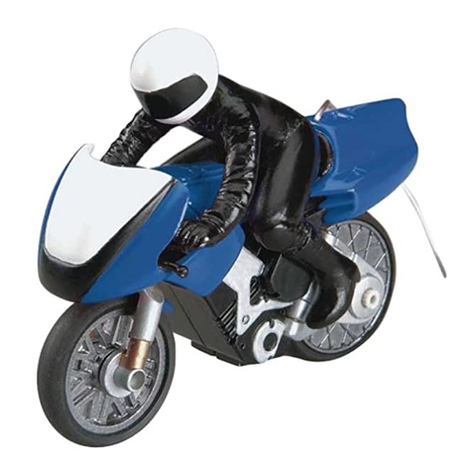
Hobbico R/C MicroSizers MicroCycles User manual

Hobbico

Hobbico R/C MicroSizers MicroCycles User manual

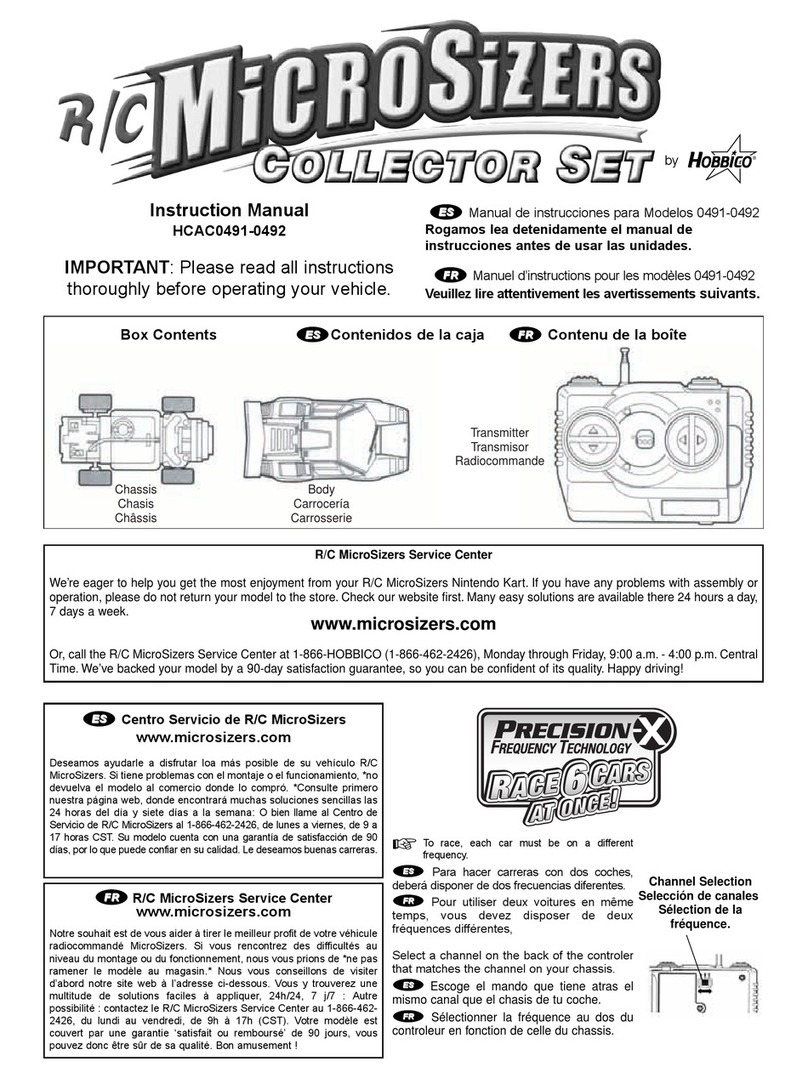
Hobbico MicroSizers HCAC0491-0492 User manual

Hobbico

Hobbico MicroSizers HCAC0491-0492 User manual

Hobbico TYPHON User manual

Hobbico

Hobbico TYPHON User manual

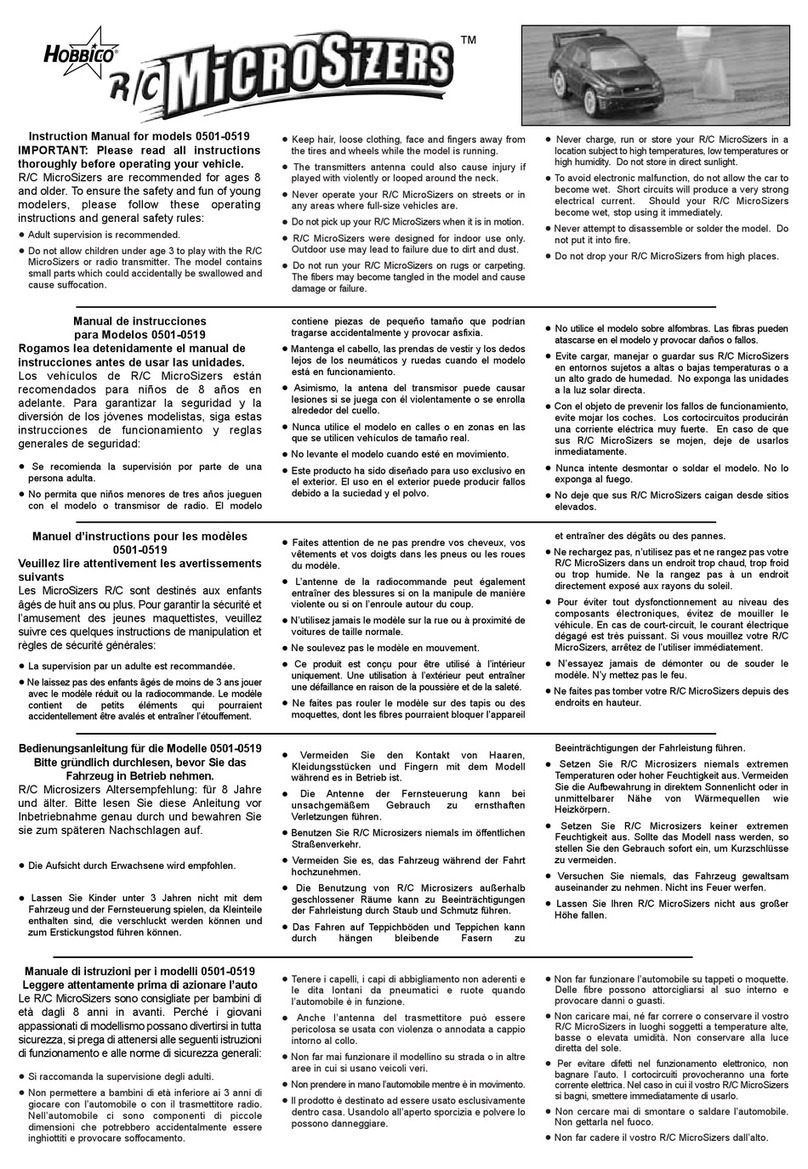
Hobbico R/C MicroSizers 0501-0519 User manual

Hobbico

Hobbico R/C MicroSizers 0501-0519 User manual

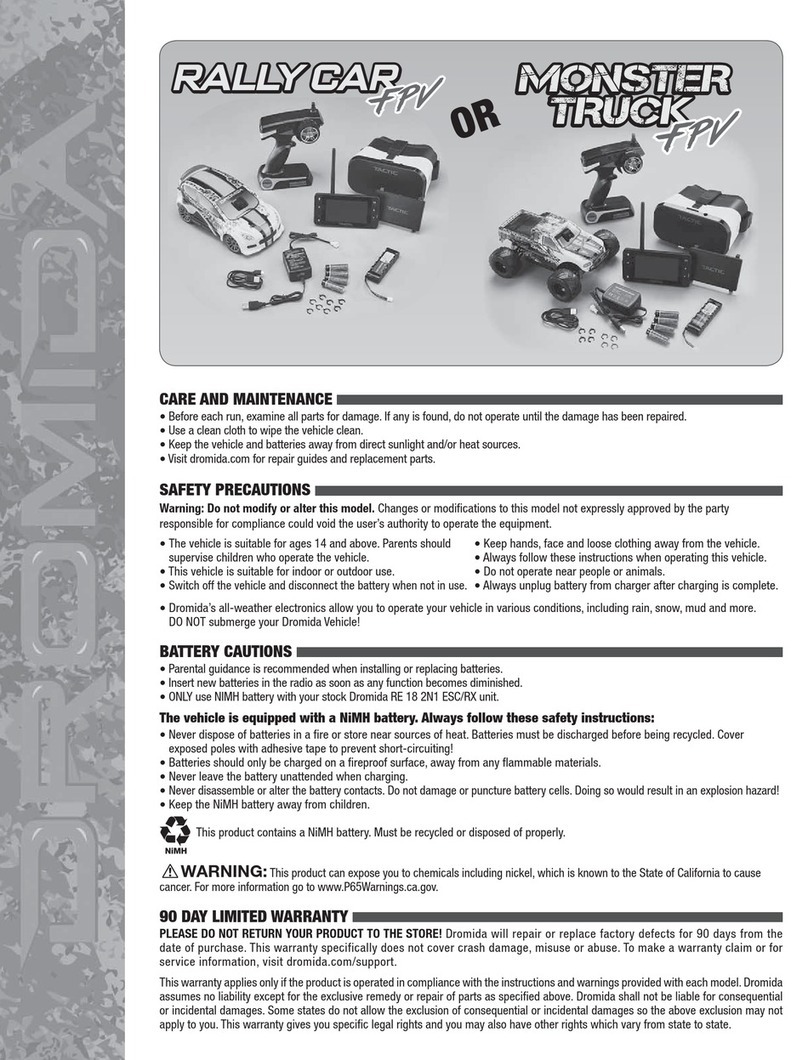
Hobbico RALLY CAR FPV User manual

Hobbico

Hobbico RALLY CAR FPV User manual

Popular Motorized Toy Car manuals by other brands

Reely Dune Fighter 3S operating instructions

Reely

Reely Dune Fighter 3S operating instructions

REVELL 1970 Chevelle SS 454 manual

REVELL

REVELL 1970 Chevelle SS 454 manual

Team Losi Micro Rally Car Operation guide

Team Losi

Team Losi Micro Rally Car Operation guide

Jamara Mercedes-AMG GLE 63 Instruction

Jamara

Jamara Mercedes-AMG GLE 63 Instruction

Eduard Humber Scout Car Mk.I exterior quick start guide

Eduard

Eduard Humber Scout Car Mk.I exterior quick start guide

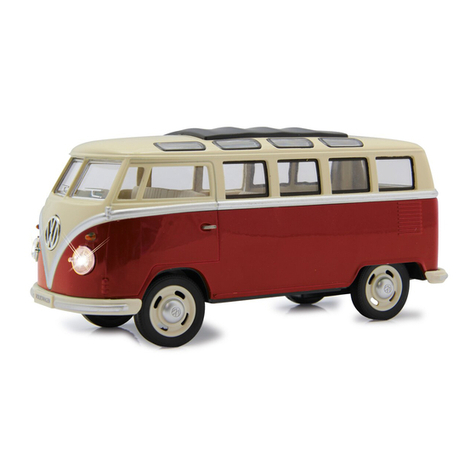
Jamara VW T1 Bus Instruction

Jamara

Jamara VW T1 Bus Instruction

REVELL 68 CHEVY CHEVELLE SS 396 manual

REVELL

REVELL 68 CHEVY CHEVELLE SS 396 manual

Schumacher Pro Cat instruction manual

Schumacher

Schumacher Pro Cat instruction manual

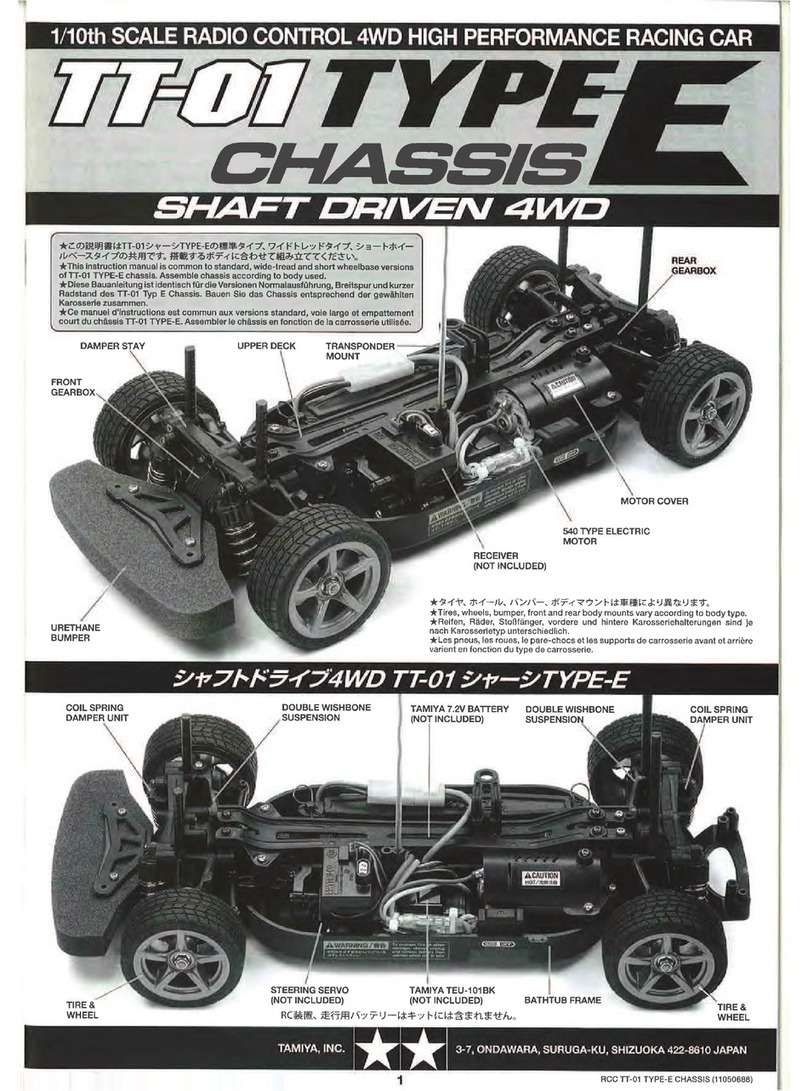
Tamiya TT-01 TYPE E instruction manual

Tamiya

Tamiya TT-01 TYPE E instruction manual

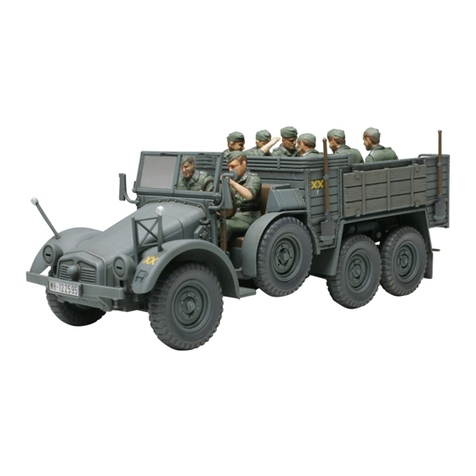
Eduard Krupp Protze 6x4 1/48 quick start guide

Eduard

Eduard Krupp Protze 6x4 1/48 quick start guide

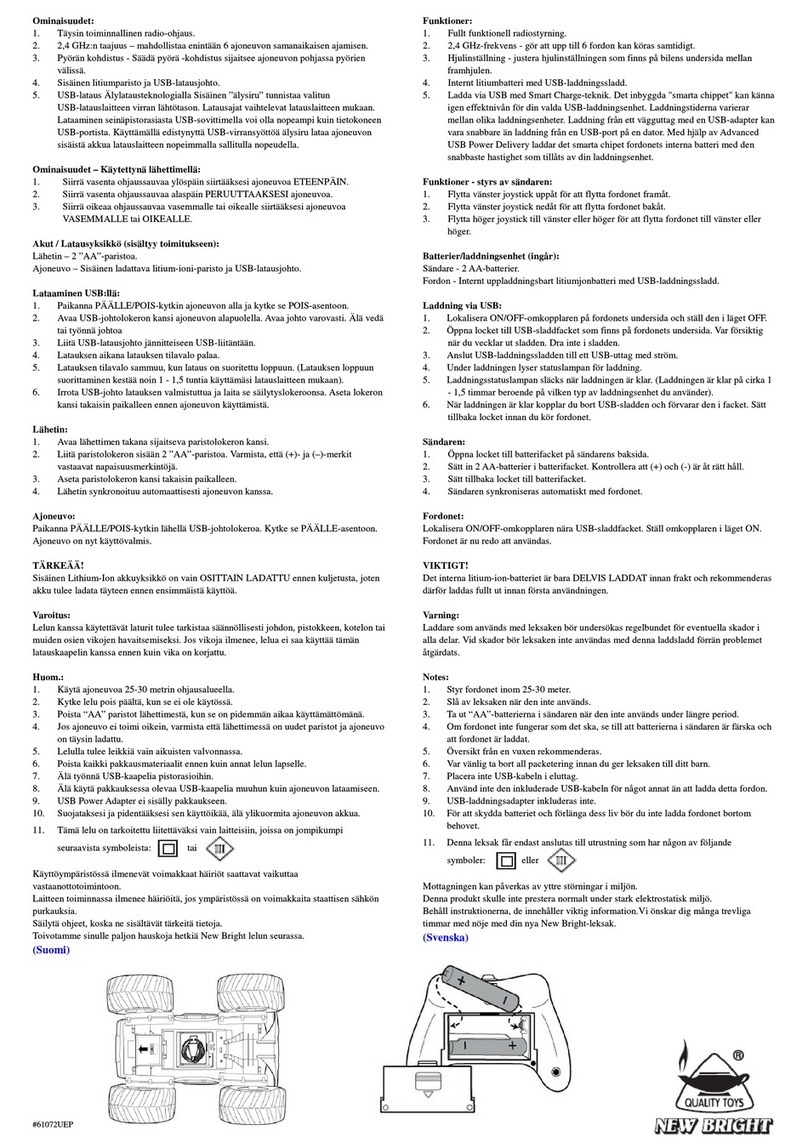
New Bright 61072UEP quick start guide

New Bright

New Bright 61072UEP quick start guide

Team Durango DEX410v5 manual

Team Durango

Team Durango DEX410v5 manual

Jamara Mercedes Actros Muldenkipper 2,4 GHz Instruction

Jamara

Jamara Mercedes Actros Muldenkipper 2,4 GHz Instruction

PLAYMOBIL 9536 manual

PLAYMOBIL

PLAYMOBIL 9536 manual

Atomic BZ3 instruction manual

Atomic

Atomic BZ3 instruction manual

Jamara McLaren Senna 2,4GHz instructions

Jamara

Jamara McLaren Senna 2,4GHz instructions

Aiyaplay 370-290V00 user manual

Aiyaplay

Aiyaplay 370-290V00 user manual

ZEROTRIBE Zetricks ZT1144 instruction manual

ZEROTRIBE

ZEROTRIBE Zetricks ZT1144 instruction manual

manuals.online logo
manuals.online logoBrands
  • About & Mission
  • Contact us
  • Privacy Policy
  • Terms and Conditions

Copyright 2025 Manuals.Online. All Rights Reserved.

ASSEMBLY OFYOUR P-51 MUSTANG RUBBER BAND POWER AIRPLANE
➊Assembling The Wing,Tail
and Fuselage
Remove the backing paper from the double
sided tape indicated by the shaded sections
shown on the drawing. Assemble all parts
shown by pressing them firmly into place to
ensure good adhesion.
Apply the decals using the pictures
on the box as a guide.
➋Assembling The Propeller
And Motor
Remove the rubber band motor holder
from the rubber band motor. Attach the
rubber band motor to the hook on the
back of the propeller hub.
➌Winding The Rubber Motor
Wind the rubber motor by turning the
propeller clockwise. Start with 60- 100
turns for a short test flight.The maximum
number of turns is 200.
➍➍Changing The Rubber Motor
If you should break a rubber band
motor, you can change it using the wire
hook as shown above. A spare rubber
band motor is included in the kit.
Entire Contents © Copyright 1999 HCAZ3086
Tail
Fuselage
Wing
Propeller
Rubber Band
Motor Rear Rubber
Motor Holder
Wire
Hook
Hook
Rubber Band
Motor Holder
TRIMMINGYOUR P-51 MUSTANG (Must be done before flying!)
TEST FLYINGYOUR P-51 MUSTANG
➊It is important to test, or trim, your P-51 correctly. The airplane
should climb and turn efficiently.
➋Using a hobby knife, carefully cut only the top and bottom of
the rudder and the inside and outside ends of both elevators.
➌Before winding the rubber motor, grasp the airplane body and
gently toss the airplane into the wind. It should glide straight ahead
and settle gently to the ground. See diagram below.
1.Take your P-51 out into the middle of a
field. Wind the rubber motor. Hold the
P-51 over your head and release the
propeller. Toss the airplane into the
wind, keeping the airplane level.
2.The airplane should climb gently and
turn gradually. If it stalls or crashes,
adjust the elevator. If it does not turn,
bend the rudder 1-2 mm to the left
or right. Refer to “Trimming your
P-51" for details.
IMPORTANT THINGS TO REMEMBER
WHENYOU ARE FLYINGYOUR P-51:
The most important thing that determines
how well your P-51 flies is how well you
have trimmed it out.
Because it can fly high and far you must
be in a large area away from houses,
streets, trees, and overhead wires.
Closely inspect your P-51 after every
flight. Make sure the wings are not
broken and are securely fastened to the
airplane body. Make sure none of the
tail parts are broken. See the REPAIR
section for details.
Always throw the P-51 into the wind.Do
not fly the P-51 if it is too windy.
CAUTION
• DO NOT FLY NEAR POWER LINES.
• ALWAYS LAUNCH PLANE AWAY
FROM PEOPLE AND OBSTACLES.
• NEVER POINTTHE PLANE AT
ANYONE OR ANYTHING.
• ALWAYS LAUNCH SKYWARD.
• DO NOT LAUNCH INDOORS.
REPAIR
Repairs can be made to your model
using clear tape. You may also use
white PVA glues or epoxy. Never use
polystyrene cements or “super” glues
as they will melt the styrofoam.
Wind
direction
A = Crash. Bend elevators upward 1-2mm.
B = Stall. Bend elevators down 1-2mm.
C = Correct flight path.
D = To veer left, bend rudder slightly to the left.
E = To veer right, bend rudder slightly to the right.
➍➍Repeat step 3 until proper flight is achieved.
A
AB
B
C
D
D
E
E