3
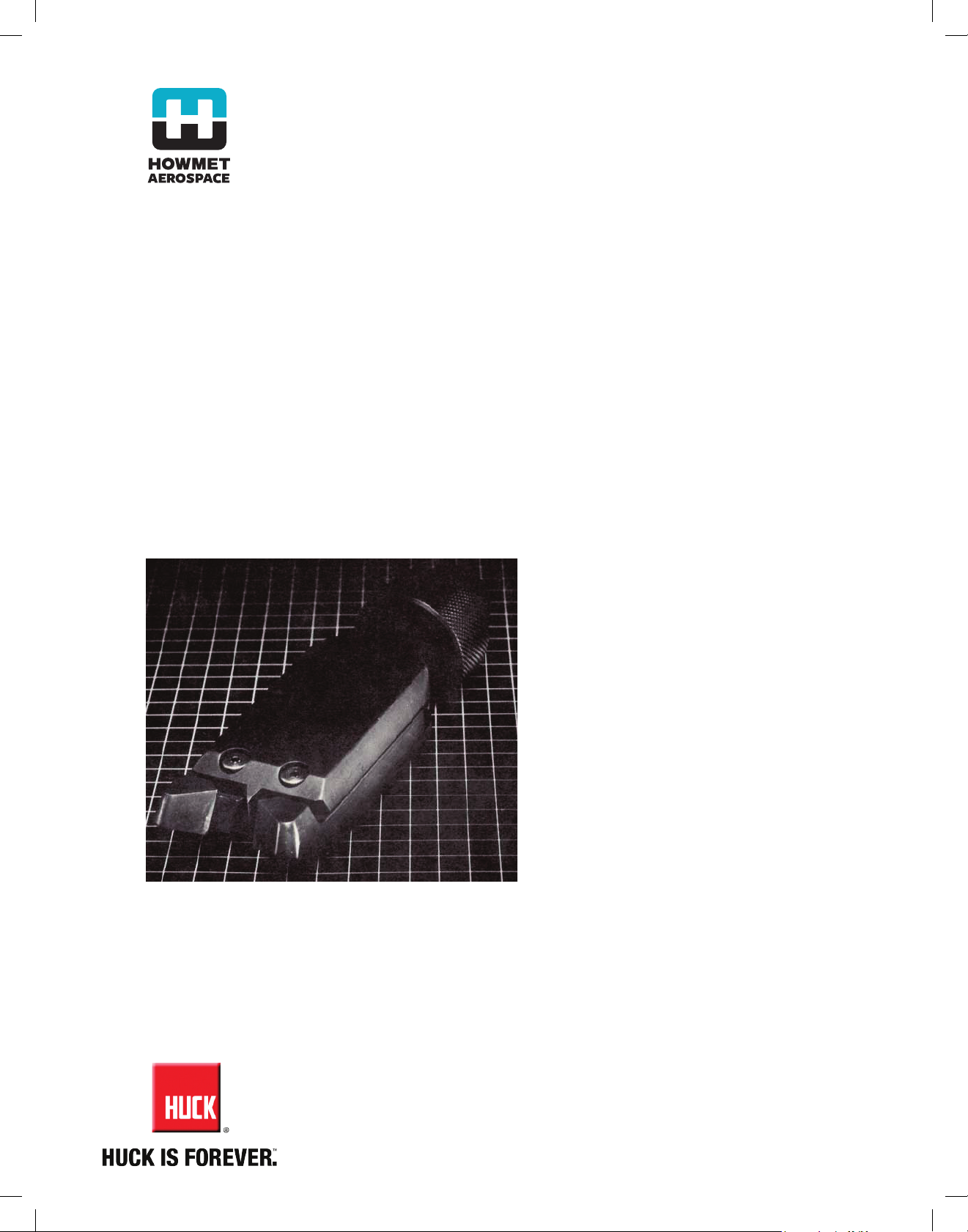
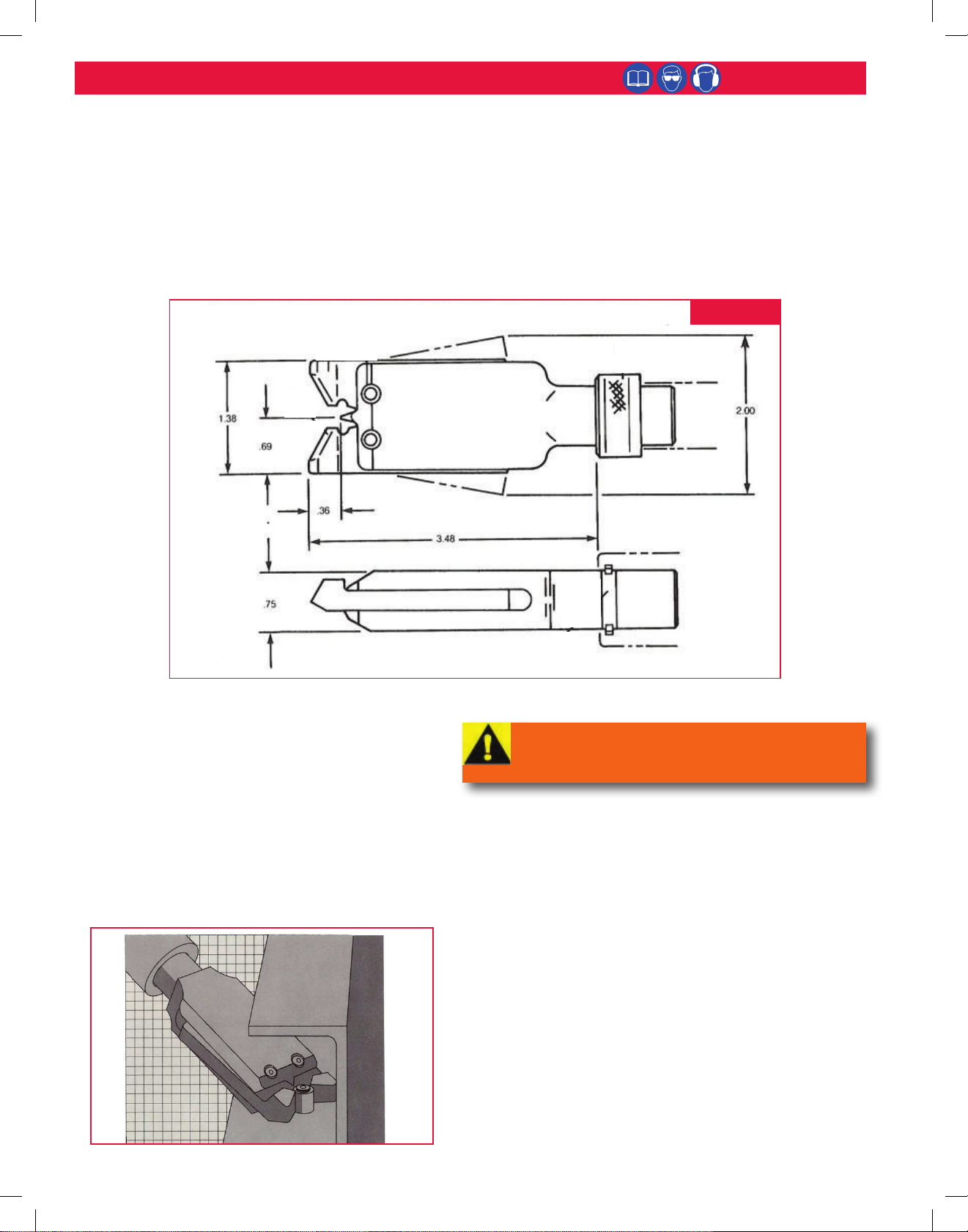
546 and 548 series Offset Collar Cutters (HK673)
Safety Instructions
I. GENERAL SAFETY RULES:
1. A half hour long hands-on training session with qualified personnel is
recommended before using Huck equipment.
2. Huck equipment must be maintained in a safe working condition at all
times. Tools and hoses should be inspected at the beginning of each
shift/day for damage or wear. Any repair should be done by a qualified
repairman trained on Huck procedures.
3. For multiple hazards, read and understand the safety instructions before
installing, operating, repairing, maintaining, changing accessories on,
or working near the assembly power tool. Failure to do so can result in
serious bodily injury.
4. Only qualified and trained operators should install, adjust or use the
cutting-off / crimping power tool.
5. Do not modify this cutting-off / crimping power tool. This can reduce
effectiveness of safety measures and increase operator risk.
6. Do not discard safety instructions; give them to the operator.
7. Do not use cutting-off / crimping power tool if it has been damaged.
8. Tools shall be inspected periodically to verify all ratings and markings
required, and listed in the manual, are legibly marked on the tool. The
employer/operator shall contact the manufacturer to obtain replacement
marking labels when necessary. Refer to assembly drawing and parts list for
replacement.
9. Tool is only to be used as stated in this manual. Any other use is prohibited.
10. Only genuine Huck parts shall be used for replacements or spares. Use of
any other parts can result in tooling damage or personal injury.
11. Never remove any safety guards or pintail deflectors.
12. Check clearance between trigger and work piece to ensure there is no
pinch point when tool is activated. Remote triggers are available for
hydraulic tooling if pinch point is unavoidable.
13. Do not abuse tool by dropping or using it as a hammer. Never use hydraulic
or air lines as a handle or to bend or pry the tool. Reasonable care of
installation tools by operators is an important factor in maintaining tool
efficiency, eliminating downtime, and preventing an accident which may
cause severe personal injury.
14. Never place hands between cutting-off / crimping power tool and work
piece. Keep hands clear from front of tool.
II. PROJECTILE HAZARDS:
1. Disconnect the cutting-off / crimping power tool from energy source when
changing inserted tools or accessories.
2. Be aware that failure of the workpiece, accessories, or the inserted tool
itself can generate high velocity projectiles.
3. Always wear impact resistant eye protection during tool operation. The
grade of protection required should be assessed for each use.
4. For overhead work, wear a safety helmet.
5. Ensure that the workpiece is securely fixed.
6. The risk to others should also be assessed at this time.
7. Be aware of the risk of being exposed to the ejection of cuttings or chips.
8. Be aware that working on brittle material can cause harmful splinters.
III. OPERATING HAZARDS:
1. Use of tool can expose the operator’s hands to hazards including: crushing,
impacts, cuts, abrasions and heat. Wear suitable gloves to protect hands.
2. Operators and maintenance personnel shall be physically able to handle the
bulk, weight and power of the tool.
3. Hold the tool correctly and be ready to counteract normal or sudden
movements with both hands available.
4. Maintain a balanced body position and secure footing.
5. Release trigger or stop start device in case of interruption of energy supply.
6. Use only fluids and lubricants recommended by the manufacturer.
7. Avoid direct contact with the inserted tool as it can become hot.
8. Sharp tools shall always be used.
9. Be aware of risk of whipping compressed air hose.
10. Be aware of risk of cutting with tools with large dimensions.
IV. REPETITIVE MOTION HAZARDS:
1. When using cutting-off / crimping power tool, the operator can experience
discomfort in the hands, arms, shoulders, neck or other parts of the body.
2. When using tool, the operator should adopt a comfortable posture while
maintaining a secure footing and avoid awkward or off balanced postures.
3. The operator should change posture during extended tasks to help avoid
discomfort and fatigue.
4. If the operator experiences symptoms such as persistent or recurring
discomfort, pain, throbbing, aching, tingling, numbness, burning sensations
or stiffness, these warnings should not be ignored. The operator should tell
the employer and consult a qualified health professional.
V. ACCESSORIES HAZARDS:
1. Disconnect tool from energy supply before changing inserted tool or
accessory.
2. Use only sizes and types of accessories and consumables that are
recommended. Do not use other types or sizes of accessories or
consumables.
VI. WORKPLACE HAZARDS:
1. Be aware of slippery surfaces caused by use of the tool and of trip hazards
caused by the air line or hydraulic hose.
2. Proceed with caution while in unfamiliar surroundings; there could be
hidden hazards such as electricity or other utility lines.
3. The cutting-off / crimping power tool is not intended for use in potentially
explosive environments.
4. Tool is not insulated against contact with electrical power.
5. Ensure there are no electrical cables, gas pipes, etc., which can cause a
hazard if damaged by use of the tool.
VII. DUST AND FUME HAZARDS:
1. Dust and fumes generated when using cutting-off and crimping power
tools can cause ill health; risk assessment and implementation of
appropriate controls for these hazards are essential.
2. Risk assessment should include dust created by the use of the tool and the
potential for disturbing existing dust.
3. Operate and maintain the cutting-off or crimping power tool as
recommended in the instruction handbook, in order to minimize dust or
fume emissions.
4. Direct the exhaust so as to minimize disturbance of dust in a dust-filled
environment.
5. Where dust or fumes are created, the priority shall be to control them at
the point of emission.
6. All integral features or accessories for the collection, extraction or
suppression of airborne dust or fumes should be correctly used and
maintained.
7. Use respiratory protection in accordance with employer’s instructions and
as required by occupational health and safety regulations.
VIII. NOISE HAZARDS:
1. Exposure to high noise levels can cause permanent, disabling hearing loss
and other problems such as tinnitus, therefore risk assessment and the
implementation of proper controls is essential.
2. Appropriate controls to reduce the risk may include actions such as
damping materials to prevent workpiece from ‘ringing’.
3. Use hearing protection in accordance with employer’s instructions and as
required by occupational health and safety regulations.
4. Operate and maintain tool as recommended in the instruction handbook to
prevent an unnecessary increase in the noise level.
5. Select, maintain and replace the consumable / inserted tool as
recommended to prevent an unnecessary increase in noise.
6. If the power tool has a silencer, always ensure that it is in place and in good
working order when the tool is being operated.
IX. VIBRATION HAZARDS:
1. Exposure to vibration can cause disabling damage to the nerves and blood
supply to the hands and arms.
2. Wear warm clothing when working in cold conditions and keep hands
warm and dry.
3. If numbness, tingling, pain or whitening of the skin in the fingers or hands,
stop using the tool, tell your employer and consult a physician.
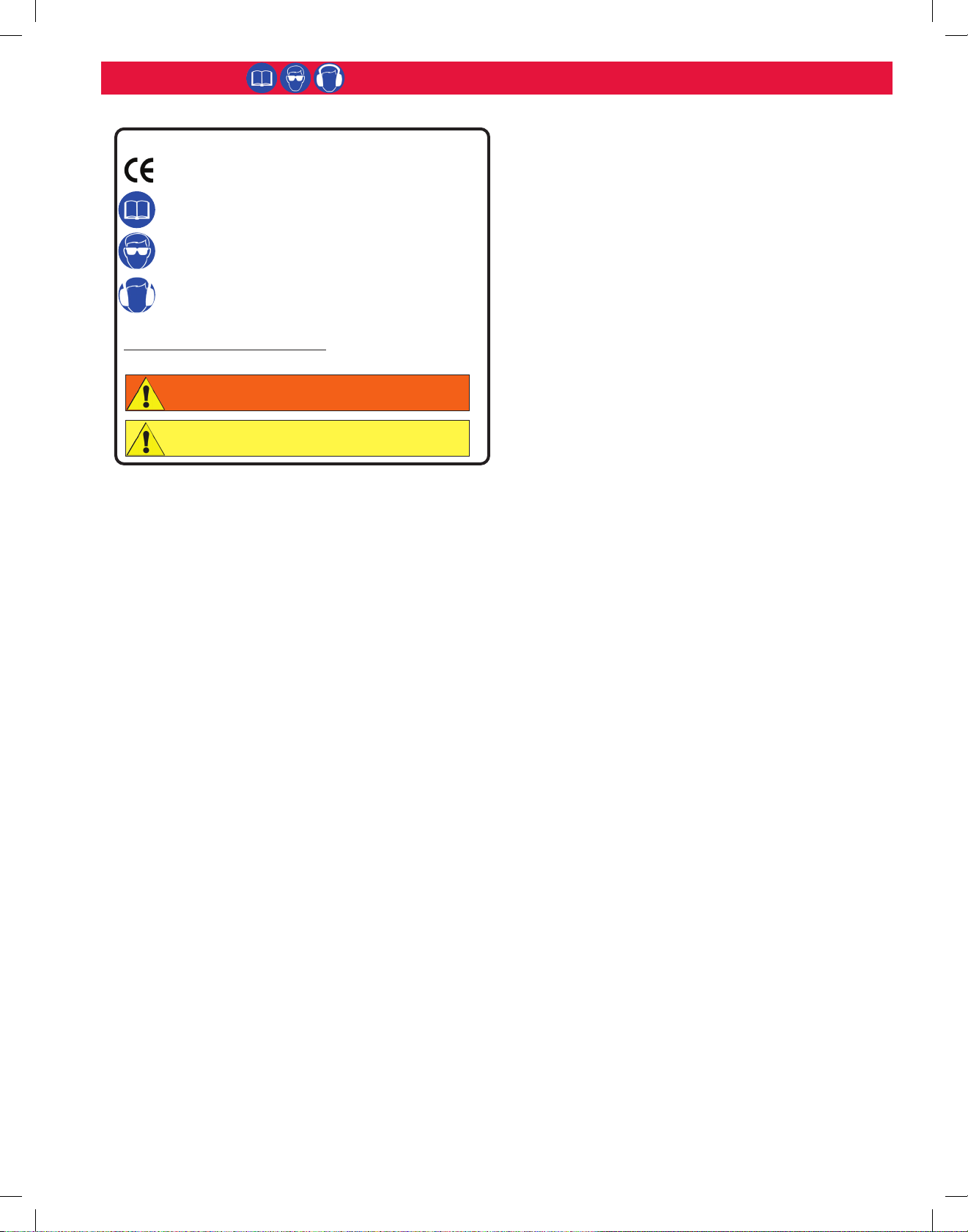
GLOSSARY OF TERMS AND SYMBOLS:
- Product complies with requirements set forth by
the relevant European directives.
- Read manual prior to using this equipment.
- Eye protection is required while using this
equipment.
- Hearing protection is required while using this
equipment.
Notes: are reminders of required procedures.
Bold, Italic type, and underline: emphasize a specific
instruction.
WARNINGS: Must be understood to avoid
severe personal injury.
CAUTIONS: Show conditions that will damage
equipment or structure.