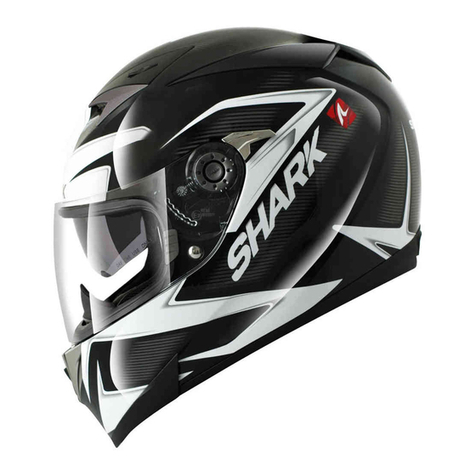
4 things that you should never forget
1. Before using the helmet, read all the instructions, and follow the suggestions carefully to ensure a
correct fit.
2. Do not use the helmet without fastening the strap. An unfastened helmet will fall off during the first
impact, leaving the head defenceless for successive impacts. There is also the risk of it falling off
during flight.
3. Do not fasten the helmet using just the Velcro. The Velcro that may be present on the strap serves
purely to stop it flapping in the wind.
4. To ensure maximum performance, never modify your helmet, whatever the circumstances.
In case of accident
If the accident happens to you:
oThe inner shell will be deformed –though the deformation may not be visible to the naked
eye –because it has absorbed the impact.
oAfter an accident, even if the impact was minor, the helmet should be replaced,
regardless of whether there is visible damage or not.
If you witness an accident:
oKeep calm.
oReport the accident immediately, if possible by phoning for an ambulance (dial 118 in Italy).
Only medically-qualified personnel know exactly how to deal with injuries.
oNever move an injured person, unless this is absolutely essential because of a situation of
greater danger. If the spinal column has been fractured, moving the injured person could
damage the spinal cord, causing permanent paralysis.
oIf the victim is wearing a helmet, do not remove it, but open the visor to facilitate breathing.
oKeep the victim calm, and, if possible, cover him. Shock provokes shivering and a sensation
of cold.
oDo not give the victim alcoholic drinks.
oStem the flow of blood from wounds, protecting your hands with gloves or similar, throwing
them away later if they have been soiled with blood. Do not apply tourniquets: if you place a
tourniquet in the wrong position, you could worsen the situation.
oNever put the victim into a private car. Wait for the ambulance. If the victim is conscious, talk
to him or her and try to calm him or her down.
Helmet maintenance
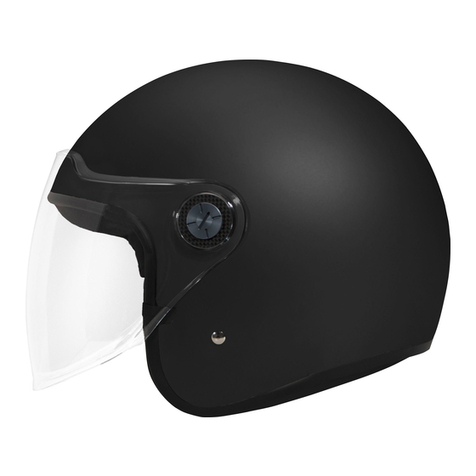
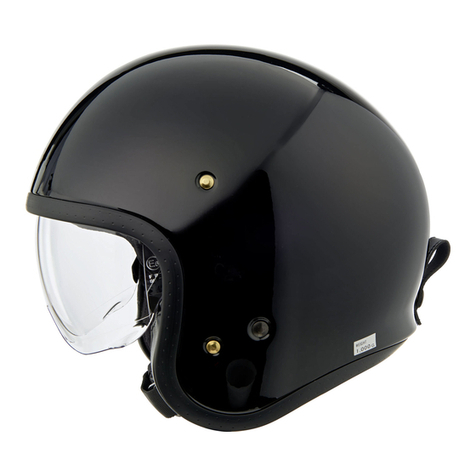
The helmet protects your head, and so it should be treated with care.
The visor should be changed when it has scratches preventing satisfactory vision.
The helmet can be seriously damaged by:
•Paints and varnish
•Petrol
•All types of chemical solvent
•Excessive heat (do not leave your helmet exposed to the sun)
•Inappropriate modifications
Scrupulously follow the instructions provided by the manufacturer.
A helmet does not have a fixed lifespan. However, it is a good rule to replace it after five years of correct use.
Important!
•THE EXTERNAL SHELL OF THE HELMET SHOULD NEVER BE ALTERED IN ANY WAY.