7
Operating the M4
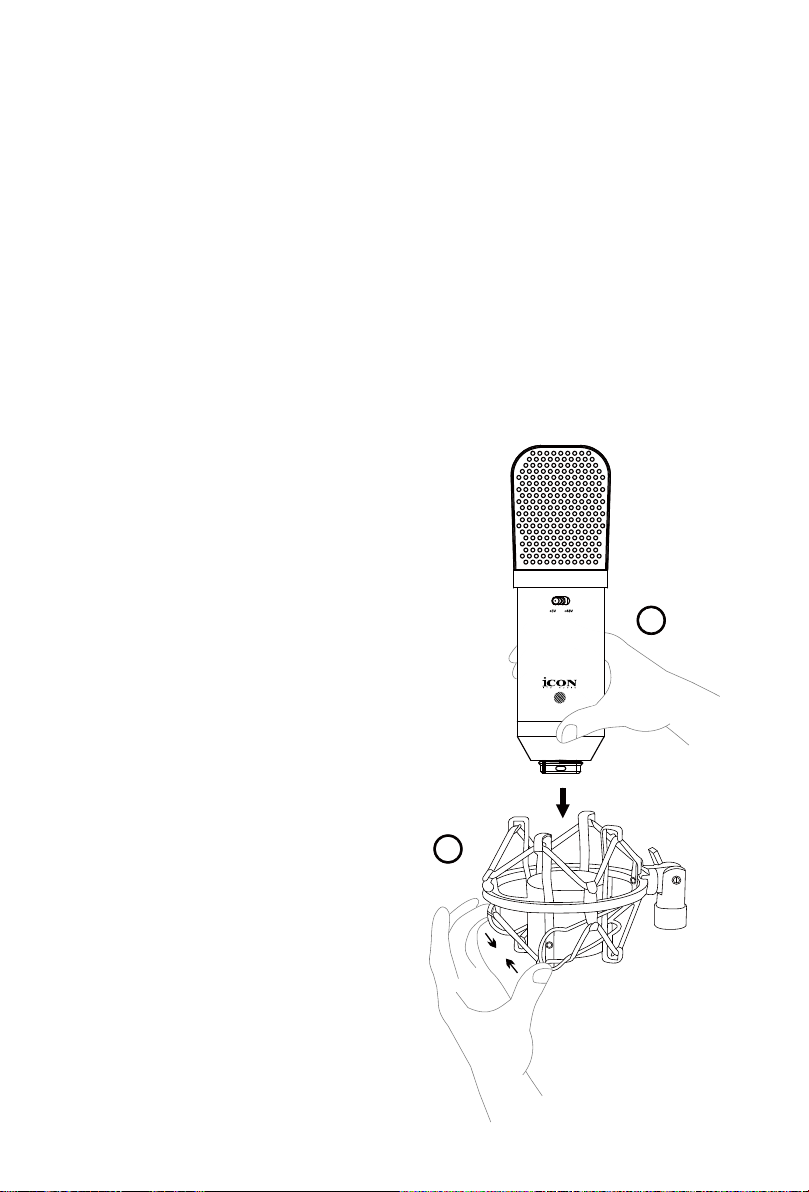
Powering the M4 (5V or 48V)
The M4 is a condenser microphone and therefore needs to be operated by
connecting a phantom power supply. Phantom power is standard on most quality
mixers, outboard MIC-pres and hard disk recorders. If necessary an external
phantom power supply can also be used. The M4 receives the phantom power
directly from a MIC cable when connected to a mixer or other microphone input
that includes a phantom supply. The power is actually sent OUT of the microphone
INPUT, riding silently along with the audio signal. Most mixers have a switch to
engage the phantom power so be sure to check that the phantom power is on
Setting up the signal level
When connecting the M4 to a mixer or recorder input, be sure that the input is of
microphone level. Also, be sure that the 5V or 48V phantom power is engaged as
explained at the previous section “Powering the M4”. Most mixers and recorders of
reasonable quality will offer a microphone input with MIC trim (usually called Trim or
Gain) control. The purpose of the MIC trim control is to optimize the amount of good
signal to any noise associated with the mixers electronics. A good MIC pre with trim
also will have a Peak or Clip LED. To set a good level on the MIC, set the M4 up in
front of the desired sound source and slowly raise the MIC trim control until you see
the Peak LED light up. Then, turn the mix trim control down until the LED does not
light any more. On most mixers, the ideal setting is that the trim control is turned up
as much as possible without lighting the Peak LED.
Microphone Placement
In order to maximize the sound quality, you must pay careful attention to the
placement of your M4 and how it is positioned for the instrument or vocalist that
you are miking. All microphones, especially unidirectional or cardioids microphones,
exhibit a phenomenon know as the “proximity effect”. Very simply put, proximity
effect is a resulting change in the frequency response of a microphone based on the
position of the MIC capsule relative to the sound source. Specically, when you point
a cardioid MIC directly at the sound source (on-axis) you will get the best frequency
response, however, when you start pointing the microphone slightly away (off-axis)
you will notice the low frequency dropping off and the microphone will start to sound
thinner.
For most vocal applications you’ll want to position the microphone directly in front
of the artist. The same may be true for miking instruments. However, you can make
some pretty amazing equalization adjustments by slightly changing the angle of the