PAGE 7
INSTALLATION
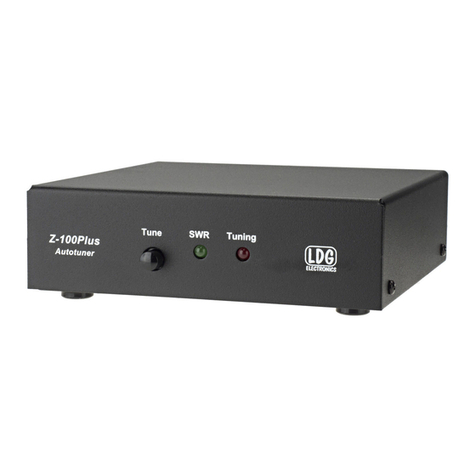
The Z-100Plus tuner is designed for indoor operation only; it is not water resistant. If you use it
outdoors (Field Day, for example), you must protect it from the rain. The Z-100Plus is designed for
use with coax-fed antennas. If use with longwires or ladder-line-fed antennas is desired, an external
balun is required. The LDG RBA-4:1 or RBA-1:1 is ideal, depending on the antenna and
transmission line used.
Always turn your radio off before plugging or unplugging anything. The radio may be damaged
if cables are connected or disconnected while the power is on.
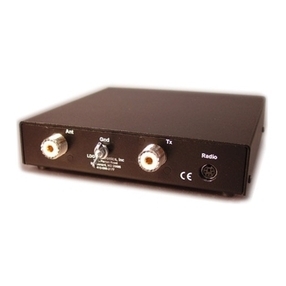
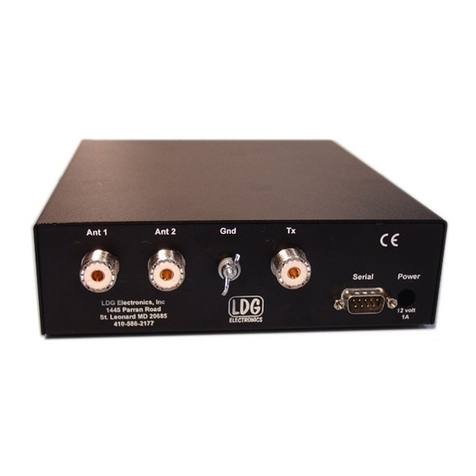
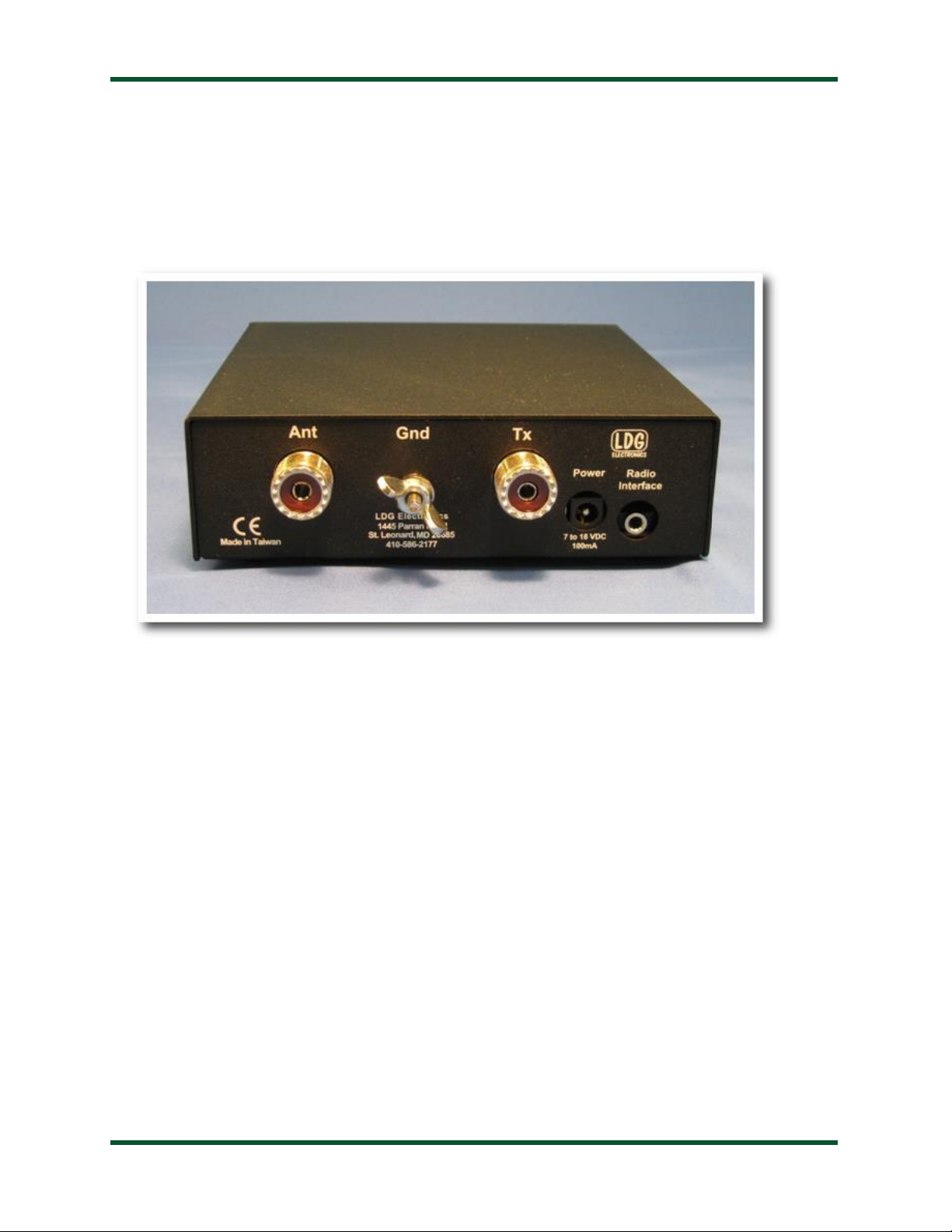
Connect the HF antenna jack on the transceiver to the Transmitter jack on the back of the Z-
100Plus, using a 50-ohm coax cable rated 125 watts or greater.
The Z-100Plus can interface directly with several popular transceivers. For Icom radios, it will
enable their “Tune” button to start a tuning cycle and provide power to the tuner.
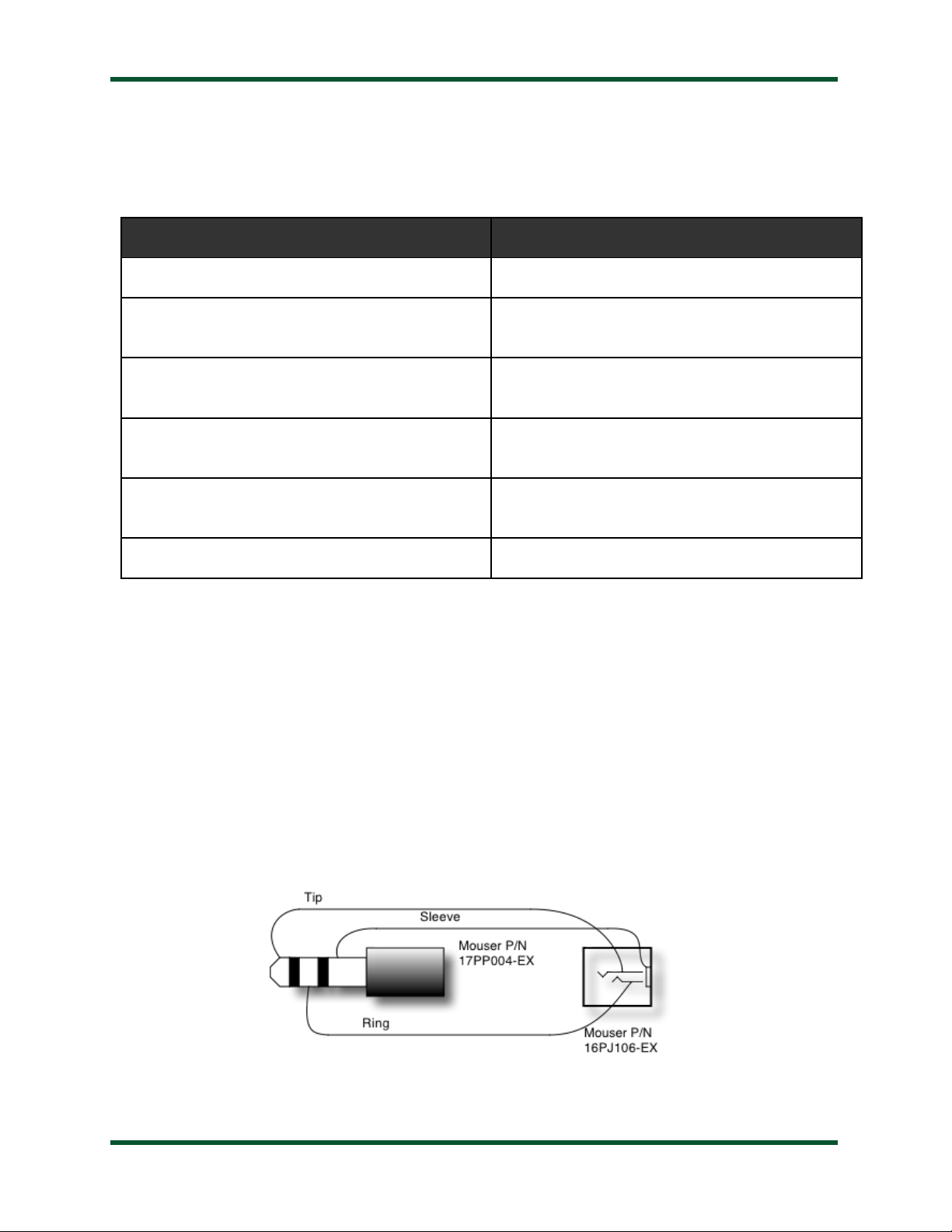
For Icom radios that are AH-3 or AH-4 compatible, connect the white Molex connector of the
optional IC-PAC or IC-PAC-6 Interface cable into the radio’s tuner port. The power and radio plugs
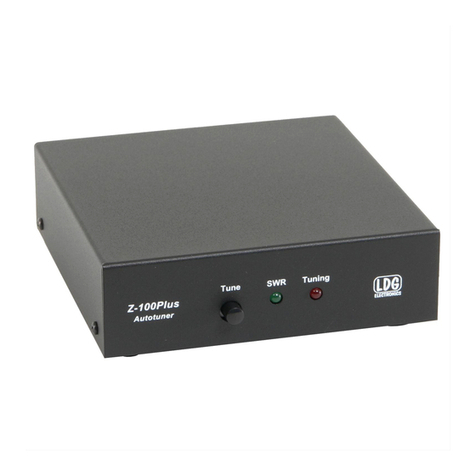
then connect to the tuner. The tuning process can start by either pressing the tune button on the tuner
or the radio.
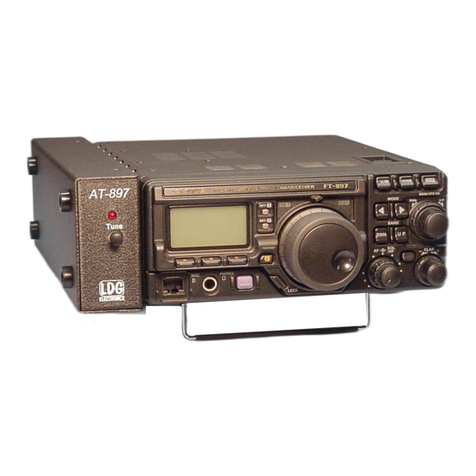
For Yaesu FT-897 and 857, use the optional Y-ACC cable and plug the red end marked “Radio”
into the radio’s ACC port. Connect the black end marked “Tuner” into the tuner’s interface jack.
The radio does not supply power to the tuner. The tune button on the tuner is used for starting the
tuning process.
If you are not using an Icom interface cable for powering the tuner, connect the Z-100Plus to a
source of DC power capable of providing 7 –18 volts DC at 300 mA, using the provided coaxial
connector (center positive), or install 8 AA batteries in included battery pack. If your radio is
powered by 12 VDC, you most likely can use the same power supply for the Z-100Plus.
Grounding the Z-100Plus tuner will enhance its performance and safety. LDG recommends that
you connect your tuner to a suitable ground; a common ground rod connected to buried radials is
preferred, but a single ground rod, a cold water pipe, or the screw that holds the cover on an AC
outlet can provide a serviceable ground. LDG strongly recommends the use of a properly installed,
high quality lightning arrestor on all antenna cables.