manuals.online logo
Brands
  1. Home
  2. •
  3. Brands
  4. •
  5. Max-Thrust
  6. •
  7. Toy
  8. •
  9. Max-Thrust B-17 User guide

Max-Thrust B-17 User guide

Other Max-Thrust Toy manuals
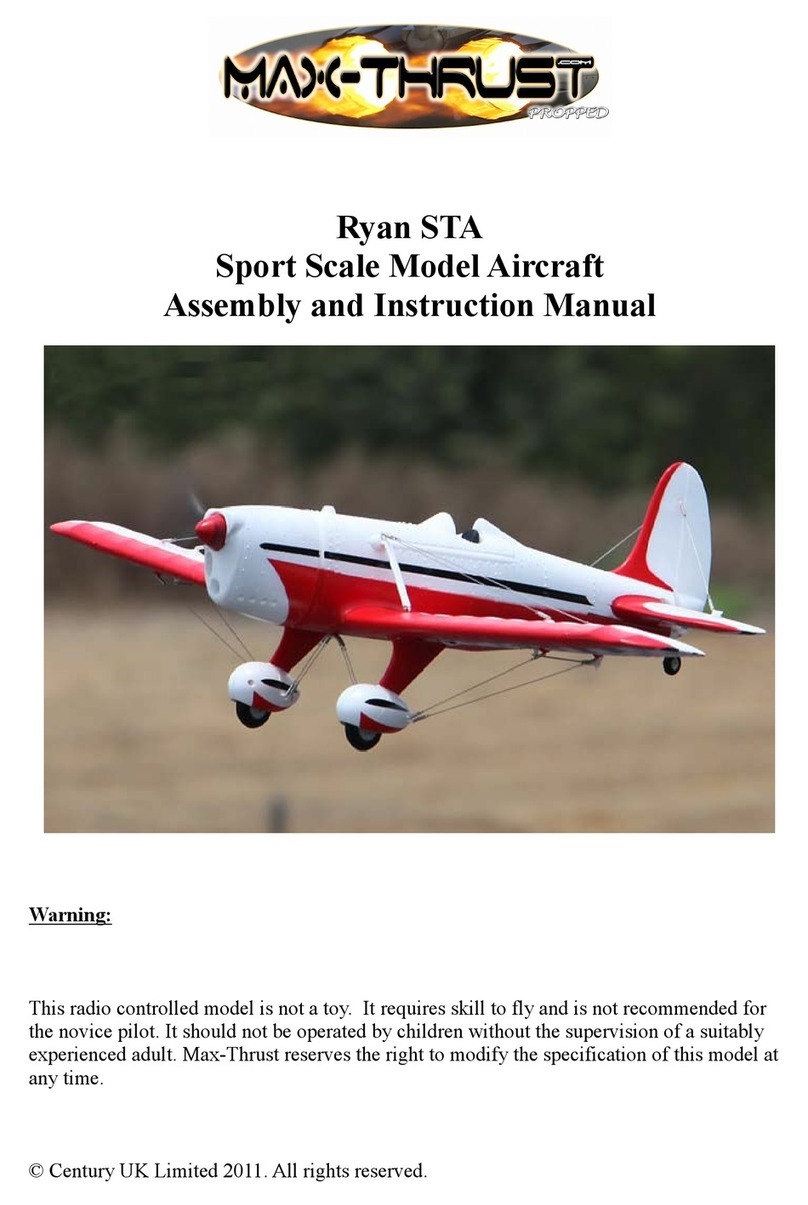
Max-Thrust Ryan STA User guide

Max-Thrust

Max-Thrust Ryan STA User guide
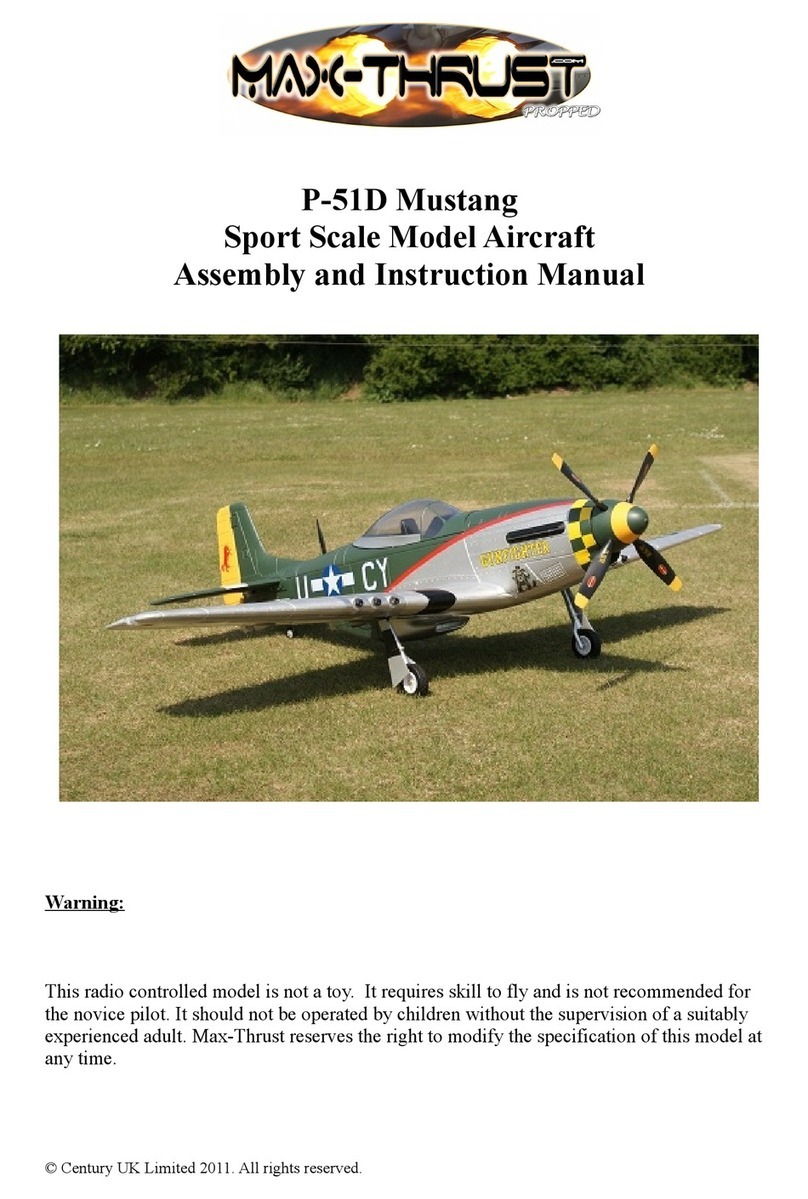
Max-Thrust P-51D Mustang User guide

Max-Thrust

Max-Thrust P-51D Mustang User guide

Max-Thrust Douglas A1 Skyraider User guide
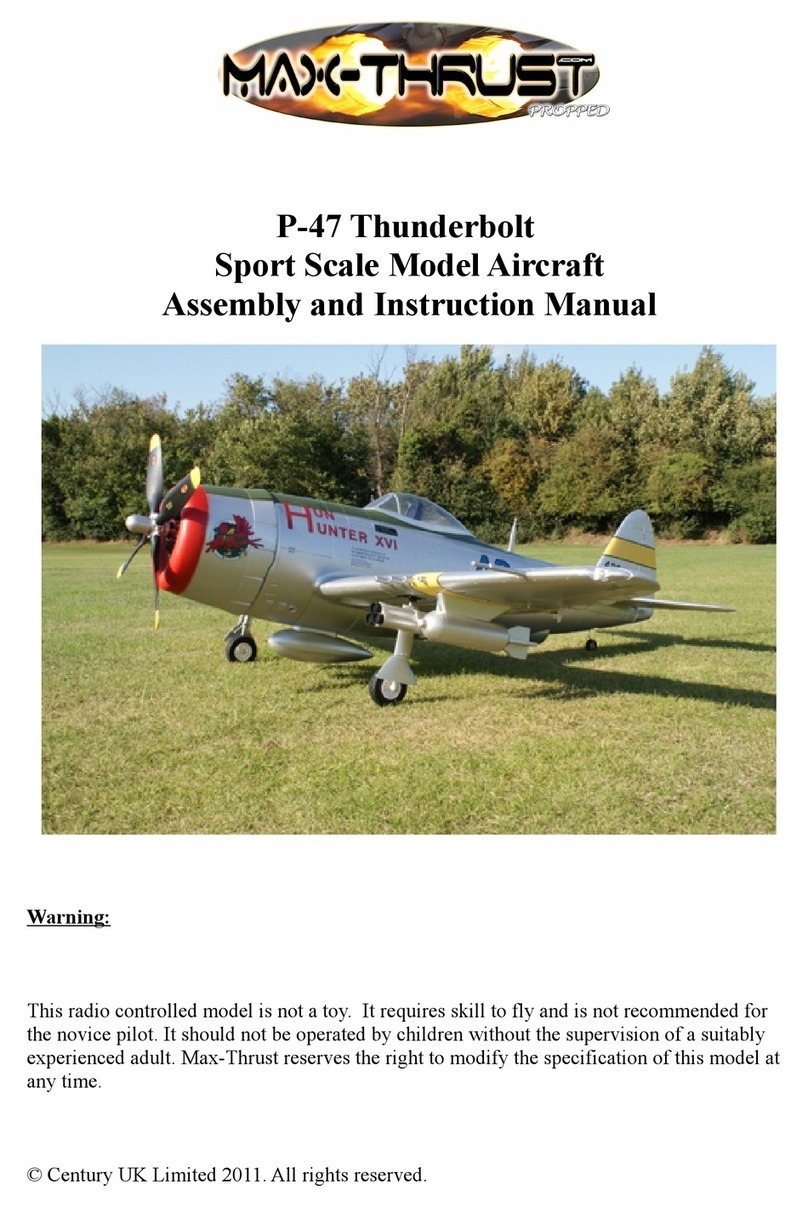
Max-Thrust

Max-Thrust Douglas A1 Skyraider User guide

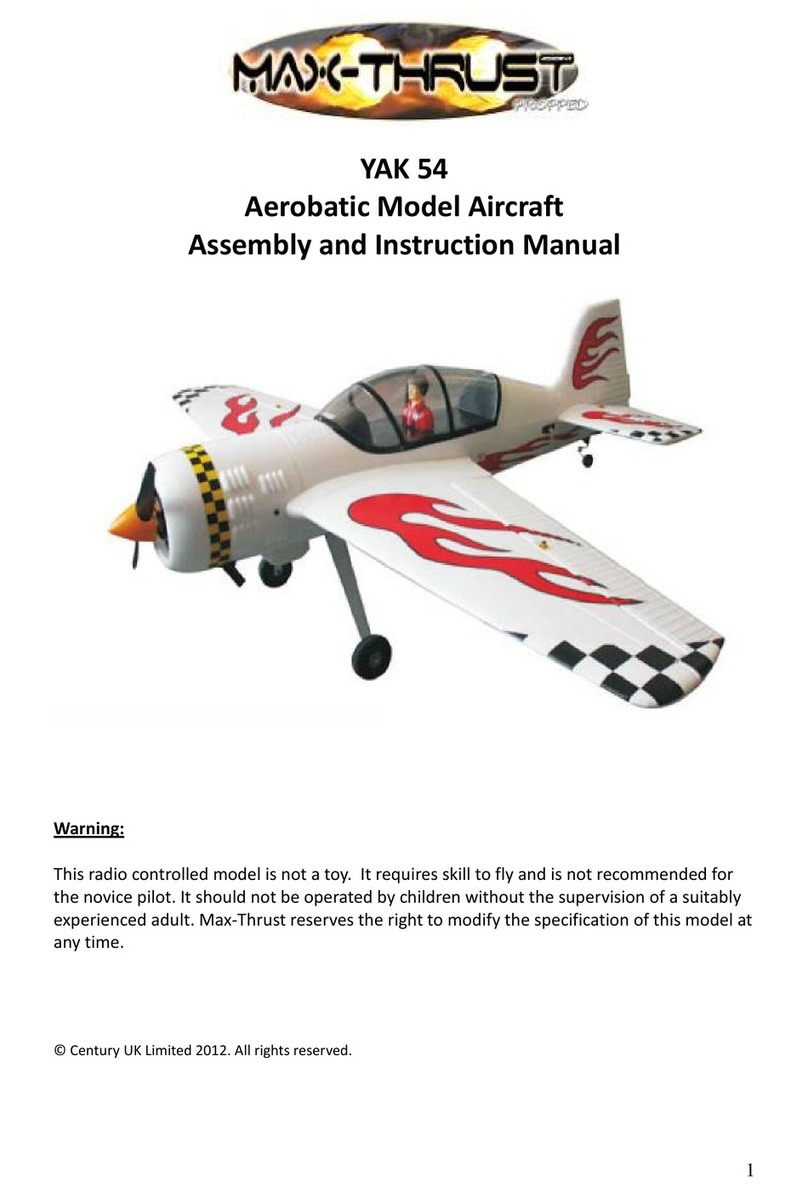
Max-Thrust P-47 Thunderbolt User guide
Max-Thrust

Max-Thrust P-47 Thunderbolt User guide

Max-Thrust YAK 54 User guide

Max-Thrust

Max-Thrust YAK 54 User guide
Max-Thrust Double Trouble Balsa Pro-Built Series User manual
Max-Thrust

Max-Thrust Double Trouble Balsa Pro-Built Series User manual

Max-Thrust RIOT User guide

Max-Thrust

Max-Thrust RIOT User guide
Max-Thrust MAX TRAINER Balsa Pro-Built Series User manual
Max-Thrust

Max-Thrust MAX TRAINER Balsa Pro-Built Series User manual

Max-Thrust APPRENTICE User manual

Max-Thrust

Max-Thrust APPRENTICE User manual
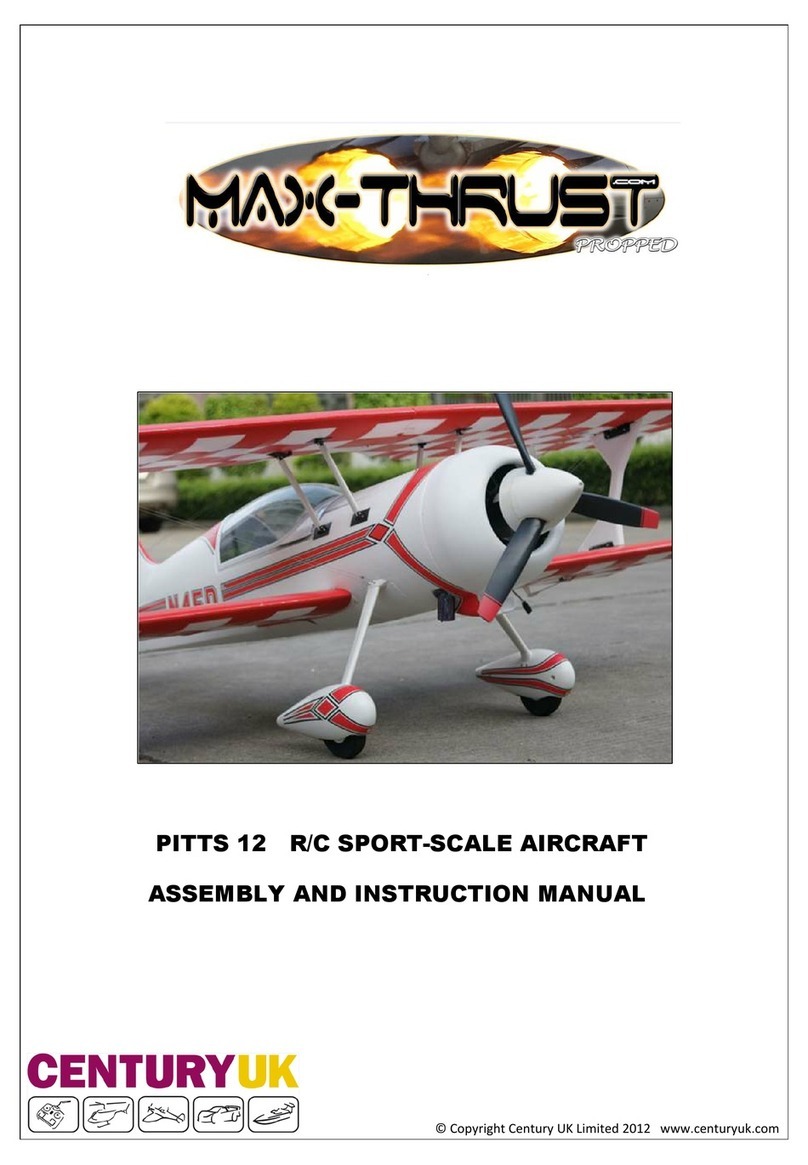
Max-Thrust PITTS 12 User guide

Max-Thrust

Max-Thrust PITTS 12 User guide
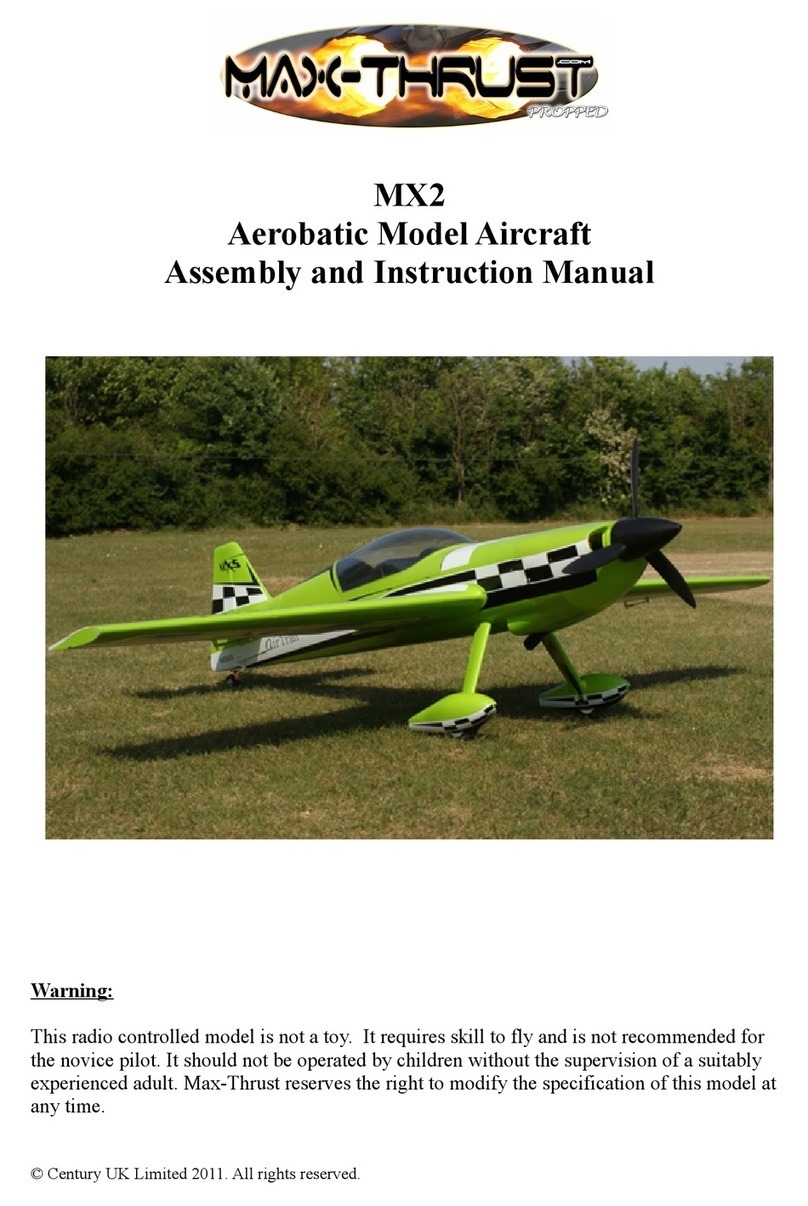
Max-Thrust MX2 User guide

Max-Thrust

Max-Thrust MX2 User guide

Max-Thrust Mini Viper Jet User instructions

Max-Thrust

Max-Thrust Mini Viper Jet User instructions

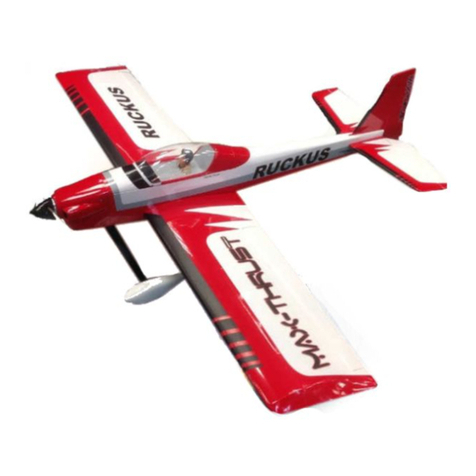
Max-Thrust Ruckus Balsa Pro-Build Series User manual

Max-Thrust

Max-Thrust Ruckus Balsa Pro-Build Series User manual

Popular Toy manuals by other brands
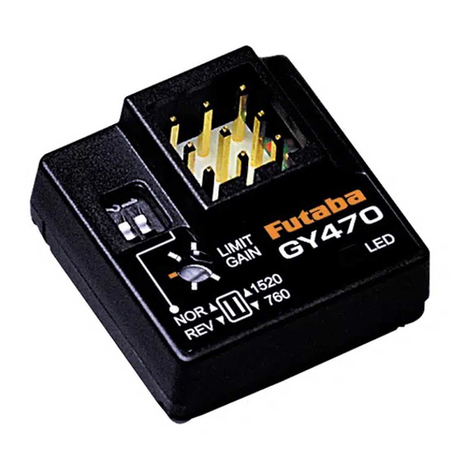
FUTABA GY470 instruction manual

FUTABA

FUTABA GY470 instruction manual

LEGO 41116 manual

LEGO

LEGO 41116 manual

Fisher-Price ColorMe Flowerz Bouquet Maker P9692 instruction sheet
Fisher-Price

Fisher-Price ColorMe Flowerz Bouquet Maker P9692 instruction sheet

Little Tikes LITTLE HANDIWORKER 0920 Assembly instructions

Little Tikes

Little Tikes LITTLE HANDIWORKER 0920 Assembly instructions

Eduard EF-2000 Two-seater exterior Assembly instructions
Eduard

Eduard EF-2000 Two-seater exterior Assembly instructions

USA Trains EXTENDED VISION CABOOSE instructions

USA Trains

USA Trains EXTENDED VISION CABOOSE instructions
Modellbau Laffont Z1601 Assembly instructions

Modellbau Laffont

Modellbau Laffont Z1601 Assembly instructions

NOCH 12905 instruction manual

NOCH

NOCH 12905 instruction manual

Eduard Ki-61-Id quick start guide

Eduard

Eduard Ki-61-Id quick start guide

Viessmann Vollmer 45616 Mounting instruction

Viessmann

Viessmann Vollmer 45616 Mounting instruction

Vollmer 42004 Mounting instruction

Vollmer

Vollmer 42004 Mounting instruction

Phoenix Model CLASSIC-EP instruction manual

Phoenix Model

Phoenix Model CLASSIC-EP instruction manual

H-KING Sopwith Camel British WW1 Fighter instruction manual

H-KING

H-KING Sopwith Camel British WW1 Fighter instruction manual

MODSTER Predator 4x4 Crawler user manual

MODSTER

MODSTER Predator 4x4 Crawler user manual

DHK Hobby 8136 User instruction manual

DHK Hobby

DHK Hobby 8136 User instruction manual

THUNDER TIGER Raptor 50 V2 kit manual

THUNDER TIGER

THUNDER TIGER Raptor 50 V2 kit manual

Timberkits Skateboarder instructions

Timberkits

Timberkits Skateboarder instructions

Hangar 9 Funtana 125 Assembly manual

Hangar 9

Hangar 9 Funtana 125 Assembly manual

manuals.online logo
manuals.online logoBrands
  • About & Mission
  • Contact us
  • Privacy Policy
  • Terms and Conditions

Copyright 2025 Manuals.Online. All Rights Reserved.

1
B-17 R/C SPORT-SCALE AIRCRAFT
ASSEMBLY AND INSTRUCTION MANUAL
© Copyright Century UK Limited 2012 www.centuryuk.com
2
Warning:
This radio controlled model is not a toy. It re uires skill to fly and is not recommended for use by
beginners without assistance from an experienced model pilot. It should not be operated by children
without the supervision of a suitably experienced adult.
Max-Thrust reserves the right to modify the specification of this model at any time.
Safety Precautions
1. Do not attempt to repair or modify this aircraft with non-factory parts.
2. Never fly this model over roads, railway lines, near to power lines, airports, do not fly this model in
excessively strong winds, in the rain, or thunderstorms.
3. Do not fly or launch the model towards people.
4. Keep hands and face away from rotating propellers at all times.
5. We strongly recommend that all fixings and fasteners used in the construction of this model are
checked regularly for integrity. Failure to do so could cause a crash, injury to yourself or others around
you.
6. We only recommend the use of 2.4GHz radio e uipment with this model
.
© Copyright Century UK Limited 2012 www.centuryuk.com
Disclaimer
1. This radio controlled model is not a toy. Used incorrectly it is capable of inflicting serious injury to
persons or damage to property. The owner/pilot assumes all responsibility for any damage to persons or
property resulting from the use of this product.
2. The manufacturer and distributor decline all responsibility for any liability arising from use of this
product.
3. It is very important that you follow all instructions for assembling and setting up of this model. Failure
to do so could result in a lo
ss of control and possibly a crash.
EPOFLEXY”
“EPOFLEXY” is a very tough and durable material perfect for the manufacture of model aircraft. When
using screwed fixings with “EPOFLEXY” components it is important to tighten the screws sufficiently to
provide a firm fixing.
Excess tightening could result in the foam material becoming compressed, possibly damaging or
distorting the part. Take care to ensure that all screws are tightened sufficiently to provide a firm fixing,
but do-not over tighten. We recommend that all fixings are checked regularly for security and safety
purposes.
3
Overview
Thank-you for purchasing this MAX-THRUST B-17 radio controlled model aircraft. The B-17 offers a
stunning combination of terrific looks and sensational flight performance. Manufactured from
“EPOFLEXY” it is extremely robust, however, in the event of a “less than perfect” arrival, we supply a
range of spares to get you flying again in the shortest time. It is capable of an impressive range of
aerobatic manoeuvres to thrill the experienced pilot, but with reduced control throws it provides a solid
and predictable flight performance, perfect for the sports-scale flyer.
We are certain you will enjoy your new model, please take the time to read this manual thoroughly and
understand its contents completely prior to commencing assembly.
© Copyright Century UK Limited 2012 www.centuryuk.com
Key Features
4 x Powerful Brushless Motors
4 x Brushless Electronic Speed Controllers
Efficient scale effect 3 Blade Propellers
Pre-Installed servos
Durable “EPOFLEXY” Construction
Retracting Main Undercarriage
Retracting Steerable Tail Wheel
Superb Flight Performance
High Brightness LED Lighting System
Specification
Wingspan: 2000mm
Length: 1450mm
Weight: 3500g
Motor: 4 x 4011 750KV Out-Runner Brushless
ESC: 4 x 45A Brushless
Servos: 10
Batteries Re uired: 2 x 2200 - 3350mAh 14.8v Li-Po (Not Included)
Recommended Batteries: 2 x Power-Tech 3350mAh 14.8V 33C (Order Code: PT-B-3333504S)
4
Parts List
1
2
3
4
5
6
1. Propellers x 4
2. Retracting Tail-wheel
3. Plastic Parts
4. Adhesive
5. Fuselage Assembly
6. Horizontal Tail-Plane
7. Wing Spar
8. Control Leads
9. Screws & Fixings
10. Servo Covers
11. Vertical Fin
12. Wings
7
8
9
10
11
12
© Copyright Century UK Limited 2012 www.centuryuk.com
5
© Copyright Century UK Limited 2012 www.centuryuk.com
1. Wing Assembly
Locate the left hand (port) wing panel. Secure a plastic
control horn and backing plate to the aileron using two
1.5mm x 15mm & two 1.5mm x 20mm screws, (image 1).
The 20mm screws are to be used closest to the hinge line.
Electrically centre the aileron servo, (do not attempt to
move any servos manually as this may damage them).
Connect the servo to the aileron horn with a 75mm long
control rod. The “Z” bend of the control rod should be
connected to the servo horn, (image 2). This permits
adjustment to the clevis if re uired at a later time.
Secure the servo cover in position using four 1.5mm x
6mm self- tapping screws, (image 3).
2
3
Secure a plastic control horn and backing plate to
the
flap with four 1.5mm x 15mm screws, (image 4). It may
be necessary to trim the backing plate to make it
perfectly fit the recess in the flap, (image 5 & 6).
Connect the servo to the flap with a 75mm long
control rod. The “Z” bend of the control rod should be
connected to the servo horn, (image 7). Secure the
servo cover in position using four 1.5mm x 6mm self-
tapping screws, (image 8). Repeat the process for the
right hand (starboard) wing panel.
6
Wing Joining
Locate the wooden wing spar and slide
halfway into the corresponding rectangular
aperture in the wing panel, (image 9).
Please note: the spar has a dihedral angle
and must be installed the correct way up,
(image 10).
Then fit the remaining wing panel onto the
wooden spar ensuring that none of the wires
are trapped between the panels, (image 11).
2. Horizontal Tail Plane
Secure a control horn to
one
elevator as shown using four 1.5
x 20mm screws, (image 12).
Connect the elevator servo to
the control horn using a 75mm
control rod. The “Z” bend of the
control rod should be connected
to the servo horn, (image 13).
Secure the servo cover in
position using four 1.5mm x
6mm self- tapping screws,
(image 14). The other side will
be completed after the tail
plane is fixed to the fuselage.
3. Vertical Fin
© Copyright Century UK Limited 2012 www.centuryuk.com
Secure the control horn to the rudder as shown using four 1.5 x 20mm screws,
(image 15). Connect the rudder servos to the control horn using the 100mm
control rod. The “Z” bend of the control rod should be connected to the servo
horn, (image 16). Secure the servo cover in position using four 1.5mm x 6mm self-
tapping screws, (image 17).
7
© Copyright Century UK Limited 2012 www.centuryuk.com
4. Fuselage
Slide the horizontal tail plane into the fuselage
slot as shown, (image 18). Make certain the tail
plane is centred correctly. Connect the remaining
elevator servo to its horn and fix the cover as
described in Section 2.
Locate the “Y” lead marked “2” and connect to
the two elevator servos. Route the remaining plug
through the fuselage toward the wing area.
Locate the “Y” lead marked “4” and connect one
leg to the tail-wheel steering servo. Locate the
extension lead marked “5” and connect to the
retracting tail wheel unit, (image 19). Route the
other end of this lead through the fuselage
towards the wing area.
Secure the retracting tail wheel unit in position
using the four M3 x 10mm self-tapping screws,
(image 20).
Centre the tail wheel steering servo and fit the
control horn in position. Electrically lower the
retracting tail wheel to ensure the plastic control
horn locates correctly with the control pin in the
servo horn, (image 21).
The remaining connector from the “Y” lead
marked “4” should now be connected to the
rudder servo, (image 22).
Slide the vertical fin and rudder assembly into
position on the fuselage. Make certain the rudder
servo wire is routed neatly. Secure the assembly
in position using the two M3 x 75mm screws,
(image 23.)
M3 x 10mm (x4)
(x1)
M3 x 75mm
(x2)
18
19
20
21
22
23
8
Fuselage (continued)
Fix the following scale detailing to the model
using the supplied foam adhesive. We
recommend that the adhesive is used
sparingly. Using a cocktail stick makes accurate
application of the adhesive easy.
Apply sparingly!
Cockpit screen
Rear screen
Forward gun turret
Rear gun turret
Front observation dome
Aerial
Under
-
fuselage gun turret
©
Copyright Century UK Limited 2012 www.centuryuk.com
9
5. Radio Control
Connect the “Y” leads to the corresponding connections on the wing.
“Y” Lead No.1 = Connects to the two aileron servos.
“Y” Lead No.5 = Connects to the two main retract units, the remaining plug will be
connected to third retract unit in the tail once the wing and fuselage are joined.
“Y” Lead No.6 = Connects to the two flap servos.
“Y” Lead No.7 = Connects to the bomb doors.
Offer the wing to the fuselage, leading edge first, ensuring that all wiring is kept clear of the
wing seat. Secure the wing in place with the four M4 x 55mm screws.
We recommend that your receiver is mounted in the area behind the ESCs, using self-
adhesive “Velcro” tape.
You must adhere to the receiver manufacturer instructions regarding positioning and
aerial routing.
Connect the ESC power connectors to the motor power leads. You will note they are
numbered 1-4, make certain they are connected accordingly, 1-1, 2-2 etc.
The two servo type leads with only black and red wired from the ESCs supply power to the
wing lights. Connect them to the corresponding wires from the wings.
The lead marked “6” which is fed from one of the power supply cables with a red “T”
connector, is the UBEC. Plug this into any spare channel on your receiver.
The remaining servo control plugs should be connected to the appropriate control outputs
on your receiver.
6. Propellers
Please note that the propellers for this model are handed. When viewed from the front, the
left wing motors turn clockwise. The thread on the shafts of these motors is reversed, i.e.
anticlockwise to tighten.
The motors on the other wing rotate anti-clockwise when viewed from the front and have
handed propellers accordingly. The thread on these motors is conventional, i.e. clockwise
to tighten.
Propeller Rotation (
viewed from front)
© Copyright Century UK Limited 2012 www.centuryuk.com
10
Remove one nut from each motor shaft,
leaving the remaining nut tightened at the
end of the thread, (image23).
Slide the propeller onto the shaft and fix
securely in position with the remaining nut,
(image 24).
Note: It is essential that the propellers are
securely fixed. Failure to do so could result
in serious damage or injury.
The scale effect propeller nuts are simply
screwed onto the motor shafts, (image 25).
Please remember that the threads on the
shafts are handed!
Propellers (continued)
23
24
25
7. Battery Installation
Your flight batteries, (not included) need
to be firmly secured in the battery
compartment to prevent them from
moving in flight, (image 26). The model
includes one battery positioning strap,
however the batteries will re uire an
additional method of fixing to provide
ade uate security. Because most
experienced pilots will have a preferred
method of battery retention, this has not
been included with the model. We
recommend the use of self-adhesive
“Velcro” combined with additional
straps.
Image shows 2 x Power-Tech 3350mAh 4S Li-Po’s
© Copyright Century UK Limited 2012 www.centuryuk.com
26