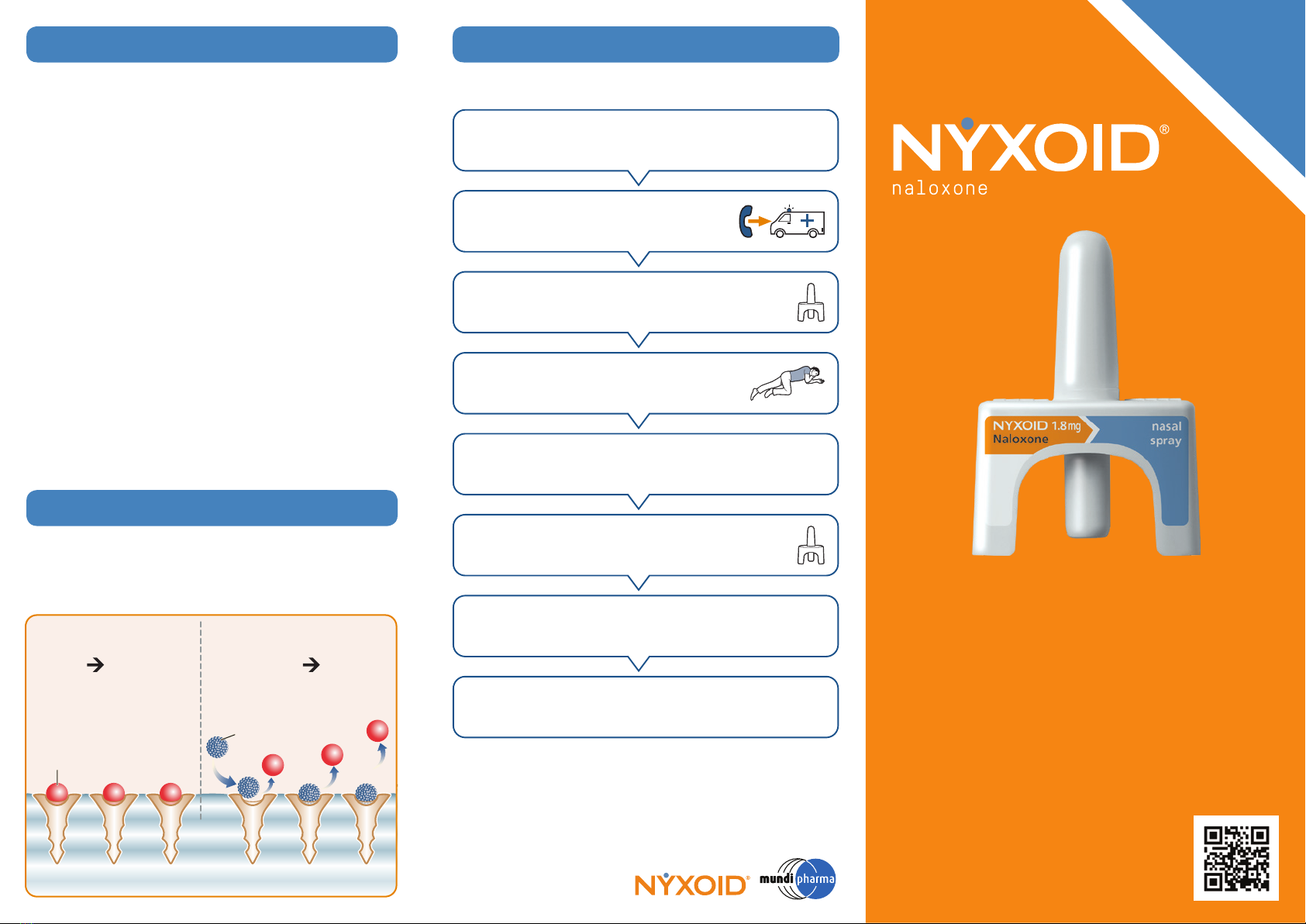
Check for signs of overdose
Give 1 spray of Nyxoid Monitor until help arrives
No response? Give 2nd dose
Take care for your own safety
When the ambulance arrives
Disposal of used nasal sprays
If you forget to give the used sprays to the paramedics, pass
them to a healthcare professional or pharmacist, and arrange
for replacements. Never throw away the sprays in water waste
or household waste.
Put into recovery position
Call an ambulance
lApproach with care. Check for dangers, such as injecting
materials that might lying around
lCheck for a response, to see if the person is conscious.
You can:
l shout their name
l gently shake their shoulders
l talk loudly into their ear
l rub their breastbone (sternum)
l pinch their ear or the bed of their fingernail
lCheck airways and breathing.
l Clear the mouth and nose of any blockages
l For 10 seconds, check for breathing – Is the chest moving?
Canyouhearbreathingsounds?Canyoufeelbreathonthe
cheek?
lCheck for signs of overdose, such as:
l no response to touch or sounds
l slow, uneven breathing or no breathing
l snoring, gasping or gulping
l blue or purple fingernails or lips
lIf an overdose is suspected Nyxoid should be given
lStay with the person. Watch for an improvement in
breathing, and their response to sound and touch
lIf the person is unconscious and not breathing normally,
give basic life support (such as CPR) if you are trained to
do so
lBe aware — even if they wake up, they may become
unconscious again, and stop breathing
lIf there’s no improvement after 2–3 minutes, or if
overdose symptoms come back: use a new Nyxoid
spray in the other nostril. You can do this while the
person is in the recovery position
lIf patient does not respond to two doses, further doses
may be given (if available)
lNyxoid can cause acute withdrawal symptoms if
the person is dependent on opioid drugs. Symptoms
can include:
• body aches and stomach cramps
• feeling sick, vomiting, diarrhoea
• sneezing
• sweating, fever, shivering or trembling
• nervousness, restlessness or irritability
Some people may seem to act aggressively as they wake up.
Take care for your own safety.
lImmediately tell them what has happened and that you
have given Nyxoid. Give them any used Nyxoid spray(s).
lPut your phone in loudspeaker mode if possible
to keep your hands free
lGive emergency services as much information as
you can, including:
l your exact location and postcode (if known)
l what substances you think the person may have taken
l whether they are conscious and breathing
l that you plan to give Nyxoid spray
Nyxoid is not a substitute for emergency medical
care or basic life support (such as CPR).
Always call for emergency
services immediately, even
if the person wakes up.
What to do: step-by-step
CD
APlace nearest arm at
right angle
to body,
with arm
bent
BBring other arm
across chest
Place back of
person's hand
against cheek
Grasp far leg
just above knee
Lift knee
Roll person
towards you,
onto their
side
Support head, keeping
back of hand against cheek
Final position:
Hand supports
head
Top leg bent at hip and knee
Lay the person on their back.
Support the back of the neck,
and let the head tilt back.
Clear away anything you see
blocking their nose.
B
Peel off the back of the
Nyxoid container.
Remove the nasal spray and
place it within easy reach.
A
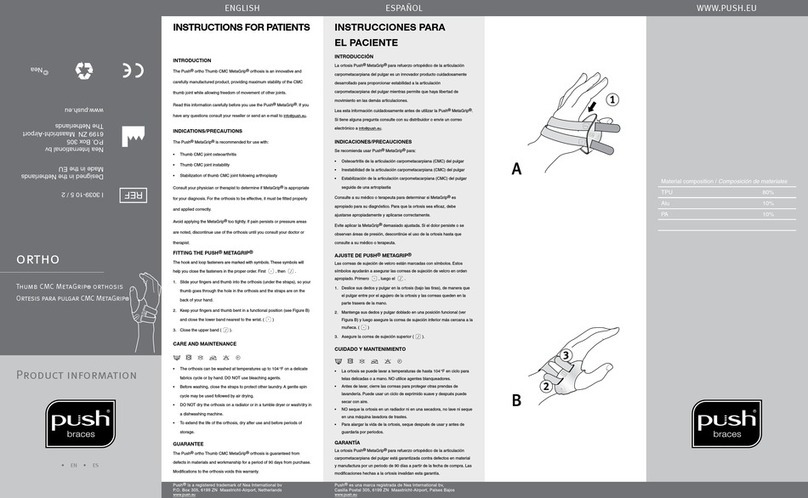
Hold the spray as shown —
first two fingers either side
of the nozzle, thumb ready
to push the plunger.
Don’t press to prime or
test before use.
C
Don’t
press yet
Gently insert the spray nozzle
into onenostril. Press firmly
on the plunger until it clicks
and gives the dose.
Remove the nozzle from
the nostril. If possible, note
which nostril you used.
Press
“Click”
D
1
3 5
6
7
8
4
2
!
!
Each nasal spray contains one dose only.
If you get any side effects, talk to your doctor, pharmacist or nurse.
This includes any possible side effects not listed in this leaflet.
You can also report side effects directly via HPRA Pharmacovigilance,
Website: www.hpra.ie. By reporting side effects you can help provide more
information on the safety of this medicine.