_______________________________________________________________________________________
_______________________________________________________________________________________
Page 8 of 16
3Torque Sensor Series 2000
The Series 2000 provides the easiest and most cost-effective entry into torque measurement technology.
3.1 Short description
The series is mainly used in test stands, automation processes, production lines e.g. end-of-line tests and
teaching.
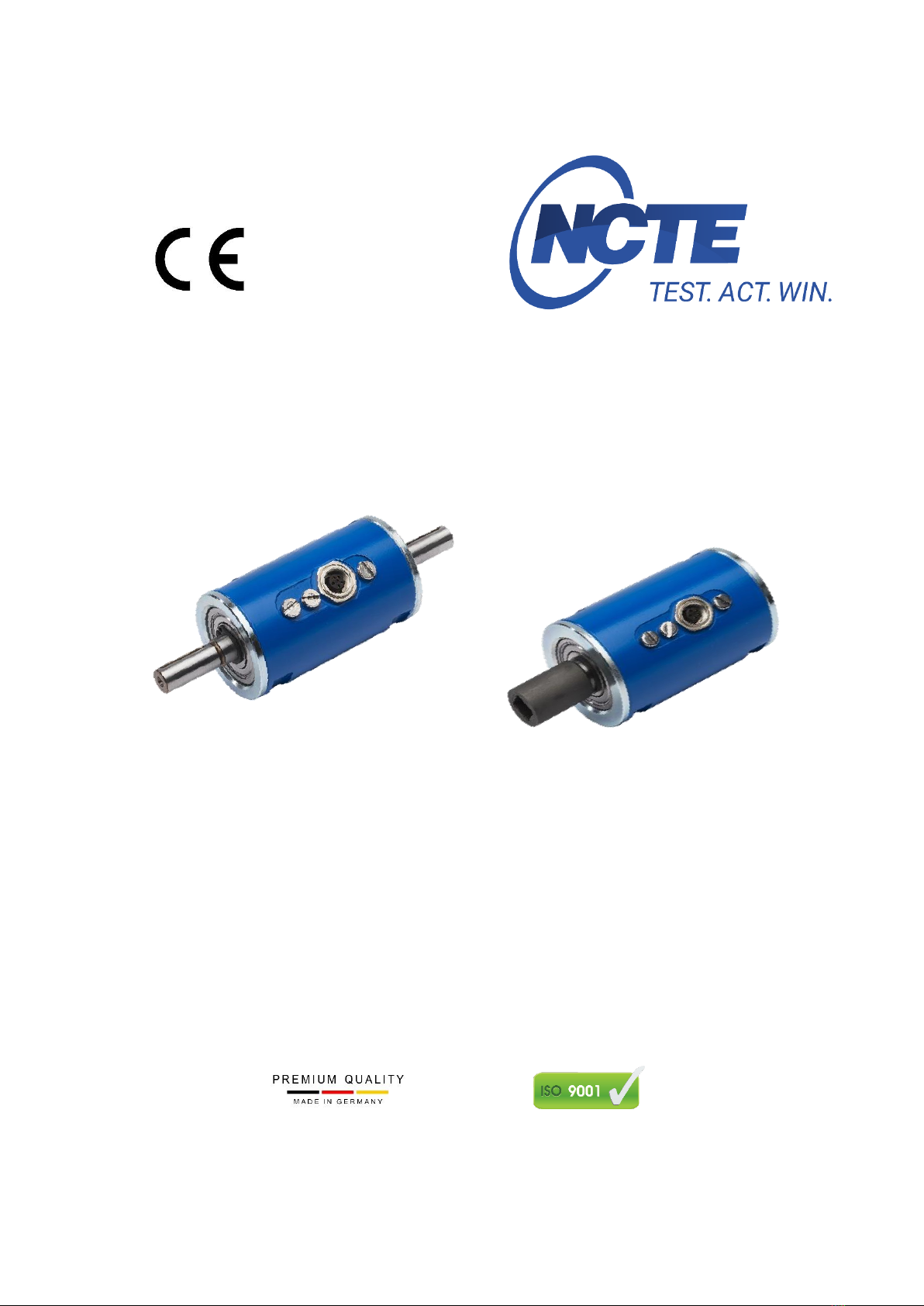
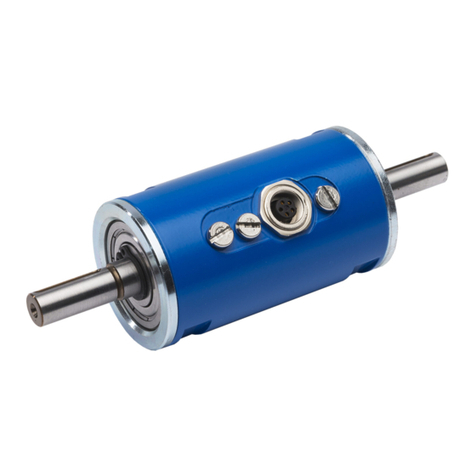
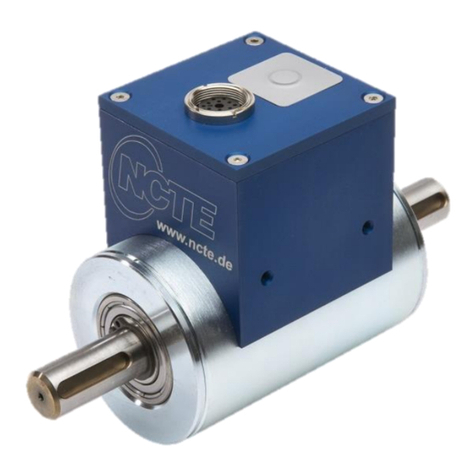
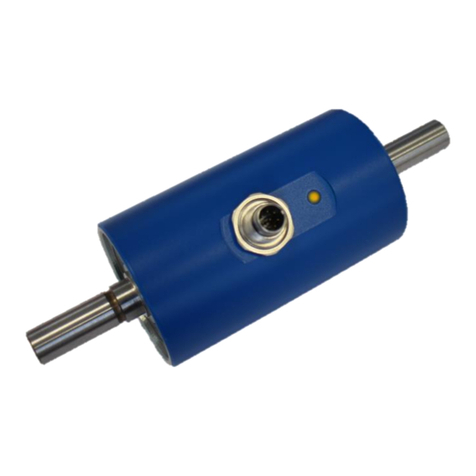
Torque measurement is possible both statically and dynamically. The mechanical connection is made via a
square shaft (series 2100) or round shaft (series 2200).
The Series 2000 provides an analog output signal with 0-5V.
The sensor is delivered as a ready-to-connect unit including 5m cable, keystones (round shaft) and calibration
certificate.
3.2 Assembly and disassembly
When mounting the sensor, make sure that the measuring shaft is exactly aligned with the connecting shafts
(corresponding couplings can be found in the accessories). It must then be possible to push the key adapters
/ square ends of the connection shafts onto the key adapter connections / square connections of the sensor
without any effort. No force must be exerted on the housing in the axial direction during fastening. The sensor
can be secured against rotation by means of the flat surface (optional sensor holder). The cable length must
not exceed 5m. Using a cable other than the one supplied by NCTE or an identical cable with a different cable
length may impair the function of the sensor system.
The disassembly may only be done without applying torque to the measuring shaft.
3.3 Interface description
Mechanical interfaces:
For power transmission, adapter connections are provided at both ends of the keystone round shafts.
In respect to square sensors, the shaft has square ends.
Electrical interface:
A socket for power supply and signal output is attached to the upper side of the housing.
(Pin assignment see Chapter “7 Wiring diagram")
3.4 Starting up
After mounting the sensor, the following must be observed:
Switch on power supply and check voltage value.
(Voltage peaks at the sensor must be avoided, devices must be checked accordingly before
connection to the sensor)
Connect the sensor to the power supply. (using the cable supplied).
Record the output signal of the sensor with high resistance.
(e.g. A/D converter, oscilloscope, PC measuring card)
Record output signal in mechanically unloaded state of the sensor.