Page of 63
power source and cord recommendations in this manual.
•Do not abuse the cord. Never carry a portable tool by its power cord, or yank tool or extension
cords from the receptacle. Keep power and extension cords away from heat, oil, sharp edges or
moving parts. Replace damaged cords immediately. Damaged cords may cause a fire and
increase the risk of electric shock.
•Grounded tools must be plugged into an outlet properly installed and grounded in accordance
with all codes and ordinances.Never remove the grounding prong or modify the plug in any way.
Do not use any adapter plugs. Check with a qualified electrician if you are in doubt as to
whether the outlet is properly grounded.
•Double insulated tools are equipped with a polarized plug (one blade is wider than the other).
This plug will fit in a polarized outlet only one way. If the plug does not fit fully in the outlet,
reverse the plug. If it still doesn’t fit, contact a qualified electrician to install a polarized outlet. Do
not change the plug in any way.
•Avoid body contact with grounded surfaces such as pipes, radiators, ranges, and refrigerators.
There is an increased risk of electric shock if your body is grounded.
•When operating a power tool outside, use an outdoor extension cord marked “W-A” or “W.”
These cords are rated for outdoor use and reduce the risk of electric shock.
•Extension Cord Use:
A. Use only ‘Listed’ extension cords. If used outdoors, they must be marked “For Outdoor Use.”
Those cords having 3-prong grounding type plugs and mating receptacles are to be used
with grounded tools.
B. Replace damaged or worn cords immediately.
C. Check the name plate rating of your tool. Use of the improper size or gauge of extension
cord may cause unsafe or inefficient operation of your tool. Be sure your extension cord is
rated to allow sufficient current flow to the motor. For the proper wire gauge for your tool,
see the chart.
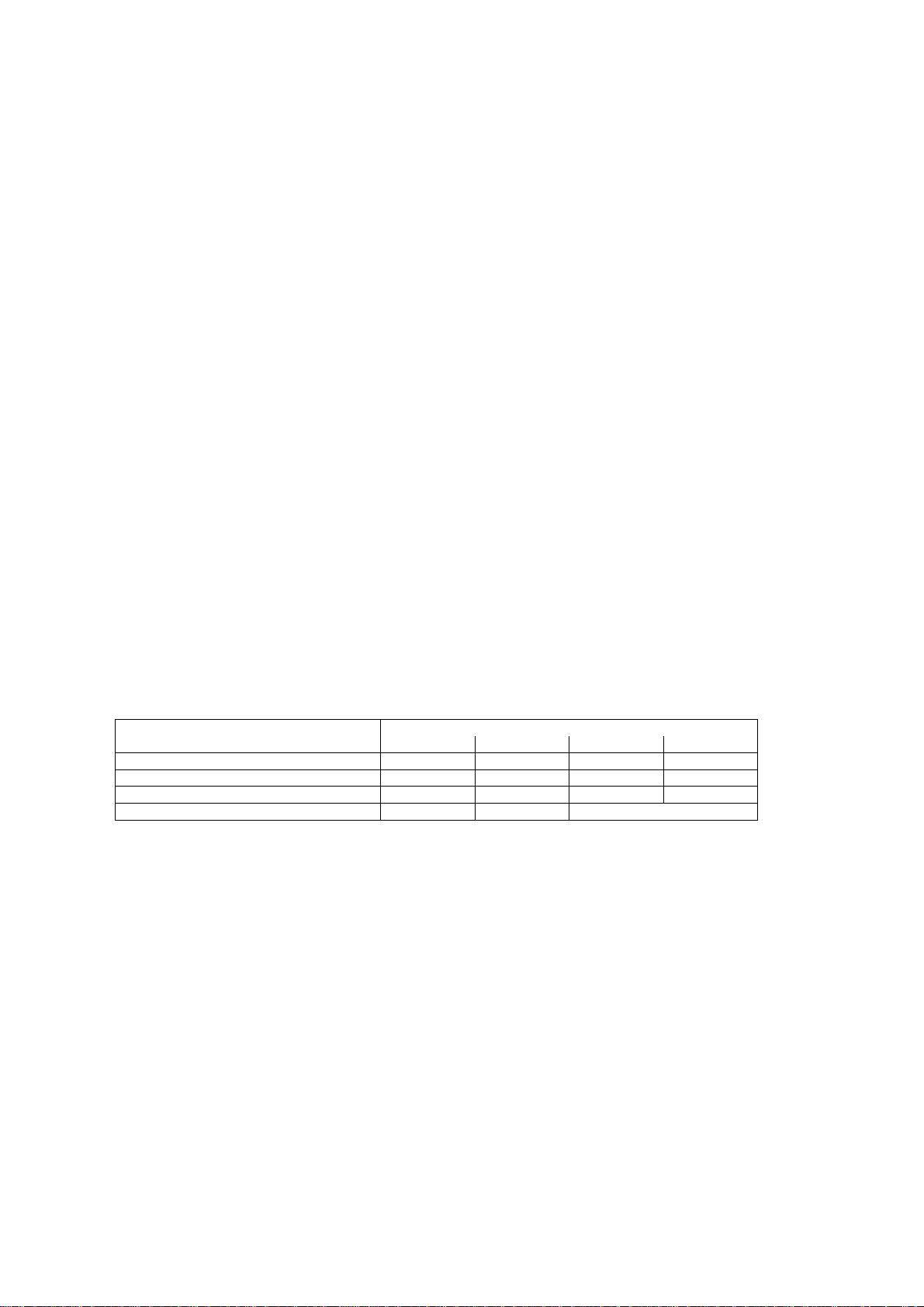
CHART FOR MINIMUM WIRE SIZE OF EXTENSION CORD:
Nameplate AMPS CORD LENGTH
25’ 50’ 100’ 150’
0-6 18 AWG 16 AWG 16 AWG 14 AWG
6-10 18 AWG 16 AWG 14 AWG 12 AWG
10-12 16 AWG 16 AWG 14 AWG 12 AWG
12-16 14 AWG 12 AWG (NOT RECOMMENDED)
If in doubt, use larger cord.
Be sure to check voltage requirements of the tool to your incoming power source.
•Do not expose power tools to the rain or wet conditions. Water entering a power tool will
increase the risk of electric shock.
•Do not let your fingers touch the terminals of the plug when installing to, or removing from, the
outlet.
•Ground Fault Circuit Interrupters. If the work area is not equipped with a permanently
installed Ground Fault Circuit Interrupter outlet (GFCI), use a plug-in GFCI between the power
tool or extension cord and the power receptacle.
PERSONAL SAFETY
•Do not immerse this product in water or other liquid.
•Do not put this product close to open flame.
•Disconnect this product or remove its batteries before cleaning.
TOOL USE AND CARE