manuals.online logo
Brands
  1. Home
  2. •
  3. Brands
  4. •
  5. Numark
  6. •
  7. Music Mixer
  8. •
  9. Numark DM1002 MKII User manual

Numark DM1002 MKII User manual

Other Numark Music Mixer manuals

Numark MIXTRACK3 User manual

Numark

Numark MIXTRACK3 User manual

Numark DM 1820X User manual

Numark

Numark DM 1820X User manual

Numark DM925 User manual

Numark

Numark DM925 User manual

Numark RM6 User manual

Numark

Numark RM6 User manual

Numark PARTY MIX User manual

Numark

Numark PARTY MIX User manual

Numark PPD9000 Technical document

Numark

Numark PPD9000 Technical document

Numark DM1050 Technical document

Numark

Numark DM1050 Technical document

Numark M1A User manual

Numark

Numark M1A User manual

Numark HDMIX User manual

Numark

Numark HDMIX User manual

Numark CD MIX-1 Instruction manual

Numark

Numark CD MIX-1 Instruction manual

Numark M4 User manual

Numark

Numark M4 User manual

Numark DM1090 User manual

Numark

Numark DM1090 User manual

Numark CM200USB Technical document

Numark

Numark CM200USB Technical document

Numark M6 User manual

Numark

Numark M6 User manual

Numark DM-950 Technical document

Numark

Numark DM-950 Technical document

Numark DM3001X User manual

Numark

Numark DM3001X User manual

Numark DM900 "BLUE DOG" User manual

Numark

Numark DM900 "BLUE DOG" User manual

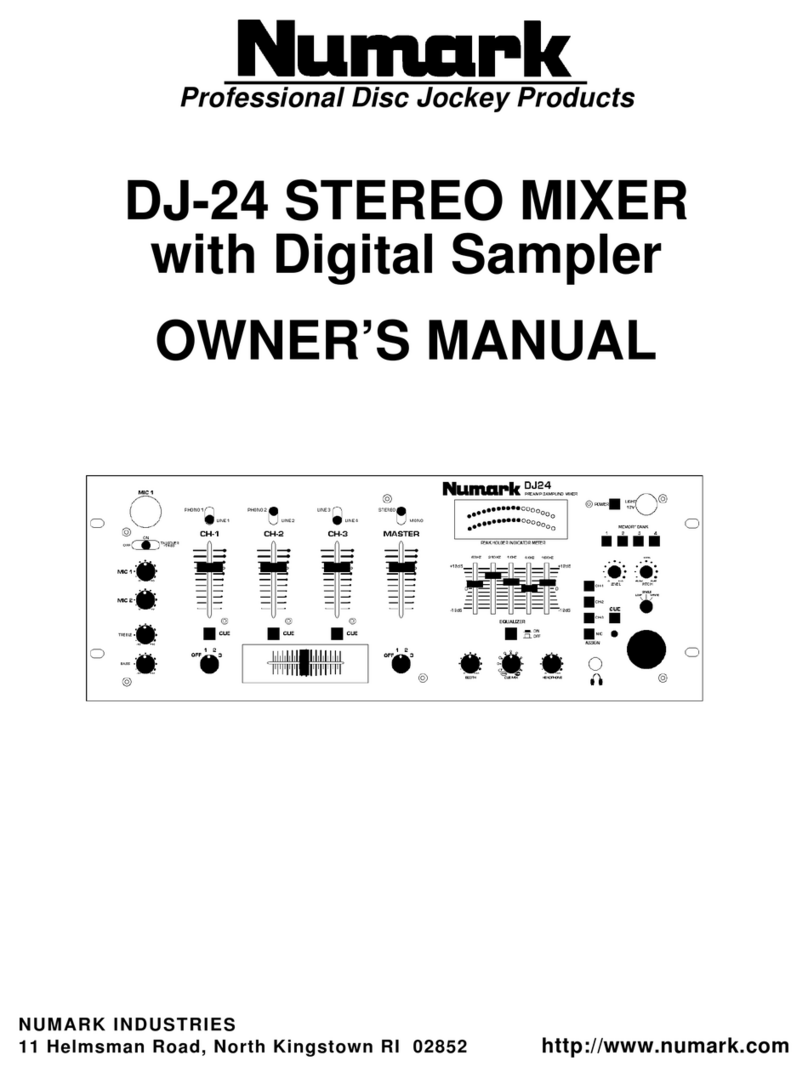
Numark DJ-24 User manual

Numark

Numark DJ-24 User manual

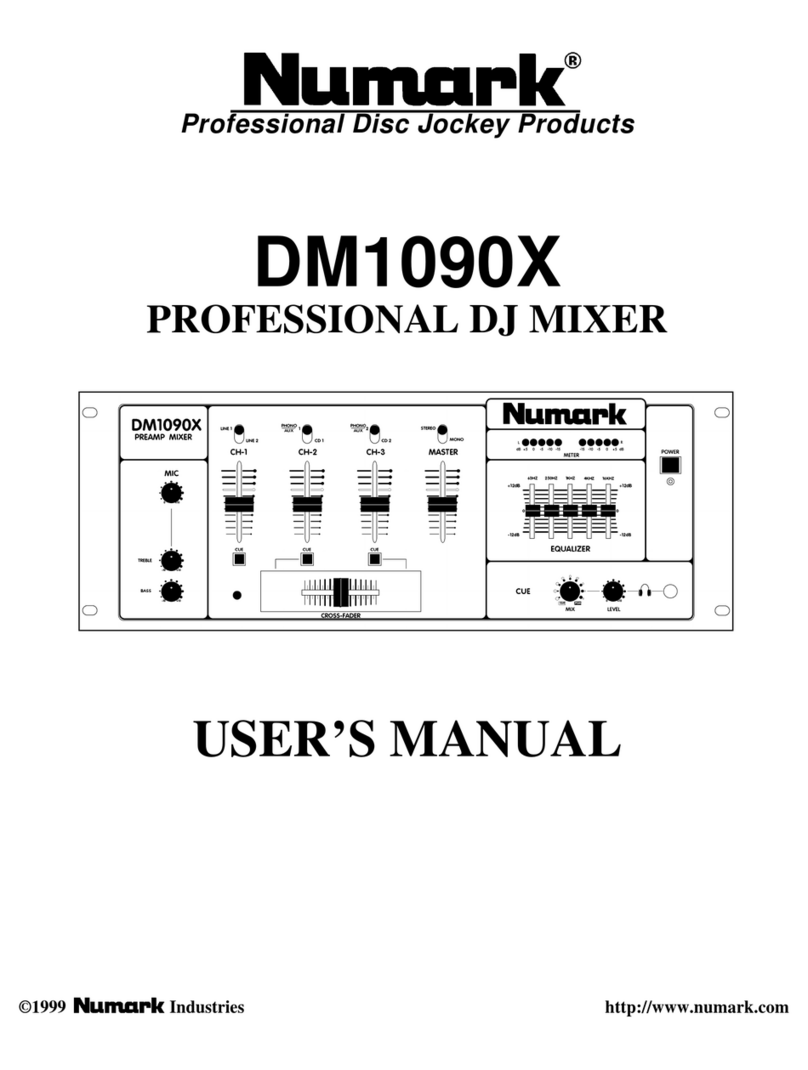
Numark DM1090X User manual

Numark

Numark DM1090X User manual

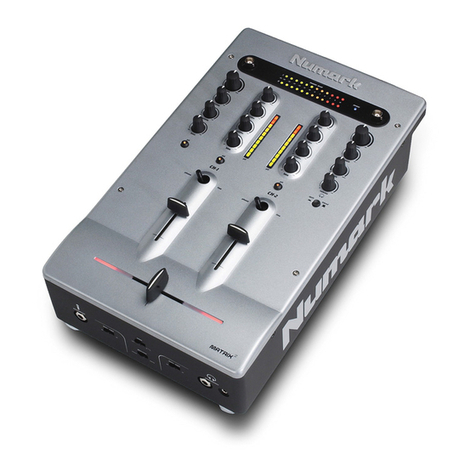
Numark MATRIX2 User manual

Numark

Numark MATRIX2 User manual

Numark X6 User manual

Numark

Numark X6 User manual

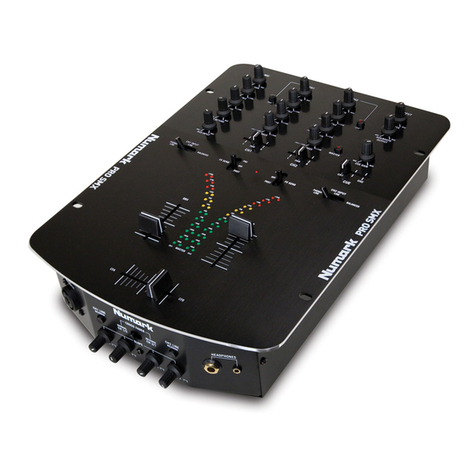
Numark Pro SMX User manual

Numark

Numark Pro SMX User manual

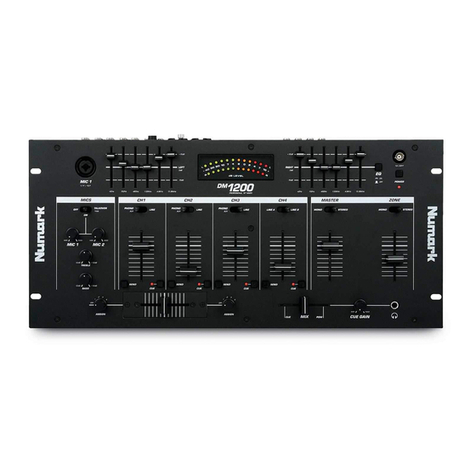
Numark DM1200 User manual

Numark

Numark DM1200 User manual

Numark M3 User manual

Numark

Numark M3 User manual

Popular Music Mixer manuals by other brands

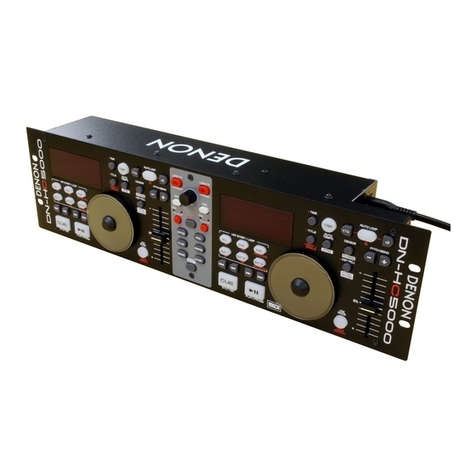
Denon DN-HC5000 - Serato ITCH Hardware/Software... Service manual

Denon

Denon DN-HC5000 - Serato ITCH Hardware/Software... Service manual

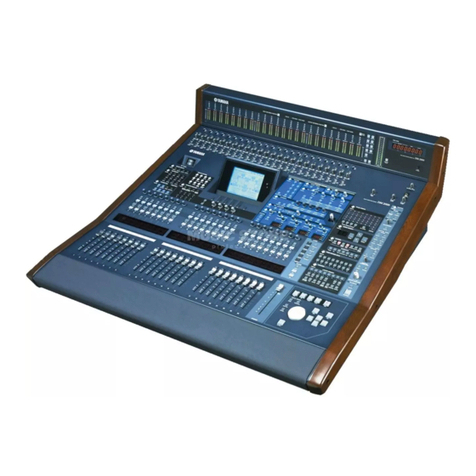
Yamaha WC42260 owner's manual

Yamaha

Yamaha WC42260 owner's manual

Vertiv KMMLED156 Quick installation guide

Vertiv

Vertiv KMMLED156 Quick installation guide

Yamaha EMX3000 user manual

Yamaha

Yamaha EMX3000 user manual

Mackie Onyx Analogue Mixer brochure

Mackie

Mackie Onyx Analogue Mixer brochure

Peavey S-32 Sanctuary Series Operation guide

Peavey

Peavey S-32 Sanctuary Series Operation guide

Rane MP 4 Operator's manual

Rane

Rane MP 4 Operator's manual

True T9 Touchscreen Console owner's manual

True

True T9 Touchscreen Console owner's manual

Studiomaster Air Pro 24 instruction manual

Studiomaster

Studiomaster Air Pro 24 instruction manual

Yamaha MV802 owner's manual

Yamaha

Yamaha MV802 owner's manual

Roland SoundCanvas SC-8820 owner's manual

Roland

Roland SoundCanvas SC-8820 owner's manual

Roland M-160 owner's manual

Roland

Roland M-160 owner's manual

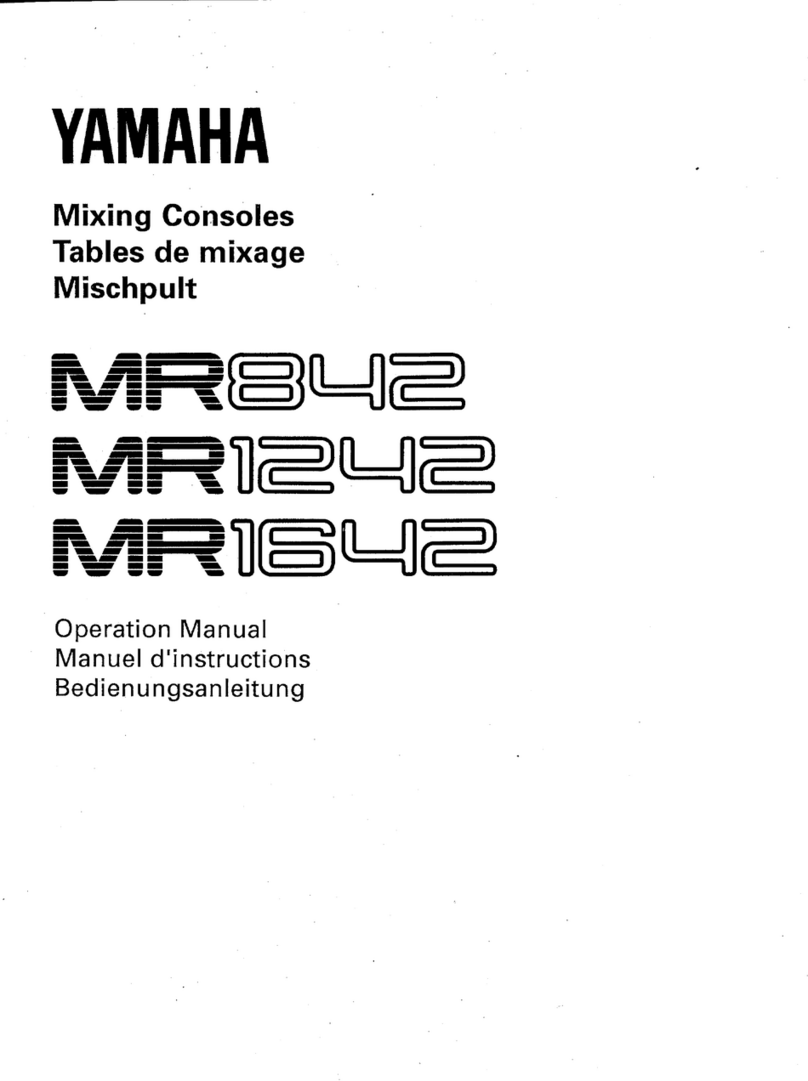
Yamaha MR1642 Operation manual

Yamaha

Yamaha MR1642 Operation manual

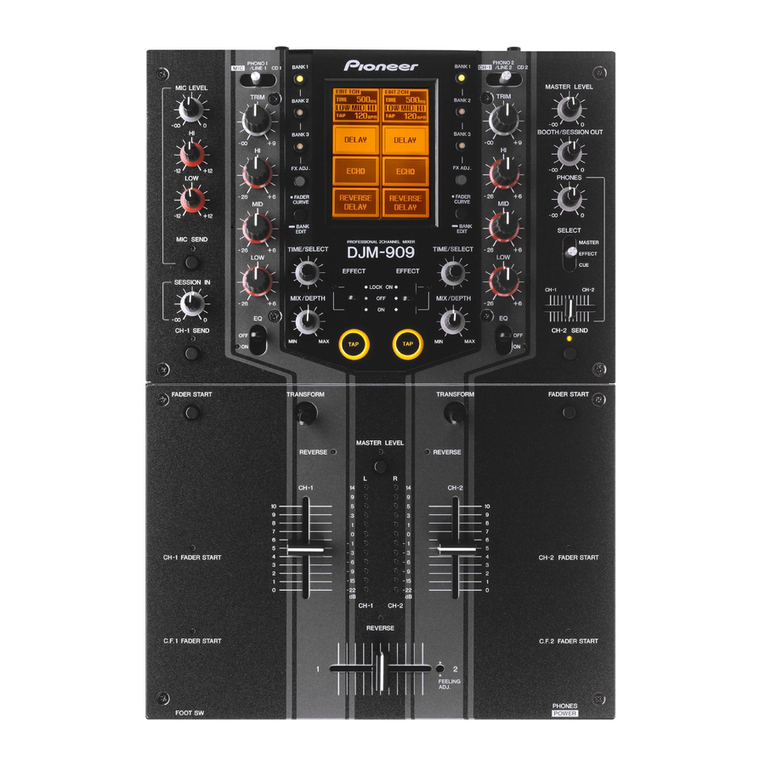
Pioneer DJM 909 - Battle Mixer W/Effects operating instructions

Pioneer

Pioneer DJM 909 - Battle Mixer W/Effects operating instructions

Veeder-Root TLS-350 Series System setup manual

Veeder-Root

Veeder-Root TLS-350 Series System setup manual

Alto APM80.QUAD user manual

Alto

Alto APM80.QUAD user manual

Omnitronic PM-211 user manual

Omnitronic

Omnitronic PM-211 user manual

SoundCraft B400 user guide

SoundCraft

SoundCraft B400 user guide

manuals.online logo
manuals.online logoBrands
  • About & Mission
  • Contact us
  • Privacy Policy
  • Terms and Conditions

Copyright 2025 Manuals.Online. All Rights Reserved.

PROFESSIONAL DJ MIXER
Quick Start Owner’s Manual
Manual de inicio rápido para el usuario
(ESPAÑOL)
Schnellbedienungsanleitung
(DEUTSCH)
Manuel d’utilisation du propriétaire
(FRANÇAIS)
Manuale rapido di utilizzazione
(ITALIANO)
CONTENUTO DELLA CONFEZIONE
•MIXER
•CAVI DI ALIMENTAZIONE
CONTENU DE LA BOÎTE
•MIXER
•BLOC D’ALIMENTATION
SCHACHTELINHALT
•MISCHPULT
•STROMKABEL
BOX CONTENTS
•MIXER
•POWER SUPPLY
CONTENIDOS DE LA CAJA
•MEZCLADOR
•FUENTE DE ALIMENTACIÓN
CD PLAYER CD PLAYER
TO PHONO 2 TO PHONO 1
TO LINE
TO LINE
HOUSE AMP
TO AMP
CD BURNER
TAPE DECK
FROM RECORD
OR
TO LINE
TO LINE
MIXER QUICK SETUP GUIDE (ENGLISH)
1. Make sure all items listed on the front of this guide are included in the box.
2. READ SAFETY INSTRUCTION BOOKLET BEFORE USING THE PRODUCT
3. Study this setup diagram.
4. Place mixer in an appropriate position for operation.
5. Make sure all devices are turned off and all faders are at “zero”
6. Connect all stereo input sources as indicated in the diagram.
7. Connect the stereo outputs to the power amplifier(s), tape decks, and/or audio sources.
8. Plug your mixer and other devices into AC power.
9. Switch everything on in the following order.
•audio input sources (i.e. turntables or CD players)
•your mixer
•last, any amplifiers
10. When turning off, always reverse this operation by,
•turning off amplifiers
•your mixer
•last, any input devices
11. Go to http://www.numark.com for product registration.
FRONT PANEL FEATURES
1. Power LED: Illuminates when the mixer is on.
2. Microphone Input: Microphones with a ¼”
connector can be connected to this input
terminal.
3. Mic Gain: This knob adjusts the volume of the
microphone input.
4. Tone Knob: This rotary knob adjusts the tone.
5. Channel Gain: This rotary control adjusts the
pre-fader input level.
6. Channel Treble: This rotary control adjusts the
high-tone level.
7. Channel Middle: This rotary control adjusts the
middle -tone level.
8. Channel Bass: This rotary control adjusts the
low-tone le vel.
9. Input Selector: This toggles select what input
source is routed to the channel from the rear
panel connected units.
10. Channel Fader: This slide fader is used to adjust
the level sent to program mix.
11. Headphone Jack: Your headphones can be
connected to this ¼” terminal. The volume
should always be set at its lowest setting while
connecting and disconnecting headphones to
prevent damage to headphones and/or your
hearing.
12. Headphone Volume: This rotary control adjusts
the volume level of the headphone output.
13. Tone Knob: This rotary knob adjusts the tone.
14. Cue Slider: Channels 1 and 2 can be previewed
using this mini-crossfader. Sliding this to the left
plays the left “channel-1” and sliding to the right
plays the right “channel-2”.
15. Replaceable Crossfader:This slide fader blends
audio between the channels assigned to the left
and right assign switches.
Note: This fader is user replaceable if it should
ever wear out. Simply remove the facepanel and
then remove the screws holding it in position.
Replace the fader with a quality authorized
replacement from your local Numark retailer.
16. Crossfader Direction: Activation of this switch
reverses the assignment of CH-1 and CH-2 on
the crossfader.
17. Crossfader Contour Control:The position of
this control determines how quickly or intensely
the crossfader will blend.
18. Transform buttons:
19. Master Output Knob:This rotary control
adjusts the main output volume.
20. Stereo Level Indicator: quickly and accurately
tracks level of audio.
21. KILL Switches: Eliminate High, Mid, or Low
frequencies for a unique effect.
REAR PANEL FEATURES
14
2 3
156
7
8
23
Note: It is recommended that the mixer be turned
off before connecting and disconnecting any
sources to the inputs of the mixer.
1. Phono Inputs: This input is used for connecting
your turntables through the sensitive RIAA phono
preamplifiers. Only turntables with phono level
output should be attached. Line level turntables
and other devices may be attached if the Phono/Line
rear panel switch is set to the line position.
2. Phono/Line Source Switch: This switch activates
and deactivates the sensitive RIAA phono
preamplifiers. Only turntables with phono level
output should be assigned when the switch is
in the phono position. Some turntables offer line
level output. To use these turntables and other line
devices like CD players, switch the input to Line.
3. GND: This screw connector should be used to secure
any turntables or other devices connected to the
mixer that need to be grounded.
4. Line Inputs: CD players, Tape Decks, Samplers or
other line level input devices should be connected to
these inputs.
5. Record Output: This RCA output is for connecting a
recording device such as a tape deck or CD recorder.
The level of the record output is based upon pre -
master levels.
6. Master Output (RCA): This output is for connecting
an external monitoring device such as a PA system,
powered monitors or a home stereo. The level of the
master stereo output signal is controlled by the
master fader.
7. AC In: This mixer is designed to work with the
power supply assembly that comes with the unit.
While the power is switched off, plug the power
supply into the mixer first, then plug it into the
outlet.
8. Power Switch: Use this switch to turn on the mixer
after all input devices are already connected to
prevent damage to your equipment. Turn the mixer
on before you turn on amplifiers and turn of
amplifiers before you turn off the mixer.