INSTALLATION INSTRUCTIONS
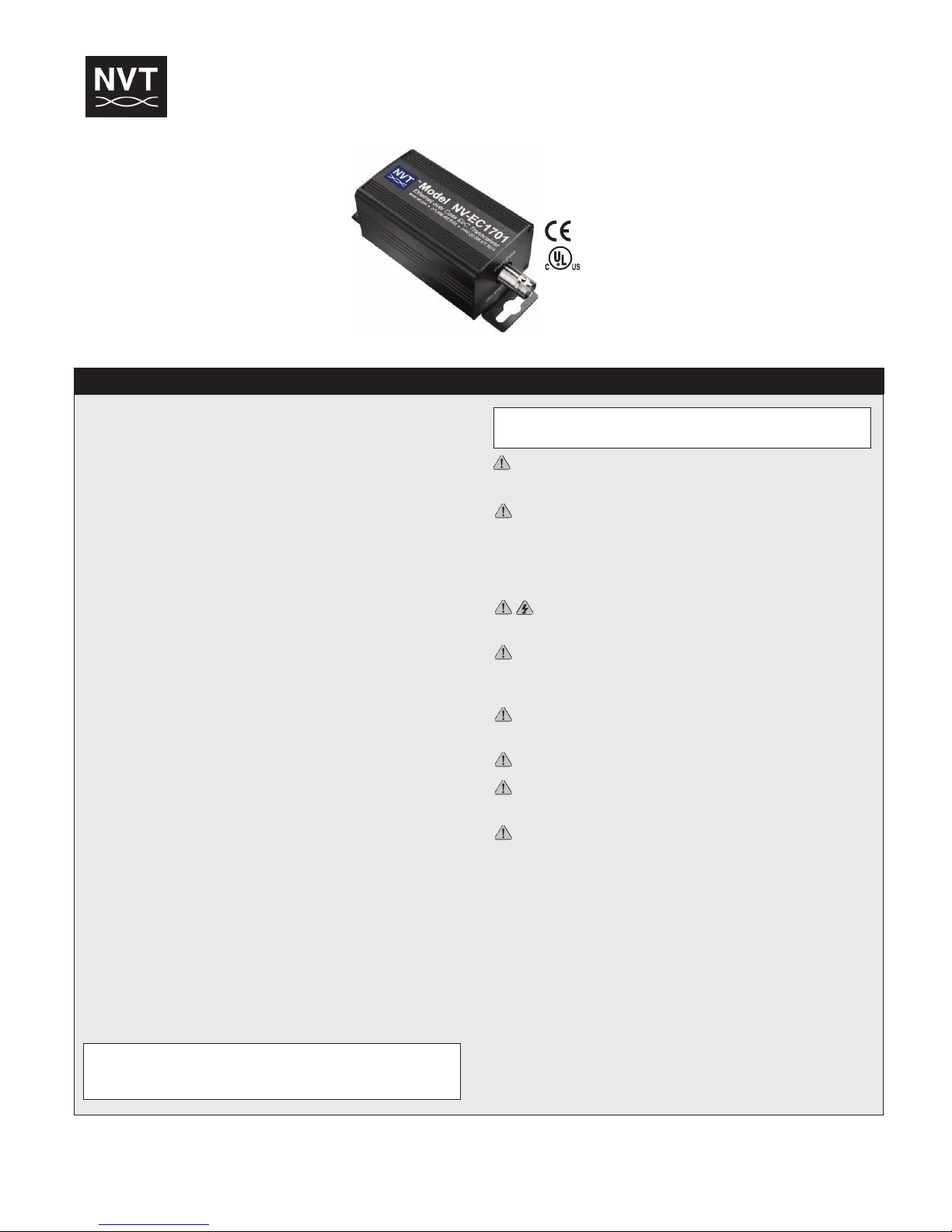
Model NV-EC1701 EoC Ethernet over Coax Transceiver
with PoE, PoE+, or High Power PoE
NV-EC1701 NV-EC1701
Model NV-EC1701
www.nvt.com ● (+1)650.462.8100 ● (+44) (0) 208 977 6614
Ethernet over Coax Transceiver
Model NV-EC1701
www.nvt.com ● (+1)650.462.8100 ● (+44) (0) 208 977 6614
Ethernet over Coax Transceiver
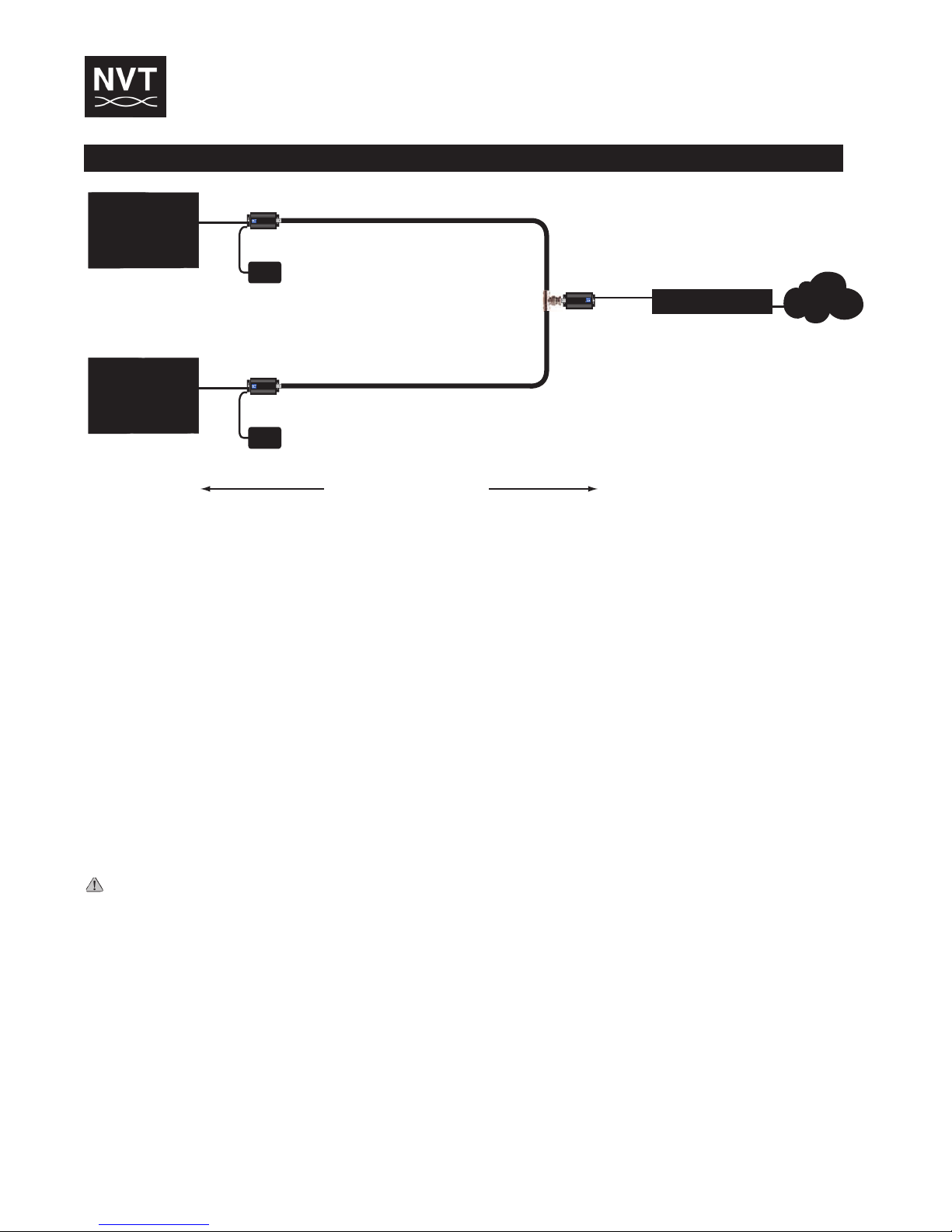
DVR / NVR
Hybrid DVR or NVR
Monitor
LAN/WAN
48VDC Power Supply
IP Camera
6Watt
≤ 1,850 ft (560 m) with a 48V power supply
≤ 4,800 ft (1,4600 m) with a 56V power supply
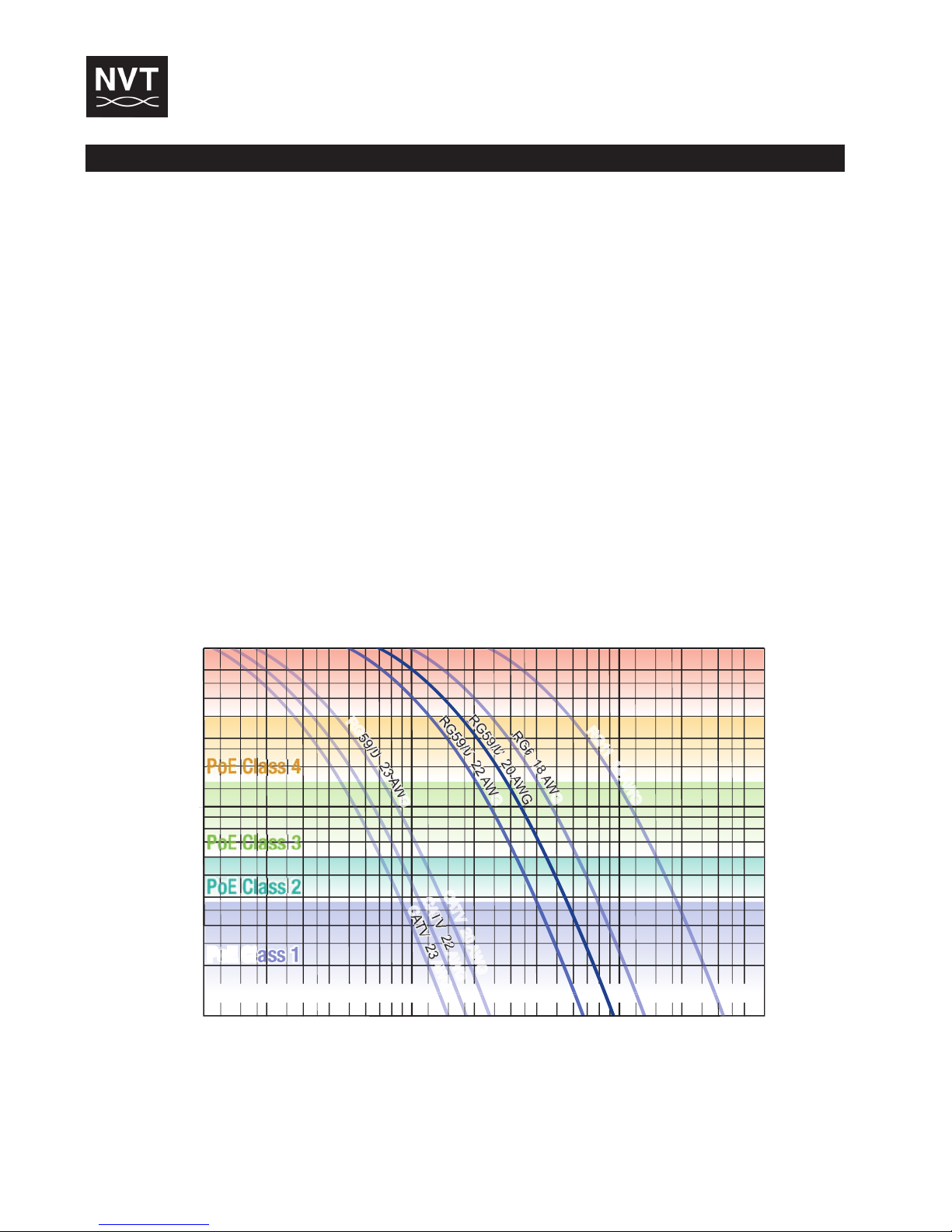
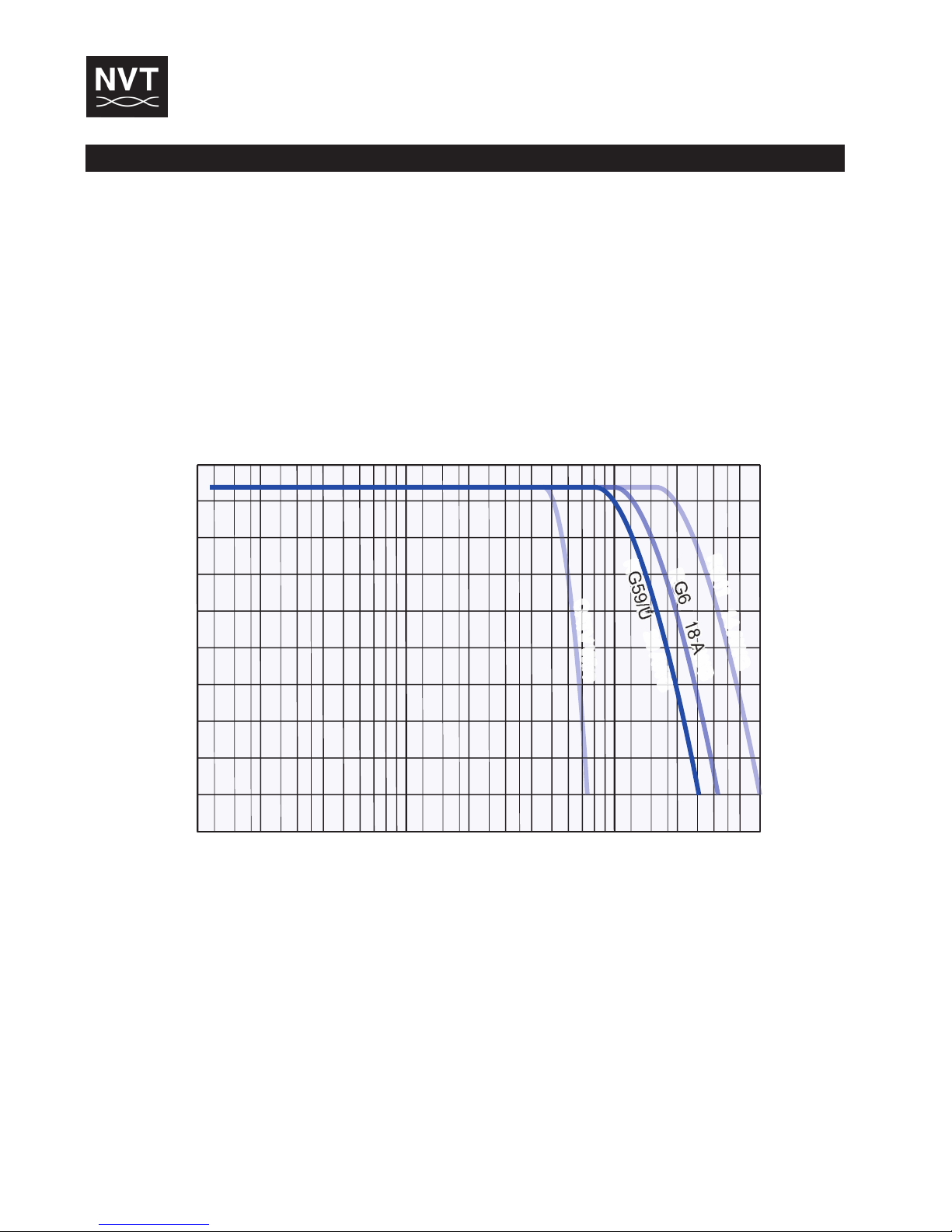
See wire distance charts on pages 8 & 9
or IP Distance Calculator available from www.nvt.com
RG 59/U 20AWG
Cat5
≤328ft
(≤100m)
≤328ft
(≤100m)
Cat5
Most installations that use the NV- C1701 transceiver involve
the replacement of an analog camera with an IP camera, while
reusing the installed coax cable. Since most IP cameras support
Po (Power over thernet), the legacy 24VAC distribution may no
longer be needed.
Disconnect all analog equipment from the coax before
installing the IP equipment. The NV- C1701 uses the coax
to deliver 48 or 56VDC. To prevent damage, never connect
analog cameras or analog control-room equipment to an
NV- C1701.
Transceiver Configuration
NVT oC transceivers m st be config red to communicate
exclusively with other transceivers within their Network Gro p.
The configuration process is described on page 3.
Connecting the Camera End
Install the new IP camera. Mount the NV- C1701 nearby.
Connect an RJ45 patch cable between the network connector
(Po ) of the camera and the RJ45 jack on the NV- C1701.
Connect the coax to the BNC jack on the NV- C1701.
For most installations, the IP camera power will be low enough,
and the coax distance short enough, so that the IP camera and
its NV- C1701 can receive power through the coax. In most
cases, a power supply will not be needed at this end. For addi-
tional details, see “High Power xtended Distance
Considerations” on page 7.
Connecting the Control-room End
Install a second NV- C1701 at the control-room end of the coax
cable.
If rack-mounting is desired, use the NV-RM C16 tray, which
supports up to four NV- C1701 transceivers, which together can
support up to 16 cameras.
Connect the coax cable to the BNC jack on the NV- C1701.
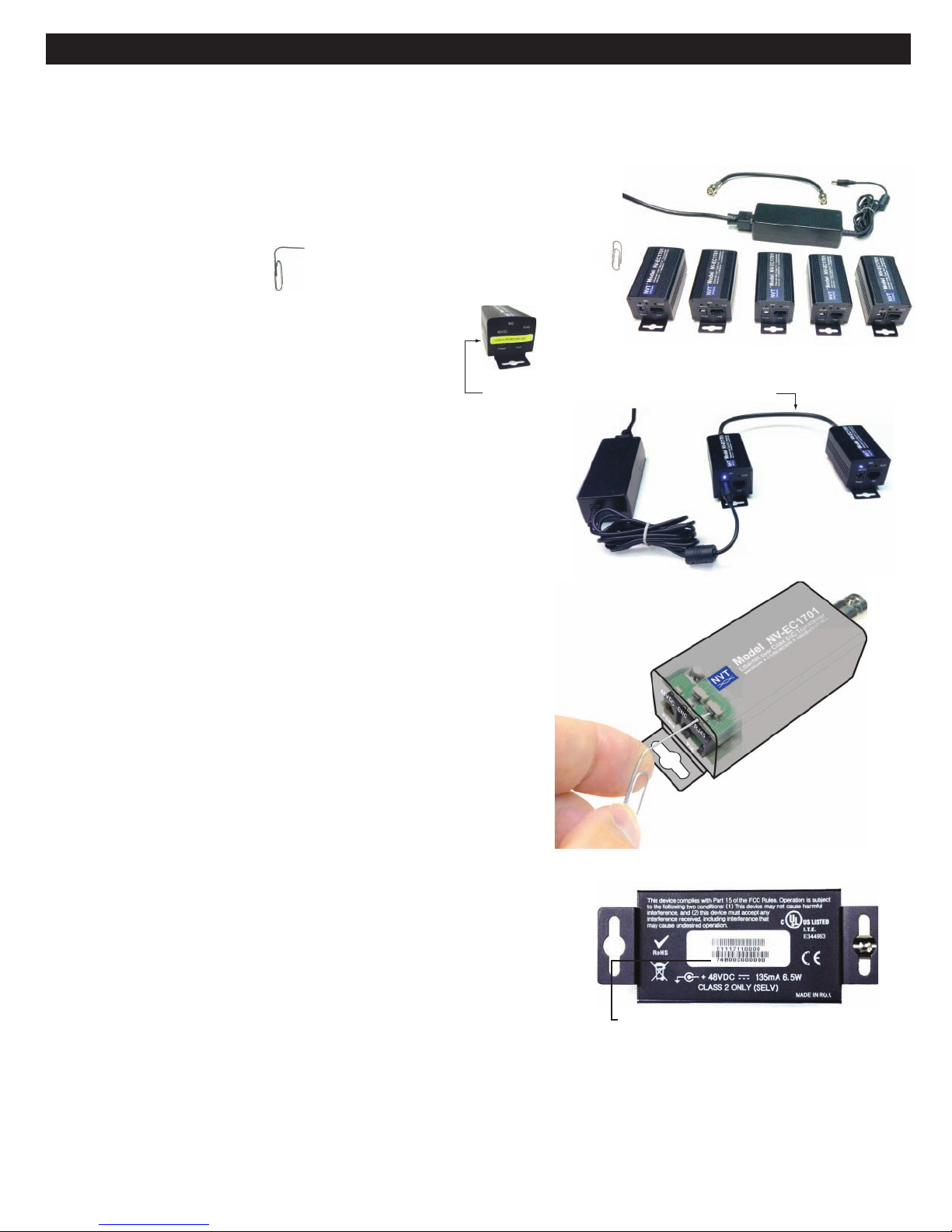
Connect a class 2 (S LV) 48V or 56VDC power supply to the
power jack on the NV- C1701. This will provide power to the
entire system, including the cameras. The Blue “Power” L Ds
will illuminate on both transceivers.
Connect an RJ45 patch-cord between the RJ45 jack on the
NV- C1701 and either: 1) an IP camera video input on a Hybrid
DVR, or 2) an thernet switch allocated for video. See “Hybrid
DVR Considerations” on page 5, or “NVR Considerations” on
page 6.
The Green L Ds will illuminate when a network link is estab-
lished, and will blink when data traffic is present.
The NV- C1701 communicates via the coax using
a bus-architecture. This means that up to four
remote camera-end NV- C1701s may be
connected together to a fifth NV- C1701 at the
control-room. The coax cables are connected
together using BNC splitters, available from NVT,
or elsewhere. If you purchase BNC “T” connectors
from another supplier, please purchase high
quality connectors. Low cost connectors have
been found to have intermittent shield connections.
Multiple IP cameras draw more current. To ensure
adequate power, see “High Power xtended
Distance Considerations” on page 7.
The NV- C1701 transceiver has been recently updated to
support full Po , Po +, or High-Power cameras, as well as non-
powered legacy devices.
Unlike conventional Po , voltage-drop and load current must be
confirmed by the installer. See “High Power xtended Distance
Considerations” on page 7.
NVT’s Class 2 current limiting ensures safety of the installation
during fault conditions, while delivering higher power (up to 90
watts) with more efficient allocation amongst loads. Up to two
power s pplies may be sed within a network gro p.
MULTIPLE CAMERAS
PoE CONSIDERATIONS
Fig re 1 - Typical Installation
Page 4 of 14
NV-BNCT
NV- C4BNCT