manuals.online logo
Brands
  1. Home
  2. •
  3. Brands
  4. •
  5. Rigol
  6. •
  7. Measuring Instrument
  8. •
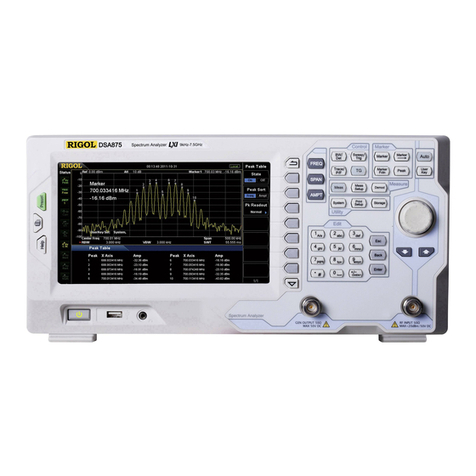
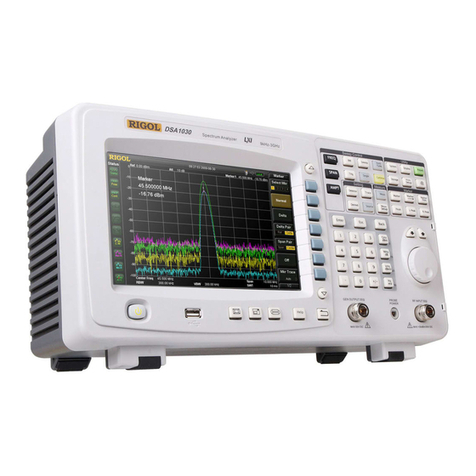
  9. Rigol DSA1000 Series Administrator Guide

Rigol DSA1000 Series Administrator Guide

Other manuals for DSA1000 Series

3

Other Rigol Measuring Instrument manuals
Rigol RP1002C User manual

Rigol

Rigol RP1002C User manual

Rigol DS1202Z-E User manual

Rigol

Rigol DS1202Z-E User manual

Rigol DM3058 User manual

Rigol

Rigol DM3058 User manual

Rigol RPL1116 User manual

Rigol

Rigol RPL1116 User manual

Rigol RSA3015N User manual

Rigol

Rigol RSA3015N User manual

Rigol DSA700 series User manual

Rigol

Rigol DSA700 series User manual

Rigol M300 Series User manual

Rigol

Rigol M300 Series User manual

Rigol RSA3045 User manual

Rigol

Rigol RSA3045 User manual

Rigol RSA5065 User manual

Rigol

Rigol RSA5065 User manual

Rigol RSA Series User manual

Rigol

Rigol RSA Series User manual

Rigol DSA700 series User manual

Rigol

Rigol DSA700 series User manual

Rigol PLA2216 User manual

Rigol

Rigol PLA2216 User manual

Rigol DL3032 User manual

Rigol

Rigol DL3032 User manual

Rigol DSA800 Series User manual

Rigol

Rigol DSA800 Series User manual

Rigol RSA3000 Series Installation and operation manual

Rigol

Rigol RSA3000 Series Installation and operation manual

Rigol DS1000CA series User manual

Rigol

Rigol DS1000CA series User manual

Rigol PHA0150 User manual

Rigol

Rigol PHA0150 User manual

Rigol DSA1000A Series User manual

Rigol

Rigol DSA1000A Series User manual

Rigol PCA1030 User manual

Rigol

Rigol PCA1030 User manual

Rigol DSA800E Series User manual

Rigol

Rigol DSA800E Series User manual

Rigol RP1002C User manual

Rigol

Rigol RP1002C User manual

Rigol RSA Series Operating instructions
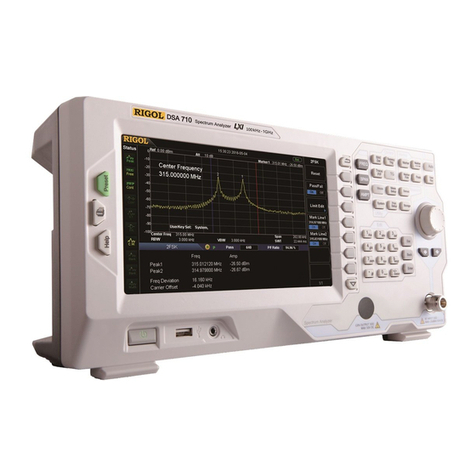
Rigol

Rigol RSA Series Operating instructions

Rigol PCA1500 User manual

Rigol

Rigol PCA1500 User manual

Rigol RP1003C User manual

Rigol

Rigol RP1003C User manual

Popular Measuring Instrument manuals by other brands
Powerfix Profi 278296 Operation and safety notes

Powerfix Profi

Powerfix Profi 278296 Operation and safety notes

Test Equipment Depot GVT-427B user manual
Test Equipment Depot

Test Equipment Depot GVT-427B user manual

Fieldpiece ACH Operator's manual

Fieldpiece

Fieldpiece ACH Operator's manual
FLYSURFER VIRON3 user manual

FLYSURFER

FLYSURFER VIRON3 user manual

GMW TG uni 1 operating manual

GMW

GMW TG uni 1 operating manual

Downeaster Wind & Weather Medallion Series instruction manual
Downeaster

Downeaster Wind & Weather Medallion Series instruction manual

Hanna Instruments HI96725C instruction manual
Hanna Instruments

Hanna Instruments HI96725C instruction manual

Nokeval KMR260 quick guide

Nokeval

Nokeval KMR260 quick guide

HOKUYO AUTOMATIC UBG-05LN instruction manual
HOKUYO AUTOMATIC

HOKUYO AUTOMATIC UBG-05LN instruction manual

Fluke 96000 Series Operator's manual

Fluke

Fluke 96000 Series Operator's manual

Test Products International SP565 user manual
Test Products International

Test Products International SP565 user manual

General Sleep Zmachine Insight+ DT-200 Service manual
General Sleep

General Sleep Zmachine Insight+ DT-200 Service manual
Sensa Core Lacto Spark user manual

Sensa Core

Sensa Core Lacto Spark user manual

VOLTCRAFT UTS-1980 operating instructions

VOLTCRAFT

VOLTCRAFT UTS-1980 operating instructions

EBCHQ 94915 Operation manual

EBCHQ

EBCHQ 94915 Operation manual

Balluff BIP LD2-T017-01-EP-S4 Series user guide

Balluff

Balluff BIP LD2-T017-01-EP-S4 Series user guide

Pulsar IMP Lite Series instruction manual

Pulsar

Pulsar IMP Lite Series instruction manual

ETCR 6800 user manual

ETCR

ETCR 6800 user manual

manuals.online logo
manuals.online logoBrands
  • About & Mission
  • Contact us
  • Privacy Policy
  • Terms and Conditions

Copyright 2025 Manuals.Online. All Rights Reserved.

RIGOL TECHNOLOGIES USA INC
877-4-RIGOL-1 How-To Guide
info@rigol.com
www.rigolna.com
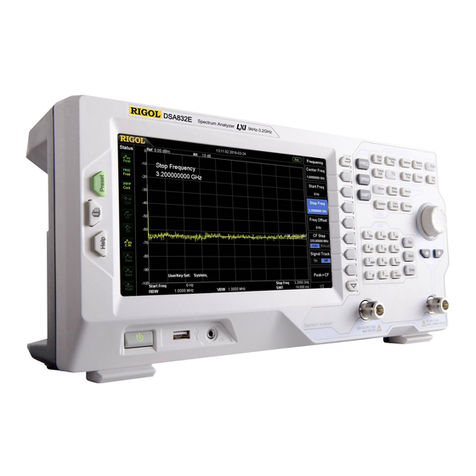
Rigol DSA1000
Application Note
Application Notes
Comparison Guides
FAQs
How-To Guides
Programming Manuals
Quick Start Guides
Support Information
User’s Guides
RIGOL TECHNOLOGIES USA INC
877-4-RIGOL-1 How-To Guide
[email protected]
www.rigolna.com
DSA1000 Tutorial Intro
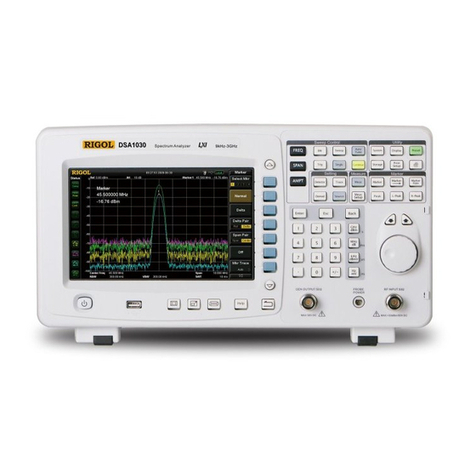
DSA1000 is Rigol’s line of spectrum analyzers. Throughout this
tutorial we will attempt to introduce some of the significant
capabilities of the DSA1000 family in addition to demonstrating the
ease of use of its interface.
Displaying the spectrum of a signal:
For this experiment, the following equipment will be needed:
-Function Generator
-Coaxial cable connector N-Type connector to BNC connector
Set the function generator to output a 100 mVpp sine wave at
100MHz. Then connect the function generator to the RF input of the
DSA1000 series analyzer. After connecting the function generator to
the spectrum analyzer, you should observe a spectrum graph as
observed below.
RIGOL TECHNOLOGIES USA INC
877-4-RIGOL-1 How-To Guide
[email protected]
www.rigolna.com
Now, press the Auto-Tune button (under Sweep Control). You should
know observe the following spectrum graph as below:
The Auto-Tune feature is a very useful and time saving feature to use.
Whenever faced with uncertainty about the position of the center
frequency on the spectrum graph, the Auto-Tune feature will assist
the user center the display at the highest peak in the input signal.
Markers:
Markers are used for the purpose of obtaining accurate
information about a specific data point on the spectrum graph.
For demonstration purposes, with the DSA1000 in the same state as
the figure above, press the “Peak” key.
RIGOL TECHNOLOGIES USA INC
877-4-RIGOL-1 How-To Guide
[email protected]
www.rigolna.com
As observed a marker will be placed at the center of the display. The
peak button is used for the purpose of placing a marker at the
highest point amplitude wise of on the spectrum graph as in the
picture below:
Similarly, if another peak exists to the left or the right of the current peak,
using the “L-Peak” and “R-Peak” buttons allows us to navigate amongst signal
peaks. In the above case, only one real peak exists, as this is a pure sine wave.
Alternatively, the peak menu on the left can be used to navigate through the
signal’s peak. It appears when the “Peak” button is pressed.
RIGOL TECHNOLOGIES USA INC
877-4-RIGOL-1 How-To Guide
[email protected]
www.rigolna.com
Frequency Controls:
Pressing the black “FREQ” button, will expose the Frequency menu on the
right hand side of the screen.
We can see that the frequency is centered at 100 MHz, which is the frequency
of the sine wave being inputted into the system.
Push the “Center Frequency” soft button; this will highlight the center
frequency value selection and using the numeric pad change the center
frequency to a different value. With a new center frequency, we can now
observe a shift in the peak location on the display as below:
RIGOL TECHNOLOGIES USA INC
877-4-RIGOL-1 How-To Guide
[email protected]
www.rigolna.com
Span Adjustment:
In this section we explore the span adjustment capability. First, press the
“Auto tune” button, the peak of the waveform goes back to the center of the
screen.
Press the “SPAN” button, the span side menu will appear on the right hand
side of the screen.
RIGOL TECHNOLOGIES USA INC
877-4-RIGOL-1 How-To Guide
[email protected]
www.rigolna.com
Press the “Span” soft button, using the numeric keypad, enter 10 MHz
RIGOL TECHNOLOGIES USA INC
877-4-RIGOL-1 How-To Guide
[email protected]
www.rigolna.com
Press the “Zero Span” soft button; you will observe the time domain
characteristics of the signal at the center frequency specified, however it’s
worth noting, this option is more useful for observing the envelope of a
modulated wave rather than that of a carrier, though the amplitude of a
carrier wave can be observed:
RIGOL TECHNOLOGIES USA INC
877-4-RIGOL-1 How-To Guide
[email protected]
www.rigolna.com
Press the “Full Span” button; you will observe the characteristics of the entire
visible spectrum to the analyzer, as seen below.
RIGOL TECHNOLOGIES USA INC
877-4-RIGOL-1 How-To Guide
[email protected]
www.rigolna.com
Amplitude Adjustment:
Press the black “AMPT” button; you will observe the amplitude menu on the
right hand side as below:
Press the “Ref Level” soft button; you will observe the amplitude drop down
as below:
Press the “Auto Scale” soft button; you will observe the amplitude return
back to an optimal position on the screen.
Track Generator Usage:
Some DSA units come standard with a Track Generator (TG). A Track
Generator outputs signals at the same frequency as the current sweep
frequency of the RF Input. This can be used for the purpose of characterizing
components and cabling.