9
3. Personal safety
a. Be alert, watch what you are doing and use common
sense when operang a electrical tool. Do not use
a electrical tool while red or under the inuence of
drugs, alcohol or medicaon. A moment of inaenon
while operang electrical tools may result in serious
personal injury.
b. Use personal protecve equipment. Always wear eye
protecon and use appropriate safety equipment
such as dust mask, non- skid safety shoes, hard hat, or
hearing protecon to reduce personal injury risk.
c. Avoid accidental starng. Make sure the switch is in
an "open" posion before connecng to the network
and / or baery pack, picking up or carrying the tool.
Carrying electrical tools with your nger on the switch
or plugging in electrical tools that have the switch to "
closed" posion can cause accidents.
d. Remove any adjusng key or wrench before starng
the machine. A keychain aached to a rotang part of
a electrical tool electrical tool may result in personal
injury.
e. Maintain strong support on the ground and keep well
balanced at all mes use. This allows beer control of
the electrical tool in unexpected situaons.
f. Do not wear loose clothing, large objects or jewellery
that may get caught by moving parts. Keep your hair
and gloves away from moving parts. Loose clothes,
jewellery or long hair can get caught in moving parts.
g. When devices or connecons for dust extracon and
collecng equipment are provided, ensure these are
well connected and used properly. The use of these
devices can reduce dust related hazards.
h. The condence gained from the frequent use of
tools should not allow general safety principles to be
ignored. A careless acon could cause a serious injury
in a fracon of a second.
4. Use and care of electrical tools
a. Do not force the electrical tool. Use the correct
electrical tool for your applicaon. The correct
electrical tool will do the job beer and safer at the
rate for which it was intended for.
b. Do not use the electric tool if the switch does not
allow switching from “start” to “stop” and vice versa.
Electric tools that cannot be controlled with switches
are dangerous and should be repaired.
c. Unplug the electric tool from the power supply and/
or remove the baery, if possible, before making
any adjustments, changing accessories or storing
the electric tool. These prevenve safety measures
reduce the risk of accidentally starng the tool.
d. Store electric tools out of reach of children when
not in use and do not allow people who are not
familiarised with the tools or with these instrucons
to handle the electric tool. Electric tools are
dangerous in the hands of untrained users.
e. Perform maintenance on electric tools and
accessories. Check that the moving parts are not
misaligned or locked, that there are no broken parts
or other factors that could aect the operaon of the
electric tools. Electric tools must be repaired before
use when they are damaged. Many accidents are
caused by poorly maintained electric tools.
f. Keep tools sharp and clean. The Properly maintained
cung tools with sharp cung edges are less likely to
bind and are easier to control.
g. Use the electrical tool, accessories and tool ps,
etc.. in accordance with these instrucons, taking
into account the working condions and the work
to develop. Use of the electrical tool for applicaons
other than those intended could result in a hazardous
situaon.
h. Keep the handles and gripping surfaces dry, clean
and free of oil and grease. Slippery handles and
gripping surfaces do not allow for a secure grip and
control of the tool in unforeseen circumstances.
5. Technical Support
a. This electrical tool complies with the requirements of
appropriate security. Repairs should only be carried
out by a qualied profesional, using original spare
parts, otherwise there could be a signicant risk to the
user.
MIXER SAFETY INSTRUCTIONS:
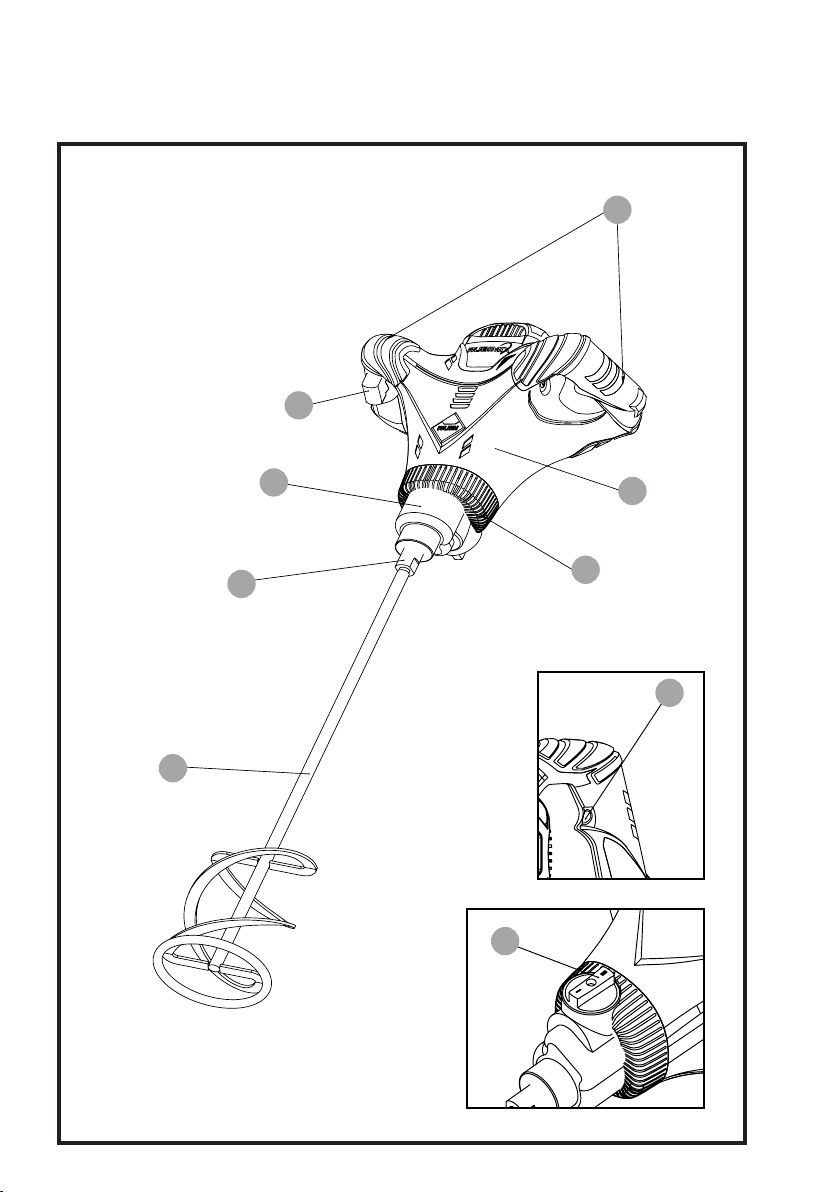
a. Hold the tool with both hands at the intended
handles. Loss of control can cause personal injury.
b. Ensure sucient venlaon when mixing ammable
materials to avoid a hazardous atmosphere.
Developing vapour may be inhaled or be ignited by
the sparks the electrical tool produces.
c. Do not mix food. Electrical tools and their accessories
are not designed for processing food.
d. Keep the cord away from the working area. The cord
may be entangled by the mixer basket.
e. Ensure that the mixing container is placed in a rm
and secure posion. A container that is not properly
secured may move unexpectedly.
f. Ensure that no liquid splashes against the housing
of the electrical tool. Liquid that has penetrated the
electrical tool can cause damage and lead to electric
shock.
g. Follow the instrucons and warnings for the material
to be mixed. Material to be mixed may be harmful.
h. If the electrical tool falls into the material to be
mixed, unplug the tool immediately and have the
electrical tool checked by a qualied repair person.
Reaching into the bucket with the tool sll plugged in
can lead to electric shock.
i. Do not reach into the mixing container with your
hands or insert any other objects into it while mixing.
Contact with the mixer basket may lead to serious
personal injury.
j. Start up and run down the tool in the mixing
container only. The mixer basket may bend or spin in
an uncontrolled manner.
SPECIFIC WARNINGS:
Addional safety precauons provided by the
manufacturer.
1) WARNING! Do not use the machine for uses other than
those for which it was designed.
2) Adequate arcial lighng is required in work areas
when ambient light is insucient.
3) Recommended operang temperature between 0 and
40°C and between 0.8 and 1.1 bar (maximum humidity
95%).
4) Before starng operaons, wear protecve gloves,
hearing protectors and protecve glasses.
5) When unpacking the machine, and also aer each use,
check for dents or deformaons and broken parts and
cords. If any of these are found, do not use the electric
tool and contact the manufacturer immediately.
6) Do not use the mixer to work with ammable liquids
or gases, nor any material other than mortar or
cemenous adhesives. Furthermore, do not use
the tool if there are ammable liquids or gases in the
vicinity.
7) Hold the mixer rmly during use.
8) Keep the tool clean and free of grease, oil and dry mortar
or cement residue. Do not use aggressive chemical
ENGLISH
TRANSLATION OF THE ORIGINAL