8
When ready the graft union is made by firmly pushing the scion and rootstock together while taking
care to align the cambium layer. With pre grading, similar diameters will ensure scions and
rootstocks match neatly and firm cambium contact is guaranteed on at least one side, if not both.
Then the union is bound together with suitable grafting tape and the tip of the scion waxed or
painted with a suitable sealant. If excessively wet allow the union to dry slightly before sealing.
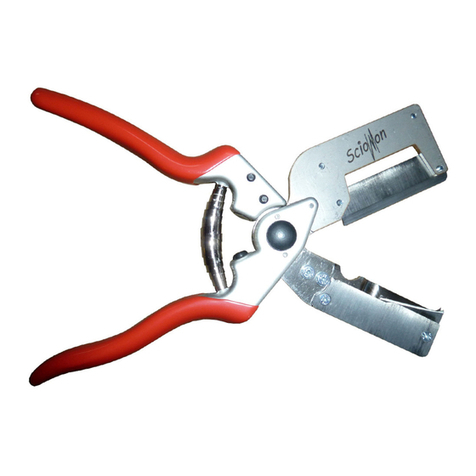
Whip and tongue bench grafts can also be prepared using the hand shears by following the above
process. These can be planted out immediately or packed in appropriate medium and stored for
later planting out. With the correct placement, alignment and care sealing them, and provided you
have a firm fit, your graft unions will take minor handling knocks without becoming dislodged or
compromised ensuring a high success of ‘take’ is achieved.
12. PREPARING WEDGE (NOTCH) GRAFTS
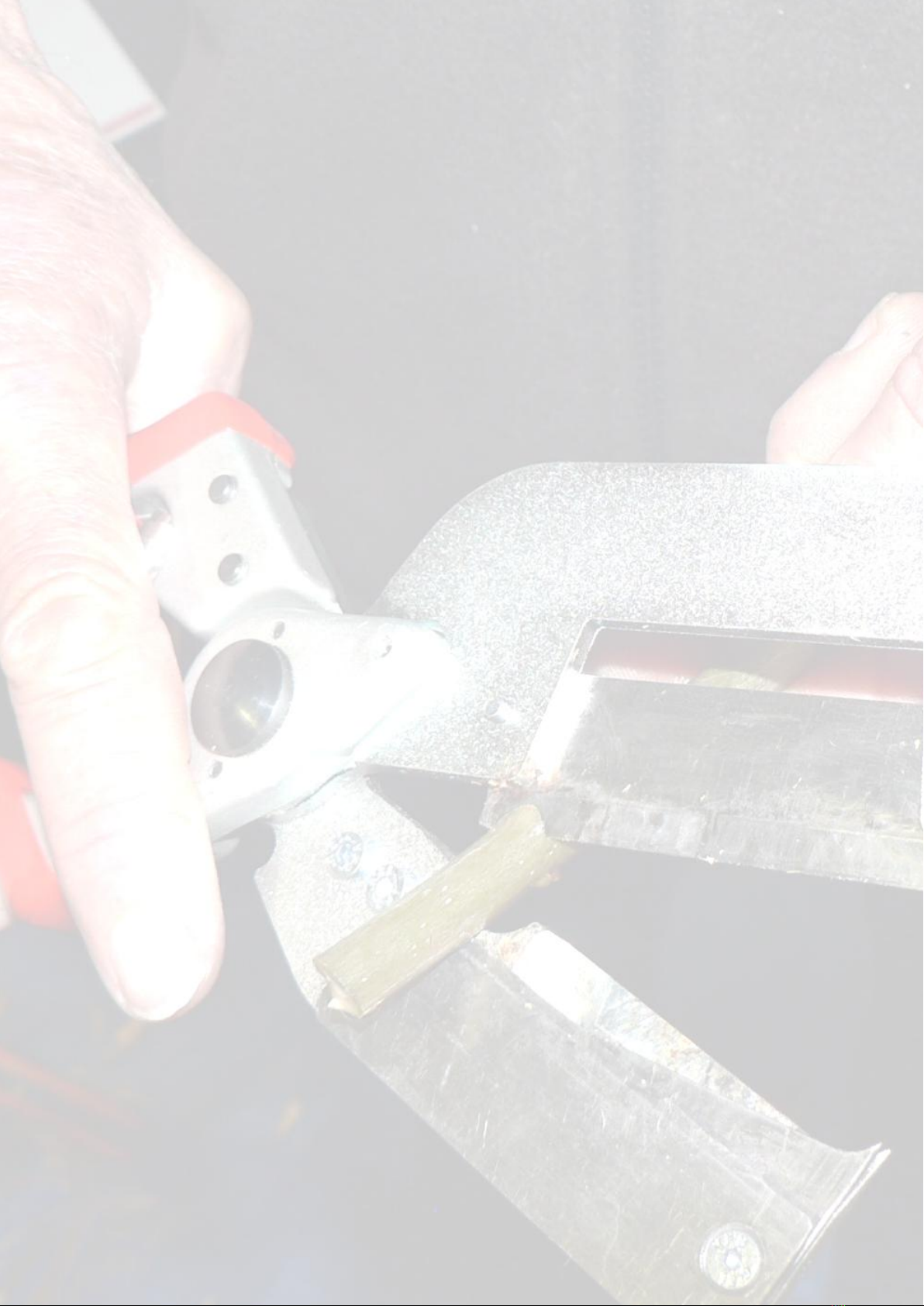
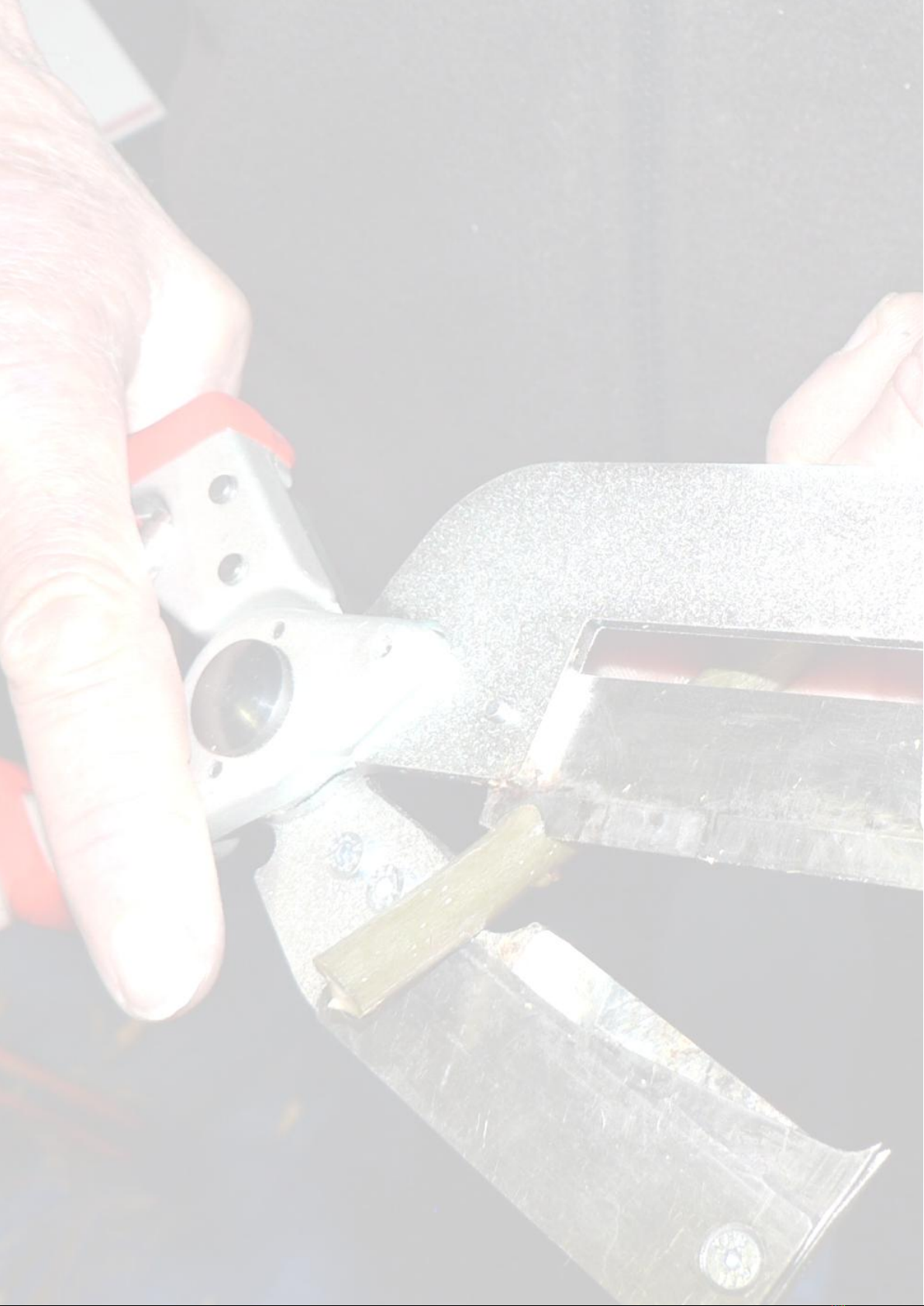
The Grafting Shears are also utilised to cut wedge grafts (photo 24). The first cut is made as
described above (photo 22), and then a second cut is made by placing the cut surface of the whip on
the upper surface of the stop rest plate. The wood is tilted so that only one side rests on the plate
(photo 23). The cut is made by biting into the wood with the blade slicing the wood to form a wedge
shape. With practice the positioning of the scion wood will result in a symmetrical wedge being
produced with a wider back and narrower front. A second cut can be made if the wedge formed is
not precise on the first attempt. Store these until ready to graft on in the field with a suitable saw,
chisel or grafting knife.
13. PREPARING ‘V’ CLEFT GRAFTS
When a ‘V’ cleft graft is required make the first cut as previously described. Lay the cut face across
the upper guide plate to finish the cleft graft by making a second cut. In normal situations the
second cut will produce a matching slope resulting in a ‘V’ being formed (photo 27). By using a
sliding action to start the cuts as the blade enters the wood you will maximize the whip lengths
produced (photo 28). This may take several attempts to perfect, but with patience & experience you
will produce these grafts with ease. If the ‘V’ formed is not uniform further cuts can be made to
centralise the ‘V’ of the cleft scion. This is done by aligning the tip of the scion in the upper plate
recess to the left (photo 40), or lying it across the upper plate bade and slicing again. If a blunt end is
desired lengthen the whips out by maximizing the handle opening. The tip can then be cut back to
the desired length of whip and bluntness of end required (photo 29). These grafts can be stored
ready to either graft on to understock in the field or complete at the bench.
To prepare the root stock to receive the ‘V’ cleft graft, cut the rootstock to the desired length below
a bud node. Now use the pins to grip the rootstock and align the end so that the blade is resting in
the middle on the top of the rootstock. With the left hand tension the rootstock against the pins to
lock in place. Now squeeze the handles closed so that the blade slices through the top of the
rootstock creating a split cut. With practice you will create the desired split to accept your previously
prepared ‘V’ grafts. Carefully push the two parts firmly together aligning the cambium on at least
one side. Seal and store for planting out, as described above. It is sometimes useful to use scion