manuals.online logo
Brands
  1. Home
  2. •
  3. Brands
  4. •
  5. Sennheiser
  6. •
  7. Microphone
  8. •
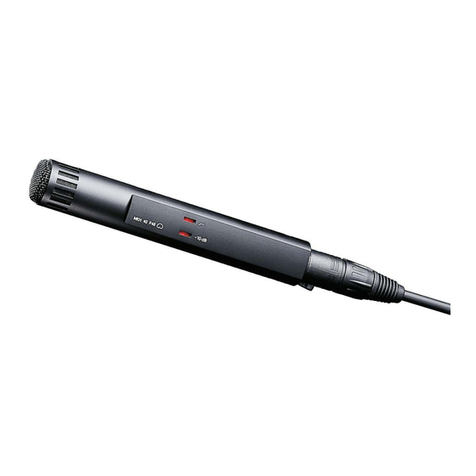
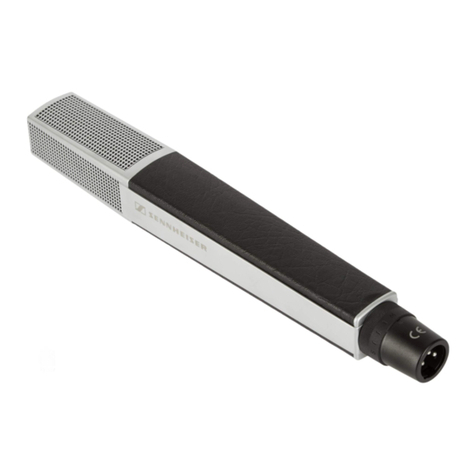
  9. Sennheiser MKH 418-S - User manual

Sennheiser MKH 418-S - User manual

Other manuals for MKH 418-S -

3

Other Sennheiser Microphone manuals

Sennheiser Evolution E 604 User manual
Sennheiser

Sennheiser Evolution E 604 User manual

Sennheiser ew 100 G4 User manual

Sennheiser

Sennheiser ew 100 G4 User manual

Sennheiser COM 1424 User manual

Sennheiser

Sennheiser COM 1424 User manual

Sennheiser MK 8 User manual

Sennheiser

Sennheiser MK 8 User manual

Sennheiser evolution e 845 User manual

Sennheiser

Sennheiser evolution e 845 User manual

Sennheiser MKH 816 P 48 U3 User manual

Sennheiser

Sennheiser MKH 816 P 48 U3 User manual

Sennheiser HSP 4 User manual

Sennheiser

Sennheiser HSP 4 User manual

Sennheiser Evolution E 935 User manual

Sennheiser

Sennheiser Evolution E 935 User manual

Sennheiser MZB 415 User manual

Sennheiser

Sennheiser MZB 415 User manual

Sennheiser E 825 S - ANNEXE 787 User manual

Sennheiser

Sennheiser E 825 S - ANNEXE 787 User manual

Sennheiser E 608 - 01-07 User manual

Sennheiser

Sennheiser E 608 - 01-07 User manual

Sennheiser SKM 300 G4 User manual

Sennheiser

Sennheiser SKM 300 G4 User manual

Sennheiser MKH 416 T - ANNEXE 80 User manual

Sennheiser

Sennheiser MKH 416 T - ANNEXE 80 User manual

Sennheiser EVOLUTION E908 User manual

Sennheiser

Sennheiser EVOLUTION E908 User manual

Sennheiser XS Lav USB-C User manual

Sennheiser

Sennheiser XS Lav USB-C User manual

Sennheiser E 965 User manual

Sennheiser

Sennheiser E 965 User manual

Sennheiser MKH 418 S P48 U User manual

Sennheiser

Sennheiser MKH 418 S P48 U User manual

Sennheiser SpeechLine IS Series User manual

Sennheiser

Sennheiser SpeechLine IS Series User manual

Sennheiser evolution E945 User manual

Sennheiser

Sennheiser evolution E945 User manual

Sennheiser DW Pro 1 User manual

Sennheiser

Sennheiser DW Pro 1 User manual

Sennheiser evolution wireless g3 SKM 300 User manual

Sennheiser

Sennheiser evolution wireless g3 SKM 300 User manual

Sennheiser Skm 2020 d User manual

Sennheiser

Sennheiser Skm 2020 d User manual
Sennheiser HSP 2 User manual

Sennheiser

Sennheiser HSP 2 User manual

Sennheiser MZC 30 User manual

Sennheiser

Sennheiser MZC 30 User manual

Popular Microphone manuals by other brands

Betzold 760932 operating instructions

Betzold

Betzold 760932 operating instructions

Shure A88SM user guide

Shure

Shure A88SM user guide

JTS UF-10TH/12 instruction manual

JTS

JTS UF-10TH/12 instruction manual

Shure BETA 58A User giude

Shure

Shure BETA 58A User giude

Shure SM7 user guide

Shure

Shure SM7 user guide

Sony ECM-Z200 Service manual

Sony

Sony ECM-Z200 Service manual

Electro-Voice 652 engineering data

Electro-Voice

Electro-Voice 652 engineering data

mantona 21150 instruction manual

mantona

mantona 21150 instruction manual

Loewe We. SEE 55 user manual

Loewe

Loewe We. SEE 55 user manual

IK Multimedia iRig Stream MIC PRO user manual

IK Multimedia

IK Multimedia iRig Stream MIC PRO user manual

DAPAudio RM-101 user manual

DAPAudio

DAPAudio RM-101 user manual

AKG CHM 21 User instructions

AKG

AKG CHM 21 User instructions

Sony C-48 operating instructions

Sony

Sony C-48 operating instructions

GIGAMEDIA GGM PAMICUHFG user manual

GIGAMEDIA

GIGAMEDIA GGM PAMICUHFG user manual

Shure WH30TQG user guide

Shure

Shure WH30TQG user guide

auna PRO MIC-900 manual

auna PRO

auna PRO MIC-900 manual

Shure MV51 manual

Shure

Shure MV51 manual

AKG D 3800 User instructions

AKG

AKG D 3800 User instructions

manuals.online logo
manuals.online logoBrands
  • About & Mission
  • Contact us
  • Privacy Policy
  • Terms and Conditions

Copyright 2025 Manuals.Online. All Rights Reserved.

USING THE SENNHEISER MKH 418S
STEREO MICROPHONE
The Sennheiser MKH 418S is a stereo version of the MHK 416. It is an M-S (Mid - Side) stereo mi-
crophone. It is actually two microphones in one housing -- a directional mic (mid) picking up sounds
from the front and a bi-directional mic (side) picking up sounds from the left and right sides.
The output of the 418S is two signals -- the Mid and the Side. As such they are NOT normal Left -
Right stereo, but can be turned into L-R stereo with a special “matrix” circuit. The 418S is intended
to be used with the Sound Devices hard disk recorders (722 and 744T) which have the M-S matrix
circuit built in. No other Cage equipment has this circuit.
There are times and situations to record in stereo, and times and situations NOT to record in stereo.
These are detailed on pages 2 and 3. On pages 4 and 5 are instructions about menu settings for the
Sound Devices recorders for the different applications.
1
Use the 418S exactly as you would use any other shotgun, and record only the MID. DON’T
RECORD DIALOGUE IN STEREO! Really, don’t. It’s been tried and rejected, because it
creates many more problems than it solves.
MONO APPLICATIONS
RECORDING DIALOGUE
moving mic
in mono
YES
stationary mic
in stereo
NO
NO
moving mic
in stereo
Use the MID
signal only.
The “sweet spot” of
the mic isn’t aimed at
anyone.
The “sweet spot” is
aimed at whoever is
speaking, BUT the
background will be
heard moving.
RECORDING STATIONARY SOUND EFFECTS
Specic sounds that are (usually) connected to something happening on the screen (e.g.
door slam, toast popping up, hammer hitting nail, car starting, etc.) are best recorded in
mono. Record them with the mic held or clamped in position, and in mono, using the MID
signal only. It’s preferable to use a less directional mic -- cardiods are very good for efffects
recording -- but the MID capsule of the 418S is useable. 2
STEREO APPLICATIONS
RECORDING MOVING SOUND EFFECTS
Very specic sounds -- and backgrounds -- that have movement should be recorded in ste-
reo.
Keep the mic stationary as the moving object passes. If possible use a tripod or mic stand.
Panning the mic to follow the object
will defeat the purpose of recording in stereo.
stationary mic
a single car
(aka “car-by”) trafc
stationary mic stationary mic
stationary mic
RECORDING BACKGROUNDS and AMBIENCES
This is the most common use for a stereo mic. Use a tripod or mic stand. Step away while
recording and avoid making any noise.
3
THE CABLE
mic end
5-pin XLR female
(aka XLR5F)
recorder/mixer end
standard 3-pin XLR male (aka XLR3M) x2
labels
1 (MID)
2 (SIDE)
MIC 1
input
MIC 2
input
The cable that comes with the 418S is pretty much a no-brainer, except that you MUST plug
the 3-pin XLR labeled 1 (MID) into the MIC 1 input, and the one labeled 2 (SIDE) into the
MIC 2 input of a Sound Devices 722 or 744T. THIS IS VERY IMPORTANT.
Even if you’re recording mono (MID only), plug both XLRs into the recorder so you don’t have
a cable end just dangling.
NOTE:
These instructions assume that you are familiar with the operation
of the Sound Devices 722 and 744T. If necessary, refer to the PDF hand-
outs “722 Quick Start” and 744T Quick Start.”
NOTE:
Menu numbers on the 722 or 744T may differ from those used here.
This is because Sound Devices issues frequent rmware updates, often
including menu revisions. Even if the number differs, the
name
will be
correct.
MONO RECORDING (MID ONLY)
Make sure that INPUT 1 is set to MIC.
Turn INPUT 1 48V phantom power ON.
1 2
A
B
18) Input 1: 48V Phantom (menu)
Set Input-to-Track
routing to 1 -> A
Set Headphone
Source to 1 (or A) (main display)
You are now ready to record.
RECORDER SET-UP AND SETTINGS
4
29) Input 1,2: Linking, MS
STEREO RECORDING (MID-SIDE)
Make sure that INPUT 1 and INPUT 2 are set to MIC.
Turn INPUT 1 and INPUT 2 phantom power ON. 18) Input 1: 48V Phantom
19) Input 2: 48V Phantom
1 2
A
B
Set Input-to-Track routing
to 1 --> A and 2 --> B
(menu)
Set Headphone
Source to 1,2 (or A,B) 1,2
Set Input 1,2: Linking, MS to Linked 1/2 and MS
select
select
Input 1,2 Gain Controls
Unlinked
Linked 1,2
> Linked 1,2 and M/S <
Input 1 and 2 Gain controls are now “linked.” This means that the Input 1 knob controls the
level of both Input 1 and Input 2, and the Input 2 knob controls the balance between them.
Selecting M/S activates the matrix circuit, sending normal L and R to your tracks.
Now when you adjust the Input Gain controls, the Bit-Depth / Sample Rate display...
...changes to
Gain (Input 1 control) and
Balance (Input 2 control).
A moving bar shows the balance. M
M
M
M
M
S
S
S
S
S
all Mid
mostly Mid, some Side
mostly Side, some Mid
all Side
equal Mid and Side
At equal balance the bar turns into a star.
Start with the balance equal. Because of the high directionality of the Mid mic, you may want
to balance slightly (or not so slightly) in favor of the Side mic in order to achieve a natural-
sounding stereo. You are now ready to record. 5