manuals.online logo
Brands
  1. Home
  2. •
  3. Brands
  4. •
  5. Sharp
  6. •
  7. Batteries Charger
  8. •
  9. Sharp 20 User manual

Sharp 20 User manual

Popular Batteries Charger manuals by other brands

EVBox BusinessLine manual

EVBox

EVBox BusinessLine manual

Goobay 71808 user manual

Goobay

Goobay 71808 user manual

Kogan KACRDQIS4XA user manual

Kogan

Kogan KACRDQIS4XA user manual

Sealey WCB3 quick start guide

Sealey

Sealey WCB3 quick start guide

Vanner SP00143/181 owner's manual

Vanner

Vanner SP00143/181 owner's manual

KeyOuest KO037515 quick start guide

KeyOuest

KeyOuest KO037515 quick start guide

Enplus Silk Series user manual

Enplus

Enplus Silk Series user manual

Intermec SF51 user guide

Intermec

Intermec SF51 user guide

Colorovo PowerBox 6800 user guide

Colorovo

Colorovo PowerBox 6800 user guide

Smartech WBC-250 Operator's manual

Smartech

Smartech WBC-250 Operator's manual

PIXO C-USB instruction manual

PIXO

PIXO C-USB instruction manual

Gunson G4104 quick start guide

Gunson

Gunson G4104 quick start guide

Dometic NDS SCE320 Short Operating Manual

Dometic

Dometic NDS SCE320 Short Operating Manual

ABB HT572708 Operation manual

ABB

ABB HT572708 Operation manual

EVOline Square80 manual

EVOline

EVOline Square80 manual

Redarc SBC24025 Operating instructions and owner's manual

Redarc

Redarc SBC24025 Operating instructions and owner's manual

Absaar HV04 manual

Absaar

Absaar HV04 manual

DazeTechnology Cover Dazebox Home installation manual

DazeTechnology

DazeTechnology Cover Dazebox Home installation manual

manuals.online logo
manuals.online logoBrands
  • About & Mission
  • Contact us
  • Privacy Policy
  • Terms and Conditions

Copyright 2025 Manuals.Online. All Rights Reserved.

SHARP
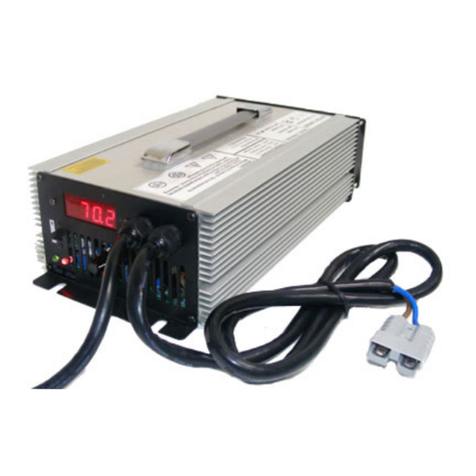
Battery charger
SHARP 20
EN ......................................................................3
AR ......................................................................8
BG ....................................................................13
CS ....................................................................19
DA ....................................................................24
DE ....................................................................30
EL ....................................................................36
ES ....................................................................42
ET ....................................................................48
FI ....................................................................53
FR ....................................................................58
HU ....................................................................64
IT ....................................................................70
LT ....................................................................76
LV ....................................................................82
NL ....................................................................88
NO ....................................................................94
PL ....................................................................99
PT ..................................................................105
RO .................................................................. 111
RU ..................................................................117
SK ..................................................................124
SL ..................................................................130
SV ..................................................................136
ZH ..................................................................141
Figures......................................................145
Approvals..................................................150
Valid for Sharp with Model Code:
1AB20**, 1AB21**
Doc: A00180 rev04
Print PN: 6515089
Battery charger
Safety
Safety precautions
Read the instructions. The manual
contains important safety and oper-
ating instructions. Always keep this
manual nearby the product.
Read and understand this instruction, the battery
instruction provided by your battery manufacturer,
and your employer’s safety practice, before using,
installing, or servicing the product.
Only qualified personnel should install, use or
service this product.
Applies to the European market, EN standard:
This appliance can be used by children aged from
8 years and above and persons with reduced
physical, sensory or mental capabilities, or lack of
experience and knowledge if they have been
given supervision or instruction concerning use of
the appliance in a safe way and understand the
hazards involved. Children shall not play with the
appliance. Cleaning and user maintenance shall
not be made by children without supervision.
Applies to markets outside Europe, IEC standard:
This appliance is not intended for use by persons
(including children) with reduced physical, sens-
ory or mental capabilities, or lack of experience
and knowledge, unless they have been given
supervision or instruction concerning use of the
appliance by a person responsible for their safety.
Children should be supervised to ensure that they
do not play with the appliance.
CAUTION
Always connect the battery cables before
connecting mains. Disconnect mains before
disconnecting battery cables.
Intended use
The battery charger is intended for charging lead-
acid batteries.
Battery charger adjustment
The charger must be adjusted to each type of
battery to be charged (Freely Ventilated FVLA or
Valve regulated VRLA). Each charger can be
ordered as pre-adjusted with charging curve and
parameters optimized for a specified battery.
Before start charging
Proper installation of the battery charger and
implementation of necessary safety devices and
measures, including their maintenance, is the
responsibility of the operating company/customer.
As a basic rule, a risk and hazard analysis must
be prepared in accordance with local require-
ments and best practice.
Ensure that the charger is adjusted for the battery
type. Before connection, check the marking on
the battery and the battery charger.
EXPLOSIVE GASES
WARNING
RISK OF EXPLOSION! - Read and follow the
precautions provided below:
WARNING, explosive gases.
Lead-acid batteries generate
explosive gases during charging.
•Incorrect settings of the battery charger may
damage the battery and generate explosive
gases from the battery during charging.
Always check settings before start charging.
•Do not charge non-rechargeable batteries,
damaged batteries or battery types not
intended for the charger.
•Do not disconnect the battery when the charg-
ing process is in progress. Sparks may occur
and cause hydrogen explosion when charging
lead-acid batteries. Arc flash may occur and
damage the connector pins. Always stop the
charging process before the battery is
disconnected.
No open flame. Fire, open ignition
source and smoking are prohibited
near battery.
•Explosive gases. Prevent flames and sparks.
Provide proper ventilation during charging.
•Do not smoke, cause sparking or use open
flames near battery.
•Do not keep inflammable material close to
battery charger.
ENGLISH
3

Well-ventilated. Always provide
proper ventilation during charging.
ELECTRIC SHOCK
WARNING
RISK OF ELECTRIC CHOCK! - Read and follow
the precautions provided below:
WARNING, risk of electric shock.
High voltage inside. The battery
charger contains voltage at a level
that can cause personal injury.
•Disconnect the battery and power supply
before maintenance, servicing or dismantling.
•Check that the power supply at the site of the
installation complies with the rated voltage
specified on the battery charger’s data label.
•The battery charger may only be connected to
a power outlet with protective earth.
•Do not operate the charger if there is any
evidence of damage.
•If the supply cord or plug is damaged:
•The manufacturer, its service agent or
similary qualified person must carry out
any replacement of the cord / plug in order
to avoid a hazard.
•Appliances with specially prepared cords
must be replaced by a special cord or
assembly available from the manufacturer
or its service agent.
•Other appliances that have a supply cord
that cannot be replaced, should be
scrapped.
•If a stationary appliance is not fitted with a
supply cord and a plug, or with other means
for disconnection from the supply mains,
disconnection must be incorporated in the
fixed wiring in accordance with the national
wiring rules.
WARNING, risk of electric shock.
High output voltage. Do not touch
uninsulated battery terminals, con-
nectors or other live electrical parts.
When installing or performing work on battery,
charger and battery terminals - do not risk short
circuits. A short circuit may cause personal injury
and permanently damage the battery. For all work
on battery chargers, batteries and BMS, suitable
insulated tools must be used.
Warning information
Hazardous situations and precautions are
presented in the text as follows.
WARNING
Indicates a potentially dangerous situation. Death
or serious injury may occur if appropriate precau-
tions are not taken.
CAUTION
Indicates a situation where damage or injury
could occur. If it is not avoided, minor injury
and/or damage to property may result.
NOTE
General information not connected to safety for
person or the product.
Graphical symbols
The following graphical attention symbols may
appear on the products and in the documentation.
Read the instructions. The manual
contains important safety and oper-
ating instructions.
Stop operation. Always stop the
charging by pressing the STOP
button before any disconnection.
WARNING, risk of electric shock.
High voltage inside. High output
voltage. Do not touch uninsulated
battery terminals, connectors or
other live electrical parts.
CAUTION, undesirable conse-
quences. The situation needs
operator awareness or action.
ENGLISH
4
For indoor use only. The battery
charger is designed only for indoor
use unless the charger is at least
IPX4-rated.
Well-ventilated. Always provide
proper ventilation during charging.
WARNING, explosive gases.
Lead-acid batteries generate
explosive gases during charging.
No open flame. Fire, open ignition
source and smoking are prohibited
near battery.
Introduction
This document contains use and maintenance
instructions for the intended battery charger.
This document is of relevance for the one who
uses the battery charger for its purpose; charge
batteries. It includes connecting the charger to the
battery, handling the charging process, and
managing basic settings.
Target groups:
•Installers
•Operators
•Maintenance personnel and technicians
Description
Sharp 20 are regulated battery chargers. Sharp
exists in different versions either for charging
flooded or valve regulated lead-acid batteries.
They can also be equipped with a charging curve
for Ni-Cad batteries or similar.
The battery charger is supplied with a pre-set
charging curve adapted to the type of battery
specified during ordering. Information about the
set charging curve can be read on the outside of
the battery charger.
The built-in microprocessor controls current and
voltage during the charging process. The status
of the charging process is displayed with an LED
on the front panel of the charger. The charging
time and temperature of the charger are moni-
tored throughout the charging process, charging
is limited in the event of defect cells or insufficient
cooling etc. During the charging process, the
charger continuously gathers data and performs
calculations in order to fully recharge the battery
with respect to amount of discharge, temperature,
age etc. The battery charger is cooled by means
of a temperature-regulated fan.
Receiving
On receipt, visually inspect the product for any
physical damage. If necessary, contact the
transport company.
Check the delivered parts against the delivery
note. Contact your supplier if something is
missing, see Contact information.
Installation
NOTE
Installation may only be performed by qualified
service partner.
The battery charger must be
installed in a dry and clean
environment.
1. Locate the battery charger so that there is free
circulation of air through the battery charger’s
ventilating openings.
2. If several battery charges are to be mounted
next to each other, they may not be located so
that cooling air from one battery charger blows
into the air intake of another battery charger.
3. Mount the battery charger as per figure Sharp
20 P4 - fig. 1a / Sharp 20 P4 - fig. 1b / Sharp
20 P6 - fig. 2. Dimensions for free space
around the battery charger shouldn´t fall below
those specified dimensions.
4. Install the battery charger so that the gasses
from the battery being charged do not get
sucked into the charger by its fan.
5. The battery charger can be used horizontally
on a table, suspended on a wall with an
accompanying bracket.
6. For installation on a wall or for internal
mounting, the battery charger should be
placed horizontally to prevent penetration of
moisture and dirt.
7. The battery charger is produced in different
mains voltage variations. Check that the
power supply at the site of the installation
complies with the rate voltage according to the
information on the battery charger’s rating
plate.
ENGLISH
5
8. The recommended mains fuse is specified on
the battery charger’s rating plate.
9. The battery charger is connected to the mains
voltage via a cable with a plug to an earthed
wall socket.
10.Connect the battery charger as per figure
Sharp 20 P4/P6 - fig. 3. The red cable is
connected to the battery’s positive pole and
the black or blue cable is connected to the
battery’s negative pole. Carefully check the
marking on the battery.
11. Upon request, the battery can be permanently
connected or detachable.
Operation
Cable connections and control
panel
Sharp 20 P4 - fig. 4
1. Mains switch
2. Mains cable
3. Battery cables
4. LED
5. Program switch
Sharp 20 P6 - fig. 5
1. Mains cable
2. Battery cables
3. Reset button
4. LED
5. Program switch
Charging
WARNING
In the case of danger, disconnect the mains
voltage by pulling out the plug from the wall
socket.
Connecting a battery
1. Check that the battery charger is turned off.
The switch on the panel should be in the 0-
position (applies to Sharp 20 P4). Battery
charger Sharp 20 P6 can be continuously to
the mains.
2. Check the wiring and adapter to ensure that
there is no visible damage.
3. Connect the battery to the battery charger.
4. Start the battery charger by setting the switch
on the panel to the 1-position (applies to
Sharp 20 P4). Battery charger Sharp 20 P6
automatically starts charging when the battery
is connected. Yellow LED lights. Charging time
will vary depending on the type of battery and
the degree of discharge.
5. Green LED is displayed when the battery is
fully charged. The battery charger change to
maintenance charging.
NOTE
The green LED will not light immediately if a fully
charged battery is connected. This time can vary
between 0 and 2 hours.
Disconnecting a battery
WARNING
The battery charger should be turned off when dis-
connecting the battery. If the battery is disconnect-
ed during an ongoing charge, the contacts in the
charging connector will be damaged and spark
formation can occur causing a hydrogen gas
explosion.
1. Turn off the battery charger. Set the switch on
the panel to the 0-position (applies to Sharp
20 P4). Press the Reset button (applies to
Sharp 20 P6).
2. Disconnect the battery from the battery charg-
er (applies to Sharp 20 P4). Disconnect the
battery immediately after the reset button is
pressed. Charging is resumed after 10
seconds if the battery is still connected
(applies to Sharp 20 P6).
Maintenance and
troubleshooting
The checks below are recommended to be car-
ried out during troubleshooting and maintenance.
WARNING
High voltage!
Only qualified personnel should install, use,
maintain and service this product.
Disconnect the battery and power supply before
maintenance, servicing or dismantling.
ENGLISH
6
WARNING
High voltage!
If there is evidence of damage to the battery
charger, cables or connectors, switch off the
mains power. Do not touch damaged parts.
Do not touch uninsulated battery terminals,
connectors, or other live electrical parts.
Contact service personnel.
Safety shut-off
Charging is terminated if:
•The recharged number of ampere hours
exceeds the preset value.
•The charging time for any of the charging
phases exceeds the preset value.
•Voltage and current exceed the maximum set
value.
•The battery is disconnected without the
battery charger being stopped.
Charging is temporarily stopped or reduced when:
•The battery charger temperature exceeds
charger limits.
Checking error messages
If the battery charger’s built-in self-testing function
detects a fault, this is indicated via the status
LED’s on the front panel. Red flashing LED
indicates a charging fault. Red fixed light
indicates a fault in the charger.
Please make a note of any faults and send for
authorised service personnel.
Checks
1. Check the cables and connectors for
damages.
2. Check that the battery is free from defects, in
good condition and is the correct type for the
battery charger.
3. Check that the battery is properly connected
and that the battery fuse, if any, is not broken.
4. Check that the mains voltage is right and that
there are no blown fuses.
Recycling
The battery charger is recycled as metal and
electronics scrap. Local regulations apply and
must be followed.
Contact information
Micropower Sweden AB
Idavägen 1, SE-352 46 Växjö, Sweden
Phone: +46 (0)470-727400
e-mail: support@micropower.se
www.micropower-group.com
Charging curves
WARNING
The program tables in figure 6 and 7 are only
valid if program chip stated in the “program row”
of the tables is mounted in your battery charger.
Check the battery charger marking.
If the charger settings need to be change as a
result of a change of battery type, carry out the
following steps:
1. Identify the type of battery. Flooded or valve
regulated lead/acid batteries.
2. Identfy battery voltage and battery capacity
C5Ah.
3. Make sure that the battery charger and the
assembled program are suitable for the new
battery. If uncertain, contact your supplier.
4. Find your battery charger [CHARGER] and
program [PROGRAM] in the table.
5. Go to flooded [WET], [WET PULSE] or valve
regulated [DRY].
6. Turn the program switch for the actual battery
capacity according to the columns [Ah] and
[Switch Pos].
Text within brackets [ ] refer to columns and rows
in the program tables:
•Sharp 20 P4 - fig. 6
•Sharp 20 P6 - fig. 7
ENGLISH
7
 



  .    
  .    
 .
        
       
      .
          
 .
     EN :   
      ٨  

         
          

       .
    .     
    .
      IEC :  
   )     (
           

         
        . 

     .

         .
     .
  

     
  .
  
          

)        
     .(   

        
 .
  
        

        /
 .       -
   .

        . 
       .
  

!  -    :
   .  
    .
•
        
        .

    .
•
         
    .
•
         . 

        

 .       
 .       .
    .   

    
.
•
  .    .  
   .
•
           

.
•
         .
  .    
  .
 

!   -    :

  . . 
 .     
       .
•
        

 .

8
•
          
      .
•
         
   .
•
          .
•
      :
•
        
     /  

.
•
       
        

 .
•
         
.
•
          
        

       
.
   . . 
       
     .
         
 -      .  
        .
        
      
)BMS.(


         .

       .    

     .

          .    
        .










.


         .
  .    
 .
  .    
     STOP  .
   . . 
 .     
     .
     . 
     .
   .  
      

  IPX4  .
  .    
  .
   .  
    .
    .   

    
.

        

.
        
    .   

     .
 :
•

•

•
  
 

      S harp   
  20        

  Sharp    
         

.     .Ni-CD    

9
         
          .
          
      .    

        
   .       
          
            

           
   .      
           

 

      
         .  

        .
 

         .
    .
       . 


    











.

      
 .
1.         

  
2.         
          

         
        
3.           
          .
Sharp 20 P4 - fig. 1a Sharp 20 P4 - fig. 1b
Sharp 20 P6 - fig. 2.
4.
        

      .
5.         
  .
6.         

   .
7.        .
            
      
8.         
     .
9.
        
      
10.       Sharp 20 P4/P6
- fig. 3 .       

        .
      .
11.        .






Sharp 20 P4 - fig. 4
1. .
2. .
3. .
4.   .
5. .
Sharp 20 P6 - fig. 5
1.
 .
2. .
3.  .
4.   .
5. .


.           

   
 
1.    .      
   0 )    Sharp 20 P
  6  ) ٤ Sharp 20 P    4 

  .
2.   

     
.
3.   .
4.          

 )   Sharp 20 P     
  6 ) Sharp 20 P    4(  

     . 
 
   .  


    .
5.          
     

10