Bench Top Bender User’s Manual 9
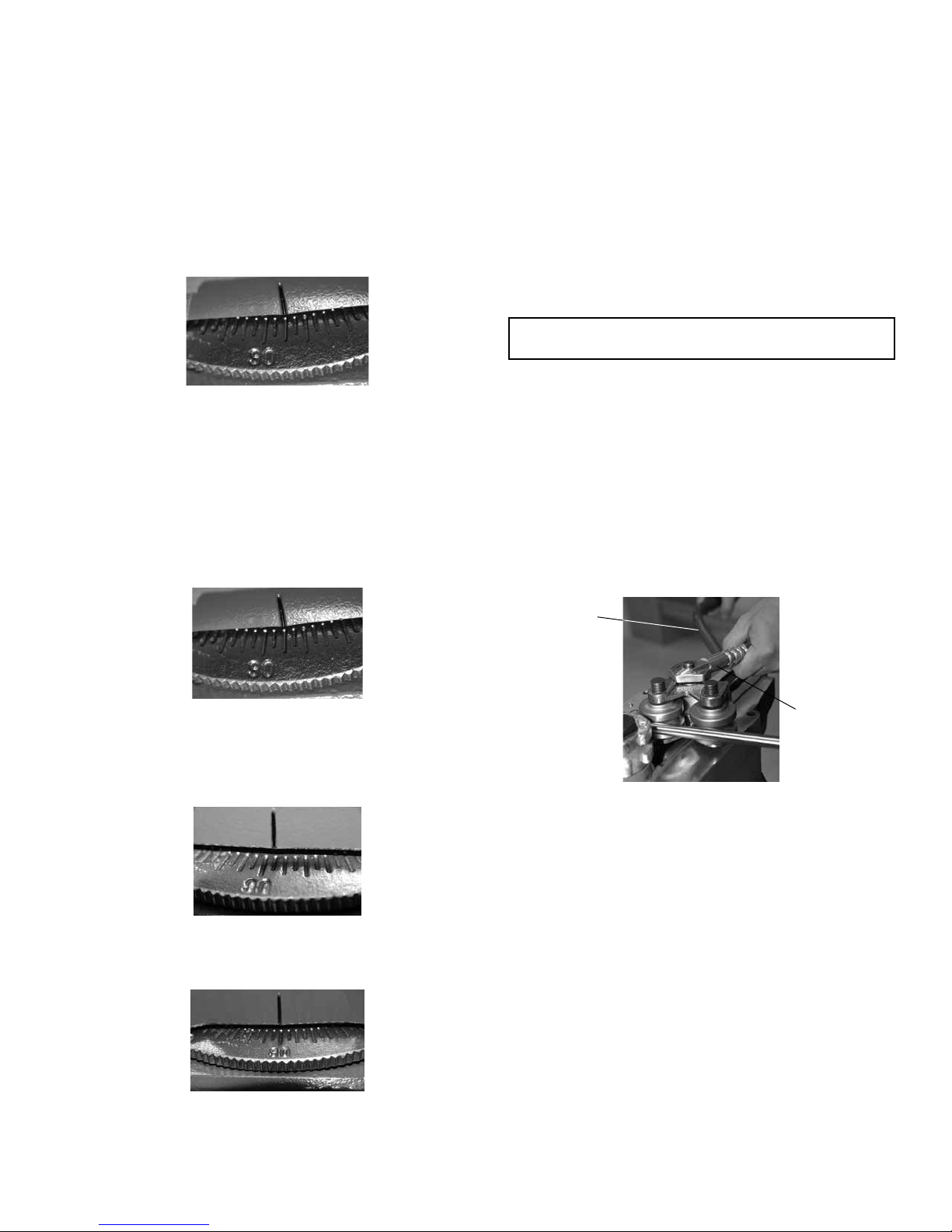
3. Keep the hand crank still and rotate the bend degree
wheel to zero.
Caution
Releasing the hand crank while tube is under
load may cause the hand crank to spin, possibly
leading to injury.
4. Rotate the hand crank until the bend wheel displays 5°
less than the desired bend angle. This will prevent setup
scrap due to overbending.
Example: For a desired bend angle of 90°, rotate the hand
crank until the bend degree wheel reads 85°.
5. Unload the bender (see Unloading the Bender) and
measure the bend angle of the tube (see Measuring
the Bend Angle). Make note of this measurement as it
is likely to be different than the angle displayed on the
bend wheel.
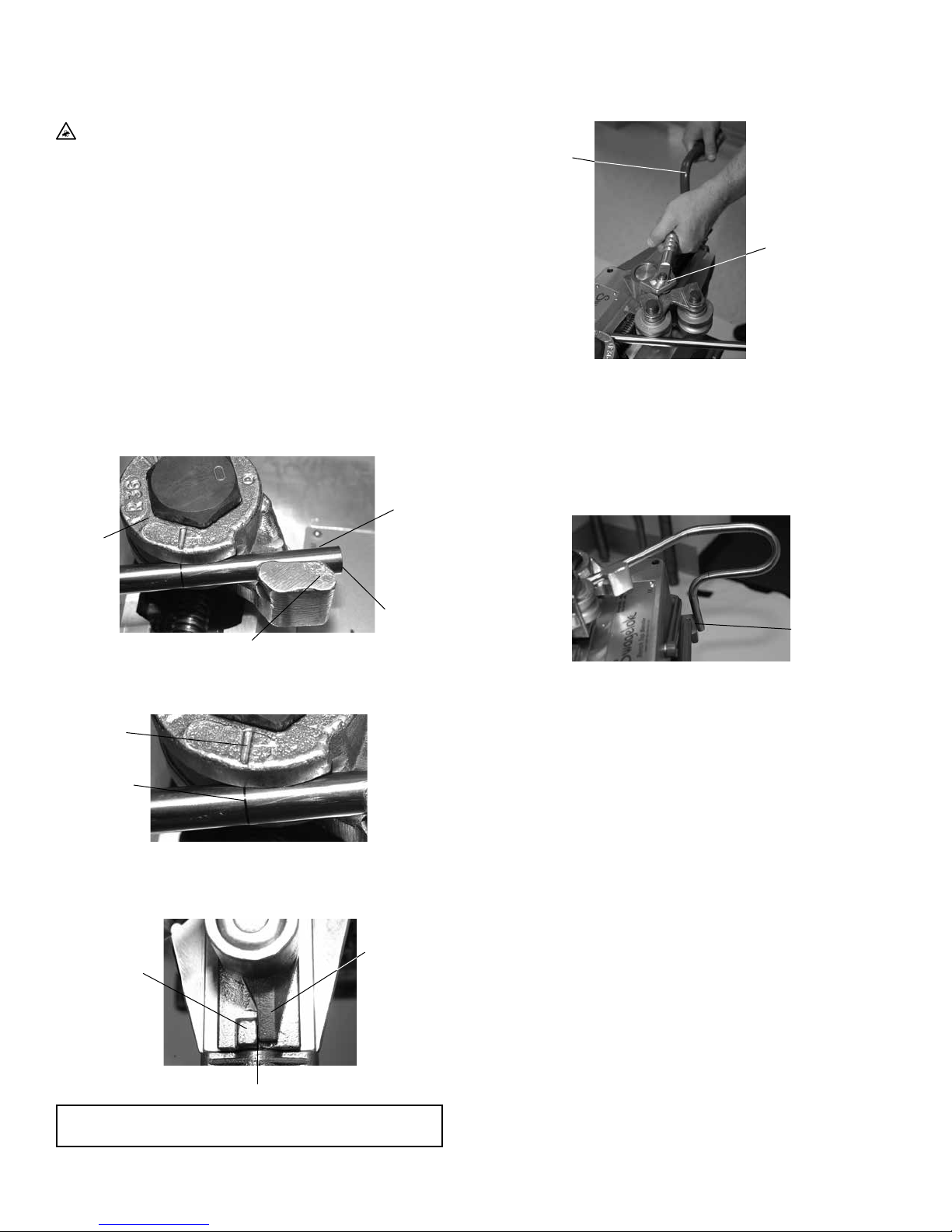
6. Reload the tube into the bender, lining up the bend mark
and the reference mark.
7. Rotate the hand crank until the bend degree wheel reads
the angle from step 4 (in example: 85°).
8. Keep the hand crank still and rotate the bend degree
wheel to the measurement noted in step 5 (in example:
88°). This calibrates the bend degree wheel by setting it
to display the actual bend angle being produced.
9. Continue to rotate the hand crank until the bend degree
wheel reads the desired bend angle.
10. Unload the bender (see Unloading the Bender) and
measure the bend angle of the tube.
The bend angle indicated on the bend degree wheel will
now be very close to the bend angle produced. If further
adjustment is desired repeat steps 6 through 10.
Note: Tube springback is cumulative. Depending on the tube
variables, a smaller bend angle builds up less tube
springback during the bending process than a larger
bend angle. For example, if a 30° bend is attempted
using a bender that was calibrated to make a 90°
bend, the resulting bend may be larger than desired.
Conversely, if a 150° bend is attempted on the same
bender, the resulting bend may be smaller than
desired. It is advised to verify each bend angle.
Unloading the Bender
Note: Do not turn the roller knob to unload the bender.
Doing so will affect bend consistency.
Caution
Releasing the hand crank while the tube is under
load may cause the hand crank to spin, possibly
leading to injury.
1. Rotate the hand crank in the direction opposite that
used to bend the tube.
2. As the hand crank is rotated, gently push the roller
bracket lever counter-clockwise until the rollers swing
away from the tube and the tube can be removed from
the bender.
Note: Do not force the roller bracket lever.
Hand crank
Roller bracket
lever