lmportant I !
Check all the screws are tight before using the car!
Check all the screws are still tight after every battery pack
used in the carl
Recommended
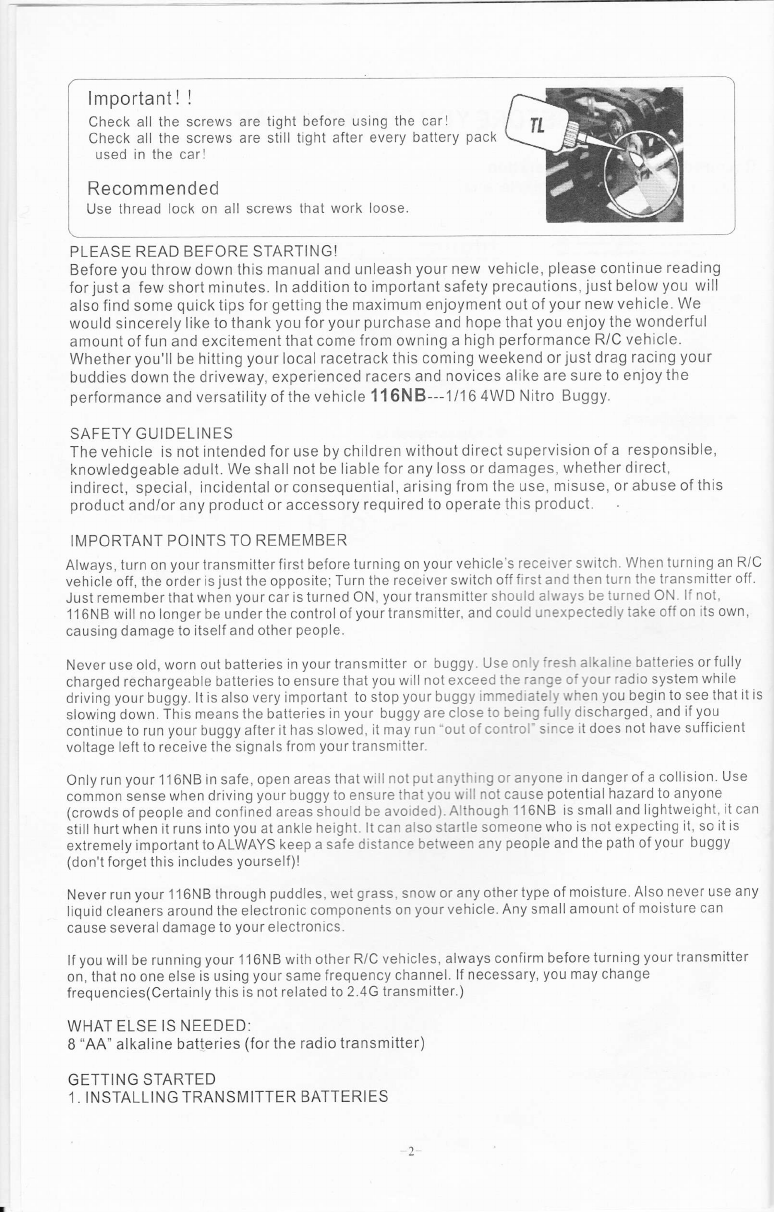
Use thread lock on all screws that work loose.
PLEASE READ BEFORE STARTING!
Before you throw down this manual and unleash your new vehicle, please continue reading
for just a few short minutes. ln addition to important safety precautions, just below you will
also find some quick tips for getting the maximum enjoyment out of your new vehicle. We
would sincerely like to thank you for your purchase and hope that you enjoy the wonderful
amount of fun and excitement that come from owning a high performance R/C vehicle.
Whether you'll be hitting your local racetrack this coming weekend or just drag racing your
buddies down the driveway, experienced racers and novices alike are sure to enloy the
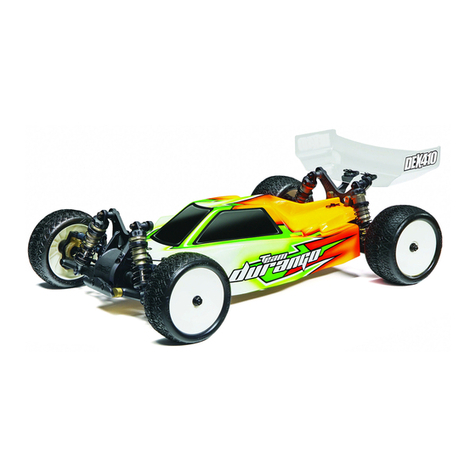
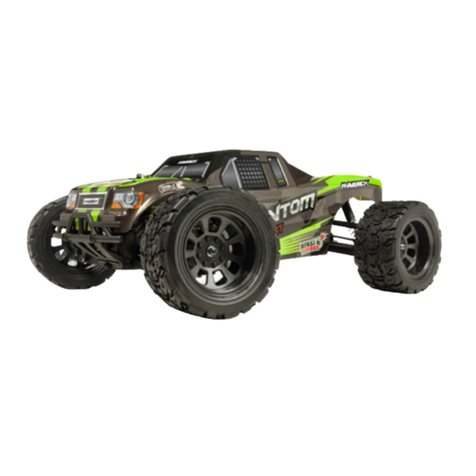
performance and versatility of the vehicle 11 6N B---1/16 4WD Nitro Buggy.
SAFETY GUIDELINES
The vehicle is not intended for use by children without direct supervisìon of a responsible,
knowledgeable adult. We shall not be liable for any loss or damages, whether direct,
indirect, special, incidental orconsequential,arisingfromtheuse,misuse,orabuseofthis
product and/or any product or accessory required to operate this product.
IMPORTANT POINTS TO REMEMBER
Always, turn on your transmitter first before turning on your vehicle's receiver switch. When turning an R/C
vehicle off, the order is just the opposite; Turn the receiver switch offfirst and then turn the transmitter off.
Just remember that when you r car is turned ON, your transm ilter shou ld always be tu rned O N. lf not,
1 1 6NB will no longer be under the control of your transmitter, and could unexpectedly take off on its own,
causing damage to itself and other people.
Never use old, worn out batteries in your transmitter or buggy. Use only fresh alkaline batteries or fuìly
charqed rechargeable batteries to ensure that you will not exceed the range of your radio system while
driviÀg your bu9gy. lt is also very important to stop your buggy immediately when you begin to see that it is
slowing down. This means the batteries in your buggy are close to beìng fully discharged, and if you
contrnuetorunyourbuggyafterithasslowed,itmayrun outofcontrol'sinceitdoesnothavesufficient
voltage left to receive the signals from your transmitter.
Only run your 116N8 in safe, open areas thatwill not put anything oranyone in dangerofa collision. Use
common sense when driving your buggy to ensure lhat you will not cause potential hazard to anyone
(crowdsof peopleandconfinedareasshouldbeavoided).Although116NB issmall andlightweight,itcan
still hurt when it runs into you at ankle height. lt can also slarlle someone who is not expecting it, so it is
extremely important to ALWAYS keep a safe distance between any people and the path of your buggy
(don't forget this includes yourseìf)!
Never run your 1 1 6NB through puddles, wet grass, snow or any other type of moisture. Also never use any
liquid cleaners around the electronic components on your vehicle. Any small amount of moisture can
cause several damage to your electronics.
lf you will be runn ing your 1 16N B with other R/C vehicles, always conf irm before turning you r transmitter
on, that no one else is using your same frequency channel. lf necessary, you may change
frequencies(Certainly this is not related to 2.4G transmìtter.)
WHAT ELSE IS NEEDED:
B "AA" alkaline batteries (for the radio transmitter)
GETTING STARTED
1. INSTALLING TRANSMITTER BATTERIES