Due to the variety of problems that can be caused by outside weather conditions, venting by canopies or
wall fans is preferred over any type of direct venting. It is recommended that a canopy extend 6" past the
appliance and the bottom edge be located 6'6" from the floor. Filters should be installed at an angle of 45°
or more from the horizontal. This position prevents dripping of grease and facilitates collecting the run-off
grease in a drip pan, unusually installed with a filter. A strong exhaust fan tends to create a vacuum in the
room and may interfere with burner performance or may extinguish pilot flames. Fresh air openings
approximately equal to the fan area will relieve such a vacuum. In case of unsatisfactory performance on
any appliance, check the appliance with the exhaust fan in the “OFF” position. Do this only long enough to
check equipment performance, then turn hood back on and let it run to remove any exhaust that may have
accumulated during the test.
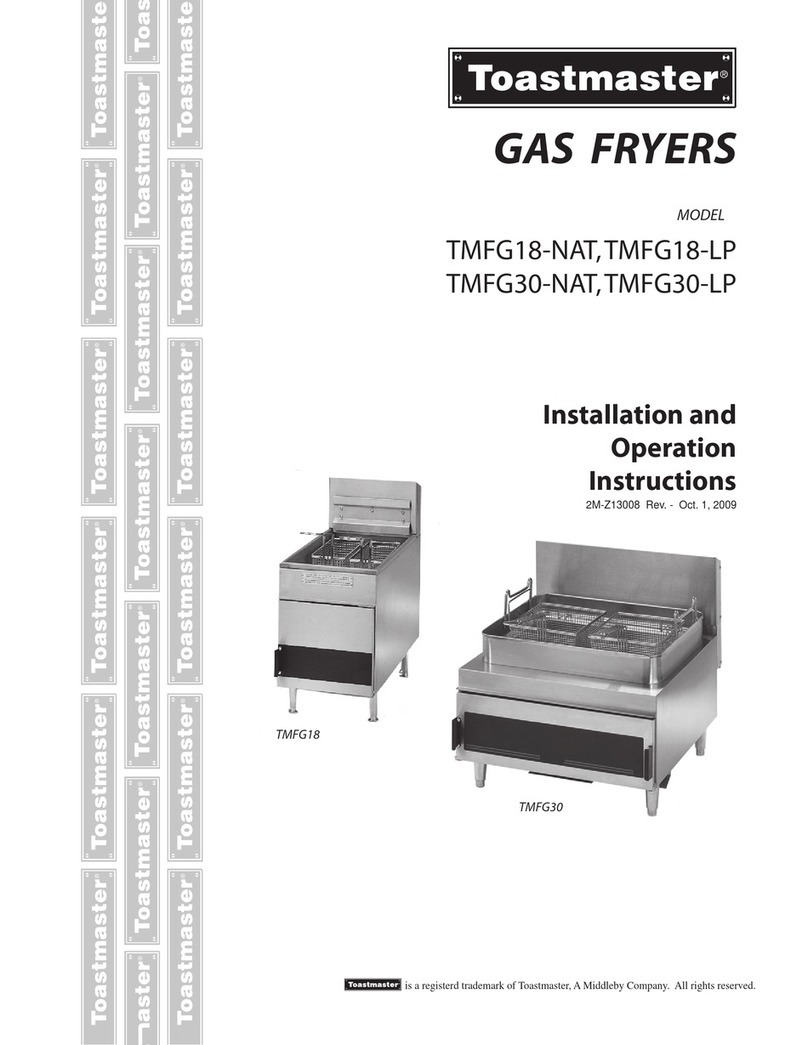
The exhaust fan should be installed at least 2 feet above the vent opening at the top of the fryer. Make sure
all ventilation meet local code requirement
This unit is not intended to be connected directly to an outside flue.
Step #5: Gas Connection
A 3/4" male NPT line for the gas connection is located near the lower right rear corner of the fryer. The
serial plate (located inside the front door of the fryer) indicates the type of gas the unit is equipped to burn
(natural gas or propane). The fryer should be connected ONLY to the type of gas for which it is equipped.
A circuit diagram is located inside the front door of the fryer.
All equipment is adjusted at the factory; however, pilot height should be checked at installation and
adjusted, if necessary.
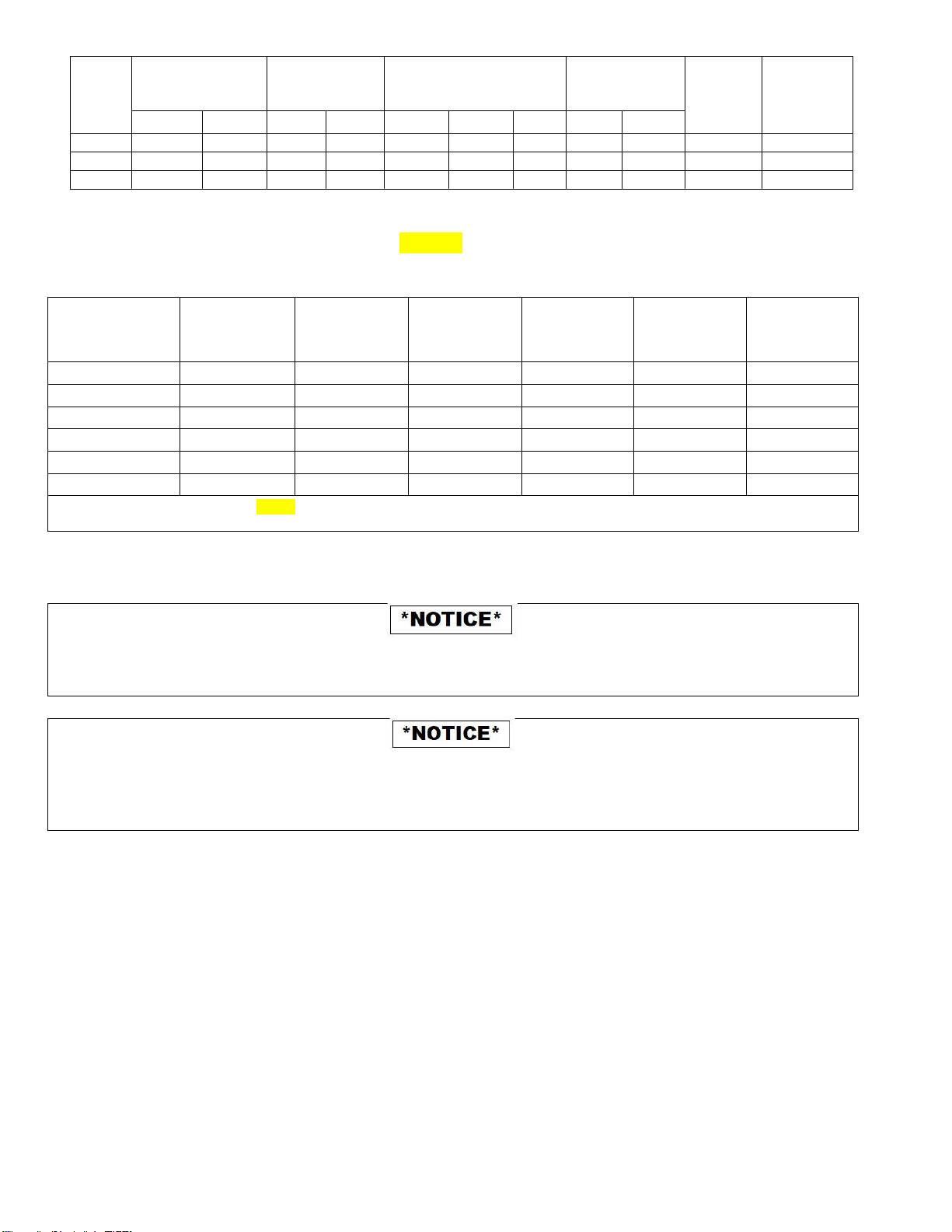
For orifice sizes and pressure regulator settings, see the chart on page 4. If the fryer is being installed at
over 2,000 feet altitude and that information was not specified when ordered, contact the appropriate
authorized Service Representative or the Service Department. Failure to install with proper orifice sizing
will result in poor performance and may void the warranty.
If applicable, the vent line from the gas appliance pressure regulator shall be installed to the outdoors in
accordance with local codes or, in the absence of local codes, with the National Fuel Gas Code, ANSI
Z223.1, Natural Gas Installation Code, CAN/CGA-B149.1, or the Propane Installation Code, CAN/CGA-
B149.2, as applicable.
An adequate gas supply is imperative. Undersized or low pressure lines will restrict the volume of gas
necessary for satisfactory performance. A combination gas valve and pressure regulator, which is provided
with each unit, is set to maintain a 4" W.C. manifold pressure for natural gas or 10.0" W.C. manifold
pressure for propane gas. However, to maintain these conditions the pressure on the supply line, when all
units are operating simultaneously, should not drop below 7" W.C. for natural gas or 11" W.C. for propane
gas. Fluctuations of more than 25% on natural gas or 10% on propane gas will create problems and affect
burner operating characteristics. A 1/8" tap to measure the manifold pressure is located on the combination
gas valve and on the burner manifold, which is on the burner manifold located directly below the burners
inside the cabinet.