Viavi Trilithic Seeker D Lite User manual

Seeker D Lite
Source Transmitter
User’s Guide

Seeker D Lite Source Transmitter
User’s Guide
Document Num., Rev. 2
May 2018Page 2
Notice
Every effort was made to ensure that the information in this manual was accurate at the time
of printing. However, information is subject to change without notice, and VIAVI reserves the
right to provide an addendum to this manual with information not available at the time that this
manual was created.
Copyright/Trademarks
© Copyright 2018 VIAVI Solutions Inc. All rights reserved. No part of this guide may be
reproduced or transmitted, electronically or otherwise, without written permission of the
publisher. VIAVI Solutions and the VIAVI logo are trademarks of VIAVI Solutions Inc. (“Viavi”).
All other trademarks and registered trademarks are the property of their respective owners.
Copyright release
Reproduction and distribution of this guide is authorized for US Government purposes only.
Ordering information
This guide is a product of VIAVI Technical Publications Department, issued as part of the
product. The catalog number for a published guide is Catalog Number - printed. The catalog
number for an electronic guide on USB is Catalog Number - electronic.
Terms and conditions
Specications, terms, and conditions are subject to change without notice. The provision
of hardware, services, and/or software are subject to VIAVI standard terms and conditions,
available at www.viavisolutions.com/en/terms-and-conditions.

Seeker D Lite Source Transmitter
User’s Guide
Document Num., Rev. 2
May 2018 Page 3
Table of Contents
Chapter 1
General Information ..................................................................................................................5
Ordering Information ..............................................................................................................5
Where to Get Technical Support ............................................................................................5
How this Manual is Organized ...............................................................................................5
Conventions Used in this Manual...........................................................................................6
Precautions ............................................................................................................................6
Periodic Calibration................................................................................................................6
Chapter 2
Introduction & Operation..........................................................................................................7
What is the Seeker D Lite Source Transmitter? .....................................................................7
Overview...........................................................................................................................7
Testing Approach ..............................................................................................................7
Equipment Supplied with the Seeker D Lite Source Transmitter ...........................................8
Replacement Parts.................................................................................................................9
Field Accessories ...................................................................................................................9
A Guided Tour of Your Seeker D Lite Source Transmitter....................................................10
Front View.......................................................................................................................10
Rear View .......................................................................................................................11
Left Side View.................................................................................................................12
Battery Charging ..................................................................................................................13
Battery Charge Indicator LED.........................................................................................13
Operation .............................................................................................................................14
Power Indicator LED.......................................................................................................14
Transmit Level Adjustment .............................................................................................14
Chapter 3
Appendix ..................................................................................................................................15
Specications.......................................................................................................................15
Limited Warranty ..................................................................................................................16

Seeker D Lite Source Transmitter
User’s Guide
Document Num., Rev. 2
May 2018Page 4

Seeker D Lite Source Transmitter
User’s Guide
Document Num., Rev. 2
May 2018 Page 5
How this Manual is Organized
This manual is divided into the following chapters:
• Chapter 1, “General Information” provides contact information and describes how this
operation manual is structured.
• Chapter 2, “Introduction & Operation” introduces what the Seeker D Lite Source
Transmitter is and what it does. This chapter discusses the practical application,
connections and controls of the Seeker D Lite Source Transmitter.
• Chapter 3, “Appendix” shows the technical specications and warranty information of
the Seeker D Lite Source Transmitter.
General Information
Chapter 1
Ordering Information
Where to Get Technical Support
Phone US: +1-844-GO-VIAVI or +1-844-468-4284
Outside US: +1-855-275-5378
Email: T[email protected]
Website: https://support.viavisolutions.com/welcome
For additional information about our products and services, contact your local VIAVI
representative or visit https://www.viavisolutions.com/en-us/how-buy.
Seeker D Lite Source Transmitter
User’s Guide
Document Num., Rev. 2
May 2018Page 6
Conventions Used in this Manual
This manual has several standardized conventions for presenting information:
• Connections, menus, menu options, and user-entered text and commands appear in
bold.
• Section names, web, and e-mail addresses appear in italics.
Precautions
Periodic Calibration
The chosen frequency must closely match that of the leakage detector or leaks will not be
detected properly. If the Seeker D Lite Source Transmitter appears to be out of calibration, the
unit must be returned to VIAVI or an authorized repair center for re-calibration.
A CAUTION alerts you to any condition that could cause a
mechanical failure or potential loss of data.
A NOTE is information that will be of assistance to you related
to the current step or procedure.
A WARNING alerts you to any condition that could cause
personal injury.
Do not use the Seeker D Lite Source Transmitter in any
manner not recommended by the manufacturer.
A strong electromagnetic eld may affect the measurement
accuracy of the Seeker D Lite Source Transmitter.

Seeker D Lite Source Transmitter
User’s Guide
Document Num., Rev. 2
May 2018 Page 7
Introduction & Operation
Chapter 2
What is the Seeker D Lite Source Transmitter?
Overview
Mitigation of signal leakage within the subscriber premise is essential for the successful
operation of services both inside and outside of the coaxial cable network. To thoroughly
evaluate the potential for interference to subscriber services, VIAVI has developed a patent
pending approach to signal leakage measurement which will comprehensively test the
Aeronautical and LTE bands in both fully digital and analog cable systems.
Historically, signal leakage detectors have required high levels of sensitivity to
measure signal leakage radiating from the CATV network. Measurement within the
subscriber premise and the migration to all digital networks places even greater
sensitivity requirements upon the leakage detector, combined with a new requirement to
simultaneously monitor for signal leakage in both the aeronautical and LTE bands.
While these new requirements are a necessity to detect the potential for interference
between CATV and LTE services, the cost of designing, manufacturing and deploying this
new generation of leakage detectors has risen signicantly. As an industry leader in the
design and manufacture of signal leakage equipment, VIAVI has studied this application
model very carefully to develop a new and affordable method of signal leakage detection
within the subscriber’s premise.
Testing Approach
To overcome the high design and manufacturing cost associated with improvements in
instrument sensitivity, this system uses the Seeker D Lite Source Transmitter high output
signal source to replace the cable service at the subscriber’s ground block. The higher
levels transmitted by the Seeker D Lite Source Transmitter will increase the eld strength of
the signals radiating out of the subscriber network allowing a lower cost receiver to be used
for measurement purposes.
The Seeker D Lite Source Transmitter injects two carriers into the subscriber network, one
at 135–139 MHz and another at 611–615 MHz, supporting testing in both the Aeronautical
and LTE bands. The user may set the output level to 43 dBmV for home certication, but
also has the option to reduce the level to 23 dBmV should the subscriber network prove to
be too porous for pinpointing the location of a leak at the higher transmit level.

Seeker D Lite Source Transmitter
User’s Guide
Document Num., Rev. 2
May 2018Page 8
The Seeker D Lite provides both a visual readout of the measured levels in uV/m and a
tone proportional to signal strength. To prevent false triggering this system utilizes Trilithic’s
channel tagging technique. To provide constancy with leakage levels typically found within
the subscriber’s premise in home cert mode, the levels displayed by the Seeker D Lite have
been normalized to represent the value of a leak at typical system levels. This correlation
between measured and displayed levels will assist the technician in evaluating the severity
and recording of a leak based upon established industry practices.
Equipment Supplied with the Seeker D Lite Source
Transmitter
The Seeker D Lite Source Transmitter comes with the following:
• Seeker D Lite Source Transmitter
• One Built-In Li-Ion Battery
• AC to DC Power Adapter & Battery Charger

Seeker D Lite Source Transmitter
User’s Guide
Document Num., Rev. 2
May 2018 Page 9
Replacement Parts
The following replacement parts are available for the Seeker D Lite Source Transmitter:
Part Number Description
0090061000 Li-ION Replacement Battery (Replacement Requires 1 Battery)
0610198000 AC to DC Power Adapter & Battery Charger
0190197000 AC US Power Cable
Field Accessories
The following accessories are available for the Seeker D Lite Source Transmitter:
Part Number Description
2071527048 Precision RF Coaxial Test Cable (I/O-15)
2072097000A Vehicle Power Adapter
0190322000 AC Euro Power Cable
To place an order, contact your local VIAVI representative, call 1-844-GO-VIAVI, or visit
https://www.viavisolutions.com/en-us/how-buy.

Seeker D Lite Source Transmitter
User’s Guide
Document Num., Rev. 2
May 2018Page 10
A Guided Tour of Your Seeker D Lite Source Transmitter
Before using your instrument take a few minutes to familiarize yourself with the instrument,
its basic conventions and its navigational tools. This section provides a brief overview of the
instrument’s features, buttons, and controls.
Front View
RF Output Connector
Power Button
Transmit Level Button
Power Indicator LED
Transmit Level Indicator LED
Battery Charge Indicator LED
DC Charge Port
with Protective
Rubber Door
Table of contents
Other Viavi Transmitter manuals

Popular Transmitter manuals by other brands

Dejero
Dejero EnGo 3x manual

Rosemount
Rosemount 4600 Reference manual

Speaka Professional
Speaka Professional 2342740 operating instructions

trubomat
trubomat GAB 1000 instruction manual

Teledyne Analytical Instruments
Teledyne Analytical Instruments LXT-380 instructions
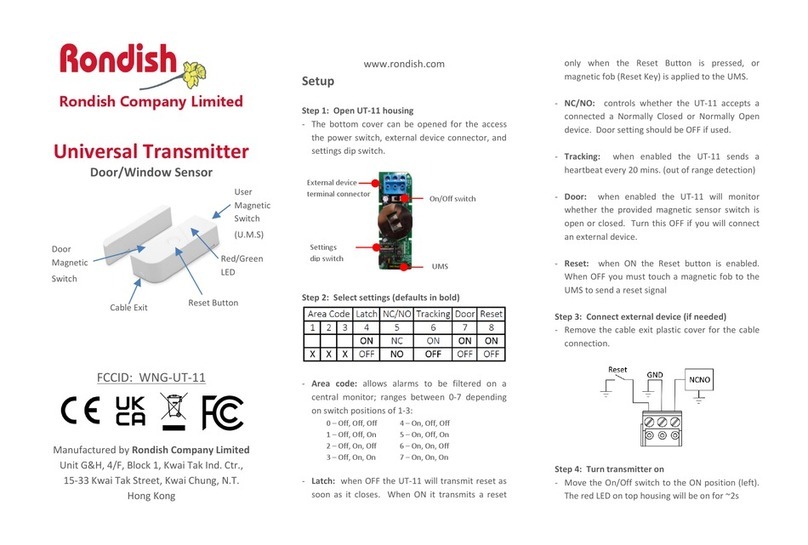
Rondish
Rondish UT-11 quick start guide