www.metaldetectors.co.uk
Metal Detectors
1 Angela Street
Mill Hill, Blackburn
BB2 4DJ
t: +44 (0)1254 55887
f: +44 (0)1254 676901
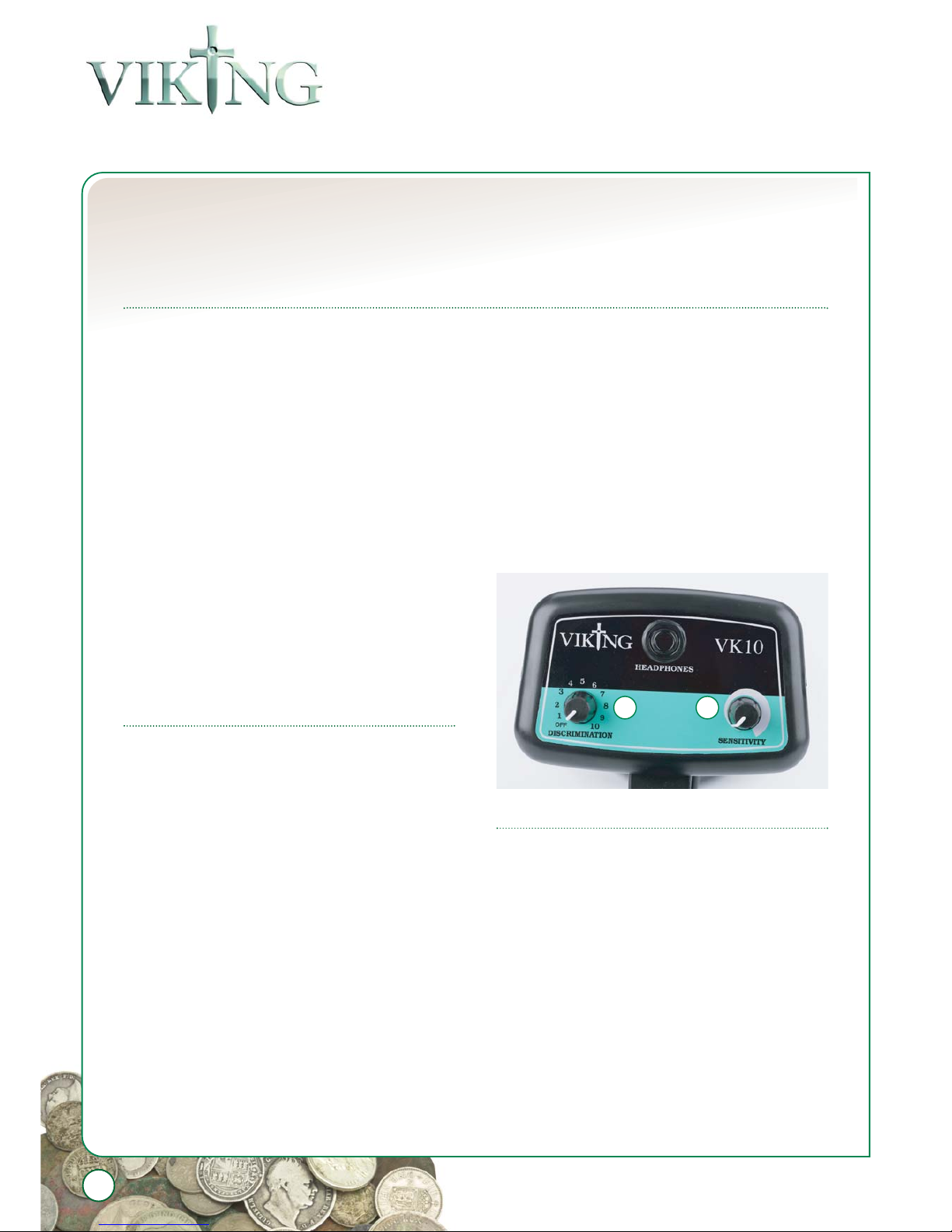
be found. The further the control is turned
clockwise the more discriminating the detector
will be. When turned fully clockwise (level 10)
only the most conductive metals (Silver and
Copper) will be found. All other targets will be
ignored. For general detector use it is not
recommended to search with the discrimination
control set to full as you may miss the most
valuable targets. Items such as gold rings are
not as conductive as a piece of copper and will
be missed if the discrimination control is set too
high.
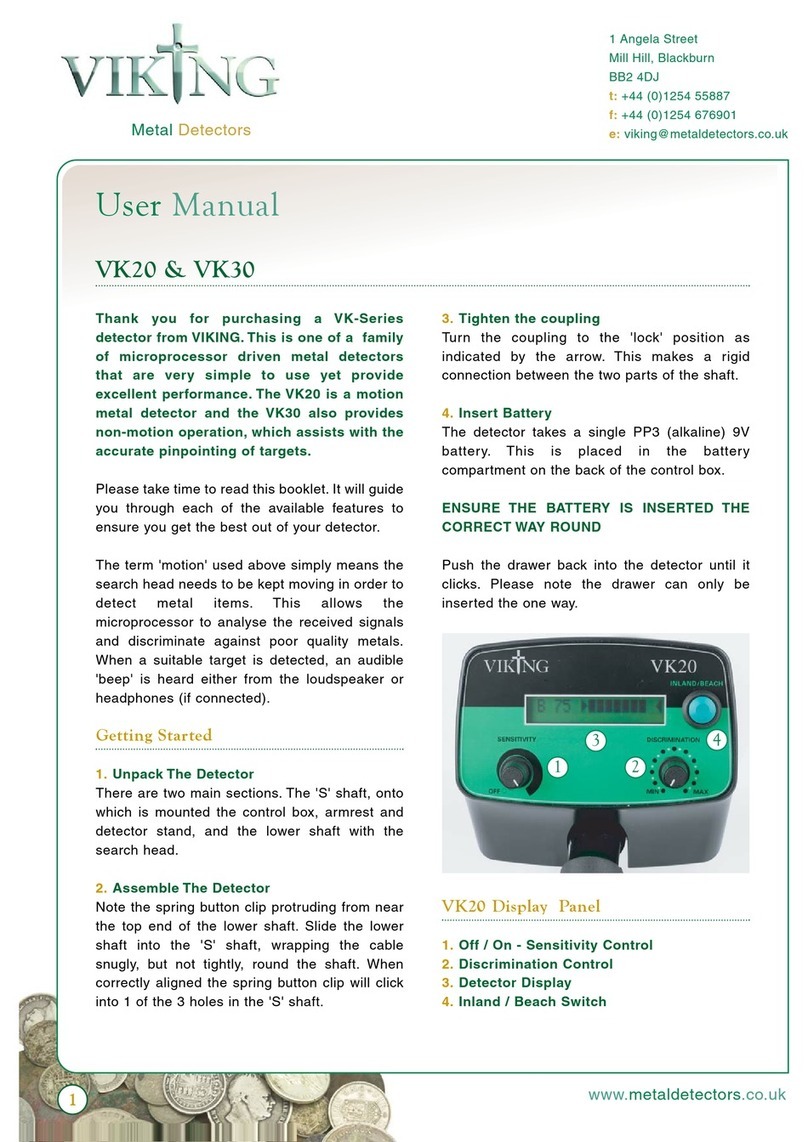
2. Sensitivity Control
Turning this control will adjust the sensitivity
setting of the detector. Maximum sensitivity is
achieved when the control is turned fully
clockwise. The ability of the detector to locate
small or deep objects will increase with the
sensitivity setting. In some environmental
conditions the detector may produce false beeps
which do not indicate a target. In this case it is
recommended that the sensitivity setting is
reduced until the problem is resolved.
3. Headphone Socket
This is situated on the front panel of the control
box. The socket will accept a standard pair of
headphones with a ¼" jack plug. The loudspeak-
er will be disabled when a plug is inserted into
the headphone socket.
4. Adjustable Armrest
The armrest is fixed with a screw. Loosening this
with a screwdriver allows the position of the
armrest to be moved back and forwards. Push
the armrest to the position that provides you with
the most comfort for detecting and tighten the
screw.
Using Your Detector
First, switch your detector on by turning the
discrimination control clockwise until it clicks.
Then turn the sensitivity control until it is at the
level you require. Finally set the desired level of
discrimination. Remember that with the
discrimination set too high your detector will
ignore many valuable targets, for example gold
rings and much modern coinage. When starting
out it is recommended that a medium setting of
about 5-6 should be used. This will reject trash
metals such as iron yet still detect all coinage.
The detector will still detect ring pull-tabs and
silver foil. With experience the setting at which
most rubbish is ignored and desired objects are
still found will become apparent. This can only be
determined by trial and error and depends on the
preference of the individual detectorist.
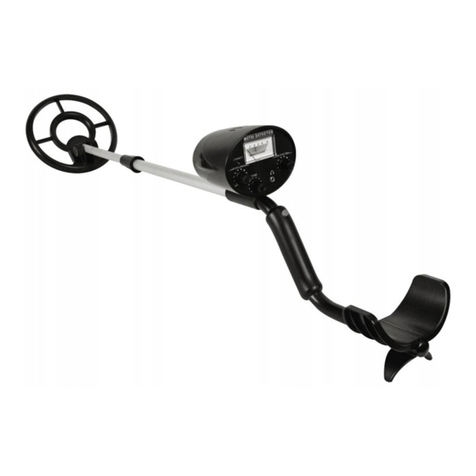
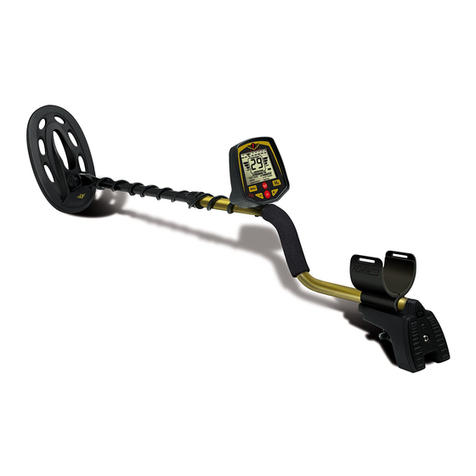
To detect, hold the detector by the handgrip with
your arm in the rest. Lower the search head to
the ground ensuring that it is flat to the ground If
you feel the length of the shaft or the position of
the armrest are wrong adjust them now.
Keeping the head close and parallel to the
ground, sweep it back and forth in an arc in front
of you. The speed at which you sweep is not
critical but remember that the machine is more
likely to miss targets if you go too fast. Walk
slowly forward as you sweep, allowing the area
searched each time to overlap with that
searched by the previous sweep to avoid missing
targets.
The detector will emit a beep when an object is
detected. This can then be pinpointed by
repeatedly sweeping over it and noting where
the head is when the sound occurs. More
accurate pinpointing can be achieved by
sweeping at 90 from the original direction. The
2