WAFE Intelligent ventilation specialist | 7
Heat recovery story
Housing standards in the Western world are continually rising. It’s not only about comfort
anymore: ease of maintenance, ergonomics and low operating costs do matter, too. Above all
–we expect to live in a healthy and natural environment.
At first, we tried to solve this with better quality building materials, more efficient isolation and
airtight door and window systems. Some heat savings were achieved but it soon became ap-
parent that a sealed off indoor environment like this is far from healthy and natural. Levels of
CO2kept rising due to an accumulated exhaled stale air inducing weariness and a loss of focus.
Opening the window was the only solution. By doing so, however, we not only reversed any
previous heat saving benefits but allowed the city pollution and noise back into our homes.
Ventilation with heat recovery became the only suitable alternative.
Heat recovery basics
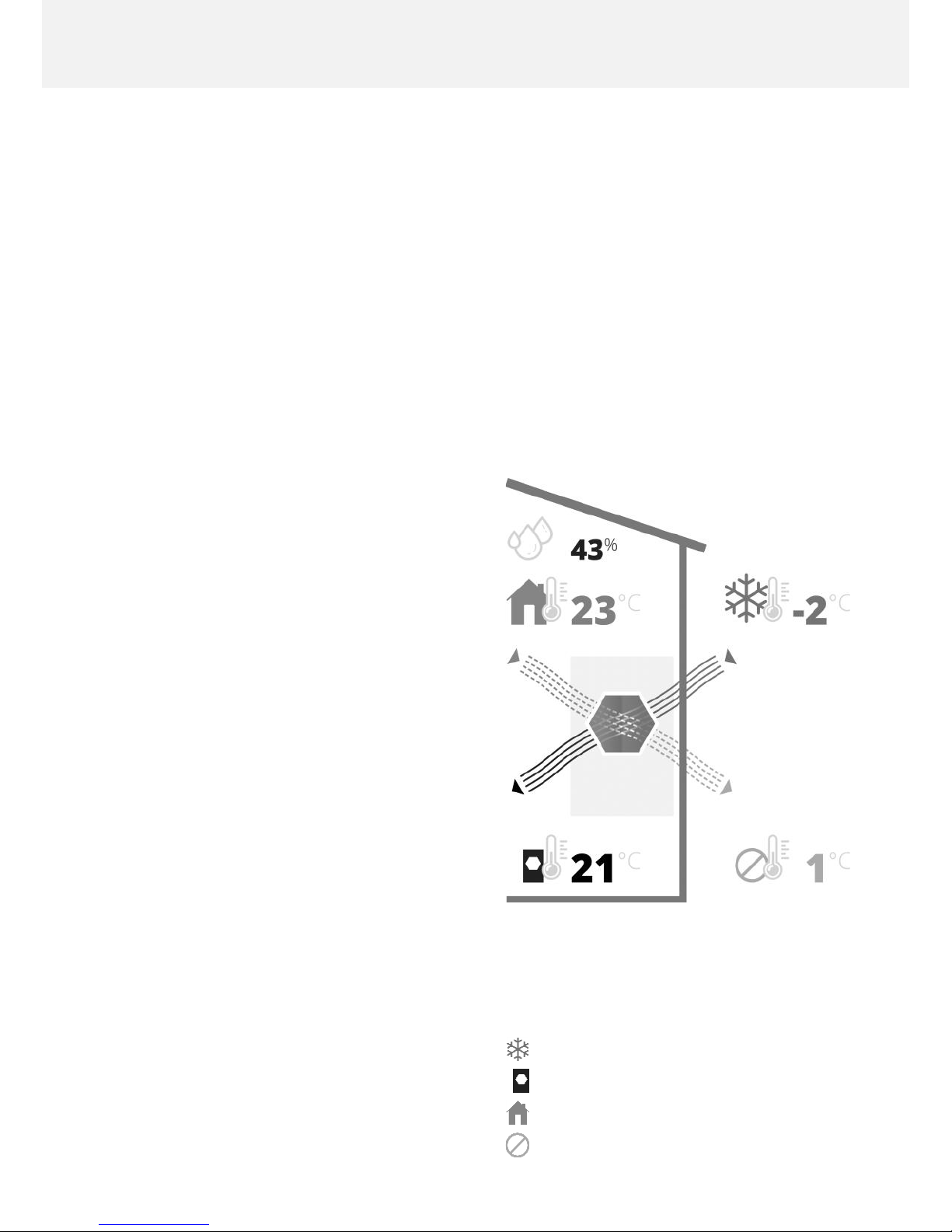
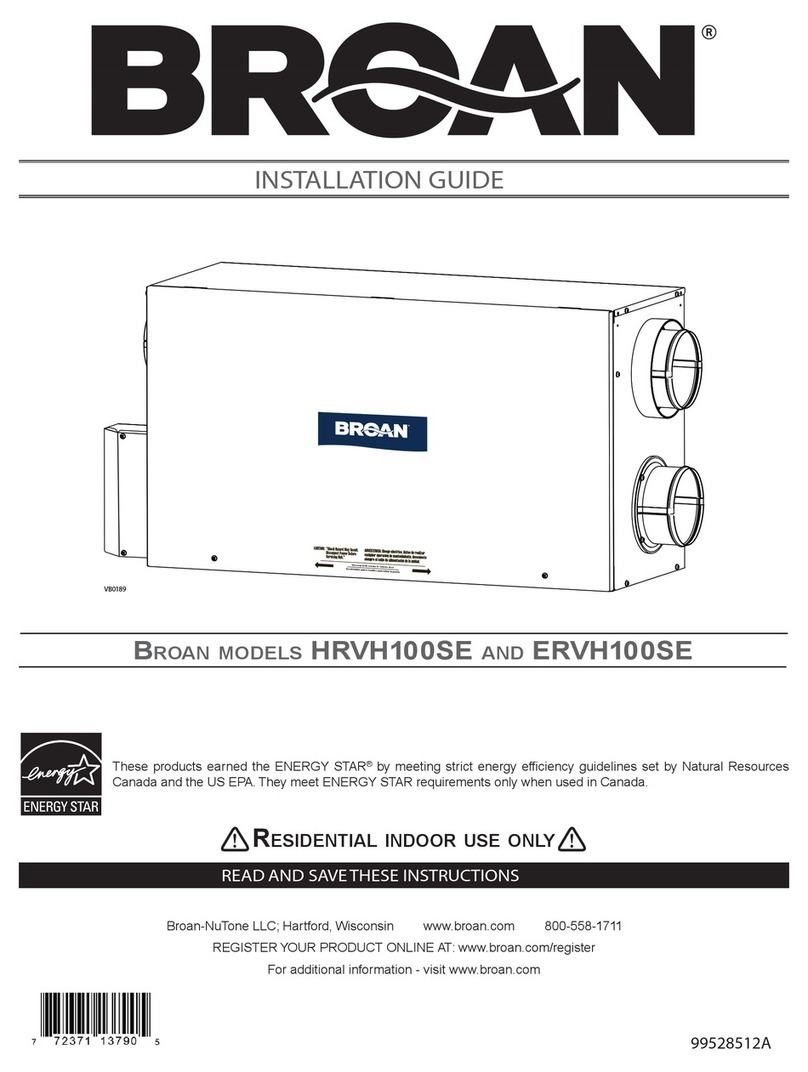
Heat Recovery Ventilation (HRV) efficiently
uses energy of waste stale air ejected out of
the building (with high levels of CO2) to
warm up the fresh air coming from outside,
thus creating a healthier and more comfort-
able environment for all the residents. In
summer, on the contrary, the air flowing
into the building is pleasantly cooled.
In addition to filtering out dust, smog ele-
ments and various allergens, superior
forms of ventilation systems —like
WAFE 350—recover not only heat but hu-
midity, too. Devices like these —called
Energy Recovery Ventilation (ERV) units—
save us money on heating costs and, more
importantly, create healthy and balanced
home environment.
Energy recovery ventilation is the
new standard in the construction of
modern houses, apartments and
commercial properties.