Instructions & Maintenance
Manual
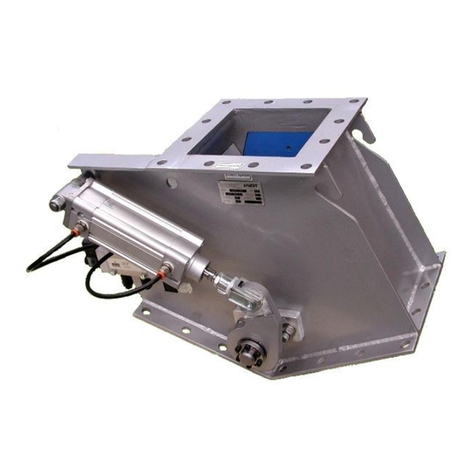
Tank Vent Check Valves.
WINEL B.V.
P.O. Box 70, 9400 AB Assen,
Dr AF Philipsweg 55, 9403 AD Assen,
The Netherlands
Tel. 31 (0)592 366060, Fax 31 (0)592 340833
http://www.winel.nl
Rev: D Written: GdH / MT
Checked by: YX
Date: 25-03-2009 Page: 4/ 24 Approved by: AvdV
3. General product information:
3.1 The
WINEL B.V.
Tank Vent Check valves are designed and tested for a long
and trouble-free lifetime. However, to keep the valves in the best possible condition
we recommend maintenance as per enclosed maintenance instructions.
3.2. WINEL B.V. Tank Vent Check valves types RM ® and BOLEREO ® are made
of the finest materials in state-of-art manufacturing facilities.
Please understand that the WINEL B.V. Tank Vent Check valves have been
installed by the shipyard facility and will be used according owners instructions. As a
result Winel B.V. does not necessarily know the detailed application of the WINEL
B.V. Tank Vent Check valves. In respect to that fact WINEL B.V. cannot be held
responsible for any damage to the ship, its crew and/or its contents.
For the above-mentioned reason, installation and operating personnel should
carefully read the instructions on integrated systems before using the WINEL B.V.
Tank Vent Check valves.
3.3. WINEL B.V. Tank Vent Check valves work by means of a PE or SS (stainless
steel) floating ball situated in the ball holder compartment. In case (sea-) water enters
the WINEL B.V. Tank Vent Check valve the ball floats up to the Neoprene seat and
closes the tank.
3.4. WINEL B.V. Tank Vent Check valves can be used on amongst others
Ballast water tanks, Drinking water tanks, Fuel oil tanks, Lubricating Oil tanks,
Grey water tanks, to let air flow in and out the tank while preventing
overcoming (sea-) water to enter the tanks.
WINEL B.V. Tank Vent Check valves should NEVER
be used for any other purpose then indicated in these
instructions. In case of doubt, you are advised to consult
Winel B.V. and/or the surveyor responsible.
3.5. WINEL B.V. Tank Vent Check valves are not designed for overflow
purposes of fluids. While filling a.o. the ballast tanks, the responsible officer on the
vessel should prevent an overflow situation. In case of frequent or continuous
overflows with fluids the Neoprene seats and the floating balls may be damaged