3
Safety Precautions
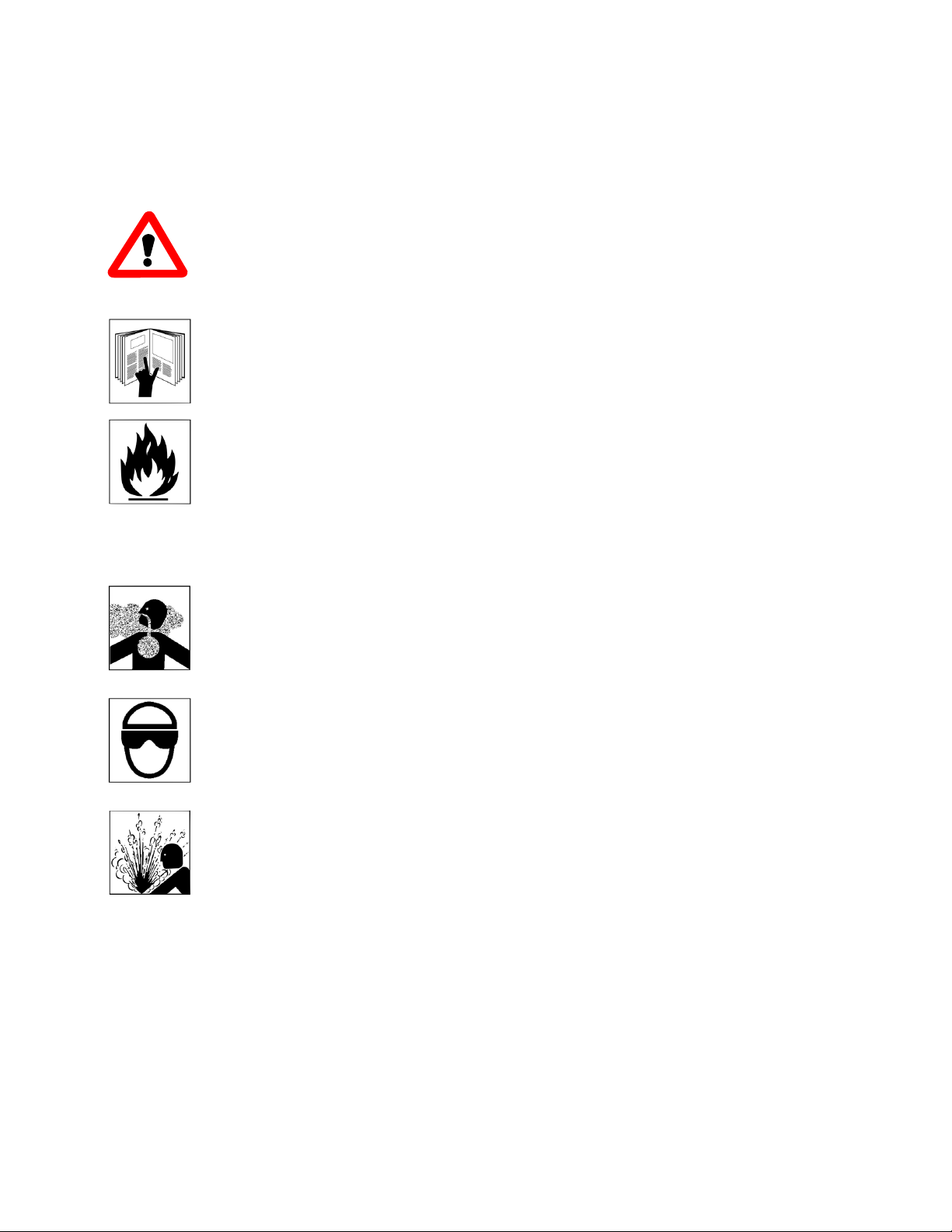
WARNING: To prevent personal injury:
Study, understand, and follow all warnings in this manual before
operating this unit. If the operator cannot read these instructions,
operating instructions and safety precautions must be read and
discussed in the operator’s native language.
Operate this unit with vehicles or cylinders marked to contain
R-1234yf or R134a refrigerant. Cross-contamination with other
refrigerant types causes severe damage to the A/C system, to
service tools, and equipment. Do NOT attempt to adapt the unit for
another refrigerant. Do NOT mix refrigerant types through a system
or in the same container.
Some vehicles may contain illegal substitute refrigerants that may
contain hydrocarbons. R-1234yf is considered a flammable substance.
Failure to follow the manual can result in serious injury or death.
Less than 2 grams of refrigerant are required to be vented with
each sample. This identifier is designed with sealed heat sources
and without sparking components. Ensure adequate ventilation in the
recycling machine design to prevent the accumulation of
refrigerants.
DO NOT breathe refrigerant and lubricant vapor or mist. Exposure
may irritate eyes, nose, and throat. Use recycling equipment
certified to meet the requirements of SAE J2788, J2843, or J2851 to
remove refrigerant from the A/C system. If accidental system
discharge occurs, immediately ventilate the work area. There must
be adequate ventilation in the vehicle servicing area.
The optional air detection sensor is a chemical fuel cell sensor
that will eventually expire. The user must return the unit to
replace the air detection sensor whenever the instrument indicates
as such. Failure to replace the air detection sensor will result in
non- functionality of the instrument.
Wear eye and skin protection when working with refrigerants.
Escaping refrigerant vapors can freeze upon contact. Do NOT direct
refrigerant escaping from the sample hose toward exposed skin or
toward the face.
Connection to power sources greater than 13V DC could cause “out of
warranty” damage.
No operator access is permitted inside the enclosure.
If the equipment is used in a manner not specified by the
manufacturer, the protection by the equipment may be impaired.