manuals.online logo
Brands
  1. Home
  2. •
  3. Brands
  4. •
  5. YOODA
  6. •
  7. Control Unit
  8. •
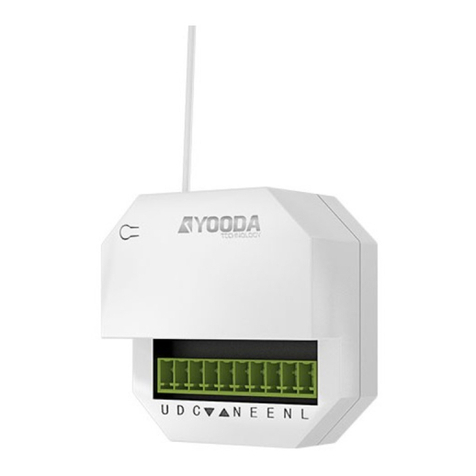
  9. YOODA CAMELEO Series User manual

YOODA CAMELEO Series User manual

This manual suits for next models

1

Other YOODA Control Unit manuals

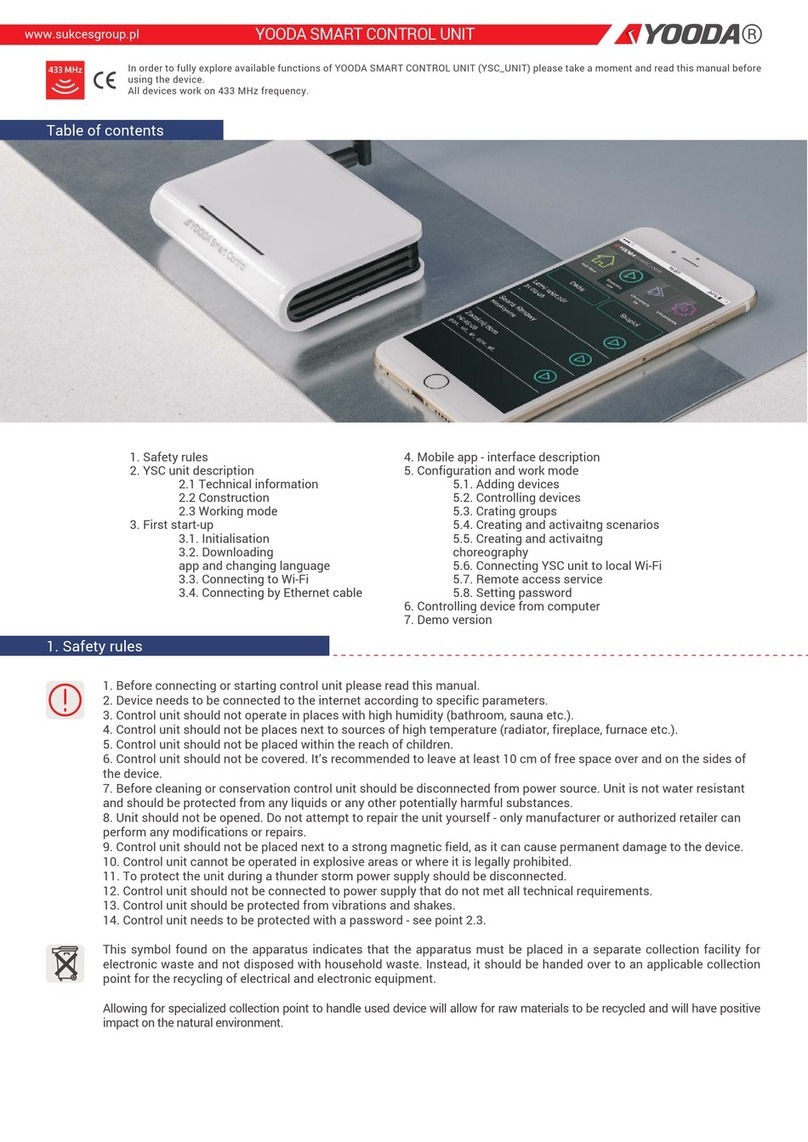
YOODA SMART CONTROL UNIT User manual

YOODA

YOODA SMART CONTROL UNIT User manual

YOODA Smart Home 2 User manual

YOODA

YOODA Smart Home 2 User manual

YOODA NANO Series User manual

YOODA

YOODA NANO Series User manual

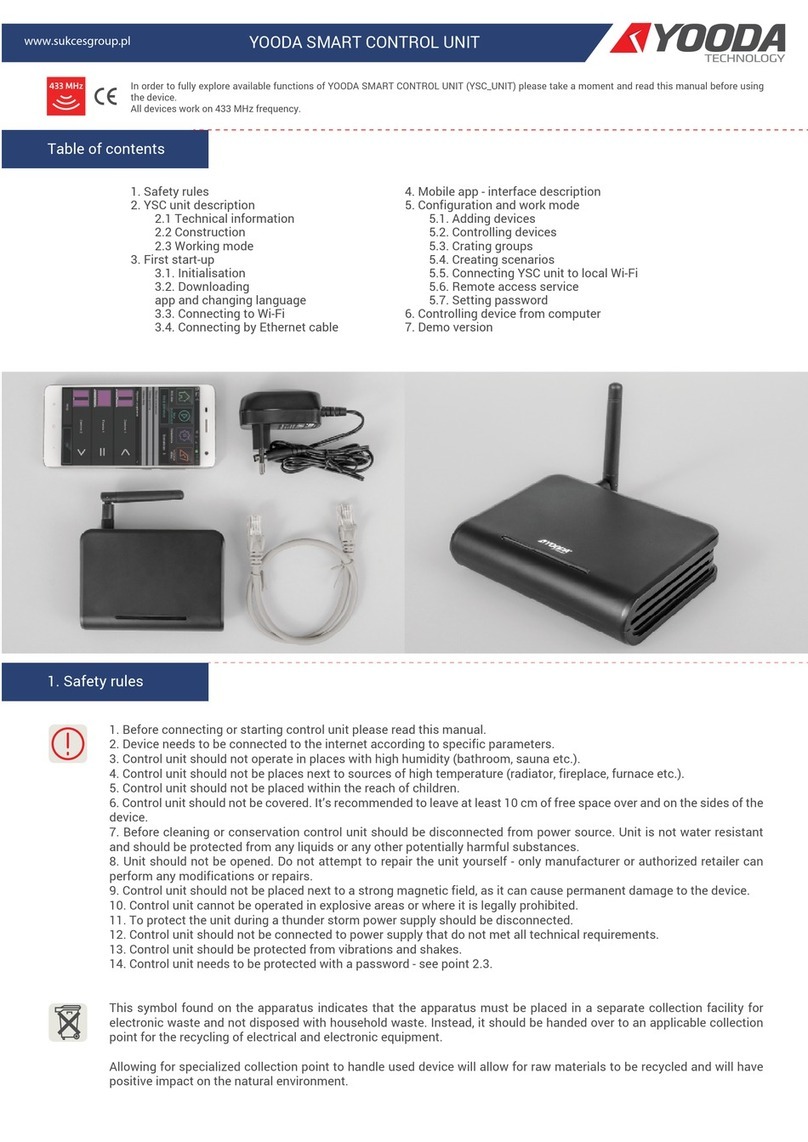
YOODA SMART CONTROL UNIT User manual

YOODA

YOODA SMART CONTROL UNIT User manual

Popular Control Unit manuals by other brands

Seitz 14A80 user manual

Seitz

Seitz 14A80 user manual

Wilo RS485 Installation and operating instructions

Wilo

Wilo RS485 Installation and operating instructions

Becker CentralControl CC41 Commissioning Instruction

Becker

Becker CentralControl CC41 Commissioning Instruction

SICK CDB650 operating instructions

SICK

SICK CDB650 operating instructions

Panduit NetKey NKP5E88M Series installation instructions

Panduit

Panduit NetKey NKP5E88M Series installation instructions

MX Options Concentric Petite Fitting instructions

MX

MX Options Concentric Petite Fitting instructions

Clean Water Systems Fleck 2510 Installation & start?up guide

Clean Water Systems

Clean Water Systems Fleck 2510 Installation & start?up guide

Fairchild FSB44104A user guide

Fairchild

Fairchild FSB44104A user guide

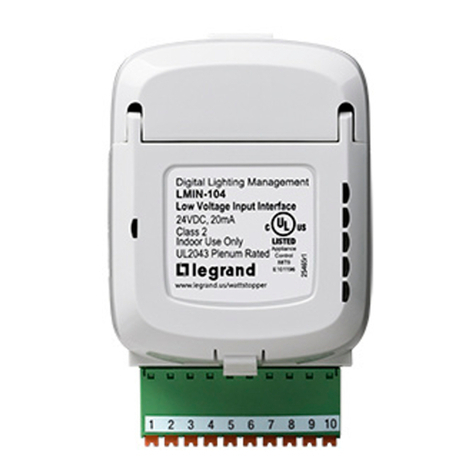
LEGRAND Wattstopper LMIN-104 installation instructions

LEGRAND

LEGRAND Wattstopper LMIN-104 installation instructions

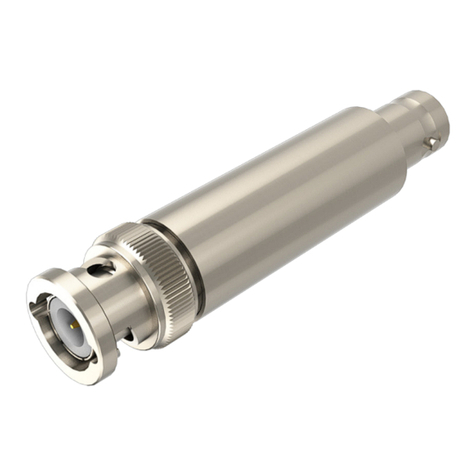
PMK ATT10BNCS instruction manual

PMK

PMK ATT10BNCS instruction manual

Tektronix TDS3FFT user manual

Tektronix

Tektronix TDS3FFT user manual

Woodward easYgen Technical manual

Woodward

Woodward easYgen Technical manual

Balluff BNI EIP-502-105-R015 user guide

Balluff

Balluff BNI EIP-502-105-R015 user guide

NXP Semiconductors TWR-LS1021A Getting started

NXP Semiconductors

NXP Semiconductors TWR-LS1021A Getting started

Advantech PCM-3117 Startup manual

Advantech

Advantech PCM-3117 Startup manual

Danfoss MCO 101 manual

Danfoss

Danfoss MCO 101 manual

Moons' Lin Engineering R701P user manual

Moons'

Moons' Lin Engineering R701P user manual

Aventics RV1 operating instructions

Aventics

Aventics RV1 operating instructions

manuals.online logo
manuals.online logoBrands
  • About & Mission
  • Contact us
  • Privacy Policy
  • Terms and Conditions

Copyright 2025 Manuals.Online. All Rights Reserved.

Single-channel CAMELEO flush-mounted control unit (CAMELEO_1Cf)
1. Control:
can control single motor
2. Memory:
up to 20 transmitters
3. Range:
200 meters outdoor,
35 meters indoor
4. Power supply:
230 V / 50 Hz
5. Output voltage:
230 V / 50 Hz
6. Output power:
300 W
7. Dimensions:
80 x 80 x 50 mm
8. Operating temperature:
from 0°C to 50°C
9. Protection degree:
IP 30
Radio receiver range is a variable value and can differ from declared values depending on conditions in which device
operates. Possible sources of changes in range are building construction, interference caused by other radio transmitters
etc.
To access the programming button, remove the frame from the front of the control unit.
1
2. Detailed description
In order to fully explore available functions of CAMELEO series please take a moment and read this manual before using the device.
CAMELEO control units are compatible with all YOODA brand devices.
CAMELEO_1Cf
www.sukcesgroup.pl
1. General information
UP button
Single-channel CAMELEO flush-mounted
control unit (front)
programming button
STOP button
DOWN button
LED diode
2
3. Connection
4. Programming transmitters
Deleting the transmitter
Optimal mounting parameters:
1. Minimal length from the ground > 1,5 m,
2. Minimal length from the wall and ceiling > 0,3 m,
3. Minimal length between receivers > 0,2 m.
Installation of the tubular motor should be performed by specialists with 1kV or higher SEP-certified electrician's licence
(SEP - Association of Polish Electrical Engineers) or equal license. Device is designed to operate in places shielded from
unfavourable weather conditions. Motor should be installed in accordance with all provisions of regional law and profe
sional standards. All cables connecting power receiver with electric source should be protected from overload and
short-circuits effects with devices automatically disconnecting power. Device should be powered with a separate source
and protected only with a fast-blow fuse (never slow-blow fuse). Creating electrical system using inadequate fuse may
result in loosing rights under the provisions of warranty. When connecting device to power source with cables with
adequate cross-section should be used. Long-lasting output load capacity table should be the ground for choosing
adequate cables.
1. Longer than 10 seconds pause between series of button clicks during programming will cause device to switch off from
programming mode without saving any changes.
2. Procedure described below is to be used for programming first and all other transmitters.
3. Receiver can hold in its memory up to 20 different transmitters. Adding more transmitters will remove the first
programmed transmitters.
1. Longer than 10 seconds pause between series of button clicks will cause device to switch off without saving any
changes.
2. Performing the procedure removes only one transmitter.
Switch
power on.
Press programming button
(LED diode start to flash).
Press STOP button
(LED diode stops to flash).
Press UP button
on transmitter that
is beeing programmed.
The LED on the receiver will
flash and then turn off.
The transmmiter
has been
programmed.
The transmmiter has
been deleted.
Switch
power on.
Press programming button
(LED diode start to flash).
Press STOP button
(LED diode stops to flash).
Press DOWN button
on transmitter that
is beeing deleted.
The LED on the receiver will
flash and then turn off.
motor:
230 V / 50 Hz
power supply:
230 V / 50 Hz
phaze wire
(power supply)
1st direction
(motor)
2nd direction
(motor)
neutral wire
(power supply)
neutral wire
(motor)
protective wire
(power supply) protective wire
(motor)

3
6. Deleting all transmitters
7. Activating impulse mode
Proceeding with this instruction will cause for all transmitters to be deleted form receivers memory.
When impulse mode is activated, single push of UP or DOWN button forces motor to make single part of a full turn, and
when UP or DOWN button is being held for 2 seconds it will force motor to run constantly.
Programmed
transmitters were
successfully deleted.
Switch
power on.
Simultaneously press and hold
STOP and DOWN button
for about 6 seconds.
Switch
power on.
Simultaneously press and hold
UP and STOP button
for about 6 seconds
The LED diode on the receiver
will flash and then turn off.
Impulse mode has been activated.
Repeat these steps to deactivate
the impulse mode.
The LED on the receiver will
flash and then turn off.