manuals.online logo
Brands
  1. Home
  2. •
  3. Brands
  4. •
  5. Zennio
  6. •
  7. Security Sensor
  8. •
  9. Zennio WinDoor RF Guide

Zennio WinDoor RF Guide

Other manuals for WinDoor RF

1

This manual suits for next models

1

Other Zennio Security Sensor manuals

Zennio EyeZen TP User manual

Zennio

Zennio EyeZen TP User manual

Zennio Presentia W0 User manual

Zennio

Zennio Presentia W0 User manual

Zennio EyeZen TP vT User manual

Zennio

Zennio EyeZen TP vT User manual

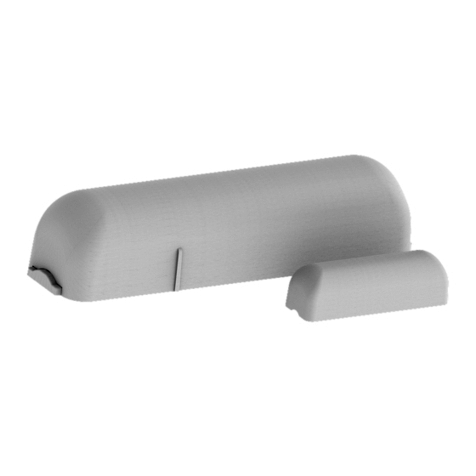
Zennio WinDoor RF User manual

Zennio

Zennio WinDoor RF User manual

Zennio Presentia C v2 User manual

Zennio

Zennio Presentia C v2 User manual

Zennio Presentia C v2 User manual

Zennio

Zennio Presentia C v2 User manual

Zennio EyeZen RF ZPDEZRF868 User manual

Zennio

Zennio EyeZen RF ZPDEZRF868 User manual

Zennio ZN1IO-DETEC User manual

Zennio

Zennio ZN1IO-DETEC User manual

Zennio Presentia W0 User manual

Zennio

Zennio Presentia W0 User manual

Zennio EyeZen TP v2 User manual

Zennio

Zennio EyeZen TP v2 User manual

Popular Security Sensor manuals by other brands

Honeywell Home PROSiXCOCN Installation and setup guide

Honeywell Home

Honeywell Home PROSiXCOCN Installation and setup guide

Duevi SIRPZ-RB-868 Operation

Duevi

Duevi SIRPZ-RB-868 Operation

RKI 65-2483RK Operator's manual

RKI

RKI 65-2483RK Operator's manual

Nortech PD160 Enhanced Series user manual

Nortech

Nortech PD160 Enhanced Series user manual

Omron K8AC-H2 manual

Omron

Omron K8AC-H2 manual

Agilent Technologies G8610 Series Quick reference card

Agilent Technologies

Agilent Technologies G8610 Series Quick reference card

Shinko SE2EA-1-0-0 instruction manual

Shinko

Shinko SE2EA-1-0-0 instruction manual

Det-Tronics X Series instructions

Det-Tronics

Det-Tronics X Series instructions

ACR Electronics COBHAM RCL-300A Product support manual

ACR Electronics

ACR Electronics COBHAM RCL-300A Product support manual

TOOLCRAFT 1712612 operating instructions

TOOLCRAFT

TOOLCRAFT 1712612 operating instructions

Elkron IM600 Installation, programming and functions manual

Elkron

Elkron IM600 Installation, programming and functions manual

Bosch WEU PDO 6 Original instructions

Bosch

Bosch WEU PDO 6 Original instructions

THORLABS PDA10JT user guide

THORLABS

THORLABS PDA10JT user guide

Waeco UV-DETECT operating manual

Waeco

Waeco UV-DETECT operating manual

Intermatic IOS-DSIMF manual

Intermatic

Intermatic IOS-DSIMF manual

Siemens AZL66 Series manual

Siemens

Siemens AZL66 Series manual

BTI Profiline Multi Finder operating instructions

BTI

BTI Profiline Multi Finder operating instructions

Challenger SL01 instruction manual

Challenger

Challenger SL01 instruction manual

manuals.online logo
manuals.online logoBrands
  • About & Mission
  • Contact us
  • Privacy Policy
  • Terms and Conditions

Copyright 2025 Manuals.Online. All Rights Reserved.

© Zennio Avance y Tecnología S.L. Edition 4 Further information www.zennio.com Page 1/2
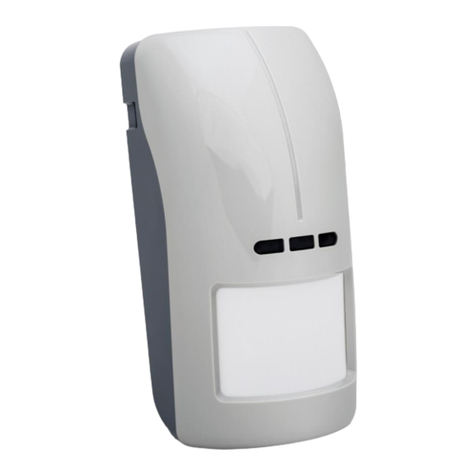
WinDoor RF
KNX-RF magnetic contact for door or window
ZRFWD TECHNICAL DOCUMENTATION
FEATURES
•KNX RF (RF1.R @ 868.3 MHz) device for detection and
notification of window/door opening and closing
•Tamper contact with parameterizable sendings
•Heartbeat and low-battery warning functionality
•Dimensions 73 x 19 x 17 mm
•Surface-mounted
•Conformity with the CE, UKCA, RCM directives
1. RF Antenna
2. Programming LED
3. Programming button
4. Battery
5. Cover
6. Tamper button
7. Magnet
8. Alignment marks
Figure 1: WinDoor RF
Programming/Test button: short press to set programming mode. If this button is held while connecting the battery, it enters the safe mode.
Programming LED: programming mode indicator (red). When the device enters the safe mode, it blinks (red) every half second. During the start-up
(reset or after power failure) and if the device is not in safe mode, it emits a red flash.
GENERAL SPECIFICATIONS
CONCEPT
DESCRIPTION
Type of device
Electric operation control device
Power supply
Voltage (typical)
3.6 VDC
Battery type¹
1/2AA (ER14250) Li-SOCl2
Expected battery lifetime² (years)
5
Maximum consumption³
mA
mW
23.4
84.2
Communication type
KNX RF Ready (Semi-directional)
Radio frequency
868.3 MHz
Maximum transmitting power
20 mW (13 dBm)
Operation temperature
0 .. +55 °C
Storage temperature
-20 .. +55 °C
Operation humidity
5 .. 95%
Storage humidity
5 .. 95%
Complementary characteristics
Class B
Protection class
III
Operation type
Continuous operation
Device action type
Type 1
Electrical stress period
Long
Degree of protection
IP20, clean environment
Installation
Surface-mounted on windows or doors. The distance between magnet
and sensor must not exceed 15 mm (7 mm in case of steel-made frame
and door).
RF Range⁴
Up to 125 m in free-field
Operation indicator
The programming LED indicates programming mode (red). After the
initialisation (1 s), five quick flashes (5 x 0.1 s) of the LED notify the
correct recognition of the closed door.
Weight
27 g
PCB CTI index
175 V
Housing material
PC FR V0 halogen free
¹ See "Note about the batteries".
² Considering one hearbeat sending each day, 7 open/close cycles per day and medium signal power.
³ The maximum consumption depends on the transmission power parameterized.
⁴ The maximum range depends on several factors such as environmental conditions, device orientation, type and thickness of the surrounding materials,
etc.
2
º
7
1
3
º
4
3
5
3
6
8
º
8
º
© Zennio Avance y Tecnología S.L. Edition 4 Further information www.zennio.com Page 2/2
SAFETY INSTRUCTIONS ANDADDITIONAL NOTES
•Installation should only be performed by qualified professionals according to the laws and regulations applicable in each country.
•This device is not suitable for security applications in alarm systems.
•Avoid to install the device close to radioelectric devices. The materials of the building and of the elements near the device could
influence on its coverage range.
•Keep the device away from water (condensation over the device included) and do not cover it with clothes, paper or any other material
while in use.
•The WEEE logo means that this device contains electronic parts and it must be properly disposed of by following the instructions at
https://www.zennio.com/en/legal/weee-regulation.
•This device contains software subject to specific licences. For details, please refer to http://zennio.com/licenses.
INSTALLATION INSTRUCTIONS
1. Place the sensor on the door/window frame, and the magnet directly on the edge of the door/window. Align the marks correctly
and mark the position of both of them. The distance between the sensor and the magnet when the door/window is closed must
be lower than 15 mm (7 mm in case of steel). For details on the different types of installation, please refer to the technical note
“Installation WinDoor RF”.
2. Fix the back cover of the sensor on the previously marked locations using the supplied screws (0.28 Nm max.) or the adhesive
strips. Do the same with the magnet (in case of screw fixing first remove the cover with a screwdriver and, once the back cover
is fixed, place back the magnet with its cover).
3. With the door closed, verify that the device is completely off by pressing the programming button shortly, and then remove the
plastic strip that isolates the battery. Check that the device starts (programming LED in red colour for 1 s) and then that the
closed door is recognized (five quick flashes).
4. Place back the sensor cover. If it is necessary to remove the cover again, pull it out by pressing on its two ends.
To download the individual address or the application press the programming button before starting the ETS download.
2
1
3
4
15
15
BATTERYREPLACEMENT
1. Release the cover by pressing on the two ends.
2. Remove the battery being careful not to damage the antenna or the printed circuit board. Push the programming button without
the battery.
3. Insert the new battery paying attention on the polarity. Check that the device starts (programming LED in red colour for 1 s)
and then that the closed door is recognized (five quick flashes).
4. Put the sensor cover back.
DIMENSIONS(mm)
⚠NOTE ABOUT THE BATTERIES: The batteries required by this device, due to their very nature, can undergo a passivation
process if not used for a long period. The batteries delivered by Zennio are guaranteed to be not passivated, but if the installation
is postponed for several months, a depassivation process may be necessary. This device performs an automatic depassivation
process during the startup, which can take several minutes depending on the status of the battery and lead to successive
restarts. Although this should be sufficient in most cases, if the battery is severely passivated, low-battery notificationsor restarts
during normal operation may arise. In such a case, Zennio recommends installing a new battery or performing a manual
depassivation procedure. Please contact Support for details (support@zennio.com).

73.0
19.0
30.0
8.0
17.0
9.0