manuals.online logo
Brands
  1. Home
  2. •
  3. Brands
  4. •
  5. ABB
  6. •
  7. DC Drive
  8. •
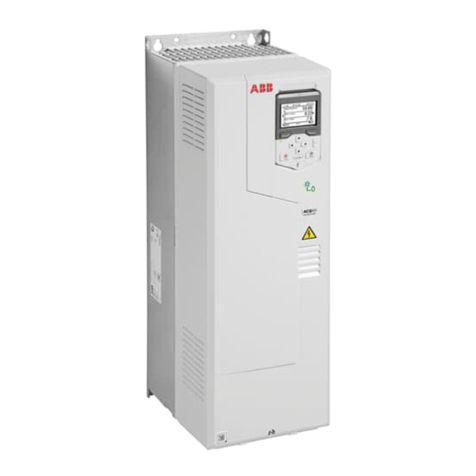
  9. ABB ACS320 series Owner's manual

ABB ACS320 series Owner's manual

Other manuals for ACS320 series

2

This manual suits for next models

1

Other ABB DC Drive manuals

ABB ACS880+N5350 User manual

ABB

ABB ACS880+N5350 User manual

ABB ACS550-02 User manual

ABB

ABB ACS550-02 User manual

ABB ACS180 User manual

ABB

ABB ACS180 User manual

ABB HD4-HXA Operating and installation instructions

ABB

ABB HD4-HXA Operating and installation instructions

ABB ACS880-01 Series Owner's manual

ABB

ABB ACS880-01 Series Owner's manual

ABB ACS880-37LC User manual

ABB

ABB ACS880-37LC User manual

ABB +Q951 User manual

ABB

ABB +Q951 User manual

ABB ACS 800 Series Operation and maintenance manual

ABB

ABB ACS 800 Series Operation and maintenance manual

ABB ACS355 series Owner's manual

ABB

ABB ACS355 series Owner's manual

ABB ACS 400 User manual

ABB

ABB ACS 400 User manual

ABB ACQ580-34 User manual

ABB

ABB ACQ580-34 User manual

ABB ACS880-01 Series User manual

ABB

ABB ACS880-01 Series User manual

ABB ACS380 Series Use and care manual

ABB

ABB ACS380 Series Use and care manual

ABB ACS880 Series User manual

ABB

ABB ACS880 Series User manual

ABB ACS880-01 Series User manual

ABB

ABB ACS880-01 Series User manual

ABB ACS580 Series User manual

ABB

ABB ACS580 Series User manual

ABB ACS380 Series User manual

ABB

ABB ACS380 Series User manual

ABB ACS310 User manual

ABB

ABB ACS310 User manual

ABB DCS800 User manual

ABB

ABB DCS800 User manual

ABB DCS800 User manual

ABB

ABB DCS800 User manual

ABB ACS550 Series User manual

ABB

ABB ACS550 Series User manual

ABB SMISSLINE F454 Service manual

ABB

ABB SMISSLINE F454 Service manual

ABB NOCH0070-6 Series User manual

ABB

ABB NOCH0070-6 Series User manual

ABB ACS2000 DFE User manual

ABB

ABB ACS2000 DFE User manual

Popular DC Drive manuals by other brands

National Instruments NI MID-7604 user guide

National Instruments

National Instruments NI MID-7604 user guide

SOMFY Maestria WT Series instructions

SOMFY

SOMFY Maestria WT Series instructions

Danfoss VLT HVAC Design guide

Danfoss

Danfoss VLT HVAC Design guide

Trane TR150 Service manual

Trane

Trane TR150 Service manual

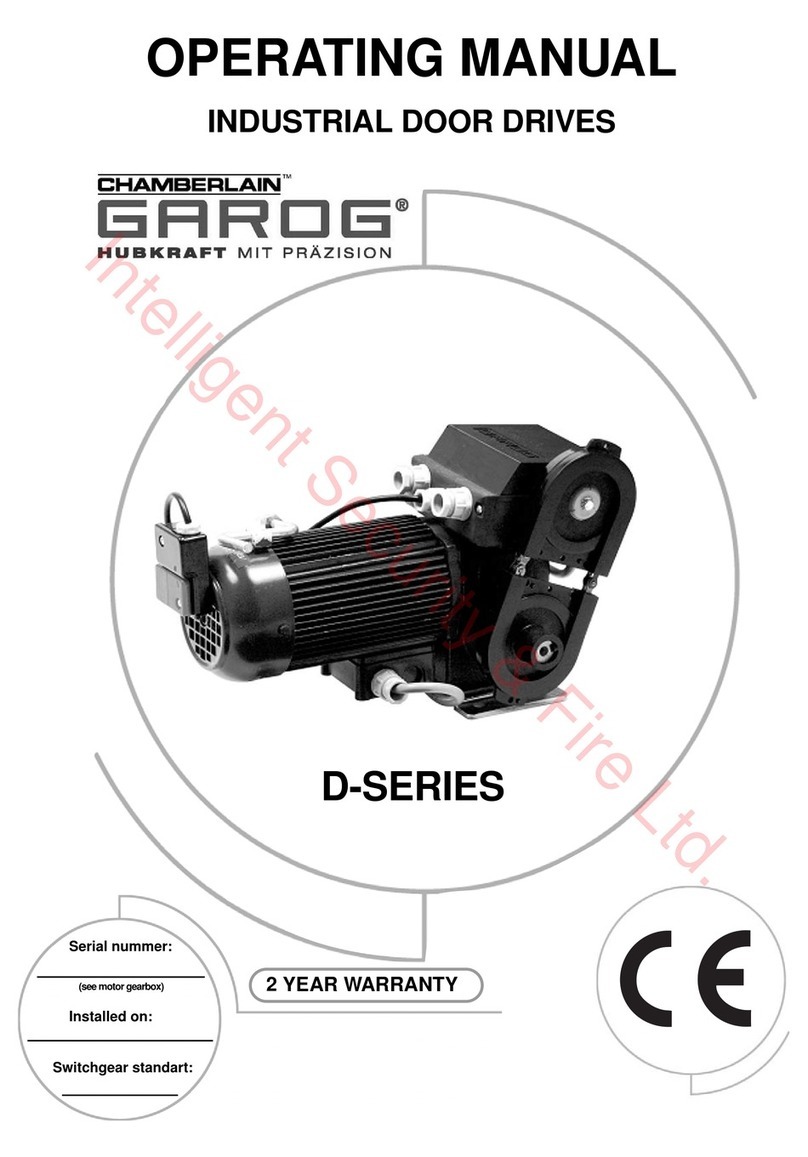
Chamberlain Garog D Series operating manual

Chamberlain Garog

Chamberlain Garog D Series operating manual

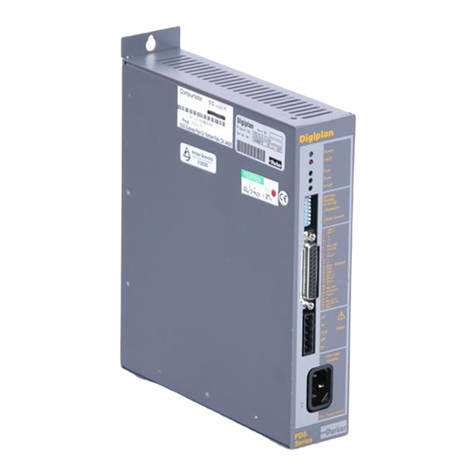
Parker PDS Series user guide

Parker

Parker PDS Series user guide

Binks QS-5012-1-CE Service manual

Binks

Binks QS-5012-1-CE Service manual

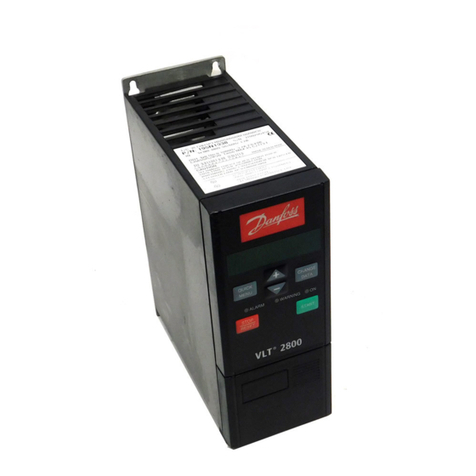
Danfoss VLT 2800 Series Quick setup

Danfoss

Danfoss VLT 2800 Series Quick setup

YASKAWA CANopen SI-S3 Technical manual

YASKAWA

YASKAWA CANopen SI-S3 Technical manual

GE D20A6 instructions

GE

GE D20A6 instructions

Danfoss VLT AQUA Drive FC 202 operating manual

Danfoss

Danfoss VLT AQUA Drive FC 202 operating manual

Lenze PositionServo 940 user manual

Lenze

Lenze PositionServo 940 user manual

Unex MC-D-250-1000-050W-TW operating manual

Unex

Unex MC-D-250-1000-050W-TW operating manual

Geckodrive G213V manual

Geckodrive

Geckodrive G213V manual

Rockwell Automation PowerFlex 700S Programming manual

Rockwell Automation

Rockwell Automation PowerFlex 700S Programming manual

WEG DeviceNet CFW500 user manual

WEG

WEG DeviceNet CFW500 user manual

Siemens SINAMICS G List manual

Siemens

Siemens SINAMICS G List manual

Siemens SINAMICS SM150 6SL3815-7NP41-0AA1 Operating instructions & installation instructions

Siemens

Siemens SINAMICS SM150 6SL3815-7NP41-0AA1 Operating instructions & installation instructions

manuals.online logo
manuals.online logoBrands
  • About & Mission
  • Contact us
  • Privacy Policy
  • Terms and Conditions

Copyright 2025 Manuals.Online. All Rights Reserved.

MODEL SHOWN: ACS 320
VFD KEYPADS IN E-BOX
SUPPLEMENTAL
MANUAL
FACTORY-INSTALLED
ABB VARIABLE FREQUENCY
DRIVES (VFD)
IN RENEWAIRE
(ERV) VENTILATORS
RENEWAIRE.COM
TABLE OF CONTENTS
Product info ............................ 2
Installation........................... 3-9
Operation......................... 10-16
VFD KEYPADS IN E
-
BOX
ABB VARIABLE FREQUENCY DRIVES
RENEWAIRE.COM ABB VFD SUPPLEMENTAL MANUAL 1.800.627.44992
PLANNING
YOUR INSTALLATION
ABOUT ABB VFDS
PRODUCT INFO
ABB ACS320 VFDs are generally supplied in indoor ERVs and ABB ACS355+N831 VFDs in roof top ERVs.
Both models have built in BACnet®building communication protocol and the ACS355+N831 also has
low ambient firmware that extends the lower starting temperature limit to -25°F.
FOR COMPLETE ERV INSTALLATION YOU WILL ALSO NEED:
• Standard Installation and Operation Manual for the ERV – physical installation and duct connection,
maintenance procedures, etc.
• Supplemental Wiring Schematic Manual – complete unit wiring diagrams.
• User’s Manual ACS320 Drives or Users Manual ACS355 Drives – ABB’s user’s/installer’s manual.
More detailed information is available online in the Document Library at www.abb.com/drives.
1. Before servicing or cleaning the unit, switch
power off at disconnect switch or service panel
and lock-out/tag-out to prevent power from
being switched on accidentally. More than one
disconnect switch may be required to
de-energize the equipment for servicing.
2. This installation manual shows the suggested
installation method. Additional measures may
be required by local codes and standards.
3. Installation work and electrical wiring must be
done by qualified professional(s) in accordance
with all applicable codes, standards and
licensing requirements.
4. Any structural alterations necessary for
installation must comply with all applicable
building, health, and safety code requirements.
5. This unit must be grounded.
6. Use the unit only in the manner intended by the
manufacturer. If you have questions, contact
the manufacturer.
7. When cutting or drilling into unit, wall or
ceiling, do not damage electrical wiring and
other hidden utilities.
8. Do not re-wire the VFD(s) to control more than
one motor per VFD.
9. Do not operate the motors in this unit above
the motor’s rated full load amps (FLA) as
indicated on the unit’s nameplate.
RISK OF FIRE, ELECTRIC SHOCK, OR INJURY. OBSERVE ALL CODES AND THE FOLLOWING:
WARNING
NOTE: VFD(s) in this unit can be operated in many ways. This Manual provides only an outline of common methods.
DO NOT OPERATE VFD IN CONDITIONS OUTSIDE OF TEMPERATURE LIMITS. The manufacturer’s normal
ambient temperature limits forACS320VFDs are 14°F to 122°F. RenewAire has worked with the manufacturer
to implement low-ambient-start firmware for the ACS355+N831 that extends the lower temperature
limit for starting the VFD down to -25°F, which has been validated by manufacturer and RenewAire testing.
The manufacturer recommends that the VFD not be operated for prolonged periods at temperatures below
14°F to ensure longevity of the VFD. RenewAire commercial ERVs are VFD ready, in extreme climates
consider field installing VFDs in a climate controlled indoor electrical cabinet.
WARNING
ABB VARIABLE FREQUENCY DRIVES
31.800.627.4499 ABB VFD SUPPLEMENTAL MANUAL RENEWAIRE.COM
PLANNING YOUR
INSTALLATION
INSTALLATION
“ON” AND “SPEED” SIGNALS
VFD operation in this unit is dependent on two signals: an ON signal and a SPEED (or REFERENCE) signal.
The sources and types of these signals can vary. If the ERV is equipped with dampers the ON signal to the
VFD comes from the end switch on the damper. If the ERV is not equipped with dampers, the ON signal
comes from an external control connected directly to the VFD. When an ON signal is received by the VFD,
it starts the motor. The VFD then operates the blower at the speed established by the SPEED signal. The
SPEED signal is often provided by an external control, but in some applications “pre-set” speeds are set
inside the VFD and are selected by external switches or relays.
PRINCIPLES OF EXTERNAL CONTROL
This ERV can be operated by various external
control devices including remote switch or relay,
digital time clock with relay, occupancy sensor
with relay, and carbon dioxide sensor with relay
and analog output. These devices are commonly
known as 2-wire, 3-wire, and 4-wire devices.
A Building Management System (BMS) can control
this ERV through relay contacts and with 0-10vdc
or 4-20mA analog inputs.
The external control devices can be connected to
this ERV to operate each blower independently or
for one blower to act as leader and the other
blower to act as follower. In leader-follower
mode, a single external switch or relay calls for
operation and the leader VFD sets SPEED to internal
presets, or in response to an analog input signal.
The follower VFD then operates at either exactly
the same speed, at an offset above or below the
leader’s speed, or at a scaled speed.
The VFD’s are pre-programmed at the factory so
only a few parameters need change for a
specific installation.
CONNECTING EXTERNAL CONTROLS
If this ERV is equipped with damper(s), the ON signal is connected to the terminal strip in the electrical
enclosure (“E-box”). If this ERV is not equipped with damper(s), and has 2 VFDs, the ON signal is
connected directly to the VFDs. The SPEED signals are always connected directly to the VFD(s).
WIRE ROUTING
Route input power cables, motor cables and control
cables separately to decrease electromagnetic
interference caused by the rapid changes in
the drive output voltage. Where control cables
must cross power cables make sure that they
are arranged at an angle as near to 90 degrees
as possible. See the ABB VFD manual for more
detailed wire routing instructions.
Power cables and control cables can be brought
into the bottom of the electrical box attached to the
ERV unit or through the bottom of the unit itself.
There are plugged holes to run control wires and
power wires between the electrical box and the
unit interior, marked on the interior of the ERV unit
and another plugged hole in the unit compartment
divider to run wires to VFDs in the other airstream
compartment if needed.
In some configurations the VFD and/or VFD
protective guard may need to be removed to
access the control wire hole plug to run wires.
A label is located in the ERV on the left interior
wall indicating the power and control wire hole
plug locations. Bring wires out from the top or
bottom of the VFD mounting bracket and not
through the mounting bracket window when
routing wires if |the VFD is mounted over the
hole plug.
After the wires are run, apply caulk around the
wires at wire bushings used between the electrical
box and ERV unit and between compartments
in the unit to prevent air leakage between these
compartments.

ABB VARIABLE FREQUENCY DRIVES
RENEWAIRE.COM ABB VFD SUPPLEMENTAL MANUAL 1.800.627.44994
PLANNING YOUR
INSTALLATION
TECHNICAL SUPPORT
INSTALLATION
Each VFD has a keypad which is accessible at the
E-box while the unit is operating.
You can check the status of the VFD at the keypad,
and make changes to the VFD parameters at the
keypad. You can manually control the VFD from the
keypad during start-up and commissioning.
VFD is factory programmed to cover most needs
but some parameters will need to be set to interact
with the external control system.
Access the keypad(s) through the removable cover
to the E-box.
For questions about applications not covered in this manual, and for questions specific to the
ABB Drives, contact ABB Technical Support at 800-HELP-365 (800-435-7365).
A listing of ABB support and service contacts can be found on the Internet at www.abb.com/drives and
selecting Sales, Support and Service Network.
Softkey
“Auto”
“OFF” “Hand”
Softkey
Help Key
Up/Down Buttons
The function of each
Softkey changes
and is shown just
above the Softkey in
the display.
ABB KEY PAD BUTTONS
ABB manuals are available as PDFs at www.abb.com/drives; select Document Library.
Related ABB Manuals:
ACS320 User’s Manual 3AUA0000062599
ACS320 Short Form User’s Manual 3AUA0000086933
ACS355 User’s Manual 3AUA0000066143
ACS355 HVAC with BACnet (+N831) Supplement 3AXD50000024172
FMBA-01 Modbus Adapter Module User’s Manual 3AFE68586704
F-Series Fieldbus Adapter Modules Installation Note 3AXD50000008201
ACS355 HVAC With BACnet (+N831) Document Guide 3AXD50000023355
ABB offers training courses on their VFDs; navigate to www.abb.com/drives and select Training Courses.
For questions about applications covered in this manual, and for questions about how the VFDs are
installed in your RenewAire ERV unit, contact RenewAire Customer Support at 800-627-4499.
PURPOSE OF PROVIDED KEYPAD
ABB VARIABLE FREQUENCY DRIVES
51.800.627.4499 ABB VFD SUPPLEMENTAL MANUAL RENEWAIRE.COM
WIRING OPTIONS
WIRING SCHEMATICS
INSTALLATION
“ON” SIGNAL CONNECTIONS
If the ERV is equipped with Damper(s) and/or with just one VFD, the ON Signal control wires are connected
to the low-voltage terminal strip in the ERV E-box. See Fig. 1.
Install a jumper between terminals 2 and 3 to use the ERV’s on-board 24VAC power. Do this when the
external control(s) have isolated contacts that don’t provide any voltage, as in the top two examples.
Make no connections between terminals 1 & 2 and terminals 3-5 if the external control has a voltage
output to provide the ON signal. This voltage must be 24VAC.
With ERVs equipped with no dampers and 2 VFDs, the ON signal control wires are connected directly to the
VFD. See Fig. 2 & 3.
“SPEED” SIGNAL CONNECTIONS
Any SPEED Signal connections are made directly to the VFD (see Figures 4,6 & 7). The VFDs can accept
4-20mA or 0-10vdc analog control signals to operate at varying speeds. The VFDs also can accept
momentary-contact inputs to operate at up to three pre-set speeds. VFD Parameters must be properly set
to accept and act on Speed signals. Wiring for analog control signals should be twisted-pair, single- or
double-shielded cable, with shield (and drain if provided) grounded at only one end of the cable.
LEADER-FOLLOWER CONNECTIONS
ON and SPEED signals can be passed from the LEADER VFD to a FOLLOWER VFD. See Figures 3 & 5.
Capacitors in VFDs
Retain Charge
Allow 2 minutes after shutting
off power to the VFDs to allow
the capacitors in the VFD to
fully discharge. Do not connect
or disconnect wires at the VFD
without waiting 2 minutes.
CAUTION
F1 CONNECTION OF ON SIGNALS TO LOW-VOLTAGE TERMINAL STRIP IN ERV E-BOX.
ABB VARIABLE FREQUENCY DRIVES
RENEWAIRE.COM ABB VFD SUPPLEMENTAL MANUAL 1.800.627.44996
F2 FACTORY CONTROL WIRING: ON SIGNALS CONNECTED TO EACH VFD.
WIRING SCHEMATICS
INSTALLATION
See Fig. 1 for Relay or Damper Actuator
Connection alternatives.
DO NOT CONNECT POWER TO
TERMINALS 9-15 ON EITHER VFD
F3 ALTERNATIVE CONTROL WIRING: ON SIGNAL CONNECTED DIRECTLY
TO ONE VFD, PASSED TO SECOND VFD FROM TERMINALS 17 & 19.
9 10111215
8
7
6
5
4
3
2
1
AGND
A01
AGND
AI2
10V
AGND
AI1
SCR
VFD (FA)
9 10111215
8
7
6
5
4
3
2
1
AGND
A01
AGND
AI2
10V
AGND
AI1
SCR
VFD (EA)
17 19
PARAMETER SETTINGS - FA VFD
Parameter Setting Parameter Description
1401 2 = RUN Closes contact between 17 & 19 when
VFD is called to RUN.
Install these
wires -
FA VFD will turn
EA Blower ON
Close contact to
turn FA Blower ON
DO NOT CONNECT POWER TO
TERMINALS 9-15 ON EITHER VFD
NOTE: ERV may optionally have
only one VFD.
9 10111215
8
7
6
5
4
3
2
1
AGND
A01
AGND
AI2
10V
AGND
AI1
SCR
VFD (FA)
9 10111215
8
7
6
5
4
3
2
1
AGND
A01
AGND
AI2
10V
AGND
AI1
SCR
VFD (EA)
ABB VARIABLE FREQUENCY DRIVES
71.800.627.4499 ABB VFD SUPPLEMENTAL MANUAL RENEWAIRE.COM
WIRING SCHEMATICS
INSTALLATION
ANALOG INPUTS TO PROVIDE THE SPEED SIGNAL
Analog inputs are connected as shown below. It may be necessary to scale the response of the VFD to the
analog SPEED signal. See example of VFD Parameter Scaling in Figure 9 (F9).
F4 EXAMPLES OF ANALOG INPUT CONNECTIONS.
F5 LEADER-FOLLOWER CONNECTION.
NOTE: All wiring for analog signals connected to the
VFDs should be double - or single-shielded twisted-pair
cable. Ground the shield at one end of the cable only.
NOTE: Parameters 1501 and 1502 can be used to
scale the Analog Output of the Leader VFD in order to
offset or correct the speed of the Follower VFD.
If the FA VFD is controlled by an analog input signal,
it is likely that the FA VFD’s response to the analog
input will need to be scaled, using parameters 1104,
1105, 1301 and 1302. See example of VFD Parameter
Scaling in Figure 9 (F9).
If both VFDs are to run at the same speed, no scaling
parameters need be applied to the EA VFD since it is
controlled as a “Follower”.
WIRING TWO VFDS FOR LEADER-FOLLOWER OPERATION
One VFD can provide the SPEED signal to a second VFD, as shown below.
Connect VFDs as shown -
FA VFD will pass the Frequency
(Speed) Signal to the EA VFD.
Use shielded cable and ground
the shield to Terminal 1 on
either VFD
 








$*1'
$
$*1'
$,
9
$*1'
$,
6&5
9)'XVLQJYGF
 








$*1'
$
$*1'
$,
9
$*1'
$,
6&5
9)'XVLQJP$
&RQQHFWLRQVIRUYGF&RQWUROOHU
6HW-XPSHURUVZLWFK$,WR
%27720RU2))SRVLWLRQ
6LJQDOFDEOHVKLHOGVFUHHQ
)UHTXHQF\,QSXWYGF
)UHTXHQF\,QSXW&RPPRQJURXQG
5HIHUHQFH9ROWDJH
6LJQDOFDEOHVKLHOGVFUHHQ
)UHTXHQF\,QSXWP$
)UHTXHQF\,QSXW&RPPRQJURXQG
5HOD\&RQWDFWRU$FWXDWRU(QG6ZLWFK
)DFWRU\:LUHG
N2+0327(17,20(7(5
P$&21752//(5
5HOD\&RQWDFWRU$FWXDWRU(QG6ZLWFK
)DFWRU\:LUHG
$, $,
$, $,
YGF&21752//(5


&RQQHFWLRQVIRUP$&RQWUROOHU
6HW-XPSHURUVZLWFK$,WR723RU
21SRVLWLRQ
3$5$0(7(56(77,1*6*(1(5$/
3DUDPHWHU 6HWWLQJ 3DUDPHWHU'HVFULSWLRQ
  $,
(QDEOHV)UHTXHQF\WREHFRQWUROOHGE\
DQDORJLQSXWVLJQDOIURPH[WHUQDO
FRQWURO
3$5$0(7(56(77,1*6YGF$1$/2*,1387
  3URSHUO\VFDOHVGLVSOD\RILQSXW
 96HWVGLVSOD\XQLWVDV9ROWV
 9 3URSHUO\VFDOHVGLVSOD\RILQSXW
 9 3URSHUO\VFDOHVGLVSOD\RILQSXW
3$5$0(7(56(77,1*6P$$1$/2*,1387
  3URSHUO\VFDOHVGLVSOD\RILQSXW
 P$ 6HWVGLVSOD\XQLWVDVP$PSV
 P$ 3URSHUO\VFDOHVGLVSOD\RILQSXW
 P$ 3URSHUO\VFDOHVGLVSOD\RILQSXW
 








$*1'
$
$*1'
$,
9
$*1'
$,
6&5
9)'XVLQJYGF
 








$*1'
$
$*1'
$,
9
$*1'
$,
6&5
9)'XVLQJP$
63(('LQSXWZLULQJQRWLOOXVWUDWHG
$, $,
6LQFHWKHLQSXWIURPWKH
8SSHU9)'LVP$LQSXW
SODFH-XPSHURUVZLWFK$,
DW723RU21SRVLWLRQ
)UHTXHQF\2XWSXWDOZD\VP$
)UHTXHQF\2XWSXW&RPPRQJURXQG
6LJQDOFDEOHVKLHOGVFUHHQ
)UHTXHQF\,QSXWP$
)UHTXHQF\,QSXW&RPPRQJURXQG
3$5$0(7(56(77,1*6
3DUDPHWHU 6HWWLQJ 3DUDPHWHU'HVFULSWLRQ
  $,
(QDEOHV)UHTXHQF\WREHFRQWUROOHGE\
DQDORJLQSXWVLJQDOIURPH[WHUQDO
FRQWURO
ABB VARIABLE FREQUENCY DRIVES
RENEWAIRE.COM ABB VFD SUPPLEMENTAL MANUAL 1.800.627.44998
WIRING SCHEMATICS
INSTALLATION
USING VFD PRESETS FOR THE SPEED SIGNALS
The VFD can be programmed with 3 pre-set speeds. Contact switches can then be used to direct the VFD
to operate at one of those speeds. See ABB manuals for additional options. Leader-follower wiring can also
be used to make a second VFD operate at the same speed as the first VFD.
F6 USE OF 2 SWITCHES TO COMMAND THE VFD
TO OPERATE AT ANY OF 3 PRE-SET SPEEDS.
NOTE: Pre-set speeds override any
Frequency (Speed) inputs.

Use switches across terminals
9-14 and 9-15 on the VFD.
Install Leader-Follower connection
wiring if desired to operate 2nd
VFD at the same speeds.
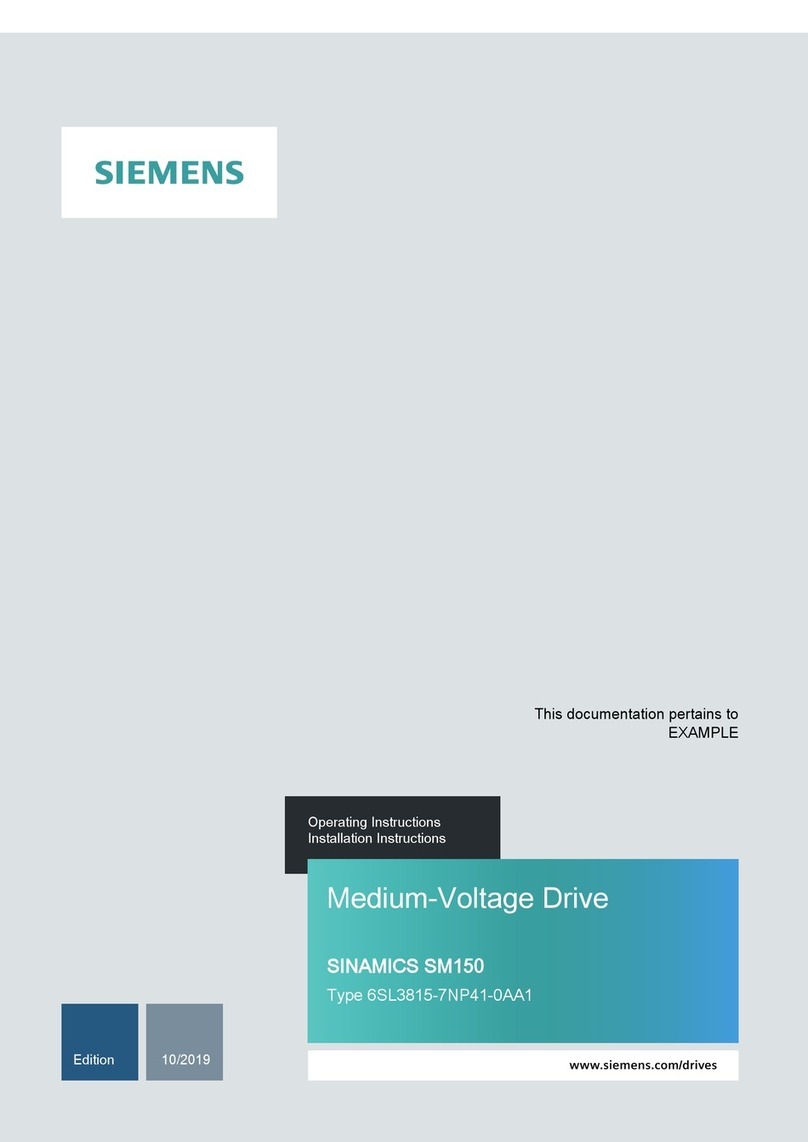
F7 EXAMPLE OF OPERATION OF 2 VFDS BY A CO2 CONTROLLER.

USE WITH A CO2 CONTROLLER
The example below corresponds to the example in the section “Scaling and Response to Analog Inputs”.
The scaling parameter settings for the FA VFD in your application are likely to be different.
If both VFDs are to run at the same speed, no scaling
parameters need be applied to the EA VFD in this example
since it is controlled as a “Follower”.
If it is desired that the VFDs should shut off when CO2
levels drop below a setpoint, connect the Normally
Open contacts of the CO2 controller (terminals 3 & 4)
to terminals 9 & 12 of the FA VFD. Adjust the operating
parameters of the CO2 controller to set the relay setpoint.
 








$*1'
$
$*1'
$,
9
$*1'
$,
6&5
9)'($
6LJQDOFDEOHVKLHOGVFUHHQ
)UHTXHQF\,QSXWP$
)UHTXHQF\,QSXW&RPPRQJURXQG
$, $,
)RUP$LQSXWSODFH
-XPSHURU6ZLWFK$,DW
723RU21SRVLWLRQ
 








$*1'
$
$*1'
$,
9
$*1'
$,
6&5
9)')$
6LJQDOFDEOHVKLHOGVFUHHQ
)UHTXHQF\,QSXWP$
)UHTXHQF\,QSXW&RPPRQJURXQG
,QVWDOOMXPSHUEHWZHHQIRU
FRQVWDQWRSHUDWLRQ
$, $,
,QVWDOOMXPSHUEHWZHHQIRU
FRQVWDQWRSHUDWLRQ





2QERDUG9$&3RZHU
9$&SRZHUDYDLODEOHKHUH
9ROW
P$
/&'
52//
6$9(
0(18
&2
&20
3:5
12
5HOD\
&2:RU&2'&21752/
1RWH,QVWDOOMXPSHUVDWWKHORZYROWDJHWHUPLQDO
VWULSLQWKH(59HER[EHWZHHQWHUPLQDOVDQG
IRUFRQVWDQWRSHUDWLRQ
3$5$0(7(56(77,1*6%27+9)'V
3DUDPHWHU 6HWWLQJ 3DUDPHWHU'HVFULSWLRQ
  $,
(QDEOHV)UHTXHQF\WREHFRQWUROOHGE\
DQDORJLQSXWVLJQDOIURPH[WHUQDO
FRQWURO
  3URSHUO\VFDOHVGLVSOD\RILQSXW
 P$ 6HWVGLVSOD\XQLWVDVP$PSV
 P$ 3URSHUO\VFDOHVGLVSOD\RILQSXW
 P$ 3URSHUO\VFDOHVGLVSOD\RILQSXW
3$5$0(7(56(77,1*6)$9)'
 +] 6HWV0LQLPXP6SHHGRI9)'
 +] 6HWV0D[LPXP6SHHGRI9)'
  6FDOHVWKHUHVSRQVHRIWKH9)'WR
WKH&2&RQWUROOHU2XWSXW
  6FDOHVWKHUHVSRQVHRIWKH9)'WR
WKH&2&RQWUROOHU2XWSXW
ABB VARIABLE FREQUENCY DRIVES
91.800.627.4499 ABB VFD SUPPLEMENTAL MANUAL RENEWAIRE.COM
INSTALLATION INSTRUCTION
INSTALLATION
USE WITH A BUILDING MANAGEMENT SYSTEM
The ABB ACS320 drive can be connected to an
external control system via embedded fieldbus.
The embedded fieldbus supports Modbus RTU,
BACnet®, Metasys®N2 and APOGEE®FLN
Protocols. See the ABB ACS320 Drives User’s
Manual for details on connecting to an external
control system.
The ABB ACS355+N831 drive can also be connected
to an external control system via embedded fieldbus
and ABB FMBA-01 Modbus Adapter. The embedded
fieldbus supports Modbus RTU and BACnet®
protocols. The FMBA-01 Modbus Adapter is used for
RS485 communications. See the ABB ACS355 User
Manual Supplement - BACnet®(+N831) for details
on connecting to an external control system.
Set drive parameter 9802, Communication Protocol
Selection, to the desired protocol (e.g. 5=BACnet).
If you cannot see the desired selection on the keypad
panel for parameter 9802, your drive does not have
that protocol software in the application memory.
BACnet® is a Data Communication Protocol
for Building Automation and Control Networks.
Developed under the auspices of the American
Society of Heating, Refrigerating and Air-Conditioning
Engineers (ASHRAE), BACnet is an American national
standard, a European standard, a national standard
in more than 30 countries, and an ISO global
standard. The protocol is supported and maintained
by ASHRAE Standing Standard Project Committee 135.
The inclusion of the BACnet protocol allows the
ACS355+N831 and ACS320 VFDs to communicate
with a Building Automation and Control system
using BACnet®.
TO ACCESS POWER AND CONTROL WIRES UNDERNEATH FMBA-01 MODULE
The ACS355+N831 VFD will typically be provided with ABB FMBA-01 Modbus Adapter Module installed on the VFD. This module will need to be
removed if access is required to the power and control wire terminals below it.
F8 FMBA-01 Module Removal / Installation Instructions
To Remove the ABB
FMBA-01 Modbus Adapter:
1. Pull out the plug lock. (A)
2. Disengage the chassis
ground screw threads from
the grounding plate below
the module. (B)
3. Pull the FMBA-01 Modbus
Adapter module off the
VFD plug receptical and do
required wiring (if any under
the module.)
To re-install the ABB FmBA-01
Modbus Adapter:
1. Push the FMBA-01 Modbus
Adapter module back on the
plug receptical with the plug
lock tab pulled out.
2. Push in the plug lock. (C)
3. Fasten the chassis ground
screw. (D)
A
BD
C
EMBEDDED FIELDBUS (EFB) COMMUNICATIONS PORT
ACS355+N831 ACS320
ABB VARIABLE FREQUENCY DRIVES
RENEWAIRE.COM ABB VFD SUPPLEMENTAL MANUAL 1.800.627.449910
INITIAL STARTUP
OPERATION
TO START ERV
1. Turn off power to the ERV at its Disconnect Switch.
Make sure the ERV is wired to provide an ON signal. (See Control Wiring Schematics later in this
Manual.) You may need to install a temporary jumper at the ERV or VFD low-voltage terminal strip.
VFDs are set at the factory to respond to the keypad. If an external controller providing an analog
input is connected to the VFD, you may want to temporarily disconnect it.
Close ERV doors and main cover for the E-box; leave keypads accessible.
2. Turn on power to the ERV at its Disconnect Switch.
Wait for keypad display to appear.
3. For each VFD:
Press the HAND button on the keypad. Motor should start running at about 425 RPM.
Use the UP/DOWN buttons to set motor speed as desired. Confirm the motor amps are no greater
than the motor FLA as listed on the unit nameplate.
4. To transfer control of the VFD to a control system:
Press the OFF button on the keypad. Motor should stop running.
Change the VFD parameters as required for the specific controls system (see “Control Connections”
and “VFD Parameters”, below, for examples; see also the ABB Manuals.)
Press the AUTO switch on the keypad.
230V Power Supplies
ERVs rated for 208-230VAC
power supplies are shipped with
VFD parameters set for 208V
operation. For 230VAC operation,
change the following Parameters:
- 2003 MAX CURRENT Change to
no more than 125% of motor
FLA for 230V, as listed on the
unit nameplate.
- 9905 MOTOR NOM VOLT
Change from 208V to 230V.
- 9906 MOTOR NOM CURR
Change to match the motor
FLA for 230V, as listed on the
unit nameplate.
CAUTION
MOTOR PROTECTION BY THE VFD(s)
Each VFD in this unit protects one motor against overload. It is critical that the VFD MAX CURRENT be
properly set at no more than 125% of the Full Load Amps (FLA) of the motor (115% of FLA if motor service
factor is less than 1.15 and the motor is not otherwise protected). The following Parameters must be set
correctly and individually for each VFD to match the characteristics of the motor attached to it:
2003 MAX CURRENT
3007 MOTOR LOAD CURVE %
9905 MOTOR NOM VOLT
9906 MOTOR NOM CURR
9909 MOTOR NOM POWER
These parameters are set at RenewAire to match the motor controlled by the VFD. In most cases they
should not be changed.