SMOKE & HEAT ALARMS
Frequently Asked Questions
4
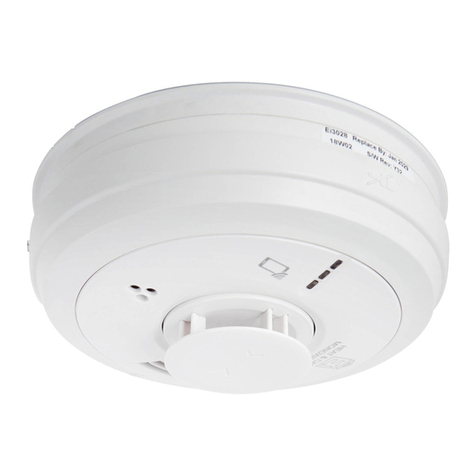
Ionisation Smoke Alarms contain a small sealed ionising source
which causes a small electrical current to flow through the air in the
smoke chamber. Smoke particles entering the chamber reduce the
current, this is sensed by the electronics and when a pre-set
threshold level is reached the alarm will sound.
Optical Smoke Alarms send a pulsed beam of infra red light through
the smoke chamber periodically. If visible smoke is present, it scatters
the light on to the photodiode light receiver and this is detected by
the electronics causing the alarm to sound. Ei Optical Alarms are
individually calibrated to ensure correct operation and to reduce
the risk of nuisance alarm.
Both have a sufficiently wide range of response to different types of
fire to be of general use. However:
Ionisation Alarms tend to respond quicker to fast flaming fires
producing small smoke particles (e.g flaming wood, petrol). This
makes them particularly sensitive to the “invisible” particles produced
by toasting, grilling or frying. They are also susceptible to nuisance
alarm when redecoration takes place. In view of this, they should be
located well away from the sources of such fumes or particles.
Optical alarms tend to respond faster to slow smouldering fires
producing large smoke particles (e.g smouldering wood,
overheating PVC wiring). They are somewhat more susceptible to
contamination from dust and fibres so they should not be installed in
particularly dusty areas. Both should be removed, or fully covered
when renovation work is being carried out.
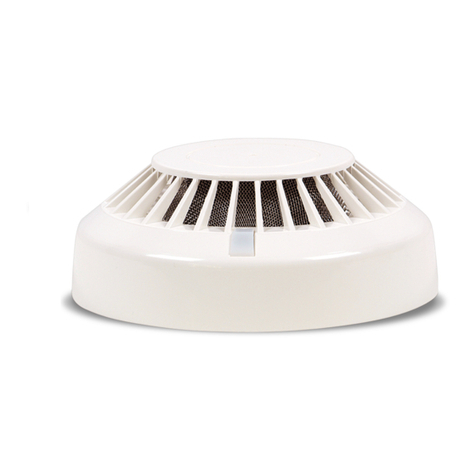
These are fixed temperature alarms which incorporate a thermistor
sensor. The thermistor is a heat sensitive resistor, when the ambient
temperature reaches a pre-set point of 58˚C, the resistance is
lowered and the alarm will sound. They are designed for use in areas
where due to high levels of dust or fumes, a conventional Smoke
Alarm is not suitable. They are particularly suited for use in a kitchen
(source of 40% of domestic fires), garages or boiler rooms. Although
they are stand alone units they should be interconnected with our
Smoke Alarms to provide an adequate warning system in the event
of a fire. BS 5839: Pt:6 recommends the use of fixed temperature
heat detectors in preference to ‘rate of rise’ types due to the
reduced risk of nuisance alarm which can be caused by opening
hot oven doors etc.
Both types of Smoke Alarms give good performances in a range of
situations. The BS 5839: Pt.6: 2004 British Standards that deals with fire
alarm systems in dwellings recommends that the choice of detector
should take account of the type of fire that may be expected and
the need to avoid false alarms. BS 5839: Pt.6 now strongly
9. How do Ei
Ionisation and
Optical Smoke
Alarms work?
10. What are the
advantages
and
disadvantages
of both sensor
types ?
11. How do Ei
Heat Alarms
work?
12. Which Alarm
should I use
where?