Optics Ter inology
Optics Ter inology
What the numbers mean. Binoculars are normally
identified by two numbers. The first number is the magni-
fication and the second number is the diameter of the
objective lens in millimeters (mm). For example, 7x35
means the binocular magnifies objects 7 times and the
objective lens is 35 mm in diameter. A 10x50 binocular
magnifies objects 10 times and has an objective lens
diameter of 50mm.
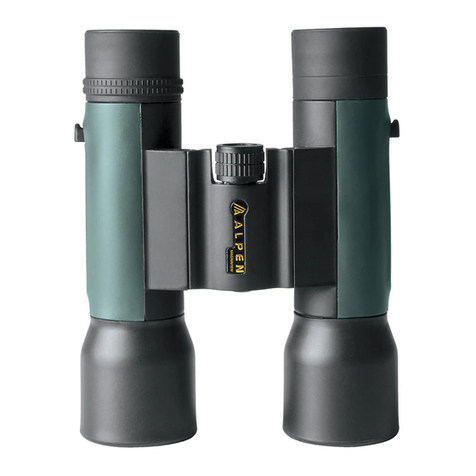
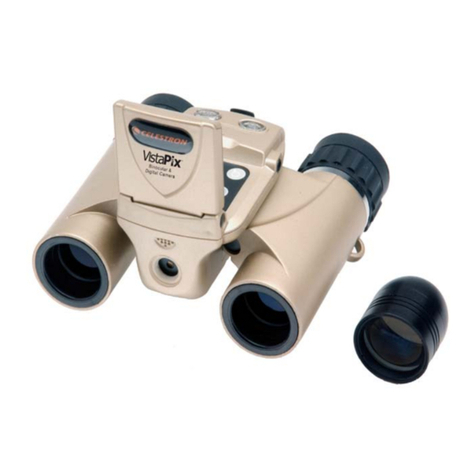
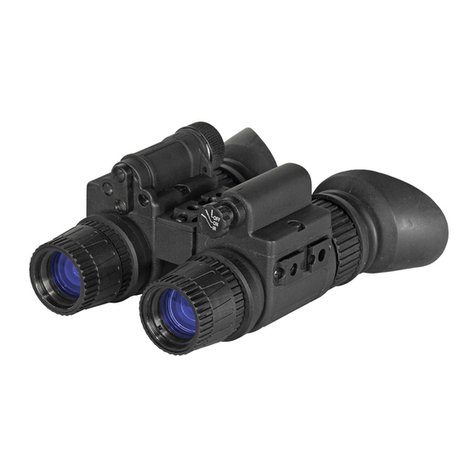
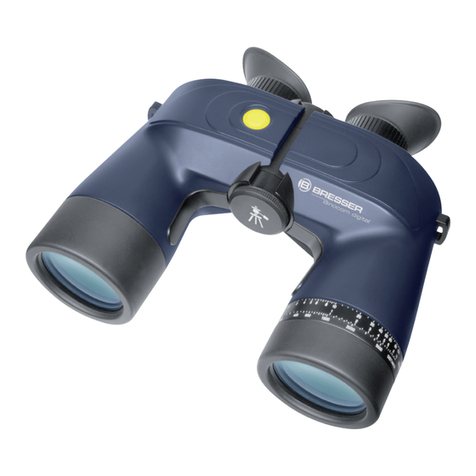
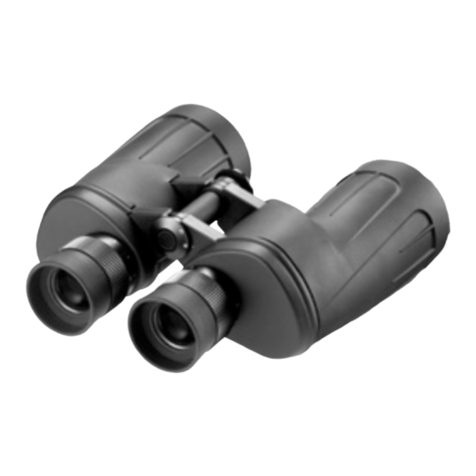
Pr sms. There are generally two categories of prisms,
porro prisms and roof prisms. Porro and roof prism binoc-
ulars are distinguished by their shape. Porro prism binoc-
ulars tend to be larger and have a definite offset to their
body design. Roof prism binoculars are more
straight and streamlined. Each provide excel-
lent viewing.
F eld of V ew (FOV). Describes the
size of the area that can be seen through
the binocular or spotting scope. Expressed
as the number of feet per 1000 yards of dis-
tance, the higher the magnification the narrow-
er the field of view. On wide angle binoculars a
special lens design allows a wider field of view than
normal. For example, field of view for a standard 7X
binocular would be 372 feet, whereas a wide angle would
be 82 feet. Wider field of views are often preferred for
viewing sporting events and by hunters who want to scan
large areas for game.
Object ve Lens D ameter is
important because many of the
performance characteristics of
a binocular are determined by
the diameter of this lens. The
function of the objective lens is
to collect light and direct it to
the prisms or eye pieces. The larger the diameter, the more
light will reach your eye thus providing a brighter and
sharper image. However, the larger the diameter, the heav-
ier and bulkier the binocular will be. You will find there are
many different combinations of magnification and objective
lens diameters to meet specific applications.
Eye Rel ef is the distance, expressed in millimeters, from
the ocular (eyepiece) lens to the point where the eye is posi-
tioned to view the entire image. Eye relief is affected by
magnification, the number of lens elements, and field of
view. Binoculars designed with long eye relief are usually
preferred by those who wear eyeglasses. Most binoculars
provide 8-13mm of eye relief. Binoculars with “long eye
relief” provide from 1 -20mm (or more) eye relief.
Ex t Pup l. A measurement
of how much light is usable
by a binocular or spotting
scope. Generally, the larger
the exit pupil, the brighter the
image will appear, particular-
ly in dim light. Exit pupil is determined by divid-
ing the diameter of the objective lens by
the magnification. For example, a
7x35 binocular has an exit
pupil of 5 mm. A
10x50 also has an
exit pupil of 5 mm,
so these are about
equal in dim light.
A 7x50 binocular
however has an
exit pupil of 7 mm.
For general use in
bright light, an exit
pupil of 2.5 mm is suffi-
cient and mm and higher
generally allow better viewing in dim
light. Lens coatings and the human eye also
affect how well a binocular performs in dim light.
Resolut on. Describes how
sharp or clear an object
appears when viewed. The
better the quality of the binocu-
lar, the better the resolution or
ability to clearly discern
details. Lens coatings, lens alignment, quality of glass, and
quality of prisms affect how sharp a viewed image will be.
ALPEN binoculars feature high-resolution optics.
Coated Opt cs. Quality optics are coated to prevent
glass surfaces from reflecting light and losing it. The very
best optics are “fully multi-coated” which means multiple
coatings are layered fully onto all “air to glass” surfaces.
“Fully coated” means all “air to glass” surfaces have been
coated with at least one layer of coating. “Coated” means
some surfaces have been coated.
482 ft.372 ft.
larger
objective lens
smaller
objective lens
large pupilsmall pupil
high-reslow-res
®and ™ denote trademarks of Alpen Outdoor Corporation.
RAINIER TETON AND MAGNAVIEW are trademarks of Alpen Outdoor Corporation.
ALPEN APEX SHASTA RIDGE KODIAK and TRAIL-TEC are registered in the U.S. Patent and Trademark Office.
8