ECOsaver Tetra
9
HOWTOUSE
HOW TO USE
PreparationbeforeOperation
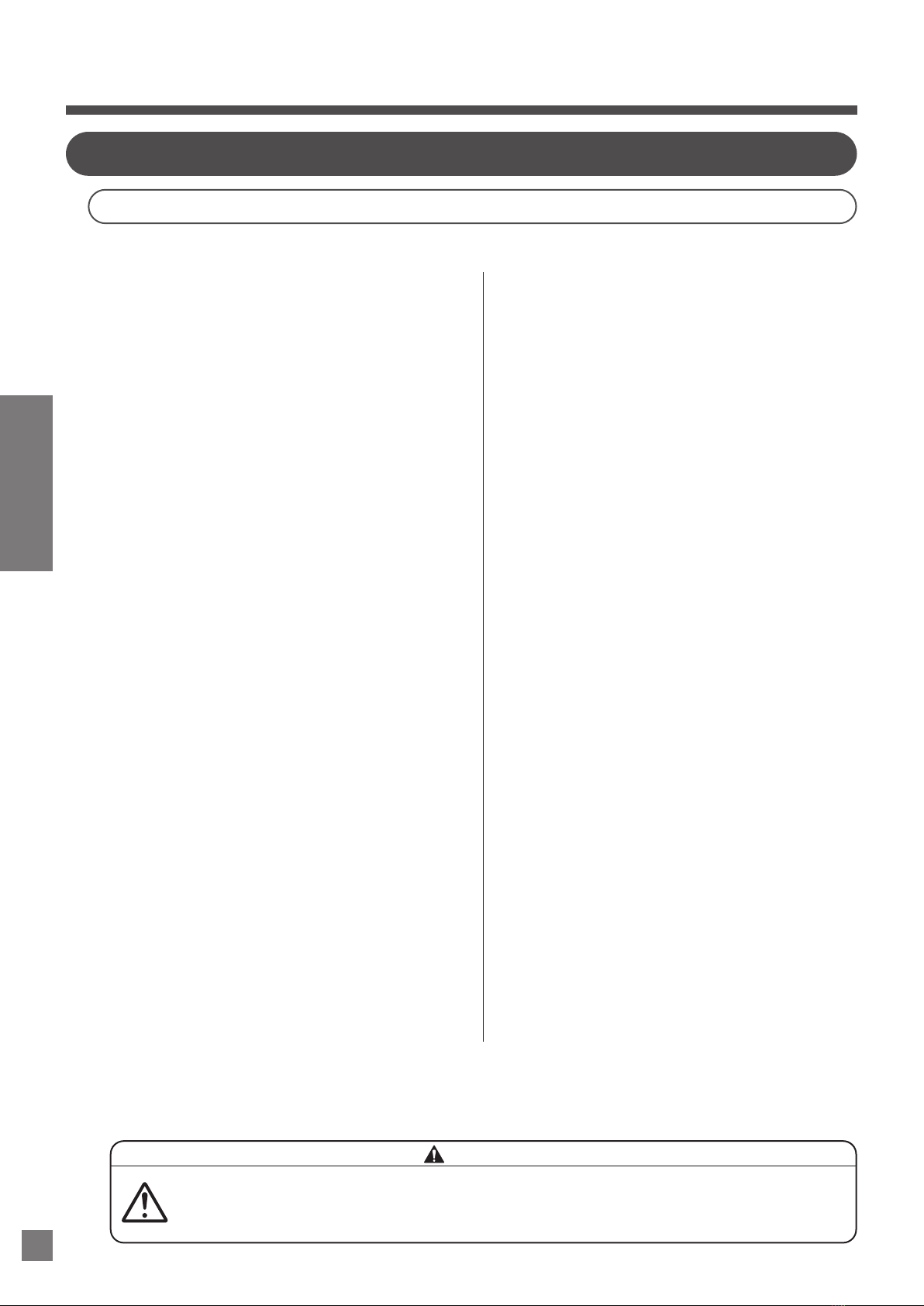
● “Transportation” and “Evacuation of the air
in the cylinder” should be done in view of
the following environment of usage.
① Do not use the machine in rain or in areas
where water may enter into the machine.
A fan is built into the machine for cooling
and it may suck water.
② The recovery machine should be used in a
well-ventilated area.
When the machine is used in a poor
ventilated area, you may be choked from
lack of oxygen in case of refrigerant leak.
③ Keep re away to prevent phosgene (highly
toxic substance) being generated.
④ Combustible gases (hydrocarbon system)
cannot be recovered.
If any combustible gases [ammonia,
hydrocarbon (propane, isobutene) and so
on] enter into the recovery machine, it may
catch re and may explode.
● Please note the following points before use.
① Evacuate the air from the refrigerant
recovery machine, charging hoses and
recovery cylinder (hereinafter called
recovery machine, hoses and cylinder).
② Install a lter or a lter dryer at the suction
port of the recovery machine.
③ Close the suction valve before starting the
recovery machine.
④ Abnormal noise may be heard when large
amount of liquid refrigerant enters into the
compressor.
Throttle the suction valve until the noise
cannot be heard.
⑤ Do not close the discharge valve or the
valve of the cylinder before stopping the
recovery machine during operation.
The discharge gauge may be damaged.
Close the valve on the manifold, stop the
recovery machine and then close the valves
at the discharge (high pressure) side.
⑥ The temperature of the cylinder may rise
when the ambient temperature is high or
R410A is recovered.
Lower the temperature and pressure of the
cylinder according to “page 10 4) Helpful
Information” and “page 15 Recovery
Procedure of R410A or When the Pressure
of Refrigerant is High”.
⑦ Do not enter the air into the hoses and the
cylinder.
When the cylinder contains air, evacuate
the air from the vapor valve referring to
the chart of saturation temperature and
pressure.
The air can be evacuated before discharging
the refrigerant.
⑧ Use an oil separator when refrigerant with a
large amount of oil is recovered.
The compressor may be damaged when a
large amount of oil is recovered.
⑨ Do not recover virgin refrigerant.
The compressor may be damaged if virgin
refrigerant is recovered for a long time.
If you need to recover virgin refrigerant, put
some additional oil in the compressor.
⑩ Do not recover from air conditioners in
which any sealant has ever been charged.
The sealant may clog the valves or the
compressor and the recovery machine may
be damaged.
⑪ Do not evacuate the air from the cylinder by
using the recovery machine.
The compressor may be damaged if it is run
for a long time under vacuum.
⑫ Do not leave refrigerant in the recovery
machine.
Always open the suction port and the
discharge port when the recover machine is
stored.
1)EnvironmentofUsage
● All connections between the recovery machine and the cylinder should be disconnected during
transportation.
◆ Allconnectionsbetweentherecoverymachineandthecylindershouldbedisconnected
duringtransportation.
◆ Steerclearofinjurieswhenyoucarryaheavycylinder.
2)Transportation
CAUTION