manuals.online logo
Brands
  1. Home
  2. •
  3. Brands
  4. •
  5. CADDX
  6. •
  7. Wireless Module
  8. •
  9. CADDX xGen NXG-433 Assembly instructions

CADDX xGen NXG-433 Assembly instructions

Popular Wireless Module manuals by other brands

Silex technology OkiLAN520w user manual

Silex technology

Silex technology OkiLAN520w user manual

Samsung WISP30 manual

Samsung

Samsung WISP30 manual

Laird RM024 user manual

Laird

Laird RM024 user manual

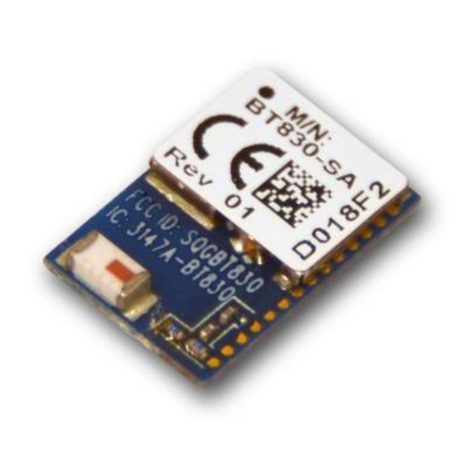
Laird BT830-SA Hardware integration guide

Laird

Laird BT830-SA Hardware integration guide

Smartech LBT-1.DO4 user manual

Smartech

Smartech LBT-1.DO4 user manual

Ebyte E49-400T20S user manual

Ebyte

Ebyte E49-400T20S user manual

Waldmann EnOcean TALK MODUL G2 operating manual

Waldmann

Waldmann EnOcean TALK MODUL G2 operating manual

Yuga CLM920 user manual

Yuga

Yuga CLM920 user manual

Waldmann TALK Bluetooth operating manual

Waldmann

Waldmann TALK Bluetooth operating manual

Telit Wireless Solutions UC864-G Hardware user's guide

Telit Wireless Solutions

Telit Wireless Solutions UC864-G Hardware user's guide

Ebyte E07-900M10S manual

Ebyte

Ebyte E07-900M10S manual

Fibocom FM101-NA-20 Hardware guide

Fibocom

Fibocom FM101-NA-20 Hardware guide

Ebyte E30 Series user manual

Ebyte

Ebyte E30 Series user manual

ICT PRT-IVO-IF installation manual

ICT

ICT PRT-IVO-IF installation manual

Quectel SC690A Series Hardware design

Quectel

Quectel SC690A Series Hardware design

Wistron NeWeb DNUR-S2 user manual

Wistron NeWeb

Wistron NeWeb DNUR-S2 user manual

Ebyte E22-400M30S user manual

Ebyte

Ebyte E22-400M30S user manual

Sengled ZM001 user guide

Sengled

Sengled ZM001 user guide

manuals.online logo
manuals.online logoBrands
  • About & Mission
  • Contact us
  • Privacy Policy
  • Terms and Conditions

Copyright 2025 Manuals.Online. All Rights Reserved.

© 2021 Carrier 1 / 56 P/N 466-2948 • REV D • ISS 15MAR21
NXG-433 xGen Wireless Expander Module
Installation Sheet
EN
EL
ES
FR
FR-BE
IT
NL
NL-BE
PT
EN: Installation Sheet
Product Summary
The NXG-433 allows the addition of wireless devices to an
xGen system. These include wireless reed switches, wireless
motion sensors, universal inputs, and keyfobs. The xGen
control panel model you are using will determine the number of
wireless zones and keyfobs that can be added.
The receiver is in a self-contained plastic housing and
connects to an xGen control panel via the standard 4 wire
buss.
Additional features include: 2 zone inputs, 1 relay output, front
and rear tamper.
Current Limit Warning
Check the current requirements of your load before
connecting!
There is no overcurrent protection on the relay when providing
buss ground or bus voltage (jumper between - and C, or C
and +). You must ensure your load does not exceed the
recommended limits. Exceeding limits can damage the module
and pose an electrical hazard.
xGen panels do have PTC overcurrent protection on the bus
and may disconnect the buss to provide temporary protection.
If enabled, your panel will report "Overcurrent Fault" or
"Expander Overcurrent".
Installation Guidelines
When installing the receiver:
•Leave 10cm clear around all sides of the module for better
signal reception
•Avoid installing on or near metal surfaces such as filing
cabinets and metal roller shutters
•Avoid installing on or near electrical devices such as
fridges, vacuum cleaners, air conditioners, computers,
washing machines, and motors
•Avoid areas that are damp and wet such as inside
bathrooms and cool rooms
Installing the Receiver
1. Remove the front plastic housing by loosening the bottom
screw.
2. Carefully remove the circuit board from the rear plastic
housing by squeezing on the side tabs. Take care to put
aside the two rubber tamper switches.
3. Feed the buss cable through one of the cable holes.
4. Screw the rear plastic housing to a fixed surface. Higher
positions generally provide better signal reception.
2 / 56 P/N 466-2948 • REV D • ISS 15MAR21
5. Re-install the rear rubber tamper button if it was removed.
6. Re-install the circuit board into the plastic housing taking
care to position the antennas in the up position.
7. Connect the buss cable to J1 on the NXG-433. Refer to
control panel installation manual for cable requirements.
8. If required, connect zone cabling and output cabling to J3
and J6 the NXG-433. Refer to “Note on Relay Modes”
below.
9. Set J2 TERM link if required. Refer to xGen Installation &
Programming Guide.
10. Turn on the power to the control panel and wait for panel
to complete initialisation.
11. Push the Enrollment switch on xGen panel.
12. The lights on the receiver should light as indicated:
Table 1 –Receiver LEDs
LED
Description
D2 Red
Blinks when sending data to control panel
D4 Green
Blinks when receiving data from control panel
D9 Green
Lit when power is on
D8 Orange
Software error
D7 Blue
Blinks when valid packet received from 63 bit device
D6 Green
Blinks when valid packet received from 80plus device
D14 Red
Lit when relay is on
D15 Red
A triple blink every second indicates module not
enrolled, a single blink every second indicates module
is enrolled
NXG-433 Device Programming
Programming is performed via the xGen control panel.
1. Log in to the xGen control panel.
2. Click Advanced –Devices –System Devices –Zone
Expander.
3. Select the NXG-433 device number from the drop-down
box:
4. Click Expander Name to set the module name. The default
is “Wireless Expander”.
5. Click Save to save changes.
6. Click Back.
7. Click Zone Start and End to set the hardwired zone
numbers if they will be used. If these are set to 0, the
hardwired zones will be disabled.
8. Click Save to save changes.
9. Click Back.
10. Click Expander Options.
P/N 466-2948 • REV D • ISS 15MAR21 3 / 56
11. If both tampers are required, select Tamper Enable.
12. If the output is required, select Output Enable.
13. Click Save to save changes.
14. If the output is required, click Output Program and select
the action to follow. The output will trigger when the action
is true.
15. Click Save to save changes.
Note on Tamper
Two rubber push buttons provide front case and rear wall
tamper.
To clear an Expander Tamper condition, both tamper inputs
must be sealed. The enclosure should be firmly mounted on a
flat surface with the cover closed.
If either tamper input is open then an Expander Tamper
condition will occur.
Note on Relay Modes
The receiver features one Single Pole Double Throw (SPDT)
Form C relay.
The relay is connected to output terminal J6 with Normally
Open and Normally Closed connections for your convenience.
D14 is a red LED that lights up when the relay is energized.
The relay can be configured in 3 different modes to support
different applications. Use jumper on J5 to select the mode
suitable for your requirements.
Default is no jumper with relay in NC position
No Jumper
Dry contact closure provided to output terminal. Maximum
Load 30VAC @ 1A or 30VDC @ 1A.
Jumper between - and C
Buss Ground provided to output terminal @ typical 0V. Do not
exceed relay rating which is maximum load 30VAC @ 1A or
30VDC @ 1A.
Jumper between C and +
Buss Voltage provided to output terminal @ typical 12-13VDC.
Maximum Load @ 12V is total panel current of 700mA, this
includes all connected codepads and expansion modules. Do
not exceed relay rating.
Adding Wireless Devices
1. Log in to the xGen control panel.
2. Click Settings.
3. Select Zones in the drop down menu.
Jumper J5
Output J6
C
NC
NO
O
Buss Voltage +
GND –
Common C
C
4 / 56 P/N 466-2948 • REV D • ISS 15MAR21
4. Select the zone number you want to configure:
5. Check the Serial Number is blank or zero. An existing
number indicates a wireless device is currently
programmed for this zone number.
6. Click Learn:
7. “Learn Mode Active” will appear. Trigger your wireless
device. Refer to the installation manual of the wireless
device if you need assistance.
8. “New Device Found” will appear and the Serial Number
field will contain your wireless device details:
9. Program other settings on this screen as required.
10. Click Save.
Adding Keyfobs
1. Log in to the xGen control panel.
2. Click Settings.
3. Select Keyfobs in the drop down menu.
P/N 466-2948 • REV D • ISS 15MAR21 5 / 56
4. Click Learn:
5. Press and hold the Arm and Disarm buttons
simultaneously for 2 seconds. This will send a tamper
message to the receiver.
6. “New Device Found” will appear and the Serial Number
field will contain your wireless device details:
7. Assign the keyfob to a user by selecting the user name in
the drop down. When the keyfob buttons are pressed, the
user’s permissions will be checked, and the user number
will be reported.
If the keyfob is not assigned a user, then it will be given
Standard User permissions and have access to arm and
disarm area 1. The keyfob number will be reported when it
is used.
8. Select the buttons to enable:
Pressing the Arm and Disarm buttons simultaneously can
send a Police event “Silent Codepad Alarm”.
Pressing the Scene (lightbulb icon) and Stay (*) buttons on
a 4-button keyfob can send an Auxiliary event “Codepad
Auxiliary Alarm”.
6 / 56 P/N 466-2948 • REV D • ISS 15MAR21
9. If the user desires automation control when the Scene
button (lightbulb icon) is pressed, select the Scene to
trigger from the drop-down menu:
Removing Wireless Devices
1. Log in to the xGen control panel.
2. Click Settings.
3. Select Zones in the drop-down menu.
4. Select the zone number you want to remove:
5. Click Remove then OK to confirm.
6. Click Save.
Completing Installation
1. Re-install the front rubber tamper button if it was removed.
2. Re-install the front plastic housing and tighten the bottom
screw.
Specifications
Compatibility
xGen control panels
Wireless operating frequency
433.65 MHz
Maximum power output
1 dBm
Required Power
12.0 VDC (provided by panel)
Current Draw
50 mA maximum
Supported Wireless Devices
433-63 All devices, 433-80plus PIR
and Door Window Switch
Dimensions (H × W × D)
155 mm x 95 mm x 68 mm
Weight
160 g
Operating temperature
0° to 49°C (32° to 120°F)
Storage temperature
−34° to 60°C (−30° to 120°F)
Relative humidity
up to 90% noncondensing
Regulatory information
Manufacturer
PLACED ON THE MARKET BY:
Carrier Fire & Security Americas Corporation Inc.
13995 Pasteur Blvd
Palm Beach Gardens, FL 33418, USA
AUTHORIZED EU REPRESENTATIVE:
Carrier Fire & Security B.V.
Kelvinstraat 7, 6003 DH Weert, Netherlands
P/N 466-2948 • REV D • ISS 15MAR21 7 / 56
Certification
EN50131-5−3:2017, Security Grade 2,
Environmental class II
EN50131−3:2009
Tested and certified by Telefication B.V.
Product warnings
and disclaimers
THESE PRODUCTS ARE INTENDED FOR SALE
TO AND INSTALLATION BY QUALIFIED
PROFESSIONALS. CARRIER FIRE &
SECURITY CANNOT PROVIDE ANY
ASSURANCE THAT ANY PERSON OR ENTITY
BUYING ITS PRODUCTS, INCLUDING ANY
“AUTHORIZED DEALER” OR “AUTHORIZED
RESELLER”, IS PROPERLY TRAINED OR
EXPERIENCED TO CORRECTLY INSTALL FIRE
AND SECURITY RELATED PRODUCTS.
For more information on warranty disclaimers and
product safety information, please check
https://firesecurityproducts.com/policy/product-
warning/ or scan the QR code.
European Union
directives
Carrier Fire & Security hereby declares that this
device is in compliance with the applicable
requirements and provisions of all applicable rules
and regulations, including but not limited to the
Directive 2014/53/EU. For more information see:
firesecurityproducts.com
REACH
Product may contain substances that are also
Candidate List substances in a concentration
above 0.1% w/w, per the most recently published
Candidate List found at ECHA Web site.
Safe use information can be found at
https://firesecurityproducts.com/en/content/intrusi
on-intro
2012/19/EU (WEEE directive): Products marked
with this symbol cannot be disposed of as
unsorted municipal waste in the European Union.
For proper recycling, return this product to your
local supplier upon the purchase of equivalent
new equipment, or dispose of it at designated
collection points. For more information see:
www.recyclethis.info
Contact information
www.firesecurityproducts.com/en/page/caddx
EL: Οδηγίες Εγκατάστασης
Σύνοψη προϊόντος
Το NXG-433 επιτρέπει την προσθήκη ασύρματων συσκευών
σε ένα σύστημα xGen. Οι συσκευές αυτές περιλαμβάνουν
ασύρματους πομπούς με ενσωματωμένη επαφή, ασύρματους
αισθητήρες κίνησης, εισόδους γενικής χρήσης και μπρελόκ. Το
μοντέλο πίνακα ελέγχου xGen που χρησιμοποιείτε θα
καθορίσει τον αριθμό τω ασύρματων ζωνών και μπρελόκ που
μπορούν να προστεθούν.
Ο δέκτης είναι ένα αυτοτελές πλαστικό περίβλημα και
συνδέεται με έναν πίνακα ελέγχου xGen μέσω του τυπικού
διαύλου 4 καλωδίων.
Οι πρόσθετες λειτουργίες περιλαμβάνουν: 2 εισόδους ζώνης, 1
έξοδο ρελέ, μπροστινό και πίσω τάμπερ.
Προειδοποίηση ορίου ρεύματος
Ελέγξτε τις απαιτήσεις του φορτίου σας πριν από τη σύνδεση!
Δεν υπάρχει προστασία από υπερφόρτωση για το ρελέ κατά
την παροχή γείωσης ή τάσης διαύλου (βραχυκύκλωμα μεταξύ -
και C, ή C και +). Θα πρέπει να διασφαλιστεί ότι το φορτίο σας
δεν υπερβαίνει τα συνιστώμενα όρια. Τυχόν υπέρβαση των
ορίων μπορεί να προκαλέσει βλάβη στο module και να θέσει
κίνδυνο ηλεκτροπληξίας.
Οι πίνακες xGen διαθέτουν προστασία από υπερφόρτωση
PTC και μπορούν να αποσυνδέουν τον δίαυλο για την παροχή
προσωρινής προστασίας. Αν έχει ενεργοποιηθεί, ο πίνακας θα
αναφέρει «Σφάλμα υπερφόρτωσης» ή «Υπερφόρτωση
επέκτασης».
Κατευθυντήριες οδηγίες για την
εγκατάσταση
Κατά την εγκατάσταση του δέκτη:
•Αφήστε διάκενο 10 cm γύρω από όλες τις πλευρές του
module για καλύτερη λήψη σήματος
•Αποφύγετε την εγκατάσταση πάνω ή δίπλα σε μεταλλικές
επιφάνειες όπως ερμάρια αρχειοθέτησης και μεταλλικά
ρολά (παντζούρια)
•Αποφύγετε την εγκατάσταση πάνω ή δίπλα σε ηλεκτρικές
συσκευές, όπως ψυγεία, ηλεκτρικές σκούπες, κλιματιστικά,
υπολογιστές, πλυντήρια και κινητήρες
•Αποφύγετε περιοχές υγρές και με υγρασία όπως μέσα σε
μπάνια και ψυχρά δωμάτια
Εγκατάσταση του δέκτη
1. Αφαιρέστε το μπροστινό πλαστικό περίβλημα
χαλαρώνοντας την κάτω βίδα.
2. Αφαιρέστε προσεκτικά την πλακέτα κυκλώματος από το
πίσω πλαστικό περίβλημα πιέζοντας τις πλαϊνές
8 / 56 P/N 466-2948 • REV D • ISS 15MAR21
γλωττίδες. Προσέξτε και τοποθετήστε στην άκρη τους δύο
ελαστικούς διακόπτες τάμπερ.
3. Περάστε το καλώδιο διαύλου μέσα από μία από τις οπές
καλωδίου.
4. Βιδώστε το πίσω πλαστικό περίβλημα σε μια σταθερή
επιφάνεια. Οι υψηλότερες θέσεις γενικά παρέχουν
καλύτερη λήψη σήματος.
5. Εγκαταστήστε ξανά το πίσω ελαστικό κουμπί τάμπερ, εάν
το είχατε αφαιρέσει.
6. Εγκαταστήστε ξανά την πλακέτα κυκλώματος στο
πλαστικό περίβλημα προσέχοντας ώστε να τοποθετήσετε
τις κεραίες στην επάνω θέση.
7. Συνδέστε το καλώδιο διαύλου στο J1 στο NXG-433.
Ανατρέξτε στο εγχειρίδιο οδηγιών του πίνακα ελέγχου για
τις απαιτήσεις του καλωδίου.
8. Αν απαιτείται, συνδέστε την καλωδίωση ζώνης και την
καλωδίωση εξόδου στα J3 και J6 στο NXG-433. Ανατρέξτε
στην ενότητα «Σημείωση για τις λειτουργίες ρελέ»
παρακάτω.
9. Τοποθετήστε τη σύνδεση J2 TERM εάν απαιτείται.
Ανατρέξτε στον Οδηγό Εγκατάστασης &
Προγραμματισμού xGen.
10. Ενεργοποιήστε την τροφοδοσία προς τον πίνακα ελέγχου
και περιμένετε να ολοκληρωθεί η αρχικοποίηση του
πίνακα.
11. Πιέστε τον Διακόπτη εγγραφής στον πίνακα xGen.
12. Οι λυχνίες στον δέκτη πρέπει να ανάβουν ως εξής:
Πίνακας 1 – Λυχνίες LED δέκτη
Λυχνία LED
Περιγραφή
D2 Κόκκινη
Αναβοσβήνει κατά την αποστολή δεδομένων στον
πίνακα ελέγχου
D4 Πράσινη
Αναβοσβήνει κατά την αποστολή δεδομένων από τον
πίνακα ελέγχου
D9 Πράσινη
Ανάβει όταν η τροφοδοσία είναι ενεργοποιημένη
D8 Πορτοκαλί
Σφάλμα λογισμικού
D7 Μπλε
Αναβοσβήνει κατά τη λήψη έγκυρου πακέτου από
συσκευή 63 bit
D6 Πράσινη
Αναβοσβήνει κατά τη λήψη έγκυρου πακέτου από
συσκευή 80plus
D14 Κόκκινη
Ανάβει όταν το ρελέ είναι ενεργοποιημένο
D15 Κόκκινη
Μια τριπλή αναλαμπή ανά δευτερόλεπτο σημαίνει ότι
το module δεν έχει εγγραφεί, ενώ η μία αναλαμπή ανά
δευτερόλεπτο σημαίνει ότι το module έχει εγγραφεί
Προγραμματισμός συσκευής NXG-433
Ο προγραμματισμός διεξάγεται μέσω του πίνακα ελέγχου
xGen.
1. Συνδεθείτε στον πίνακα ελέγχου xGen.
2. Κάντε κλικ στο Για προχωρημένους – Συσκευές –
Συσκευές Συστήματος – Επέκταση Ζώνης.
P/N 466-2948 • REV D • ISS 15MAR21 9 / 56
3. Επιλέξτε τον αριθμό της συσκευής NXG-433 από το
αναπτυσσόμενο πλαίσιο:
4. Κάντε κλικ στο Expander Name (Όνομα Επέκτασης) για
να ορίσετε το όνομα του module. Η προεπιλογή είναι
«Wireless Expander» (Ασύρματη Επέκταση).
5. Επιλέξτε Save (Αποθήκευση) για να αποθηκεύσετε τις
αλλαγές.
6. Κάντε κλικ στην επιλογή Back (Πίσω).
7. Κάντε κλικ στο Zone Start and End (Αρχή και τέλος ζώνης)
για να ορίσετε τους αριθμούς καλωδιωμένων ζωνών, εάν
πρόκειται να χρησιμοποιηθούν. Αν οριστούν στο 0, οι
καλωδιωμένες ζώνες θα απενεργοποιηθούν.
8. Επιλέξτε Save (Αποθήκευση) για να αποθηκεύσετε τις
αλλαγές.
9. Κάντε κλικ στην επιλογή Back (Πίσω).
10. Κάντε κλικ στην επιλογή Expander Options (Επιλογές
Επέκτασης).
11. Αν απαιτούνται και τα δύο τάμπερ, επιλέξτε Tamper
Enable. (Ενεργοποίηση Παραβίασης).
12. Αν απαιτείται η έξοδος, επιλέξτε Output Enable
(Ενεργοποίηση Εξόδου).
13. Επιλέξτε Save (Αποθήκευση) για να αποθηκεύσετε τις
αλλαγές.
14. Αν απαιτείται η έξοδος, κάντε κλικ στο Output Program
(Προγραμματισμός Εξόδου) και επιλέξτε την ενέργεια που
θα διεξάγεται. Η έξοδος θα ενεργοποιείται όταν ισχύει η
ενέργεια.
15. Επιλέξτε Save (Αποθήκευση) για να αποθηκεύσετε τις
αλλαγές.
Σημείωση για τα τάμπερ
Δύο ελαστικά κουμπιά πίεσης παρέχουν τάμπερ μπροστινού
περιβλήματος και πίσω τοίχου.
Για να απαλείψετε μια κατάσταση Τάμπερ Επέκτασης, και οι
δύο είσοδοι τάμπερ πρέπει να είναι σφραγισμένες. Το
περίβλημα πρέπει να τοποθετηθεί σταθερά πάνω σε μια
επίπεδη επιφάνεια με το κάλυμμα κλειστό.
Αν μία από τις δύο εισόδους τάμπερ είναι ανοιχτή, τότε θα
παρουσιαστεί κατάσταση Τάμπερ Επέκτασης.
Σημείωση για τις λειτουργίες ρελέ
Ο δέκτης διαθέτει ένα μονοπολικό ρελέ δύο κατευθύνσεων
(SPDT) Μορφής C.
Το ρελέ συνδέεται στον ακροδέκτη εξόδου J6 με συνδέσεις
Κανονικά ανοιχτό και Κανονικά κλειστό για τη διευκόλυνσή
σας.
Το D14 είναι μια κόκκινη λυχνία LED που ανάβει όταν το ρελέ
είναι ενεργοποιημένο.
Το ρελέ είναι δυνατό να διαμορφωθεί σε 3 διαφορετικές
λειτουργίες ώστε να υποστηρίζει διαφορετικές εφαρμογές.
Χρησιμοποιήστε τον βραχυκυκλωτήρα στο J5 για να επιλέξετε
τη λειτουργία που είναι κατάλληλη για τις απαιτήσεις σας.
Η προεπιλογή είναι χωρίς βραχυκυκλωτήρα με ρελέ στη θέση
NC
Χωρίς βραχυκυκλωτήρα
Περίβλημα ξηρής επαφής που παρέχεται στον ακροδέκτη
εξόδου. Μέγιστο φορτίο 30 VAC στο 1 A ή 30 VDC στο 1 A.

Βραχυκυκλωτ
ήρας J5
Έξοδος J6
C
NC
NO
O
Τάση διαύλου
+
GND –
Κοινό C
C
10 / 56 P/N 466-2948 • REV D • ISS 15MAR21
Βραχυκυκλωτήρας μεταξύ - και C
Γείωση διαύλου που παρέχεται στον ακροδέκτη εξόδου στα 0
V τυπικά. Μην υπερβαίνετε τις ονομαστικές τιμές του ρελέ που
είναι μέγιστο φορτίο 30 VAC στο 1 A ή 30 VDC στο 1 A.
Βραχυκυκλωτήρας μεταξύ C και +
Τάση διαύλου που παρέχεται στον ακροδέκτη εξόδου στα 12-
13 VDC τυπικά. Το μέγιστο φορτίο στα 12 V είναι το ολικό
ρεύμα του πίνακα 700 mA, το οποίο περιλαμβάνει όλα τα
συνδεδεμένα πληκτρολόγια και δομοστοιχεία επέκτασης. Να
μη γίνεται υπέρβαση των ονομαστικών τιμών του ρελέ.
Προσθήκη ασύρματων συσκευών
1. Συνδεθείτε στον πίνακα ελέγχου xGen.
2. Κάντε κλικ στην επιλογή Ρυθμίσεις.
3. Επιλέξτε Ζώνες στο αναπτυσσόμενο μενού.
4. Επιλέξτε τον αριθμό ζώνης που θέλετε να διαμορφώσετε:
5. Ελέγξτε ότι ο σειριακός αριθμός είναι κενός ή μηδέν. Αν
υπάρχει κάποιος αριθμός, σημαίνει ότι μια ασύρματη
συσκευή έχει ήδη προγραμματιστεί για αυτόν τον αριθμό
ζώνης.
6. Κάντε κλικ στην επιλογή Εκμάθηση:
7. Θα εμφανιστεί το «Λειτουργία εκμάθησης ενεργή».
Ενεργοποιήστε την ασύρματη συσκευή σας. Ανατρέξτε
στο εγχειρίδιο εγκατάστασης της ασύρματης συσκευής,
εάν χρειάζεστε βοήθεια.
8. Θα εμφανιστεί το μήνυμα «Εντοπίστηκε νέα συσκευή» και
στο πεδίο Σειριακός αριθμός θα αναφέρονται οι
λεπτομέρειες της ασύρματης συσκευής σας:
9. Προγραμματίστε άλλες ρυθμίσεις σε αυτή την οθόνη όπως
απαιτείται.
10. Κάντε κλικ στην επιλογή Save (Αποθήκευση).