9. If the sensor is connected to the data logger, check the output of the sensor in the data
display in LoggerNet,RTDAQ, or PC400 to make sure it is making reasonable
measurements.
5. Overview
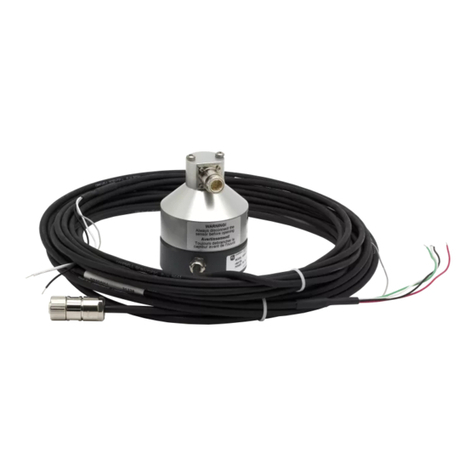
The heart of the ClariVUE 10 is a near-infrared (NIR) laser and a photodiode for detecting the
intensity of light scattered from suspended particles in water. The detector is positioned at 90
degrees to the emitter to measure the side-scatter energy. The ClariVUE 10 has two
measurement ranges. The low range is from 0-400 TU and uses a transfer function to convert mV
readings to turbidity units based on 4 calibration points in this range: 0, 20, 100, and 400 TU. The
high range is from 401 to 4000 TU. The high range transfer function converts millivolt to turbidity
units using seven calibration points across the full measurement range: 0, 20, 100, 400, 1000,
2500, and 4000TU.
Turbidity sensors are used for a wide variety of monitoring tasks in riverine, oceanic, laboratory,
and industrial settings. They can be integrated with water-quality monitoring systems,
conductivity, temperature, and depth sensors (CTDs), laboratory instrumentation, and sediment-
transport monitors.
Applications include:
lCompliance with permits, water-quality guidelines, and regulations
lDetermination of transport and fate of particles and associated contaminants in aquatic
systems
lConservation, protection, and restoration of surface waters
lAssessing the effects of land-use management on water quality
lMonitoring waterside construction, mining, and dredging operations
lCharacterization of wastewater and energy-production effluents
Features:
lFitted with wet-pluggable connector—multiple mating cable length options available
lAccurate and rugged
lCompatible with any SDI-12 data logger/controller including Campbell Scientific GRANITE-
series, CR6, CR3000, CR1000X, CR800-series, CR300-series, and CR1000
ClariVUE™10 Side-Scatter Turbidity Sensor 5