manuals.online logo
Brands
  1. Home
  2. •
  3. Brands
  4. •
  5. Canon
  6. •
  7. Camera Accessories
  8. •
  9. Canon SPEEDLITE 270EX II User manual

Canon SPEEDLITE 270EX II User manual

Other manuals for SPEEDLITE 270EX II

2

Other Canon Camera Accessories manuals

Canon TIMER REMOTE CONTROLLER TC-80N3 User manual

Canon

Canon TIMER REMOTE CONTROLLER TC-80N3 User manual

Canon LM-V1 User manual

Canon

Canon LM-V1 User manual

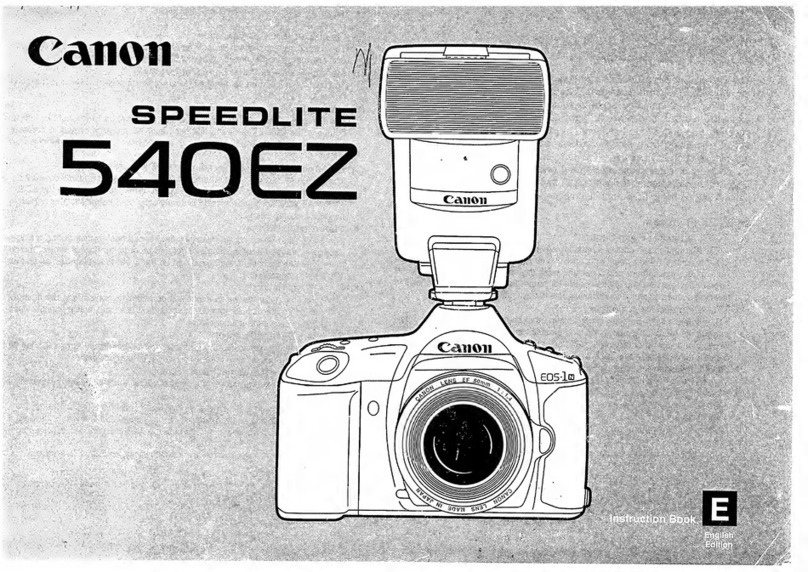
Canon 540EZ - Speedlite - Hot-shoe clip-on Flash User manual

Canon

Canon 540EZ - Speedlite - Hot-shoe clip-on Flash User manual

Canon pz-e1 User manual

Canon

Canon pz-e1 User manual

Canon FU-1000 User manual

Canon

Canon FU-1000 User manual

Canon Speedlite Transmitter ST-E2 User manual

Canon

Canon Speedlite Transmitter ST-E2 User manual

Canon ANGLE FINDER C Instruction Manual

Canon

Canon ANGLE FINDER C Instruction Manual

Canon STAPLER STACKER SS-72 User manual

Canon

Canon STAPLER STACKER SS-72 User manual

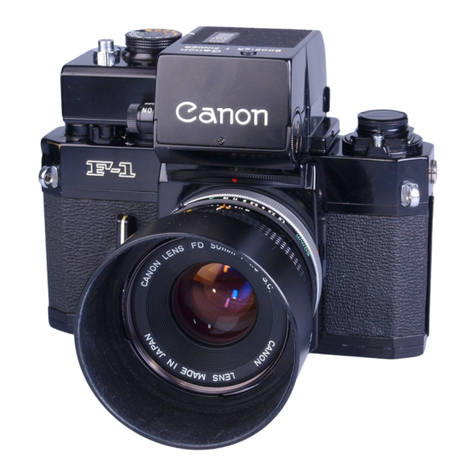
Canon F-1 User manual

Canon

Canon F-1 User manual
Canon ANTIFOG EYEPIECE Instruction Manual

Canon

Canon ANTIFOG EYEPIECE Instruction Manual

Canon Servo EE Finder User manual

Canon

Canon Servo EE Finder User manual

Canon XF User manual

Canon

Canon XF User manual

Canon WFT-E7 User manual

Canon

Canon WFT-E7 User manual

Canon EF100mm f/2 USM User manual

Canon

Canon EF100mm f/2 USM User manual

Canon LC-1 User manual

Canon

Canon LC-1 User manual

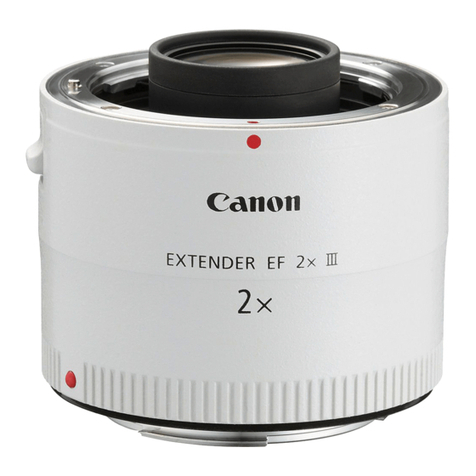
Canon Extender EF 1.4X III User manual

Canon

Canon Extender EF 1.4X III User manual

Canon WP-DC37 User manual

Canon

Canon WP-DC37 User manual

Canon Film Chamber 250 User manual

Canon

Canon Film Chamber 250 User manual

Canon AE Motor Drive FN User manual

Canon

Canon AE Motor Drive FN User manual

Canon FLASH UNIT Y User manual

Canon

Canon FLASH UNIT Y User manual

Canon BG-R10 User manual

Canon

Canon BG-R10 User manual
Canon WP-DC36 User manual

Canon

Canon WP-DC36 User manual

Canon Macro Twin Light MT-26EX-RT Assembly instructions

Canon

Canon Macro Twin Light MT-26EX-RT Assembly instructions

Canon Camera Accessory Kit 5 User manual

Canon

Canon Camera Accessory Kit 5 User manual

Popular Camera Accessories manuals by other brands
CamRanger CamRanger user manual

CamRanger

CamRanger CamRanger user manual

Custom Brackets HDV CAGE KIT Instructions for use

Custom Brackets

Custom Brackets HDV CAGE KIT Instructions for use

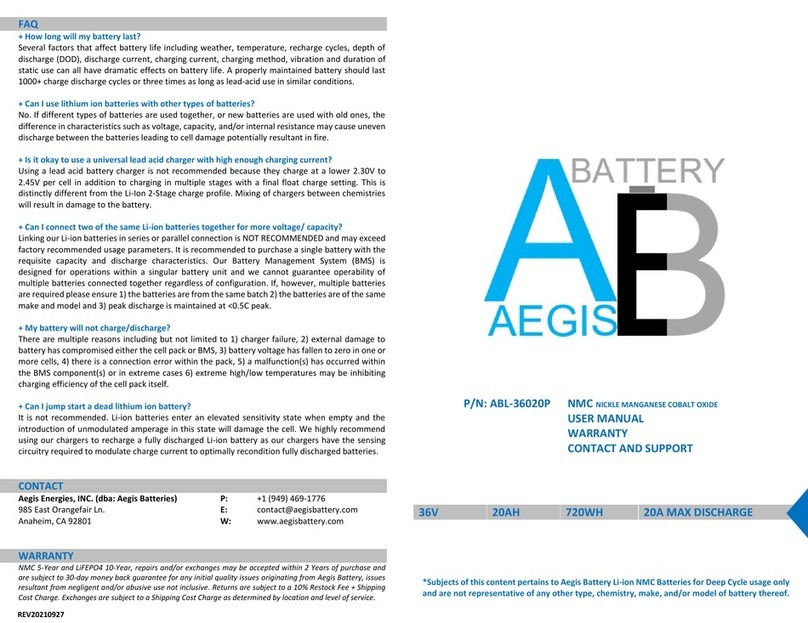
Aegis ABL052010P user manual

Aegis

Aegis ABL052010P user manual

Saft SRA Series Installation and operating instructions

Saft

Saft SRA Series Installation and operating instructions

Kodak TIB5200 technical information

Kodak

Kodak TIB5200 technical information

Videotec HEG instruction manual

Videotec

Videotec HEG instruction manual

Ikelite 6171.11 manual

Ikelite

Ikelite 6171.11 manual

Pentax Auto Bellows Slide Copier K user manual

Pentax

Pentax Auto Bellows Slide Copier K user manual

Nikon UT-1 user manual

Nikon

Nikon UT-1 user manual

dji RONIN 4D quick start guide

dji

dji RONIN 4D quick start guide

SLIK ABLE 300DX user manual

SLIK

SLIK ABLE 300DX user manual

Rebelcell 36V70 user manual

Rebelcell

Rebelcell 36V70 user manual

Trojan GC2 48V quick start guide

Trojan

Trojan GC2 48V quick start guide

Calumet 7100 Series CK7114 operating instructions
Calumet

Calumet 7100 Series CK7114 operating instructions

Ropox 4Single Series User manual and installation instructions
Ropox

Ropox 4Single Series User manual and installation instructions

Cambo Wide DS Digital Series Main operating instructions

Cambo

Cambo Wide DS Digital Series Main operating instructions

Samsung SHG-120 Specification sheet

Samsung

Samsung SHG-120 Specification sheet
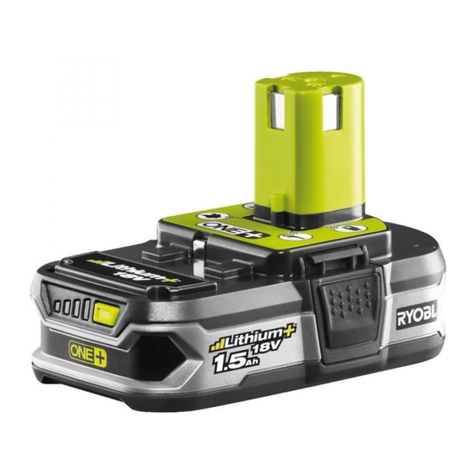
Ryobi BPL-1820 Owner's operating manual
Ryobi

Ryobi BPL-1820 Owner's operating manual
manuals.online logo
manuals.online logoBrands
  • About & Mission
  • Contact us
  • Privacy Policy
  • Terms and Conditions

Copyright 2025 Manuals.Online. All Rights Reserved.

UJ
1J
s::
m
)>
z m
c
)>
z
[]
r
0
(/)
r-
-i
m
:::0
-c -
z
s:
-1
()
(/)
0
--1
--i
0 -m
::0
m 0
c z
()
0
-
s:
()
m
-
s::
)>
0 z
z
'"tJ
c
r
m 0
)>
(/)
r
Espaiiol
Fran~ais
English
Thank
you
for
purchasing
a Canon
product.
The Canon Speedlite 270EX
II
is
a compact flash unit for Canon EOS cameras, and works
with
theE-TTL
II
and
E-TTL autoflash systems. All control
is
performed
on
the camera side,
letting
you
easily enjoy flash shooting
in
the same
manner
as a built-in flash.
• Use
with
an EOS DIGITAL camera
• The 270EX
II
is
designed for optimum use with
an
EOS DIGITAL camera.
• Use
with
an EOS
film
camera
• When used with
an
E-TTL
II
orE-TTL
autoflash EOS film camera, autoflash shooting can
be
performed
in
the same manner as when used with
an
EOS DIGITAL camera.
• The 270EX
II
cannot
be
used with TTL autoflash EOS film cameras.
• Be
sure
to
also
read the
description
of
flash
shooting
in the camera's
instruction
manual. For convenience, a camera compatible with
E-
TTL
11/E-
TTL autoflash systems
is
indicated as Type-A camera
in
camera's instruction manuals.
2
Contents
Nomenclature.............................................................................................................4
Installing
the Batteries ..............................................................................................5
Attaching
the Flash ...................................................................................................7
Fully
Automatic
Flash Shooting...............................................................................8
Flash
Shooting
in Each Camera Mode ....................................................................9
Switching
Flash Coverage......................................................................................
11
Bounce
Flash Shooting...........................................................................................12
Other
Functions
.......................................................................................................13
Setting the Flash
Functions
by
Camera Operation ..............................................14
Wireless Flash
Shooting
.........................................................................................17
Remote Control Shooting .......................................................................................
21
Troubleshooting
Guide ...........................................................................................22
Specifications
..........................................................................................................24
3
Nomenclature
CD
Flash head/AF-assist beam emitter (p.13)
® Wireless sensor
@Locking
pin
@Contacts
®Mounting
foot (p.?)
® Battery compartment cover (p.5)
(]) Remote control transmitter (p.19)
@ Bounce angle index (p.12)
4
'-
-
···········-··-·····--
--
···-·····-···············-
-
··-···-@
® 270EX
II
mini stand (p.17)
@<~>lamp
(p.8)
@Mounting
foot lock lever (p.?)
@Power
switch (p.8, 17)
<ON>
: Turns
on
power
<SLAVE>
: For wireless flash shooting
<OFF>
: Turns off power
@ Remote release button (p.19)
Installing the Batteries
Slide the battery compartment cover
and open it as shown by the arrows.
Install two batteries.
4P
Make sure
the+
and-
battery contacts are correctly
oriented.
® Return the cover
to
its original position.
Recycling Time and Flash Count
Recycling Time: Approx.
0.1
-3.9 sec.
Flash Count: Approx. 100 -680 flashes
~
Based
on
new size-AA/LR6 alkaline batteries and Canon's testing standards. 5
0 •
Be sure to use a new set
of
two batteries
of
the same brand. When replacing the
batteries, replace both batteries at once.
~
Do not fire more than 20 continuous flashes
in
a short time.
If you fire more than 20 continuous flashes
in
a short time, the overheating prevention
function may be activated and make the recycling time about 8 to 20 sec. Ifthis occurs,
allow a rest time of about 15 min. and the functioning
of
the flash will then return to
normal.
•
If
you change the batteries after firing flashes continuously, be aware that the batteries
might be hot.
• Using size-AA/LR6 batteries other than the alkaline type may cause improper battery
contact due to the irregular shape
of
the battery contacts.
[lJ
Size-AAILR6 Ni-MH or lithium batteries can also be used.
6
Attaching the Flash
Be sure to turn off the Speedlite before attaching or detaching
it.
1
2
Slide the lock lever to the left and
attach the Speedlite to the camera.
• Slip the Speedlite's mounting foot firmly all the way
into the camera's hot shoe.
Secure the Speedlite.
• Slide the lock lever
to
the right.
•
To
remove the Speedlite, slide the lock lever to the
left and detach
it
from the camera.
7
Fully Automatic Flash Shooting
When you set the camera shooting mode to
<
P
>
or Full Auto, you can shoot
in
fully
automatic flash mode.
1
2 Set the power switch to
<ON>.
-+
The flash recycling starts.
Check that
the<~>
lamp is lit.
~
When the <
~
>
lamp lights, you can shoot with the
flash.
o See p.26 for guidelines about the flash shooting range.
@
Cib
...
OF~tl;EON
• Shooting
is
also possible when the lamp
is
blinking (Quick Flash), but the flash
output level will be 1/2 to 1/3 the normal flash.
3
Take the picture.
[iJ
•
When
the
resulting picture
is
dark, move closer
to
the
subject
or
increase
the
ISO
speed
and
try shooting
again.
• Quick
Flash
cannot
be
used
when the flash
mode
is
set
toM:
Manual
Flash
(p.14).
• Quick
Flash
cannot
be
used
during continuous shooting.
(To
enable
flash,
see
p.16)
• Set
the
power switch
to
<SLAVE>
for wireless
flash
shooting
(p
.
17).
8
Flash Shooting
in
Each Camera Mode
Tv:
Shutter Priority AE
In
this mode, the camera will automatically adjust the flash output level to achieve standard
exposure for the automatically set aperture.
• Ifthe aperture display blinks, it means that the background exposure will be underexposed
or overexposed. Adjust the shutter speed until the aperture display stops blinking.
Av:
Aperture Priority AE
In
this mode, the camera will automatically adjust the flash output level to achieve standard
exposure for the set aperture.
Ifthe background
is
dark, like a night scene, a slow sync speed will be used to obtain a
standard exposure
of
both the main subject and background. Standard exposure ofthe main
subject
is
obtained with the flash, while a standard exposure ofthe background
is
obtained
with a slow shutter speed.
• Since a slow shutter speed will be used for low-light scenes, using a tripod
is
recommended.
• If the shutter speed display blinks, it means that the background exposure will be
underexposed or overexposed. Adjust the aperture until the shutter speed display stops
blinking.
9
M:
Manual Exposure
Select this mode
if
you want to set both the shutter speed and aperture manually.
As the camera will automatically adjust the flash output level according to the aperture you
set, the exposure
of
the main subject will be standard. The exposure
of
the background is
obtained with the shutter speed and aperture combination you set.
Flash Sync Speeds and Apertures Used
Aperture
Setting
P I
Set automatically (1/X sec. -1/60 sec.) Automatic
Tv
I
Set manually (1/X sec. -30 sec.) Automatic
Av
I
Set automatically (1/X
sec.-
30 sec.) Manual
M I
Set manually (1/X sec. -30 sec., Bulb) Manual
• 1/X sec. is the camera's maximum flash sync speed.
[]]
If
you
use
the<
DEP
>
or<
A·DEP
> shooting mode, the result will
be
the same
as
flash shooting
with
<P>
(Program
AE)
mode.
10
Switching Flash Coverage
• Flash head (normal position)
• Flash head (pulled forward)
The Guide No. is 22/72 (ISO 100
in
meters/feet). The
maximum flash coverage matches an EF 28mm wide
angle lens (EF-S 18mm).
The Guide No. is 27/89 (ISO 100
in
meters/feet). The flash
coverage matches an EF 50mm (EF-S 32mm) or lenses
with longer focal length.
0
When
shooting
with
a lens wider
than
EF
50mm
(EF-S
32mm), the periphery of
the
picture may become dark.
[]]
See
p.26
for guidelines about the flash shooting range.
11
Bounce Flash Shooting
By
pointing the flash head toward a wall
or
ceiling, the flash will bounce
off
the surface
before illuminating the subject. This can soften shadows behind the subject for more natural-
looking shots.
~
Pull the flash head forward and
then tilt it upward to determine
the flash head angle.
0 • When the resulting picture
is
dark, set a smaller F
number (open the aperture) or increase the ISO
speed and try shooting again. The resulting
picture may also
be
dark ifthe wall or ceiling
is
too
far
away.
e The wall or ceiling should
be
plain white or nearly
white for high reflectance. Ifthe bounce surface
is
colored, this may produce a color cast
in
the
resulting picture.
e
After shooting with bounce flash, be sure to
return the flash head to the forward-facing
position and push the flash head back into its
original position.
[i}
Determine the best angle for bounce flash
by
taking test shots and checking the resulting
pictures
on
the
camera LCD monitor.
12
Other Functions
Auto Power Off
To
save battery power, power will be turned
off
automatically after 90 sec.
of
idle use. Press
the camera's shutter button to turn on the Speedlite again.
* Canceling the auto power
off
function is possible. (p.16)
AF-Assist Beam
When you press the camera's shutter button halfway, the flash may fire repeatedly. This is
the AF-assist beam function that facilitates autofocus for dark scenes. Its effective range is
approximately 4 m/13.1
ft.
This function is available when using the Speedlite with an EOS DIGITAL camera that has an
external flash control function. Depending on the camera model, note that the firmware
may
need to be updated.
Modeling Flash
Pressing the camera's depth-of-field button will fire the flash continuously for 1 sec. This
enables you to see the shadow effects on the subject before flash shooting.
0
Do
not fire the modeling flash more than 1
0 consecutive times. If
you
fire the modeling flash
10
consecutive times, allow the Speedlite
to
rest for at least
10
min.
to
avoid overheating
and
deteriorating
the
flash head.
13
Setting
the
Flash
Functions
by
Camera
Operation
When the 270EX
II
is
attached to
an
EOS DIGITAL
camera with
an
external flash control function, the
following settings are available through camera menu
operations. See the camera's instruction manual for the
setting method and functions.
• [Flash firing] (Enable*/Disable)
External
flash
func
.
setting
Flash
mode
E-
TTL
II
Shutter
sync.
1st
curtain
Flash
exp.
camp
""2
••
1.
.~
..
1.
~
E-
TTL
II
Evaluative
~Clear
Speedlite
settings
Set to [Disable] when you wish to use only the AF-assist beam.
• [External flash func. setting]
• Flash mode (E-TTL
11*/Manual
flash)
Normally, use [E-TTL II]. [Manual flash] can also be set when not using autoflash.
Default settings
are
indicated
by
*.
14
• Shutter sync. (1st curtain*/2nd curtain/High-speed)
-1st curtain: This is the normal flash shooting mode
in
which the flash fires at the
timing when the shutter
is
fully open.
-2nd curtain: The flash fires right before the shutter closes.
-High-speed: This mode enables flash shooting at all shutter speeds. This is
effective when you want to use aperture priority for fill-flash
portraits.
• Flash exp. comp
You
can adjust the flash output level
in
the same way as normal exposure
compensation.
• E-TTL
II
(Evaluative*/Average)
-Evaluative: Fully automatic flash shooting can be performed, from dark scenes
to fill-flash shooting.
-Average: Metering
is
averaged for the entire scene.
15
• [External flash C.Fn setting]
C.Fn-01: Auto power off (Enabled*/Oisabled)
C.Fn-06: Quick flash w/continuous shot (Oisabled*/Enabled)
C.
Fn-1
0:
Slave auto power off timer (60 minutes*
/1
0 minutes)
During normal auto power off (C.Fn-01
),
the power turns off if no operations are
made within 90 seconds, but
in
slave mode, the power turns off if no operations
are made within 60 or 10 minutes.
C.Fn-11: Slave auto power off cancel (Within 8 hours*/Within 1 hour)
When the master unit has a function to cancel the auto power off
on
the slave
unit, the master unit can cancel the auto power off on the slave unit within eight
hours or one hour after the slave unit enters the auto power off mode.
16
Wireless Flash Shooting
To
perform wireless flash shooting, the camera or the Speedlite attached to the camera must
have a master function. The 270EX
II
fires as a slave flash when controlled from a master
unit. For the detailed shooting method, refer to the instruction manual of the camera or the
Speedlite with a master function.1
l
Set the camera or Speedlite
as
the
master unit.
Set the 270EX
II
as the slave unit.
• Set the power switch of the 270EX
II
to
<SLAVE>.
3 Attach the 270EX
II
to the supplied
mini stand and position the flash.
• Indoors, you can perform wireless flash shooting
using the reflection of the surrounding walls without
having to point the wireless sensor
of
the 270EX
II
toward the camera. Position the 270EX
II
while
checking that it can fire.
17
Transmission channel
You can use the flash regardless
of
the transmission channel
(1
to 4)
on
the master unit.
Slave ID (firing group)
The slave ID is set (fixed) to group
A.
This cannot be changed to group B or
C.
Auto power off on the slave unit
When the power switch
of
the 270EX
II
is
set to
<SLAVE>,
the power of the flash turns off
automatically if no operations are made within 60 or 10 minutes (p.16 C.Fn-10).
Ifthe master unit does not have a function for canceling the auto power off (p.16 C.Fn-11) on
the 270EX
II,
set the power switch of the 270EX
II
to
<OFF>
and then to
<SLAVE>
again.
0
The supplied
mini
stand
is
for
use
only with
the
270EX
II.
Use
with another flash
may
cause
the attached flash
to
fall.
18
Using the 270EX
II
for Remote Control Shooting
During Wireless Flash Shooting
The 270EX
II
can be used for remote control shooting with cameras compatible with Remote
Controller RC-1, RC-5, or RC-6. When wireless flash shooting
is
enabled, remote control
shooting
is
possible while changing easily the position
of
the 270EX
II.
~
~
Example of using the flash for wireless flash shooting
~
t
lllllll
ll
llllll
~~
·
®t
v-r
!
I
I
I
--
.-..
-.
.........
Ci]~
CD
Point the 270EX
II
toward the camera
and press the remote release button.
@
Point the 270EX
II
to the subject within
two seconds.
19