manuals.online logo
Brands
  1. Home
  2. •
  3. Brands
  4. •
  5. Cirrus
  6. •
  7. Aircraft
  8. •
  9. Cirrus SR20 User manual

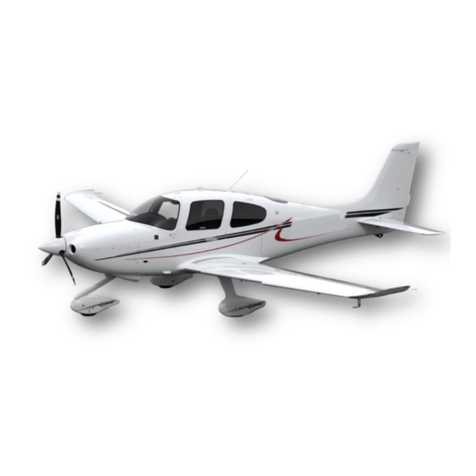
Cirrus SR20 User manual

Other manuals for SR20

15

This manual suits for next models

2

Other Cirrus Aircraft manuals

Cirrus SR20 User manual

Cirrus

Cirrus SR20 User manual

Cirrus SR20 User manual

Cirrus

Cirrus SR20 User manual

Cirrus SR20 User manual

Cirrus

Cirrus SR20 User manual

Cirrus SR22 User manual

Cirrus

Cirrus SR22 User manual

Cirrus SR20 Owner's manual

Cirrus

Cirrus SR20 Owner's manual

Cirrus SR20 User manual

Cirrus

Cirrus SR20 User manual

Cirrus SR22 User manual

Cirrus

Cirrus SR22 User manual

Cirrus SR20 Technical specifications

Cirrus

Cirrus SR20 Technical specifications

Cirrus SR20 User manual

Cirrus

Cirrus SR20 User manual

Cirrus SR22 User manual

Cirrus

Cirrus SR22 User manual

Cirrus SR20 User manual

Cirrus

Cirrus SR20 User manual

Cirrus SR22 User manual

Cirrus

Cirrus SR22 User manual

Cirrus SR22 User manual

Cirrus

Cirrus SR22 User manual

Cirrus SR22 User manual

Cirrus

Cirrus SR22 User manual

Cirrus SR20 User manual

Cirrus

Cirrus SR20 User manual

Cirrus SR22T Owner's manual

Cirrus

Cirrus SR22T Owner's manual

Cirrus SR22 User manual

Cirrus

Cirrus SR22 User manual

Cirrus SR22 User manual

Cirrus

Cirrus SR22 User manual

Cirrus SR22 User manual

Cirrus

Cirrus SR22 User manual

Cirrus SR22 User manual

Cirrus

Cirrus SR22 User manual

Cirrus SR22 User manual

Cirrus

Cirrus SR22 User manual

Cirrus SR20 Quick setup guide

Cirrus

Cirrus SR20 Quick setup guide

Cirrus SR22 Owner's manual

Cirrus

Cirrus SR22 Owner's manual

Cirrus SR20 User manual

Cirrus

Cirrus SR20 User manual

Popular Aircraft manuals by other brands

Cessna U206G STATIONAIR Pilot operating handbook

Cessna

Cessna U206G STATIONAIR Pilot operating handbook

Schleicher ASK 21 Assembly & Disassembly

Schleicher

Schleicher ASK 21 Assembly & Disassembly

Aircraft REIMS F152 Flight manual

Aircraft

Aircraft REIMS F152 Flight manual

Skywalk Tequila 2 Manual/service

Skywalk

Skywalk Tequila 2 Manual/service

MAULE M-7-235B Airplane Flight Manual

MAULE

MAULE M-7-235B Airplane Flight Manual

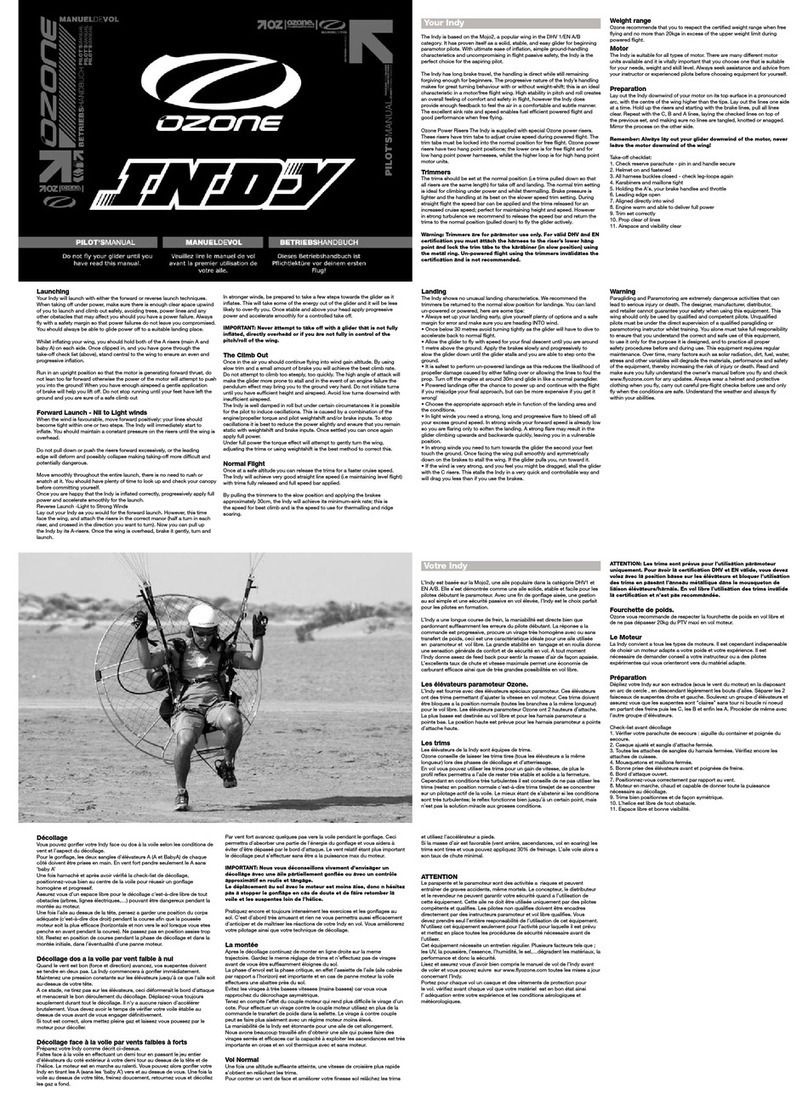
Ozone Indy Pilot's manual

Ozone

Ozone Indy Pilot's manual

Tecnam P92 Echo Super Maintenance manual

Tecnam

Tecnam P92 Echo Super Maintenance manual

Wills Wing HP II Owner's and service manual

Wills Wing

Wills Wing HP II Owner's and service manual

Ozone Roadster Pilot's manual

Ozone

Ozone Roadster Pilot's manual

Niviuk KOYOT 3 user manual

Niviuk

Niviuk KOYOT 3 user manual

Pipistrel ALPHA Trainer Operator's manual

Pipistrel

Pipistrel ALPHA Trainer Operator's manual

REVELL SnapTite BLUE ANGELS F-18 HORNET manual

REVELL

REVELL SnapTite BLUE ANGELS F-18 HORNET manual

Cessna 172 Series 1973 owner's manual

Cessna

Cessna 172 Series 1973 owner's manual

Sabfoil Surf Foil manual

Sabfoil

Sabfoil Surf Foil manual

Sky EOLE user manual

Sky

Sky EOLE user manual

Cessna 182S Skylane Information manual

Cessna

Cessna 182S Skylane Information manual

MAULE MX-7-180B Airplane Flight Manual

MAULE

MAULE MX-7-180B Airplane Flight Manual

Ozone ZENO 2 Pilot's manual

Ozone

Ozone ZENO 2 Pilot's manual

manuals.online logo
manuals.online logoBrands
  • About & Mission
  • Contact us
  • Privacy Policy
  • Terms and Conditions

Copyright 2025 Manuals.Online. All Rights Reserved.

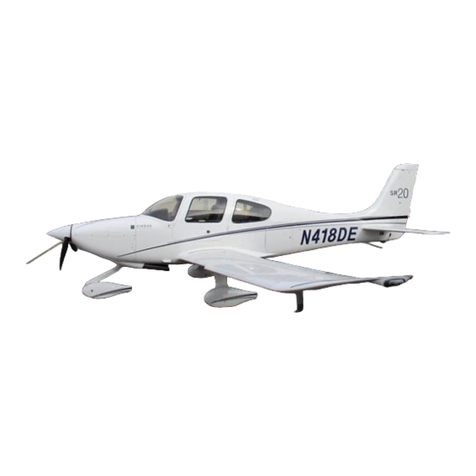
Cirrus SR20, SR22 and SR22T
Owners’ & Pilots’ Guide
An overview to owning and operating Cirrus aircraft.
Information in this document DOES NOT SUPERCEDE THE P.O.H!
This document is designed to help protect the cosmetic appearance and
mechanical integrity of the aircraft. It is not a Cirrus Aircraft nor FAA authorized
Pilot Operating Handbook,
Aircraft Flight Manual, Flight Operations Manual or supplement!
Cirrus Users Guide V26.docx Page 2 of 23 Printed 10/10/16
Welcome
Welcome to the Cirrus family. Whether you are a new owner of an SR2X series aircraft
or if you have the opportunity to fly one, we hope you’ll find this document informative
and useful.
It is designed to answer many common questions about ownership and operation, but
mainly from a cosmetic and aesthetic care standpoint.
As mentioned on the cover, it is NOT a P.O.H. nor a substitute for one; nor does it
replace or in any way supersede any information provided in the P.O.H., the
manufacturer’s guides or any Cirrus training materials. If you find anything in here that is
contradictory, the official documentation will always take precedence.
Please take what you think is useful from this and skip over the rest!
When it comes to flying your aircraft the new interactive Cirrus iFOM or Flight
Operations Manual is available as an iBook from Apple’s iBook store. On your iPad
under the iBooks app, search for “Flight Operations Manual” published by Cirrus
Aircraft. This is an amazing training tool that truly revolutionizes the flight training
experience.
Naturally we’re very interested in your feedback too, so please do let us know if you
have any suggestions to improve your flying experience…and of course feel free to tell
your friends how much fun it is to fly a Cirrus!
A note for pilots/operators of previous generation aircraft.
At Cirrus Aircraft a key component to our success has been our continuous innovation
from year to year. This document has been created for our very latest product offering,
so while the majority of the sections herein apply to all our aircraft, you may see some
features that are different from or not included in your aircraft. Nonetheless, we think
you’ll still find this to be a valuable addition to your ownership experience.

Cirrus Users Guide V26.docx Page 3 of 23 Printed 10/10/16
Pre-Flight Inspection and Consumables
Make sure you remove these four items, if they are present: Cowl plugs, pitot tube
cover, tie-down ropes, chocks. No gust lock is used in Cirrus aircraft because the trim
cartridges are sufficient to prevent a gust from slamming the controls to the stops.
Beware of leaving a chock
behind a wheel. While it
may appear to be clear as
you pre-flight, once you add
weight to the plane this
chock could easily get
trapped and damage the
wheel pant as you taxi
away. The plane will also
tend to “Rock Back” once
the engine starts,
increasing the risk of
trapping a chock
If there is a canopy cover on, carefully remove it making note as to how to reinstall it. Be
careful not to scratch the paint as you remove and/or reinstall the canopy cover.
Whenever possible, store the canopy cover in its bag in the baggage compartment.
Use your best judgment if the cover is wet: A wet cover stored in its bag will go moldy; a
wet cover simply put in the baggage compartment will get the interior wet; a wet cover
left behind during a local flight could get wetter or dirtier, or could blow around on the
ramp causing a serious safety hazard.
! !
Cirrus Users Guide V26.docx Page 4 of 23 Printed 10/10/16
Baggage Door: When opening the baggage door
don’t leave the keys hanging in the lock. Dangling keys
can scratch the paint so remove the keys as soon as
the latch is open. As you load baggage into the
baggage compartment, be aware of sharp edges that
could tear carpet or seat backs and ensure any used
or partially used oil containers are 100% sealed and
cannot leak or spill.
Seat recline/fold-down mechanism:
This is an automotive 60/40 style rear seat recline and
fold-down mechanism. Simply use the lever on the
side of either seat to position the seat into one of four
positions:
1. Fully upright
2. 50% reclined
3. Fully reclined or
4. Folded forward for luggage
(Picture is looking backwards from the front seat)
Cleaning Kits: Many owners choose to keep a small
cleaning kit in their aircraft, often in a sealed plastic
container. CAUTION, NEVER USE ANY CHEMICALS
ON THE GARMIN SCREENS, NEVER USE PAPER
TOWELS ON THE WINDSHEILD AND NEVER
CLEAN THE WINDSHIELD “DRY”!
Emergency Key Storage: We recommend keeping a
spare key accessible in case you accidently lock
yourself out of your plane. First, take your door key to
a local specialty locksmith and get a spare or two
made. Key blanks are the same as Saturn cars, blank
number B88. Remove the external power supply
cover; use metal tape to SECURELY attach your new
blank key and re-install the cover. This way you’ll only
need a Phillips-head screwdriver to access your spare
door key.
! !
Cirrus Users Guide V26.docx Page 5 of 23 Printed 10/10/16
Pre-Flight Walk-Around
Check the two Phillips head screws (one each side) in
the cowling just behind the propeller. These are easy
to miss, but the engine MUST NOT BE STARTED if
either is loose or missing. Pay special attention after
having the cowling removed.
Oil: As you open the oil inspection cover don’t allow
the spring-loaded latches to “snap” open as this will
eventually chip the paint….rather, hold and guide them
up as they unlatch.
Avoid holding anything else in your hand when you
check the oil…if you drop anything into the oil
inspection hatch it’ll be very difficult to retrieve without
removing the cowling!
Adding Oil: Generally, these airplanes like to see a
little over six quarts of oil. If you find less than 6, add a
quart. Over time you’ll discover what a good level for
your engine is. Note for the SR20’s IO-360, the oil is
added by removing the large yellow oil filler cap rather
than into where the dip stick is removed from. The oil
dip stick should be replaced with the “D” shaped ring
facing backwards.
SR22 and SR22T
Oil is added to the SR22's IO-550 via the dipstick hole.
Note that the dipstick has a flexible section and be
careful to NOT place the dipstick on the ground at any
time to avoid dirt contamination.
!
Cirrus Users Guide V26.docx Page 6 of 23 Printed 10/10/16
Static Port. There is a static source on each side aft of
the rear window. Make sure it’s not blocked,
contaminated or covered over, such as with masking
tape.
Just above this on the "spine" of the fuselage is the
frangible area through which the ballistic parachute
fires. That area should be perfectly smooth. If it is
somehow uneven, that's a maintenance red flag.
Please look and feel.
Horizontal Stabilizer. Ensure the clear tape covering
access holes is intact.
Opposite those holes on the elevator horn is the
counterweight. As you circle the empennage,
remember to look down to make sure the two pairs of
access holes in the horizontal stabilizer are covered
with clear tape and that the opposing counterweight is
present, as well as up to make sure that the
counterweight is present in the rudder.
Tail. Looking up with the rudder deflected. See the
safety-wired counterweight.
! !
Cirrus Users Guide V26.docx Page 7 of 23 Printed 10/10/16
Control Hinge Cotter Pins. Check that the cotter pins
are present in the appropriate places.
Get under the flaps and look at the push rod that drives
the flaps. Look carefully at the arrangement of the
ends of that rod and of the center safety-wired
turnbuckle arrangement. If that fails, you could have an
asymmetric flap situation.
Note that the rear-facing white navigation lights are
built into the wingtip strobe and that the strobes take
the place of a red rotating beacon on a modern aircraft.
Tire Pressures (2014 and newer with Beringer
wheels and tires only. Earlier models with
Cleveland wheels, see your POH): In order to ensure
good tire life, correct tire pressures are very important.
Be sure they are checked regularly with a tire pressure
gauge. The nose wheel should be 40 to 90 PSI and the
mains should be 62 to 112 PSI. This applies to both
the SR20 and the SR22. We recommend aiming for
the middle of these ranges
Tire inflation is such that the length of the tire flattened as it sits on the ground should be
about a US dollar bill. Or, four fingers should fit comfortably between the wheel fairing
and the ground. Third option is the fuel tester from the pocket in the baggage door. The
"cup" should stand upright and fit comfortably under the fairing. If the dollar bill test
and/or the cup test fail, the tire(s) needs air.
! !
Cirrus Users Guide V26.docx Page 8 of 23 Printed 10/10/16
Refueling!
If you’re using self-serve or a line service truck, please observe the following tips:
• Your belt buckle can easily scratch the leading edge so try to cover this or any
other sharp objects on your clothing.
• Use the exhaust pipe as the grounding point for static electricity discharge
• Use a rubber refueling mat whenever possible
• To avoid “splash back” insert the nozzle at an angle pointed towards the cabin
• Avoid rubbing the fuel nozzle against the rim of the filler hole
• Avoid allowing the fuel nozzle to rest on the bottom of the tank
Fuel: Be careful when you look into the fuel tanks to check levels, especially at night if
you are holding a flashlight. As you pour the “sumped” gas back into the tank make sure
you don’t drop the fuel tester into the tank and be sure to check the security of the filler
cap locks once you’re finished with the fuel checks.
There are five fuel drains to the check. Two under each wing and one just behind the
nose wheel. Be especially cognizant of the inboard (collector tank) drains: they can flow
very quickly.
We recommend you return clean sumped fuel to the tanks.
Dumping fuel on the ground in Florida for example, carries a
first offense fine of $50,000! We’re not kidding!
! !
Cirrus Users Guide V26.docx Page 9 of 23 Printed 10/10/16
Winter Operations
As we're sure you have been told, attempting to take off and/or fly with a
contaminated wing CAN BE FATAL!
A smooth "clean" composite wing will lose lift with EVEN THE SLIGHTEST FROST!
DECONTAMINATE YOUR AIRCRAFT BEFORE YOU ATTEMPT TO FLY!
There are a number of techniques to do this:
• Use de-ice fluid from a garden-style sprayer to melt the frost/ice and then wipe
clean. This requires having access to a sprayer and de-ice fluid.
• Park the aircraft facing the sun and then wipe the melting frost off. This can take
time.
For cold weather engine operations please refer to the Continental Motors operating
manual for the best procedures
SR22 and SR22T with Certified Flight Into Known Ice (FIKI)
Adhere to the "Never fly with a contaminated wing" rule as discussed above. Once
you are airborne the FIKI system can cope with icing, however, it is VITAL that you
have studied the on-line Cirrus Ice Awareness course and passed the quiz at the end.
This must be completed every 24 months or the FIKI certification will no longer apply!
Even the FIKI system has its limitations and it is NOT a superman cloak! Treat icing
conditions with respect at all times!
If you need to refill the de-ice fluid tanks, you can ask the FBO to do it for you, but be
aware it may be a maintenance department function rather than a line crew function and
may incur a minimum labor charge.
If you have spare fluid available and chose to fill yourself, use an appropriate funnel and
MAKE SURE YOU'RE FILLING THE TWO INBOARD DE-ICE TANKS AND NOT THE
OUTBOARD 100LL GAS TANKS!
TKS Ice protection fluid filler tank. One on each wing.
Cirrus Users Guide V26.docx Page 10 of 23 Printed 10/10/16
Windshield/window cleaning
Never use a PAPER cloth….it will scratch the windshield!
If the windshield needs cleaning, make sure you use a perfectly clean micro-fiber rag
along with a cleaning aerosol such as Prist™.
NEVER use a dry cloth on a dry windshield and if you drop the cloth on the ground DO
NOT continue with that cloth. Dust and dirt in a dry cloth will create scratches and swirls
in the windshield. Use the Prist™ liberally to ensure a damp surface and wipe in straight
lines up and down, not in a circular motion as this too can create “swirls” in the
windshield.
A good product for general cleaning is a spray foam called “PowerFoam” made by
Jetstream products. It is easy to use, leaves few streaks and is safe to use on TKS
deice panels.
Preventing Paint Scratches: Be very careful when leaning over the cowling or the
wing to check fluids as your belt buckle can easily scratch the paint, so try to cover this
or any other sharp objects on your clothing.
For Ice Equipped Aircraft: The leading edge of the wing uses a titanium panel with
over 820 holes drilled per square inch. To prevent clogging these tiny holes DO NOT
USE ANY WAX ON THE LEADING EDGE! Refer to P.O.H. for more details on
cleaning the TKS panels.
As you prepare to enter the aircraft, take one more look under the airplane to make sure
that nothing is hanging/dangling—tie-downs, pitot tube cover, chocks. Take one more
look to see the baggage door latch is secure.