9. Continue routing connectors and harness forward along lower right frame rail, be sure to keep clear of
brake rod and linkage. Route forward to voltage regulator. Remove the two Allen bolts holding the voltage
regulator onto the lower front frame, see Figure 6. Let it drop down, then directly behind that is a black
plastic panel. Hinge that panel down to access the plugs behind it. Locate the front oxygen sensor
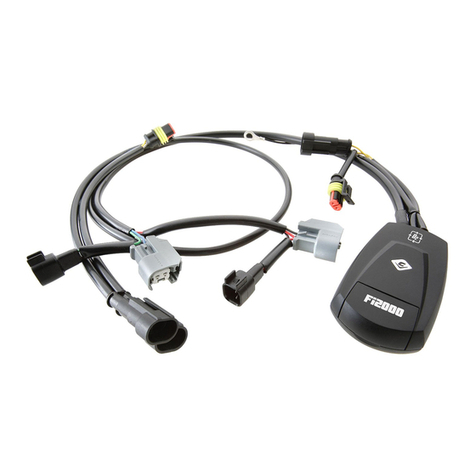
connection, slide it off its holding pin and unplug the connector. Plug the Fi2000 O2sensor harness male
connector into the O2sensor female connector and slide them back onto stock plastic panel location. Mate
the stock male harness connector with the female Fi2000 connector, place this set of connectors between
connectors attached to plastic panel, be sure Fi2000 harness exits on the right side between panel and
frame. Reinstall the panel and the voltage regulator. Leave a small amount of slack in harness at
connector and zip tie along lower right frame rail in 3 locations.
10. Locate the black waterproof connector in the wire harness bundle that was tucked down into the open area
under the seat, see Figure 3. Unplug the female connector that comes from the rear oxygen sensor, and
mate it with the male connector from the shorter Fi2000 O2 sensor harness. Mate the stock male connector
with the female Fi2000 connector. Be sure connectors are fully seated.
11. Remove the block propping up the fuel tank and lower fuel tank back into proper position.
12. Before reinstalling the fuel tank bolts and the seat, verify your connections. Remove the door from the
Fi2000 box to expose the LED’s. The pot settings on the Fi2000 must be set to match the proper intake
and exhaust configuration, Refer to Figure 7 and the Advanced Tuning section below to determine the
proper configuration. Verify the wire connections by (1) turning the ignition on, prior to starting, and see if
all three LED’s are on steady. If you have no light, your ground connection (BLACK wire) has not made
proper contact or the injector connections are not complete. (2) After achieving a steady light from all three
LED’s, start the motorcycle, wait 15 seconds and let it idle, the green light should now be the only LED on.
If all three LED’s are still on after start up verify you have attached the injector connectors correctly.
Reattach the door when finished. Note: Make sure the ignition is turned off before changing any
connection.
13. Remove the backing from the Velcro and attach the Velcro pad down between the back of the battery and
the ECU on the flat area of the frame. Apply the mating Velcro to the back of the Fi2000 and attach, see
Figure 3.
14. Reinstall the right side cover. Be sure the Phillips screw is properly secured. Reinstall left side cover and
be sure that it is properly secured by the tab which keeps it in place. Reinstall fuel tank bolts.
15. Reinstall seat and air cleaner. Secure any fasteners loosened during assembly.
ADVANCED TUNING
Your Cobra® Fi2000 fuel injection module has been tested and preset for best function and rideabilty on a
motorcycle with stock air cleaner and Cobra slip-on mufflers. The Fi2000 does have 3 important adjustments
that allow you to tune the module for optimum performance, especially if you have performed other changes
to your motorcycle. These adjustments also allow you to resolve drivability issues if our stock settings are not
exactly right for your bike. Make sure your motorcycle is up to normal operating temperature (15 minutes of
riding should be sufficient) before making any adjustments.
GREEN LED POT (left pot) –With the Closed Loop function of this module you do not need to adjust this
setting, leave it at 2.0. Without a closed loop system this adjustment would affect idle and cruise fuel. If you
had cruising issues, this is where you would try a different setting. Generally, surging and uneven running
while cruising is a lean fuel condition, so adding a small increase in fuel by turning this adjustment
clockwise with a small flat blade screwdriver a 1/2 of a position would help. The bike would need to be Test-
driven to feel an improvement and only the setting would need to be increased until the surge went
away. Also, backfiring or popping on trailing throttle is generally a lean symptom (or an exhaust gasket leak).
The same small increases as above would be tried just until the backfiring would disappear.