7
• To install the heater as well as the gas and electrical
supplies in accordance with applicable specifications
and codes. Combat Heating Solutions Limited
recommends the installer contact a local Building
Inspector or Site safety officer for information relating
to combustible materials and substances used in the
environment where the equipment is to be installed for
guidance when required.
• To use the information given in a layout drawing and in
the manual together with the cited codes and regulations
to perform the installation.
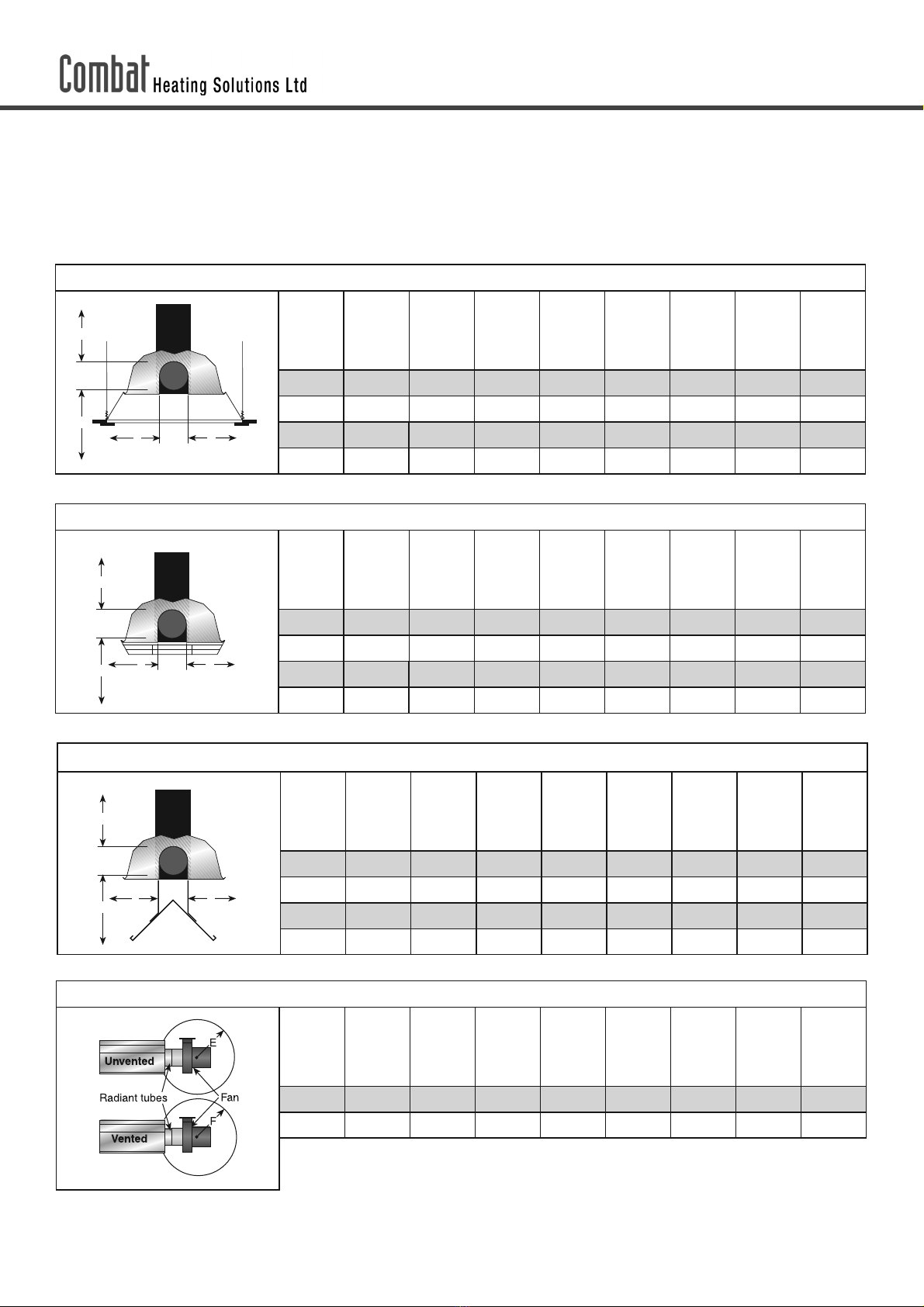
• To install the heater in accordance with the clearances
to combustibles.
• To furnish all needed materials not furnished as standard
equipment.
• To plan location of supports.
• To provide access to burners for servicing on all sides,
for burner removal.
• To provide the owner with a copy of the Installation,
Operation and Service manual.
• To never use heater as support for a ladder or any other
access equipment and never hang or suspend anything
from heater.
• To ensure there is adequate air circulation around the
heater and to supply air for combustion, ventilation and
distribution in accordance with all relevant regulations
and standards.
• To safely and adequately install heater using materials
with a minimal working load of 33kg.
• To ensure the heater is placed in an approved application.
2.1 Low Level User Instructions
In all situations, clearances to combustibles must be
maintained. Signs should be posted in storage areas to
specify the maximum stacking height of items placed below
heater to maintain required clearances to combustibles.
Minimum clearances must be maintained from vehicles
parked below the heater.
Caution should be used when running the system near
combustible materials such as wood, paper, rubber, etc.
Consideration should be given to partitions, storage racks,
hoists, building construction, etc.
A laminated wall tag is available for the heater as a permanent
reminder of the safety instructions and the importance of
the required clearances to combustibles. Please contact
Combat Heating Solutions Limited or your Combat Heating
Solutions Limited independent distributor to obtain the wall
tag. Affix the tag by peeling off the backing of the adhesive
strips on the rear surface and position the tag on a wall near
the heater (e.g. thermostat or Combat Heating Solutions
Limited Controller).
A copy of the wall tag (P/N 91037912) is illustrated on the
back cover. This copy of the wall tag can be affixed on the
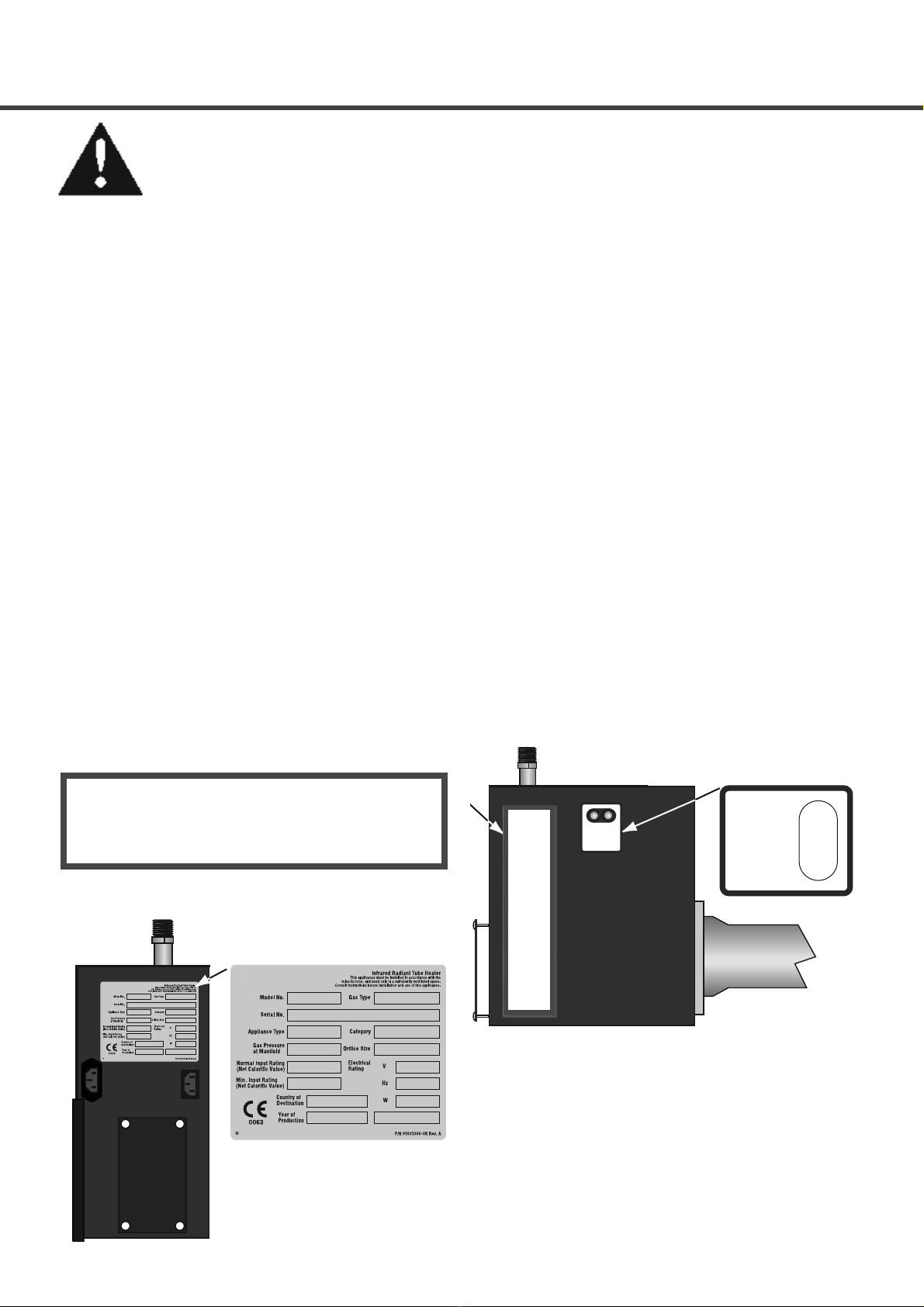
wall near the heater. Know your model number and installed
configuration. Model number and installed configuration
are found on the burner and in the Installation, Operation
and Service Manual. Write the largest clearance dimensions
with permanent ink according to your model number and
configuration in the open spaces on the tag.
SECTION 2: INSTALLER RESPONSIBLILTY
Product Damage Hazard
Do not use heater in area containing corrosive
chemicals.
Refer to appropriate Material Safety Data
Sheets (MSDS).
Failure to follow these instructions can result
in product damage.
2.2 Corrosive Chemicals
CAUTION
Combat Heating Solutions Limited cannot be responsible
for ensuring that all appropriate safety measures are
undertaken prior to installation; this is entirely the
responsibility of the installer. It is essential that the contractor,
the sub-contractor or the owner identifies the presence of
combustible materials, corrosive chemicals or halogenated
hydrocarbons* anywhere in the premises.
*Halogenated Hydrocarbons are a family of chemical
compounds characterized by the presence of halogen
elements (fluorine, chlorine, bromine, etc.). These
compounds are frequently used in refrigerants, cleaning
agents, solvents, etc. If these compounds enter the air
supply of the burner, the lifespan of the heater components
will be greatly reduced. An outside air supply must be
provided to the burners whenever the presence of these
compounds is suspected. The warranty will be invalid if
the heater is exposed to halogenated hydrocarbons.
2.3 National Standards and Regulations
All appliances must be installed in accordance with the
latest revision of the applicable standards and regulations.
This refers also to the electric, gas and venting installation.
Note: Additional regulations for installations in public
garages, aircraft hangars, etc. may be applicable.