5
104779
OWNER’S MANUAL
ASSEMBLY
Continued
Assembling and Attaching
Brass Trim
1. Remove packaging from remaining
three pieces of brass trim.
2. Locate four brass screws, two adjust-
ing plates with set screws, and two
shims in the hardware packet.
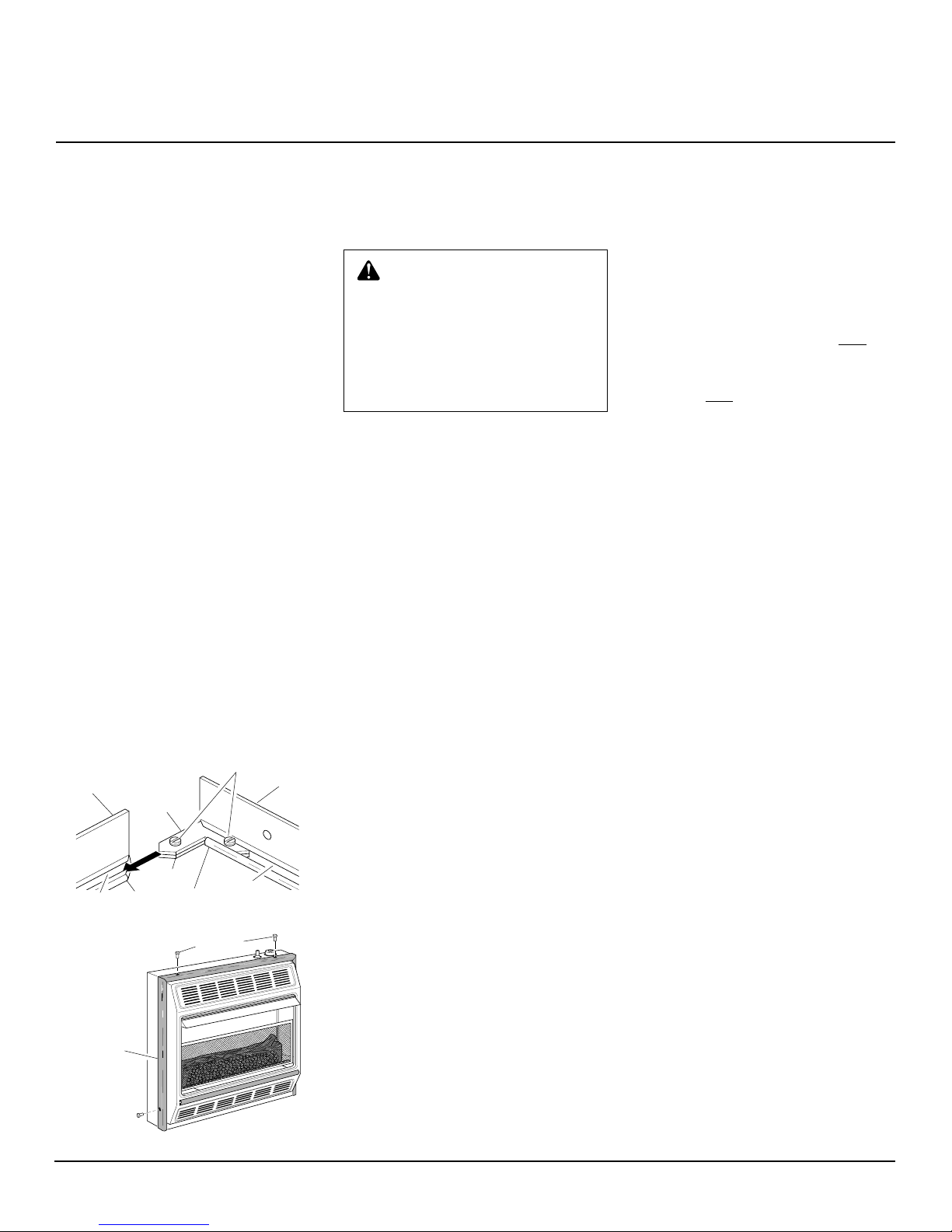
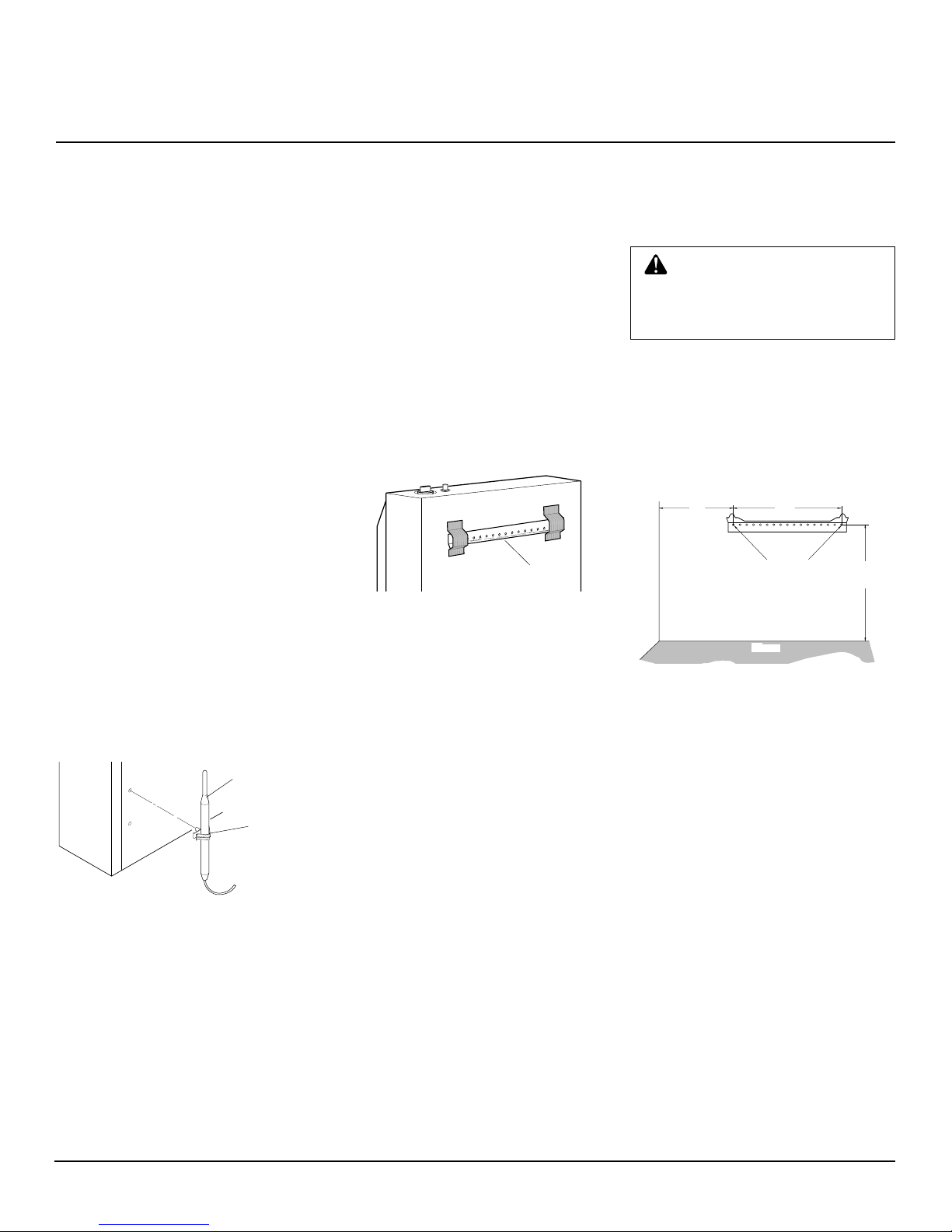
3. Align shim under adjusting plate as
shown in Figure 6.
4. Slide one end of adjusting plate/shim
inslot onmitered edgeof topbrass trim
(see Figure 6).
5. Slide other end of adjusting plate/shim
in slot on mitered edge of side brass
trim (see Figure 6).
6. While firmly holding edges of brass
trim together, tighten both set screws
on the adjusting plate with slotted
screwdriver.
7. Repeat steps 1 through 6 for other side.
8. Place the assembled trim on front of
heater cabinet.Attach on top and sides
withfour brassscrewsincluded inhard-
ware package (see Figure 7).
9. Reattach front panel toheater ifyou are
going to mount the heater to the base.
Do not reattach front panel at this time
ifyou aregoing to mountheater towall.
Side Brass
Trim
Top
Brass
Trim
Slot
Mitered Edge
Slot
Set Screws
Adjusting
Plate
Screws
Assembled
Brass Trim
Figure7 -Attaching BrassTrim toHeater
Figure 6 - Assembling Brass Trim
Shim
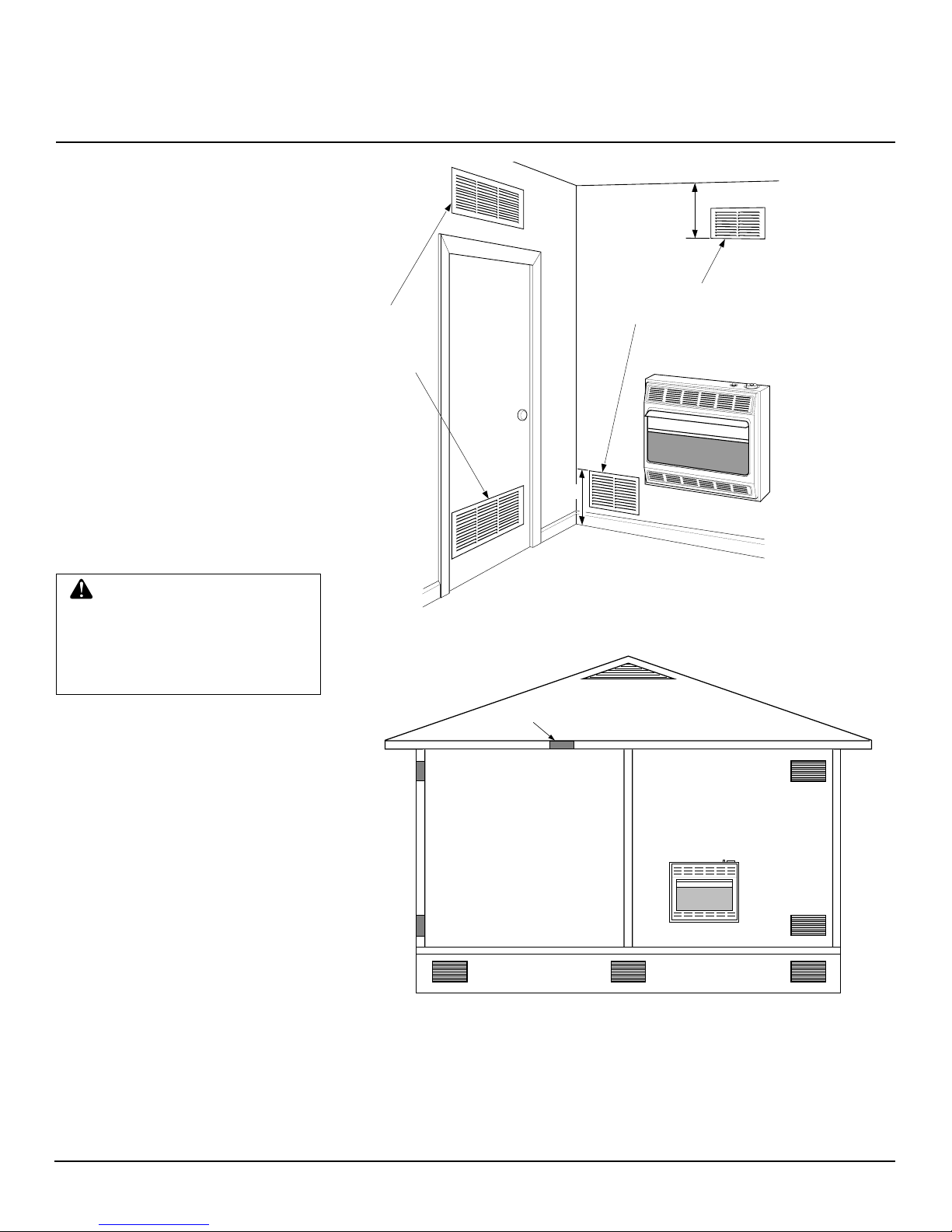
AIR FOR
COMBUSTION AND
VENTILATION
Today’s homes are built more energy effi-
cient than ever. New materials, increased
insulation, and new construction methods
helpreduceheatlossinhomes.Homeowners
weatherstripandcaulk around windows and
doorstokeepthecoldairoutandthewarmair
in. During heating months, home owners
want their homes as airtight as possible.
While it is good to make your home energy
efficient,yourhomeneedstobreathe.Fresh
air must enter your home. All fuel-burning
appliances need fresh air for proper com-
bustion and ventilation.
Exhaustfans,fireplaces,clothesdryers,and
fuel burning appliances draw air from the
house to operate. You must provide ad-
equate fresh air for these appliances. This
will insure proper venting of vented fuel-
burning appliances.
PROVIDING ADEQUATE
VENTILATION
The following is excerpts from National
Fuel Gas Code. NFPA 54/ANSI Z223.1,
Section 5.3, Air for Combustion and Venti-
lation.
Allspacesinhomesfallintooneofthethree
following ventilation classifications:
1. Unusually Tight Construction
2. Unconfined Space
3. Confined Space
The information on pages 5 through 7 will
help you classify your space and provide
adequate ventilation.
Unusually Tight Construction
The air that leaks around doors and win-
dows may provide enough fresh air for
combustion and ventilation. However, in
Confined and Unconfined Space
TheNationalFuelGasCode(ANSIZ223.1,
1992 Section 5.3) defines a confined space
as a space whose volume is less than 50
cubicfeetper1,000Btuperhour(4.8m3per
kw) of the aggregate input rating of all
appliances installed in that space and an
unconfiningspaceasaspacewhosevolume
is not less than 50 cubic feet per 1,000 Btu
per hour (4.8 m3per kw) of the aggregate
inputratingofallappliancesinstalledinthat
space.Roomscommunicating directly with
the space in which the appliances are in-
stalled*, through openings not furnished
with doors, are considered a part of the
unconfined space.
This heater shall not be installed in a con-
fined space or unusually tight construction
unlessprovisions areprovidedfor adequate
combustion and ventilation air.
*Adjoiningroomsarecommunicatingonly
iftherearedoorlesspassagewaysorventila-
tion grills between them. Continued
WARNING: This heater shall
notbeinstalledinaconfinedspace
unless provisions are provided
foradequatecombustionandven-
tilation air. Read the following in-
structions to insure proper fresh
air for this and other fuel-burning
appliances in your home.
buildings of unusually tight construction,
you must provide additional fresh air.
Unusually tight construction is de-
fined as construction where:
a. walls and ceilings exposed to the
outside atmosphere have a con-
tinuous water vapor retarder with
a rating of one perm (6 x 10-11 kg
per pa-sec-m2) or less with open-
ings gasketed or sealed
and
b. weather stripping has been
added on openable windows and
doors
and
c. caulking or sealants are applied
to areas such as joints around
window and door frames, be-
tween sole plates and floors,be-
tween wall-ceiling joints, be-
tween wall panels, at penetra-
tionsforplumbing,electrical,and
gas lines, and at other openings.
If your home meets all of the three
criteria above, you must provide ad-
ditional fresh air. See
Ventilation Air
From Outdoors
, page 7
.
If your home does not meet all of the
threecriteriaabove,proceedto
Deter-
mining Fresh-Air Flow for Heater Lo-
cation,
page 6.