GB Attention Operating Surgeon
IMPORTANT Please read carefully before
implanting this product
DESCRIPTION
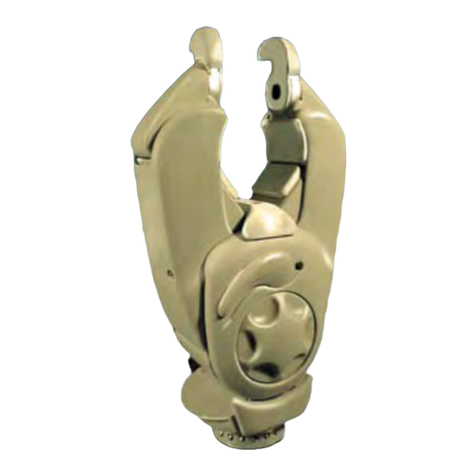
The MetaFix™ Hip is a tapered stem manufactured
from titanium (Ti6Al4V) with a layer of hydroxyapatite
(HA) Coating applied. The MetaFix™ Hip is available
in a 135° standard offset (collared and collarless),
135° lateralized high offset (collarless), a 125°
standard offset (collared and collarless), a 125° short
neck (collared) and 135° short neck (collared).The
device is intended to be used with 12/14 modular
taper heads.
The MetaFix™ hip is intended to provide increased
patient mobility and reduce pain by replacing the
damaged hip joint articulation in patients where there
is evidence of sufficient sound bone to seat and
support the components.
Please note that the 125˚ standard offset and 125˚
short neck for Size 1, and all offsets for Size 0 are
not available in the USA.
INDICATIONS
The indications for the Corin MetaFix™ Hip Stem
as a total hip arthroplasty, and when used in
combination with a Corin hemi arthroplasty head, as
a hip hemi-arthroplasty, include:
· Non-inflammatory degenerative joint disease
including osteoarthritis and avascular necrosis
DE Zur Beachtung durch den operierenden
Chirurgen
WICHTIG Bitte vor der Implantation dieses
Produkts sorgfältig durchlesen
BESCHREIBUNG
MetaFix™ Hip ist ein konisch geformter, mit
Hydroxylapatit-Beschichtung versehener Hüftschaft
aus Titan (Ti6Al4V). Der MetaFix™-Hüftschaft ist
mit Standard-Offset 135° (mit oder ohne Kragen),
seitlich erhöhtem Offset 135° (ohne Kragen),
Standard-Offset 125° (mit oder ohne Kragen), mit
kurzem Hals und 125° Offset (mit Kragen) und mit
kurzem Hals und 135° Offset (mit Kragen) lieferbar.
Der Hüftschaft ist für die Verwendung mit modularen
12/14-Konusköpfen gedacht.
MetaFix™ Hip soll den Patienten zu mehr
Mobilität zu verhelfen und Schmerzen reduzieren,
indem das geschädigte Hüftgelenk ersetzt wird,
wenn der Nachweis für ausreichend gesunde
Knochensubstanz zum Einsetzen und Halten der
Komponenten vorhanden ist.
Bitte beachten Sie, dass der 125° Standard-Offset
und der 125° Offset mit kurzen Hals für Größe 1
sowie alle Offsets für Größe 0 in den USA nicht
lieferbar sind.
INDIKATIONEN
Der Corin MetaFix™-Hüftschaft als Totalarthroplastik
des Hüftgelenks und bei Verwendung in Verbindung
which have experienced extensive use or excessive
force, are susceptible to fracture. Surgical
instruments should only be used for their intended
purpose.
The MetaFix™ Hip stem has not been evaluated
for safety and compatibility in the MR environment.
It has not been tested for heating, migration, or
image artifact in the MR environment. The safety of
the MetaFix™ Hip Stem in the MR environment is
unknown. Scanning a patient who has this device
may result in patient injury.
ADVERSE REACTIONS
Complications can potentially occur following
any joint replacement surgery. The following
complications have occurred in some patients after
their hip joint replacement surgery.
· Hip ball (femoral head) and hip socket (acetabulum)
may separate (hip dislocation);
· Device loosening from the surrounding bone;
· Allergic reaction to the implant’s materials;
· Audible sounds during motion;
· Premature wear or breakage of the implants;
· Bone loss around the implant;
· Change in the length of the treated leg;
· Hip pain and stiffness;
· Loss of hip flexibility of the hip joint;
· Nerve damage;
· Calcification.
STERILITY
The MetaFix™ Hip stem implants are supplied
augenscheinlich unbeschädigt ist, können durch
vorherige Belastungen Defekte entstanden sein,
die die Lebensdauer des Implantats verkürzen.
Chirurgen sollten sich vor der Durchführung des
Eingriffs gründlich mit der Corin MetaFix™ Hip
Operationstechnik, den Implantaten und den
Instrumenten vertraut gemacht haben.
Corin entwickelt für seine Gelenkersatzsysteme
Spezialinstrumente, mit denen die akkurate
Implantation der Prothesen unterstützt wird.
Die Verwendung von Instrumenten oder
Implantatkomponenten anderer Systeme kann zu
einer ungenauen Passform und Größenbestimmung
sowie zum Versagen des Implantats führen. In
diesem Zusammenhang wurden intraoperative
Frakturen und Instrumentbrüche gemeldet.
Chirurgische Instrumente verschleißen bei
normalem Gebrauch. Instrumente, die intensiv
genutzt oder übermäßig beansprucht wurden, sind
bruchanfälliger. Chirurgische Instrumente sollten nur
für ihren vorgesehenen Zweck verwendet werden.
Der MetaFix™-Hüftschaft ist nicht auf Sicherheit
und Kompatibilität in MR-Umgebungen bewertet
worden. Er wurde nicht auf Heizen, Migration
oder Bildartefakte in der MR-Umgebung geprüft.
Die Sicherheit des MetaFix™-Hüftschafts in der
MR-Umgebung ist nicht bekannt. Das Scannen
eines Patienten mit diesem Implantat kann zu einer
Verletzung des Patienten führen.
UNERWÜNSCHTE REAKTIONEN
Potenziell können nach jeder Gelenkersatzoperation
· Rheumatoid arthritis
· Correction of functional deformity
· Treatment of non-union, femoral neck and
trochanteric fractures of the proximal femur
· Developmental dysplasia of the hip (DDH) and
congenital dysplasia of the hip (CDH)
The Corin MetaFix™ Hip Stem is indicated for
cementless use only.
CONTRAINDICATIONS
· Active infection
· Marked bone loss or bone resorption
· Metabolic disorders which may impair bone
formation
· Vascular insufficiency
· Muscular atrophy or neuromuscular disease
· Allergy to implant material
· Severe deformity
· Charcot’s or Paget’s disease
· For hemi-hip arthroplasty, any pathological
condition of the acetabulum, such as distorted
acetabuli with irregularities, protrusion acetabuli
(arthrokatadysis), or migration acetabuli, that would
preclude the use of the natural acetabulum as
an appropriate articular surface for the hemi-hip
prosthesis.
WARNINGS AND PRECAUTIONS
Please note the MetaFix™ Hip stem should not
be used for patients who weigh more than 80 kg
for all size 0 stems and size 1 125° standard &
short neck stems. Failure of the implant may result
sterile. Check the integrity of the packaging
carefully. Do not use if the packaging is open or
damaged. Do not resterilize. For single use only. The
product is not labelled “pyrogen free”.
INSTRUMENTS
Instruments used to implant the device are
supplied non-sterile and must be sterilized prior
to use. Instruments should be cleaned according
to the Corin cleaning instructions supplied with
the instrument set. After cleaning and prior to
sterilization, the reusable device(s) should be
double-wrapped or packaged in CSR sterilization
wraps or pouches. Wrapping should be performed
using the appropriate wrapping method (e.g. AAMI
CSR wrapping technique). The following sterilization
method has been validated, based on AAMI/ANSI/
ISO guidelines and recommendations:
· Method: Moist-Heat Sterilization
· Cycle: Pre-Vacuum (Pre-Vac)
· Temperature: 270 F (132 C)
· Exposure Time: 4 minutes
· Pressure: 2-15 PSIA
· Dry-Time: 30 minutes (minimum, in chamber)
· Cool-Time: 60 minutes (minimum, at room
temperature)
After sterilizing, the reusable device(s) should be left
on the sterilizer cart, untouched, for a minimum of
one hour at room temperature, or until adequately
cooled for safe handling. Other sterilization
methods and cycles may also be suitable, however,
individuals or hospitals are advised to validate
mit einem Corin-Hüftkopf als Hemi-Hüftarthroplastik
ist unter anderem indiziert für:
· Nicht entzündliche, degenerative
Gelenkerkrankungen wie Osteoarthritis und
avaskuläre Nekrose
· Rheumatoide Arthritis
· Korrektur funktionaler Deformitäten
· Behandlung von separaten Frakturen und
Frakturen von Oberschenkelhals und trochantären
Frakturen des proximalen Femurs
· Erworbene Hüftdysplasie (DDH) und angeborene
Hüftdysplasie (CDH)
Der Corin MetaFix™-Hüftschaft ist nur für den
Einsatz ohne Zement indiziert.
KONTRAINDIKATIONEN
· Aktive Infektion
· Erheblicher Knochenverlust oder
Knochenresorption
· Stoffwechselstörungen, die die Bildung von
Knochengewebe beeinträchtigen können
· Venöse Insuffizienz
· Muskelatrophie oder neuromuskuläre
Erkrankungen
· Allergien gegen das Implantatmaterial
· Schwere Deformitäten
· Charcot- oder Paget-Krankheit
· Bei Hemi-Hüftarthroplastiken jeder pathologische
Zustand der Hüftpfanne (Acetabulum),
beispielsweise verkrümmte Acetabuli mit
Unregelmäßigkeiten, Protrusio acetabuli
(Arthrokatadysis) oder migrierende Acetabuli,
die eine Nutzung der natürlichen Hüftpfanne
Komplikationen auftreten. Bei einigen Patienten sind
nach einer Operation zum Ersatz ihres Hüftgelenks
folgende Komplikationen aufgetreten.
· Trennung (Hüftdislozierung) von Hüftkopf
(Femurkopf) und Hüftpfanne (Acetabulum).
· Ablösung des Implantats vom umgebenden
Knochen
· Allergische Reaktion auf die Implantatmaterialien
· Hörbare Geräusche während der Bewegung
· Vorzeitiger Verschleiß oder Bruch der Implantate
· Knochenverlust um das Implantat
· Längenveränderungen am behandelten Bein
· Schmerzen und Steifigkeit in der Hüfte
· Flexibilitätsverlust der Hüfte im Hüftgelenk
· Nervenschäden
· Verkalkung
STERILITÄT
Die MetaFix™-Hüftschaftimplantate werden
steril geliefert. Überprüfen Sie sorgfältig die
Unversehrtheit der Verpackung. Nicht verwenden,
wenn die Verpackung offen oder beschädigt ist.
Nicht erneut sterilisieren. Nur zum einmaligen
Gebrauch bestimmt. Das Produkt ist nicht als
“pyrogenfrei” gekennzeichnet.
INSTRUMENTE
Für die Implantation des Systems verwendete
Instrumente werden nicht steril geliefert
und müssen vor dem Gebrauch sterilisiert
werden. Die Instrumente sind gemäß den
mit dem Instrumentensatz mitgelieferten
FR À l’attention du chirurgien
IMPORTANT Lire attentivement ce document
avant d’implanter ce produit.
DESCRIPTION
Le système MetaFix™ Hip est une tige conique
en titane (Ti6Al4V) revêtue d’une couche
d’hydroxyapatite (HA). Le système MetaFix™
Hip est disponible en version offset standard avec
angle de 135° (avec et sans collerette), grand offset
latéralisé avec angle de 135° (sans collerette),
offset standard avec angle de 125° (avec et sans
collerette), col court avec angle de 125° (avec
collerette) et col court avec angle de 135° (avec
collerette). Le dispositif est destiné à être utilisé avec
des têtes coniques modulaires 12/14.
Le système MetaFix™ Hip est destiné à apporter au
patient une mobilité accrue et à réduire la douleur en
remplaçant l’articulation coxofémorale endommagée
chez les patients présentant suffisamment d’os sain
pour recevoir et soutenir les composants.
Noter que la version offset standard avec angle de
125° et col court avec angle de 125° pour la taille 1
ainsi que toutes les versions d’offset pour la taille 0
ne sont pas disponibles aux États-Unis.
INDICATIONS
Les indications de la tige de hanche Corin MetaFix™
Hip pour une arthroplastie totale de la hanche et
quand elle est utilisée en association avec une tête
Hip, les implants ainsi que les instruments avant de
réaliser l’intervention chirurgicale.
Corin conçoit des instruments spécialisés pour
ses systèmes de remplacement d’articulations
pour aider à l’implantation précise des prothèses.
L’utilisation d’instruments ou de composants
d’implants provenant d’autres systèmes peut
donner lieu à des imprécisions ou des erreurs de
dimensionnement et à la défaillance du dispositif.
Des fractures peropératoires ou des ruptures
d’instruments ont été signalées. Les instruments
chirurgicaux sont sujets à l’usure lors d’un usage
normal. Les instruments ayant été fréquemment
utilisés ou ayant subi une force excessive sont
susceptibles de se rompre. Les instruments
chirurgicaux doivent être utilisés aux fins prévues
uniquement.
La sécurité et à la compatibilité de la tige
MetaFix™ Hip dans l’environnement RM n’ont
pas été évaluées. L’échauffement, la migration
ou la formation d’artéfacts d’image dans un
environnement RM n’ont pas été testés. La sécurité
de la tige MetaFix™ Hip dans l’environnement RM
est inconnue. Procéder à un examen d’imagerie
chez un patient porteur de ce dispositif pourrait
s’avérer dangereux pour le patient.
EFFETS INDÉSIRABLES
Des complications peuvent survenir suite à une
intervention chirurgicale de remplacement d’une
articulation. Les complications suivantes sont
survenues chez certains patients après une chirurgie
pour hémi-arthroplastie Corin, dans le cadre d’une
hémi-arthroplastie de la hanche, sont les suivantes :
· maladie articulaire dégénérative non inflammatoire
telle que l’ostéoarthrite et la nécrose avasculaire ;
· arthrite rhumatoïde ;
· correction d’une déformation fonctionnelle ;
· traitement des pseudarthroses, fractures du col
du fémur et fractures trochantériennes du fémur
proximal ;
· dysplasie acquise de la hanche (DAH) et dysplasie
congénitale de la hanche (DCH) ;
La tige de hanche Corin MetaFix™ Hip est indiquée
uniquement pour un usage sans ciment.
CONTRE-INDICATIONS
· Infection active
· Perte osseuse ou résorption osseuse marquée
· Troubles métaboliques susceptibles de nuire à la
formation osseuse
· Insuffisance vasculaire
· Atrophie musculaire ou affection neuromusculaire
· Allergie au matériau de l’implant
· Déformation grave
· Maladie de Charcot ou maladie de Paget
· Pour l’hémi-arthroplastie de la hanche, tout
état pathologique de l’acétabulum, tel que des
déformations acétabulaires avec irrégularités,
protrusion acétabulaire (maladie d’Otto) ou
migration acétabulaire, susceptible d’empêcher
l’utilisation de l’acétabulum naturel en tant que
surface articulaire appropriée pour l’hémi-prothèse
de hanche.
de remplacement de l’articulation coxofémorale :
· séparation de la protubérance (tête fémorale) et de
la cavité (acétabulum) (luxation de la hanche) ;
· détachement du dispositif de l’os qui l’entoure ;
· réaction allergique aux matériaux de l’implant ;
· bruits lors de mouvements ;
· usure ou cassure prématurée des implants ;
· perte de masse osseuse autour de l’implant ;
· changement de longueur de la jambe traitée ;
· douleurs et raideur de la hanche ;
· perte de flexibilité de l’articulation coxofémorale ;
· lésions des nerfs ;
· calcification.
STÉRILITÉ
Les implants du système de tige MetaFix™ Hip
sont fournis stériles. Bien vérifier l’intégrité de
l’emballage. Ne pas utiliser le produit si l’emballage
est ouvert ou endommagé. Ne pas restériliser.
Produit à usage unique. Le produit ne porte pas la
mention « apyrogène ».
INSTRUMENTS
Les instruments utilisés pour implanter le dispositif
sont fournis non stériles et doivent être stérilisés
avant utilisation. Les instruments doivent être
nettoyés selon les instructions de nettoyage
fournies par Corin avec le kit d’instruments.
Après nettoyage et avant stérilisation, le ou des
dispositifs réutilisables doivent être emballés deux
fois ou une fois dans un sachet ou une poche
de stérilisation CSR. L’emballage doit être réalisé
from:- selection of improper components, mal-
alignment or mal-positioning of the components,
inadequate fixation of components, failure to
remove surgical debris prior to closure. Fracture,
particularly of smaller sized stems, is most likely to
occur in patients who are young, physically active,
and/or heavy. The following conditions, either
singly or in combination, can put the patient at
higher risk of failure of their joint replacement due
to severe loading of the affected extremity: obesity
or excessive patient weight, manual labour, active
sports participation, high levels of patient activity,
likelihood of falls, alcohol or drug addiction, and
other disabilities as applicable.
Surgeons should give consideration to bone and
muscle quality. Clean gloves should be worn when
handling implants. Avoid scratching or denting
implant surfaces. Do not modify implants. Do not
reuse implants, an implant may appear undamaged
but previous stress may have created imperfections
that would reduce the service life of the implant.
Surgeons should be thoroughly familiar with
the Corin MetaFix™ Hip surgical technique, the
implants, and the instruments prior to performing
the surgery.
Corin designs specialized instruments for their
joint replacement systems to aid in the accurate
implantation of the prostheses. The use of
instruments or implant components from other
systems can result in inaccurate fit, sizing, and
device failure. Intra-operative fracture or breaking of
instruments has been reported. Surgical instruments
are subject to wear with normal usage. Instruments
als geeignete Gelenkoberfläche für die Hemi-
Hüftprothese ausschließen.
WARN- UND SICHERHEITSHINWEISE
Bitte beachten Sie, dass der MetaFix™-
Hüftschaft in der Schaftgröße 0 sowie der
Größe 1 125° (Standard & kurzer Hals) nicht bei
Patienten mit einem höheren Körpergewicht als
80 kg verwendet werden darf. Ein Versagen des
Implantat kann folgende Ursachen haben: falsche
Komponentenwahl, fehlerhafte Ausrichtung oder
Platzierung der Komponenten, unzureichende
Fixierung der Komponenten, versäumtes Ausräumen
von Operationsrückständen vor dem Verschließen.
Frakturen, insbesondere von Schäften in den
kleineren Größen, treten am wahrscheinlichsten
bei jungen, körperlich aktiven und/oder schweren
Patienten auf. Folgende Faktoren können, allein oder
in Kombination, Patienten einem höheren Risiko für
ein Versagen ihres Ersatzgelenkes aufgrund hoher
Belastung der betroffenen Extremität aussetzen:
Adipositas oder Übergewicht des Patienten,
körperliche Arbeit, aktive Teilnahme an Sport, hoher
Aktivitätsgrad des Patienten, die Wahrscheinlichkeit
von Stürzen, Alkohol- oder Drogenabhängigkeit und
sonstige, eventuell vorliegende Behinderungen.
Der Chirurg sollte die Beschaffenheit von Knochen
und Muskeln berücksichtigen. Bei der Handhabung
von Implantaten müssen saubere Handschuhe
getragen werden. Zerkratzen oder Einbeulen
der Oberfläche des Implantats vermeiden.
Implantate nicht verändern. Implantate nicht
wiederverwenden. Selbst wenn ein Implantat
Reinigungsanweisungen von Corin zu reinigen. Nach
der Reinigung und vor der Sterilisation müssen
wiederverwendbare Geräte in CSR-Umschlagtücher
oder Beutel doppelt eingewickelt oder verpackt
werden. Das Einwickeln muss nach der
angemessenen Methode erfolgen (z. B. AAMI CSR-
Einwickeltechnik). Die folgende Sterilisationsmethode
ist auf der Grundlage von AAMI/ANSI/ISO-Leitlinien
und Empfehlungen validiert worden:
· Methode: Sterilisationsverfahren mit feuchter Hitze
· Zyklus: Prävakuum (Pre-Vac)
· Temperatur: 132 °C
· Einwirkzeit: 4 Minuten
· Druck: 2-15 PSIA
· Trockenzeit: 30 Minuten (Minimum, in Kammer)
· Abkühlzeit: 60 Minuten (Minimum, bei
Raumtemperatur)
Nach der Sterilisation sollten wiederverwendbare
Geräte unberührt mindestens eine Stunde bei
Raumtemperatur, oder bis sie für eine sichere
Handhabung ausreichend abgekühlt sind, auf dem
Sterilisationswagen belassen werden. Es können
unter Umständen auch andere Sterilisationsverfahren
und -zyklen in Frage kommen. Klinische Mitarbeiter
und Krankenhäuser sollten jedoch überprüfen,
welche Methode für ihre Einrichtung geeignet
ist. Die Sterilisation mit Ethylenoxid (EtO) und
Kaltsterilisationstechniken werden nicht empfohlen.
MISES EN GARDE ET PRÉCAUTIONS
Noter que la tige MetaFix™ Hip ne doit pas être
utilisée chez les patients pesant plus de 80 kg
pour toutes les tiges de taille 0 et pour les tiges
de taille 1 en version standard et col court avec
angle de 125°. Une défaillance de l’implant peut
être due à : un choix de composants inappropriés,
un mauvais alignement ou positionnement
des composants, une fixation inadéquate des
composants ou le non-retrait des restes chirurgicaux
avant la fermeture. Le risque de fracture, en
particulier pour les tiges de petite taille, est plus
élevé chez les patients jeunes, physiquement
actifs ou en surpoids. Les états suivants, isolés ou
associés, peuvent faire courir au patient un risque
plus élevé de défaillance de leur arthroplastie en
raison de la sollicitation importante de l’extrémité
concernée : obésité ou surcharge pondérale
excessive du patient, travail manuel, participation
active à des activités sportives, haut niveau d’activité
du patient, probabilité de chutes, alcoolisme ou
toxicomanie et autres handicaps le cas échéant.
Les chirurgiens doivent prendre en considération
la qualité des os et des muscles. Il convient de
porter des gants propres lors de la manipulation
des implants. Éviter d’érafler ou d’entailler la surface
des implants. Ne pas modifier les implants. Ne pas
réutiliser des implants ; un implant peut sembler
intact mais de précédentes contraintes peuvent
avoir entraîné des imperfections susceptibles de
réduire la durée de vie de l’implant. Les chirurgiens
doivent parfaitement maîtriser la technique
chirurgicale applicable à la prothèse Corin MetaFix™
selon la méthode appropriée (p. ex. la technique
d’emballage AAMI CSR). La méthode de stérilisation
suivante a été validée sur la base des directives et
recommandations AAMI/ANSI/ISO :
· Méthode : stérilisation humidité-chaleur
· Cycle : prévide (Pre-Vac)
· Température : 132 °C (270 °F)
· Temps d’exposition : 4 minutes
· Pression : de 2 à 15 PSIA
· Temps de séchage : 30 minutes (minimum, en
chambre)
· Temps de refroidissement : 60 minutes (minimum,
à température ambiante)
Après stérilisation, les dispositifs réutilisables
doivent rester sur le chariot du stérilisateur, sans
contact pendant au moins une heure à température
ambiante ou jusqu’à un refroidissement suffisant.
D’autres méthodes et cycles de stérilisation
peuvent également convenir ; cependant, il est
conseillé aux professionnels ou aux hôpitaux de
faire valider la méthode qu’ils jugent adaptée dans
leur établissement. Les techniques de stérilisation à
l’oxyde d’éthylène (EtO) et de stérilisation à froid ne
sont pas recommandées.
ES Advertencia para el cirujano al cargo
IMPORTANTE Lea detenidamente antes de
proceder a implantar este producto
DESCRIPCIÓN
La cadera MetaFix™ es un vástago cónico
fabricado en titanio (Ti6Al4V) al que se ha aplicado
un revestimiento de hidroxiapatita (HA). La cadera
Metafix™ está disponible con 135° offset estándar
(con y sin collarín), 135° offset superior lateralizado
(sin collarín), 125° offset estándar (con y sin collarín),
125° cuello corto (con collarín) y 135° cuello corto
(con collarín). El dispositivo está pensado para su
uso con cabezas cónicas modulares 12/14.
La finalidad de la cadera MetaFix™ reside en
proporcionar una mayor movilidad al paciente,
así como reducir el dolor, ya que reemplaza a
la articulación de la cadera dañada en aquellos
pacientes que presentan una superficie de
hueso sano suficiente para asentar y colocar los
componentes.
Tenga en cuenta que en los EE UU. no están
disponibles los 125˚ offset estándar y el 125˚ cuello
corto del Tamaño 1, ni los offsets del Tamaño 0.
INDICACIONES
A continuación se enumeran las indicaciones
del vástago para cadera MetaFix™ de Corin
en artroplastia total de cadera y para su uso en
combinación con una cabeza de artroplastia parcial
con la técnica quirúrgica de cadera MetaFix™ de
Corin, con los implantes y el instrumental.
Corin diseña instrumental especializado para
los sistemas de reemplazo articular con el fin de
garantizar una implantación precisa de las prótesis.
El uso de instrumental o componentes de implante
de otros sistemas puede resultar en un encaje o
tamaño imprecisos y en el fallo del dispositivo. Se
han conocido casos de fractura intraoperatoria y
rotura de instrumental. El instrumental quirúrgico
está sometido a desgaste durante su uso normal.
El instrumental que se ha sometido a un uso
prolongado o a una fuerza excesiva, es susceptible
de romperse. El instrumental quirúrgico solo debe
usarse para su fin previsto.
No se ha evaluado la seguridad y la compatibilidad
del vástago de cadera MetaFix™ en entornos
de RM. No se ha analizado el calentamiento, la
migración o los artefactos en imágenes del producto
en el entorno de las resonancias magnéticas. Por
tanto, se desconoce la seguridad del sistema de
cadera MetaFix™ en estas condiciones. Explorar a
un paciente que tenga implantado el sistema puede
provocarle lesiones.
REACCIONES ADVERSAS
Después de una intervención de sustitución articular,
es posible que se presenten complicaciones. Se
han producido las siguientes complicaciones
en algunos pacientes después de su cirugía de
sustitución de cadera.
· La cabeza femoral y el acetábulo (cavidad
de Corin en artroplastia de cadera parcial:
· Dolencias de articulación degenerativas no
inflamatorias, como la osteoartritis y la necrosis
avascular
· Artritis reumatoide
· Corrección de una deformidad funcional
· Tratamiento de fracturas del trocánter y el cuello
femoral con ausencia de consolidación del fémur
proximal
· Displasia del desarrollo de la cadera (DDH) y
displasia congénita de la cadera (CDH)
El vástago para cadera MetaFix™ de Corin está
indicado para su uso exclusivo sin cemento.
CONTRAINDICACIONES
· Infección activa
· Pérdida o resorción ósea acentuada
· Trastornos metabólicos que puedan deteriorar la
formación de hueso
· Insuficiencia vascular
· Atrofia muscular o enfermedad neuromuscular
· Alergia al material del implante
· Deformidad grave
· Enfermedad de Paget o Charcot
· En el caso de artroplastia parcial de cadera,
toda condición patológica del acetábulo (como
deformación del acetábulo con irregularidades,
protusión acetabular [artrocatadisis] o migración
acetabular) que impida el uso del acetábulo natural
como superficie articular adecuada para la prótesis
parcial de cadera.
cotiloidea) pueden separarse (dislocación de
cadera)
· El dispositivo se despega del hueso que lo rodea
· Reacción alérgica a los materiales del implante
· Sonidos perceptibles al realizar movimientos
· Desgaste o rotura tempranos de los implantes
· Pérdida ósea alrededor del implante
· Cambio en la longitud de la pierna tratada
· Dolor y rigidez en la cadera
· Pérdida de flexibilidad en la articulación de la
cadera
· Daño nervioso
· Calcificación
ESTERILIZACIÓN
Los implantes del vástago de cadera MetaFix™
se suministran esterilizados. Compruebe
minuciosamente la integridad del envase. No lo
utilice los implantes si el envase está abierto o
tiene desperfectos. No vuelva a esterilizarlos. Para
un solo uso exclusivamente. El producto no está
etiquetado como “no pirogénico”.
INSTRUMENTAL
El instrumental utilizado para implantar la prótesis se
suministra sin esterilizar y debe esterilizarse antes
de su uso. El instrumental debe limpiarse siguiendo
las instrucciones de limpieza de Corin, que se
proporcionan con el conjunto de instrumental.
Una vez que se hayan limpiado, y antes de la
esterilización, los dispositivos reutilizables deberán
ir doblemente envueltos o metidos en bolsas de
esterilización. El envoltorio o empaquetado debe
ADVERTENCIAS Y PRECAUCIONES
Tenga en cuenta que en pacientes que pesen
más de 80 kg no se deben emplear vástagos
para cadera MetaFix™ de tamaño 0, así como
tampoco vástagos estándar de 125º de tamaño
1 ni vástagos de cuello corto. El fallo del implante
puede deberse a: la selección de componentes
inapropiados, la mala alineación o mala colocación
de los componentes, la fijación inadecuada de los
componentes o no retirar los residuos quirúrgicos
antes de cerrar el lugar de incisión. Los pacientes
que son jóvenes, físicamente más activos o de
mayor peso son los más proclives a sufrir fracturas,
sobre todo de los vástagos de dimensiones más
reducidas. Las siguientes condiciones, tanto
individuales como conjuntas, pueden suponer un
mayor riesgo de fallo de la sustitución articular
para el paciente debido a la carga excesiva de
la extremidad afectada: obesidad o exceso de
peso del paciente, trabajo manual, participación
en deportes activos, altos niveles de actividad del
paciente, propensión a caídas, adicción al alcohol o
drogas y otras discapacidades, según corresponda.
Los cirujanos deben tener en cuenta la calidad
muscular y ósea. Al manipular implantes se deben
utilizar guantes limpios. Evite raspar o hacer alguna
mella en las superficies del implante. No modifique
los implantes. No vuelva a utilizar implantes usados;
aunque un implante puede no parecer dañado, las
tensiones a las que ya se ha sometido pueden haber
creado imperfecciones que reducirían la vida útil
de dicho implante. Antes de realizar la cirugía, los
cirujanos deben estar completamente familiarizados
hacerse conforme al método apropiado (por
ejemplo, la técnica de envoltorio para servicios de
esterilización recomendada por la AAMI). Se ha
validado el siguiente método de esterilización, según
las directrices y recomendaciones de AAMI/ANSI/
ISO:
· Método: Esterilización por humedad-calor
· Ciclo: Prevacío (Pre-Vac)
· Temperatura: 132 °C (270 °F)
· Tiempo de exposición: 4 minutos
· Presión: 2-15 PSIA
· Tiempo de secado: 30 minutos (como mínimo, en
la cámara)
· Tiempo de enfriamiento: 60 minutos (como
mínimo, a temperatura ambiente)
Después de la esterilización, los dispositivos
reutilizables deben dejarse en el carro esterilizador,
sin tocar, durante un mínimo de una hora a
temperatura ambiente, o hasta que se hayan
enfriado lo suficiente como para que se puedan
manipular con seguridad. Hay otros métodos y
ciclos de esterilización que pueden ser adecuados
también; sin embargo, se aconseja a las personas
y hospitales que validen en su centro cualquier
método que ellos consideren apropiado. No se
recomiendan la esterilización por óxido de etileno
(EtO) ni las técnicas de esterilización en frío.
whichever method they deem appropriate at their
institution. Ethylene Oxide (EtO) sterilization and cold
sterilization techniques are not recommended.