DataLocker H200 User manual

DATALOCKER H200
ENCRYPTED, BIOMETRIC HARD DRIVE
User Guide

CONTENTS
Introducing DataLocker H200 +BIO
Minimum System Requirements
Device accessories
DataLocker Documentation
Getting Started
Plugging in the device
Personalizing a device
Accessing data on the device
Logging into and out of the device
Saving and opening files
Disconnecting the device
Troubleshooting
Warranty Information
3
3
3
4
5
5
5
8
8
9
9
10
12

INTRODUCING DATALOCKER H200 + BIO
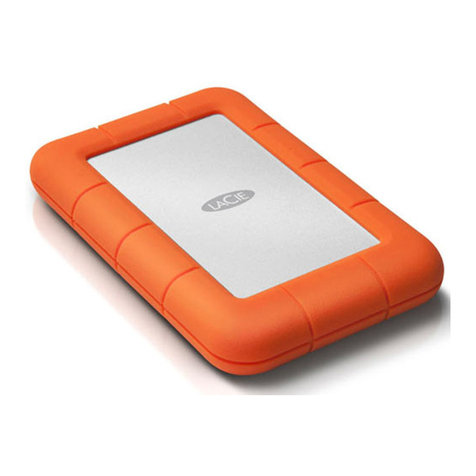
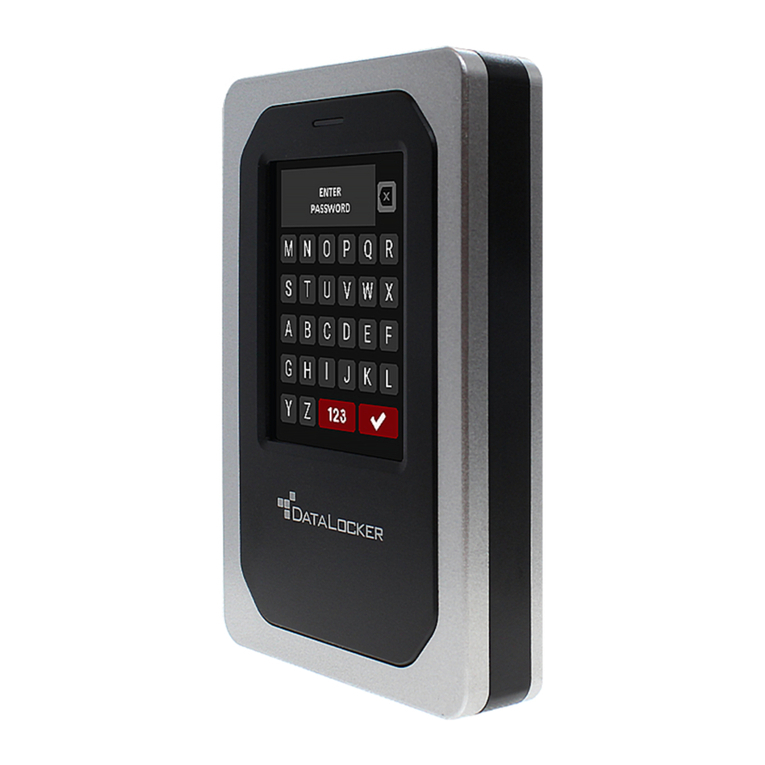
DataLocker H200 + BIO is a USB (Universal Serial Bus) portable hard drive with built-in biometric security,
data encryption, digital identity, and cryptographic services.
Figure 1: DataLocker H200
This guide is designed to help you set up your DataLocker H200 + BIO device with minimal effort.
MINIMUM SYSTEM REQUIREMENTS
DataLocker H200 + BIO comes with built-in IronKey ACCESS Standard™ software on its application partition.
The following list describes the requirements you need to use your device with ACCESS Standard.
• One or two USB ports (Type A), depending on the power available from your computer
• An operating system that supports USB 2.0 or 1.1 Mass Storage Devices
Operating systems
• Microsoft Windows 7 Pro
• Windows Vista (Business, Enterprise, Home SP2)
• Windows XP Professional SP3
• Windows XP Professional SP2
• Windows XP Home SP3
• Mac OS X 10.5 and 10.6
DEVICE ACCESSORIES
Your DataLocker H200 + BIO package includes a dual-head USB cable. For information on how to use this
cable, see “Plugging in the device” on page 4. DataLocker 200 + BIO gets the power it requires from your
computer when you connect it to the USB port(s) on your system. An external power supply is not provided or
required.
3

INTRODUCING DATALOCKER H200 + BIO
cont.
DATALOCKER DOCUMENTATION
You can find detailed instructions about using and managing DataLocker H200 in the ACCESS Standard User
Guide.
Topics include:
• Information about DataLocker H Series Hard Drives
• Personalizing the device
• Accessing the device
• Managing users
• Managing devices
• Protecting the device from viruses
• Troubleshooting
Online Help is also available with ACCESS Standard software.
To view the ACCESS Standard User Guide
• From the root directory of the application partition, double-click the UserGuide.pdf file.
Note: You need Adobe® Reader® (http://www.adobe.com/acrobat) to view the documentation.
To view online Help
• When ACCESS Standard is open, click Help on the page for which you want more information.
4

Before you can use your device, you must properly connect it to the computer. After you plug in a new device,
you must personalize it before you can use the authentication and private partition features. The device uses
pre-installed ACCESS Standard software to guide you through the personalization process. The personalization
wizard starts automatically when you plug in a new (or recycled) device. If auto-run is not configured for your
computer, you can start ACCESS Standard from the application partition on the device.
PLUGGING IN THE DEVICE
Depending on the power supplied by the host computer, you may require one or two USB connectors to use
DataLocker H200 +BIO.
To plug in DataLocker H200 +BIO using one USB port
1. Plug the smaller (Mini-A) USB connector into the back of the DataLocker H200 +BIO device.
2. Plug the black Type A USB connector into the host computer.
3. Do not plug in the gray Type A USB connector.
If the yellow power LED flashes slowly, follow the procedure that uses two USB ports.
To plug in DataLocker H200 +BIO using two USB ports
1. Plug the smaller (Mini-A) USB connector into the back of the DataLocker H200 +BIO device.
2. Plug the gray Type A USB connector into the host computer.
3. Plug the black Type A USB connector into the host computer.
If the yellow power LED flashes slowly, the host computer does not meet the USB specification and
cannot supply the required power to the device.
Note 1:
Plugging in the black USB connector first, followed by the gray connector, may delay the start up of
DataLocker H200 +BIO by a few seconds.
Note 2:
If the yellow power LED flashes quickly, power detection has timed out. Remove all USB connections
and reconnect the cable.
PERSONALIZING A DEVICE
The personalization process involves three main steps:
1. Applying a device profile—The profile sets default preferences for the device. You can choose the
Typical profile, with pre-configured device settings, or the Custom profile that allows you to configure
device settings. The Typical profile contains the following device settings:
• Authentication method: fingerprint authentication
• Number of device users: 1 (not including the Administrator)
• Private partition uses the total available disk space
• Two Factor authentication: Off
• Biometric Security Level: 1 in 4,500
GETTING STARTED
5

GETTING STARTED
cont.
• Minimum password length: 6
• Password Retry Limit: 10
• Password Re-use Threshold: 3
• User Rescue: Enabled
• Data Destruction: Off
• Administrator Account: Enabled
• Biometric Retry Limit: Infinite
2. Creating the Administrator account—Only the Administrator can perform certain operations on a
device, such as adding, removing, and rescuing users. During the personalization process, the
Administrator account is created automatically when you set the Administrator password. If you choose
a Custom profile and disable the Administrator account, you will not be prompted to provide an
Administrator password. In this case, you cannot create the account at a later time.
It is very important that you memorize the Administrator password or store it in a safe place.
3. Creating users—Depending on the device profile, you can create one or more general users on the
device.
To personalize the device
1. Plug the device into the USB port of the computer. For more information, see “Plugging in the device”
on page 4.
If Auto-run does not automatically start ACCESS, double-click the Start.exe file from the root
directory on the application partition. (If necessary, in the notification area at the far right of the
taskbar, click the DataLocker icon, and then click Personalize from the menu.)
6

GETTING STARTED
cont.
2. On the main page of ACCESS Standard, click Personalize Device.
3. On the Device Personalization page, click one of the device profile options.
4. Complete the instructions on the pages that follow to set the Administrator password (if applicable)
and create a user.
Note 1:
If you do not complete the personalization process you may have to repeat some of the above steps
the next time you connect the device. For more information about the personalization process, see the
ACCESS Standard User Guide.
Note 2:
After you successfully complete the personalization process, you can access your private partition
using a file manager. For more information about logging in and saving files to or opening files from the
private partition, see “Accessing data on the device” on page 7.
7

After you personalize a device, only registered users can authenticate to it. Authentication involves logging
into the device using a password, fingerprint, or both. The authentication method you use depends on the
capabilities of the device and the profile applied to the device.
After you successfully log in, you can save files to, and open files from, your private partition. It is
recommended that you log out of your device if you must leave it connected while you are away from your
computer. Otherwise, another user could access your private partition while you are absent. You can also
disconnect the device completely to bring the data with you.
This chapter provides information about the following topics:
• Logging into and out of the device
• Saving and opening files
• Disconnecting the device
LOGGING INTO AND OUT OF THE DEVICE
To log into the device
1 From the notification area, at the far right of the taskbar, right-click the DataLocker icon and click
Login.
2. If you are using a computer running Mac OS X, open a file manager and click the application drive for
the device. Double-click the ACCESS Standard application and on the main page of ACCESS Standard,
under Manage Device, click Login.
3. Follow the prompts in the authentication wizard until the device successfully authenticates you.
Tip:
If your device uses only biometric authentication, you can log into it without starting ACCESS Standard by
swiping your finger across the fingerprint sensor.
To log out of the device
1. From the notification area, at the far right of the taskbar, right-click the DataLocker icon and click
Logout.
2. If you are using a computer running Mac OS X, open a file manager and click the application drive for
the device. Double-click the ACCESS Standard application and on the main page of ACCESS Standard,
under Manage Device, click Logout.
Tip:
You can also log out of your device by right-clicking the DataLocker icon, and then clicking Eject Device.
ACCESSING DATA ON THE DEVICE
8

SAVING AND OPENING FILES
When you plug in your device both the application drive and the private partition display in a file manager,
such as Windows® Explorer, with an associated drive letter for each partition.
Once you log into the device, you can open files on your private partition using the appropriate program or a
file manager. When you save data to your private partition, the device encrypts the data using hardware-based
AES 256-bit encryption. Data is automatically decrypted when you open the file.
Note:
You cannot save data to the application partition.
DISCONNECTING THE DEVICE
To disconnect the device
• From the notification area at the far right of the taskbar, right-click the DataLocker icon and click
Eject Device.
Tip:
You can also disconnect the device by clicking the Safely Remove Hardware icon in the notification area
at the far right of the taskbar. Click the message “Safely remove USB Mass Storage Device - Drive (F:); where F
is the letter of the drive in the file manager that is associated with the device. Disconnect the device when the
following message displays, “The USB Mass Storage Device can now be safely removed from the system”.
Note:
If you are using a computer running Mac OS X, drag the device drive on the desktop to the Trash. Re-
lease the mouse button when you see the Eject prompt.
Caution:
Disconnecting the device either accidentally or on purpose, without properly ejecting it, could cor-
rupt the data on the device
ACCESSING DATA ON THE DEVICE
cont.
9

If you experience difficulty using DataLocker H200 + BIO after following the instructions in this User Guide,
read the following troubleshooting information.
• Check to make sure the USB cable is plugged in properly and that the cable provides sufficient USB
power to the device. For information about how to properly plug in the device to ensure adequate
power, see “Plugging in the device” on page 4.
• Check the light emitting diode (LED) status of DataLocker H200 + BIO to assess the power output
to the device and the state of the device.
• Check the Frequently Asked Questions section at datalocker.com/support.
Table 1: LED status for devices
LED status Description
Status of authentication and data transfer
Solid green Open—if no authentication mechanisms are set, any user can use the device.
User has logged into the device—if users exist, it indicates that the device has
authenticated a user.
Flashing green The flash frequency is approximately once per second and indicates that the
device is waiting for a finger due to one of the following situations:
• The device has just been plugged in and no user is currently logged into the device.
• Software has initiated a biometric authentication or enroll operation.
• A user has initiated a finger authentication operation for example, by touching
the device when it is in the “idle” waiting-for-finger state. A device will remain
in an idle state for only two minutes before the LED turns red to indicate the
device is locked.
Flashing red Failed fingerprint authentication attempt. The device will go back to waiting for a
finger (flashing green normal) after the failed signal finishes.
Flashing LED The device is waiting for a finger to authenticate but this is also the last chance to
authenticate before biometric access is blocked. The frequency is approximately
twice per second.
TROUBLESHOOTING
10
once
alternating
between red and
green
Table of contents
Other DataLocker Storage manuals
DataLocker
DataLocker DL4 FE User manual
DataLocker
DataLocker Sentry K350 User manual
DataLocker
DataLocker Sentry K300 User manual
DataLocker
DataLocker DL3 User manual
DataLocker
DataLocker Sentry ONE Standard User manual
DataLocker
DataLocker IronKey EMS H350 Enterprise User manual
DataLocker
DataLocker H100 User manual
DataLocker
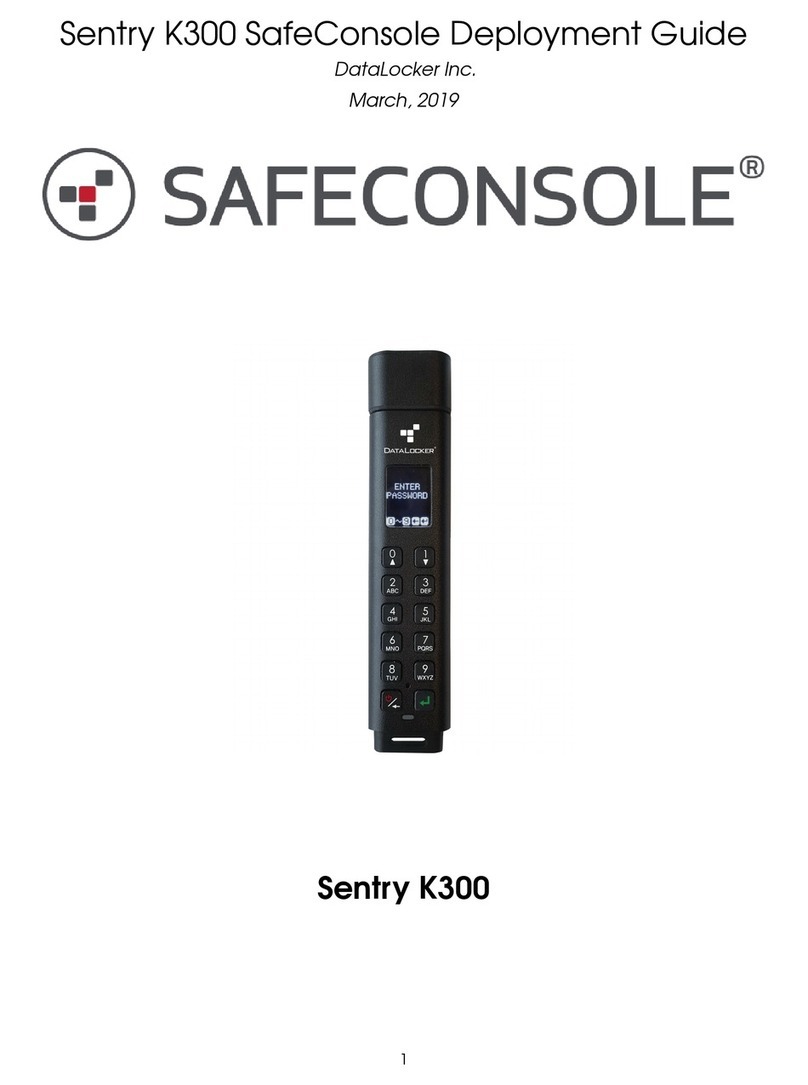
DataLocker Sentry K300 Quick reference guide
DataLocker
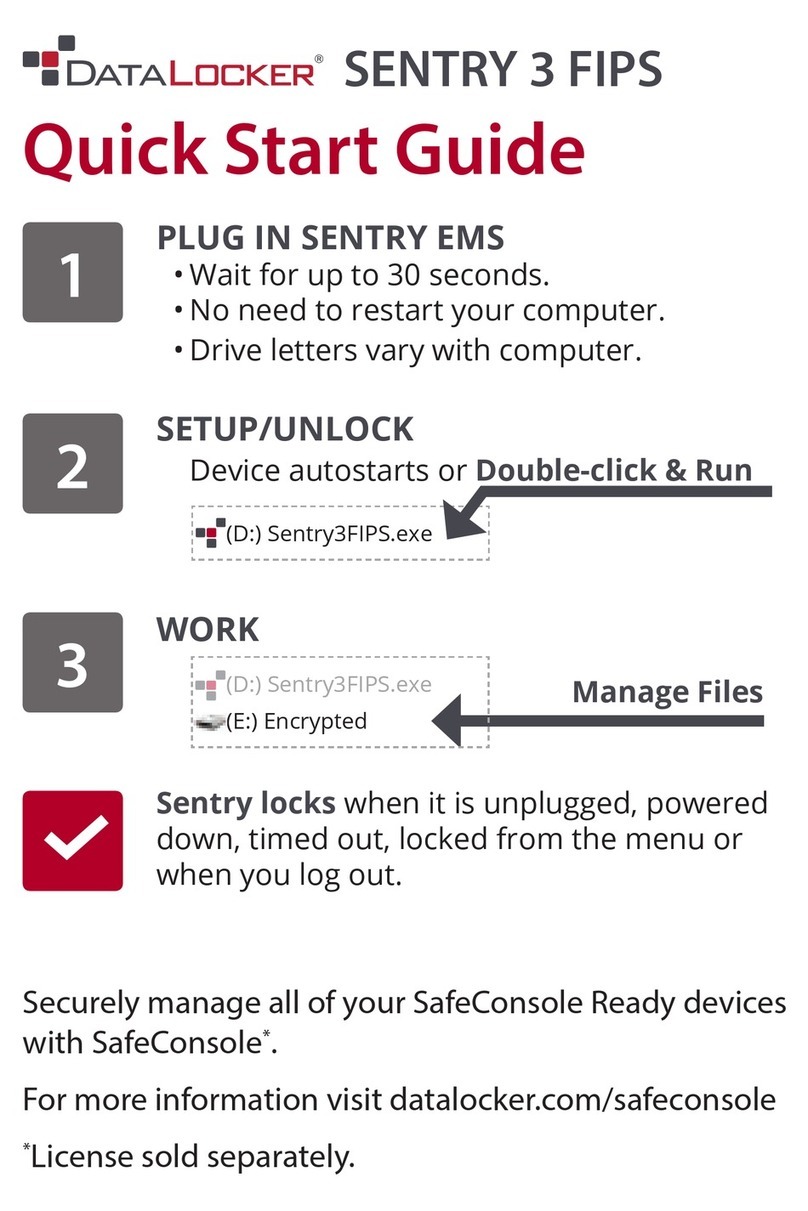
DataLocker SENTRY 3 FIPS User manual
DataLocker
DataLocker DL3 User manual