- 5 - 090088 R8
AIR RELIEF VALVE – THEORY OF OPERATION
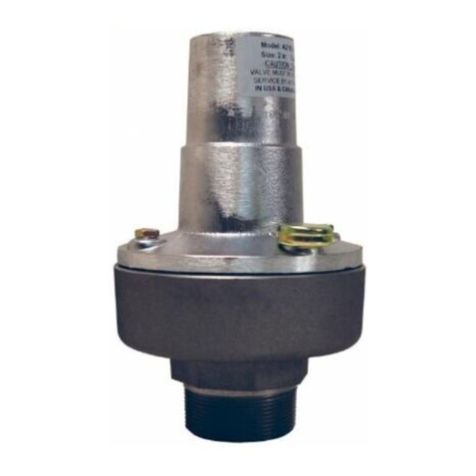
All Bayco air relief valves are spring-loaded system-pressure actuated devices consisting of a valve disc
held in a closed position against a valve seat by means of spring pressure. The pressure in the system to be
protected always acts on the valve disc and would tend to open the valve, however the spring load is set so
as to ensure that the pressure in the system, at normal operating pressures, is insufficient to open the valve.
However, when the system pressure builds to a level when the pressure load on the valve disc is equal to
the load exerted by the spring, the valve will begin to open. If the pressure in the system were to be held at
this level, the load acting to open the valve and the spring load acting to keep the valve closed would
remain in equilibrium and the valve would be neither open nor closed. In such circumstances the valve will
tend to flutter on the valve seat and may release a small amount of air but will not be relieving significant
pressure from the system. This point is known as the Warning Pressure or Cracking Pressure.
If the pressure in the system continues to rise, the load acting on the face of the valve, and tending to open
the valve will also continue to rise and will begin to exceed the load exerted by the spring, which tends to
keep the valve closed. When the opening load, due to system pressure, exceeds the closing load, due to
spring force, the valve will open, and, as long as the system pressure remains sufficient, will stay open.
This point is known as the Opening Pressure or Set Pressure (also referred to as Rated or Popping
Pressure). The difference between the Crack Pressure and Opening Pressure varies between valves and is
also related to the system flow rate. However the two should not be confused, as there is a significant
difference in pressure between the two points.
If the system pressure continues to rise, the valve will continue to open and will relieve more and more air
until the valve is fully open. At this point the valve will be relieving close to its maximum airflow rate,
further increase in system pressure will show only relatively minor increases in flow rate. If the system
pressure decreases the relieving airflow rate will reduce and the valve will start to close but will not fully
reseat until some pressure below the Opening Pressure, this pressure is known as the Reseating Pressure
and the difference between the two pressures is known as “Blowdown”.
In practice the valve should be matched to the system to be protected such that the maximum airflow rate of
the valve is never utilized, i.e. the valve should be capable of relieving a sufficient volume flow rate of air
at the opening pressure to ensure that the system pressure drops significantly. If the valve is open and the
system pressure continues to rise above the opening pressure then the valve is relieving less air than is
being put into the system. This is a potentially dangerous situation that may lead to over pressurization. Air
relief valves should always be matched to the system to be protected such that the relieving airflow rate of
the valve at the maximum allowable system pressure, and ideally at the Opening Pressure, is well in excess
of the system input flow rate at that same pressure.