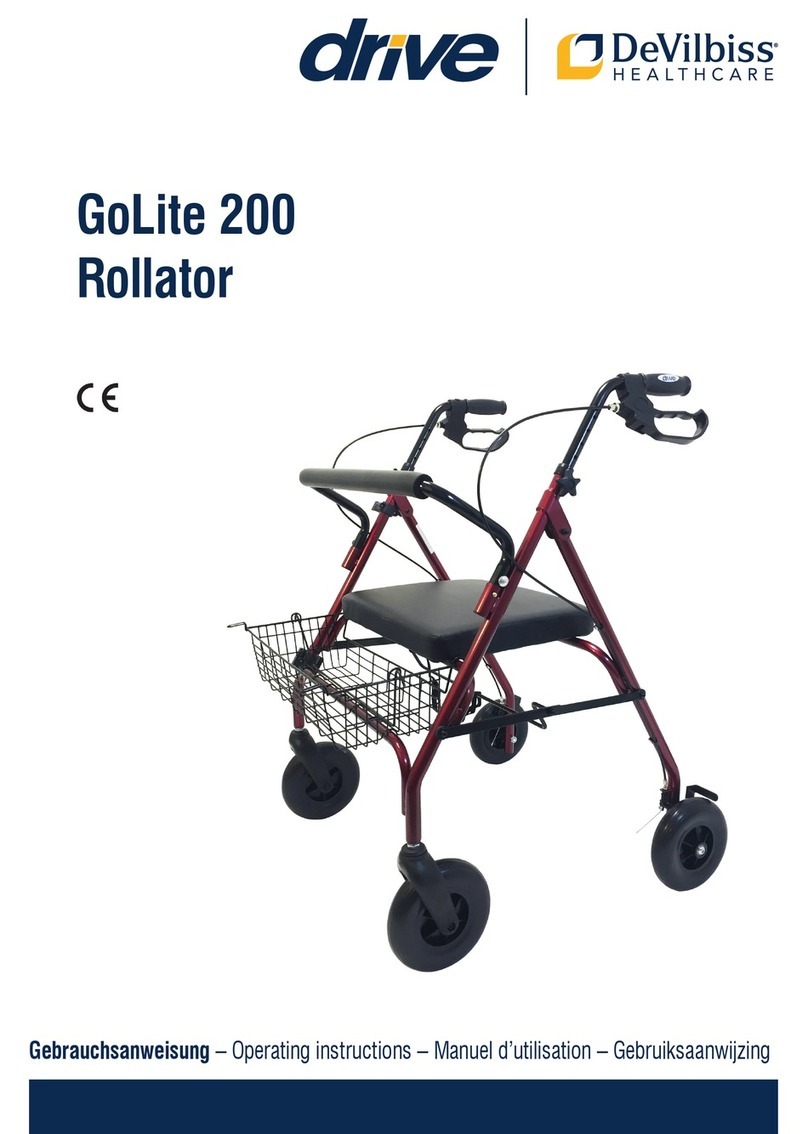
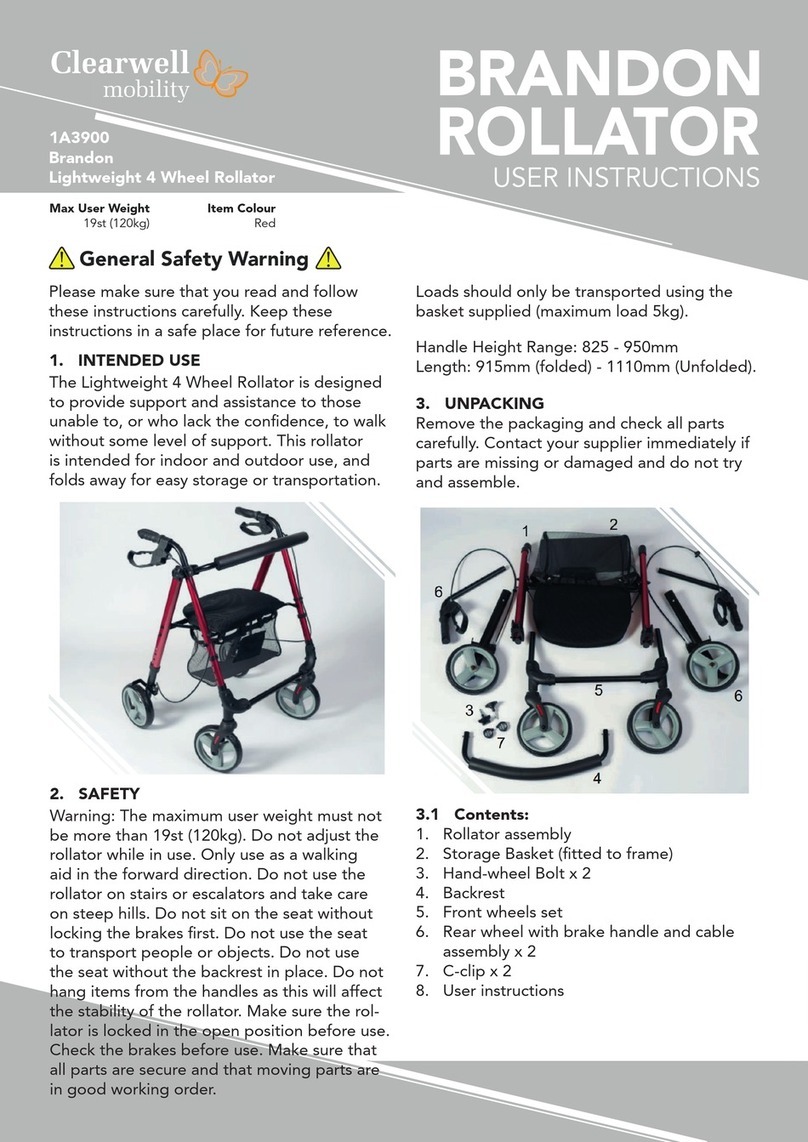
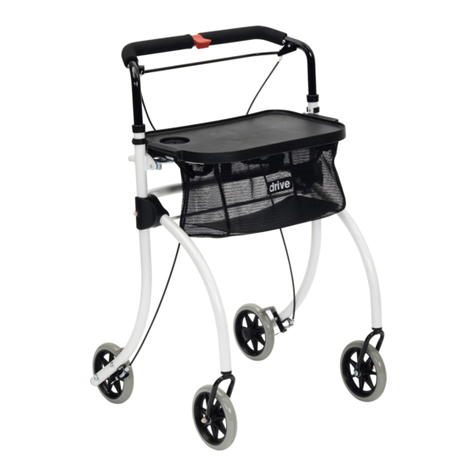
4. DIRECTIONS FOR RIGHT USE OF WALKER
ŸDesigned to provide full weight bearing.
ŸOffers maximum stability when standing.
ŸVery reliable working with reverse-roll locks.
ŸUnique U-shaped frame design creates greater clearance.
Adjust the walker to suitable height
ŸPrevent the handle from endangering you and be careful of the sting
hurting your palms.
ŸExamine whether the anti-slip rubber tips and wheels of the walker are
tight and stable.
ŸPress the spring lock with nger to adjust to the suitable height.
ŸFix the middle screw nut tightly.
ŸExamine whether the handles are loose, or they have sting.
Walker Usage Basics
ŸAlways look forward when you are walking.
ŸUse a chair with armrests to make sitting and standing easier.
ŸAlways use a chair with armrests to make sitting and standing easier.
ŸMake sure that this walker has been fully opened and adjusted before use.
ŸIts handles should be at the level of your hips. Your elbows should be slightly
bent when you hold the handles.
ŸAll 4 bottoms (2 tips or 2 wheels) of your walker need to be on the ground before
you put your weight on it.
ŸThis is a walking aid only. It should not be used as a transportation device.
ŸIt comes with two front wheels so; you just need to push it forward to move
ahead.
Note
ŸWith your arm extended down, handle should be at wrist height. With your
hand placed on the hand grip, your elbow should be exed 20 to 30 inches.
ŸEach side operates independently to allow easy movement through narrow
spaces and greater stability while standing.
About walking
ŸPut your walker about one step ahead of you.
ŸGrip the top of the walker for support and walk into it, stepping off on your
injured leg.
ŸMake sure the leg of your walker is level to the ground with both hands.
ŸDon’t step all the way to the font bar of your walker. Take small steps when
you turn.
ŸTouch the heel of this foot to the ground first, then flaen the foot and
finally li the toes off the ground as you complete your step with your good
leg.
CAUTIONS
ŸDo not down at your feet when walking.
ŸMust test it for stability before applying full weight to hand grips.
ŸDO NOT sit on the walker while it is being loaded into a vehicle or while it is
being transported in a vehicle.
ŸWheels should roll and not wobble.
ŸDO NOT exceed the maximum weight capacity or serious injury could result:
Maximum weight capacity: 100 kg.
ŸDo not attempt to operate walker without reading and understanding the
instructions contained in this manual.
ŸBefore each use make sure the walker frame is fully opened.
ŸCheck the brakes for proper operation.
ŸMake sure that all parts are secure and in good working order.
ŸThe brakes MUST be in the locked position BEFORE sitting on the seat.
ŸDO NOT use the walker to walk backwards, down gradients or to climb stairs,
curbs, or to go over obstacles. Serious risk of fall or injury may occur.
ŸDO NOT perform any adjustments to the walker while it is in use.
ŸIf the anti-slip rubber tips and wheels are worn, change them immediately.
ŸDO NOT use the walker as a wheelchair.
If you fail to understand the instructions given in the manual, serious injury and
damage may occur. To understand the cautions and instructions correctly contact
a professional or technical personnel before use.
Note