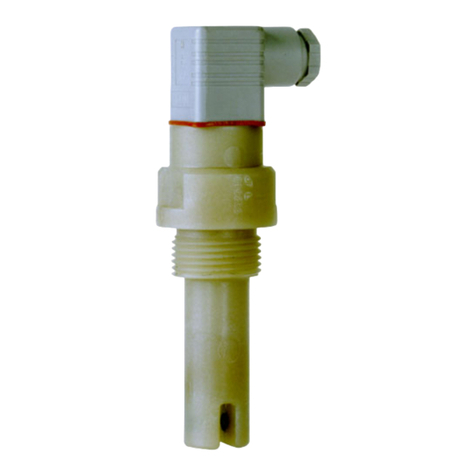
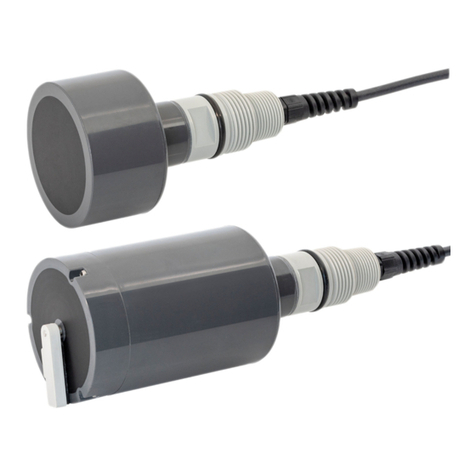
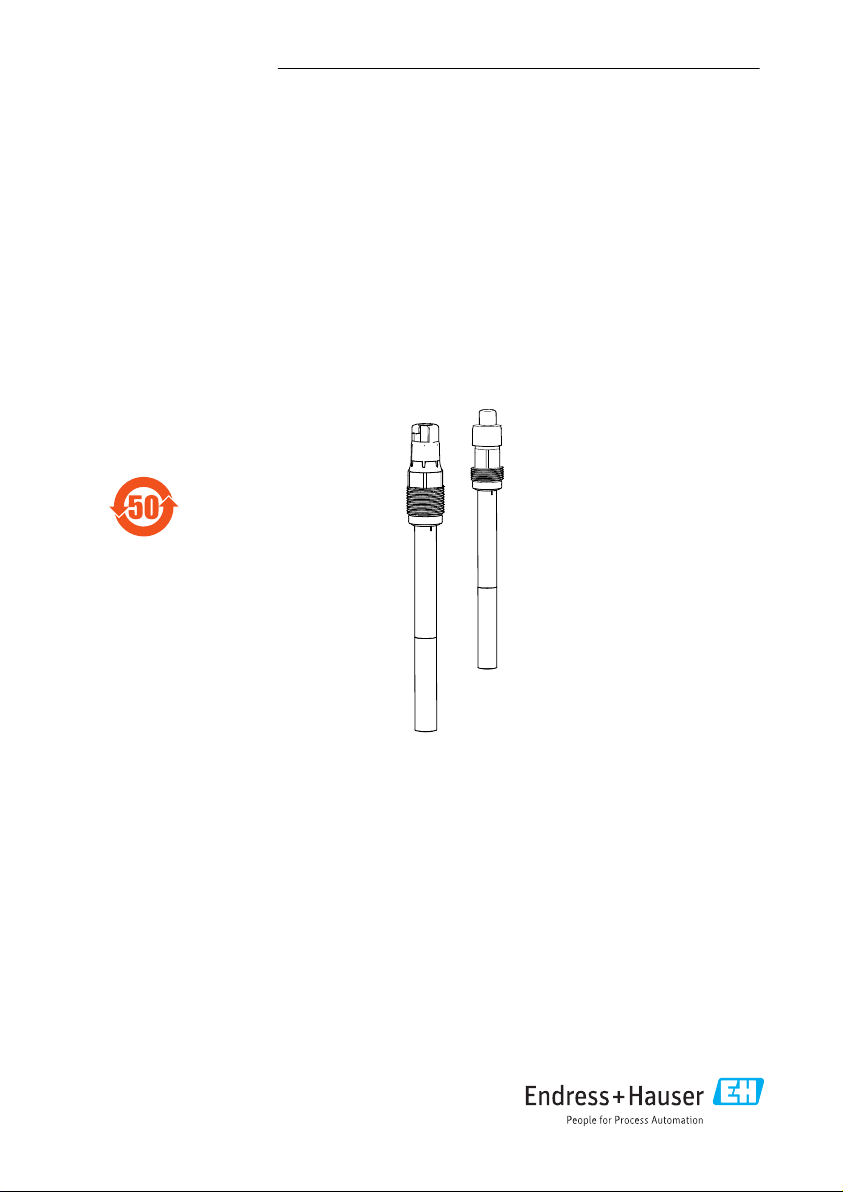
Basic safety instructions Oxymax COS22D, Oxymax COS22
6 Endress+Hauser
2 Basic safety instructions
2.1 Requirements for the personnel
• Installation, commissioning, operation and maintenance of the measuring system may be
carried out only by specially trained technical personnel.
• The technical personnel must be authorized by the plant operator to carry out the specified
activities.
• The electrical connection may be performed only by an electrical technician.
• The technical personnel must have read and understood these Operating Instructions and
must follow the instructions contained therein.
• Faults at the measuring point may only be rectified by authorized and specially trained
personnel.
Repairs not described in the Operating Instructions provided must be carried out only
directly at the manufacturer's site or by the service organization.
2.2 Designated use
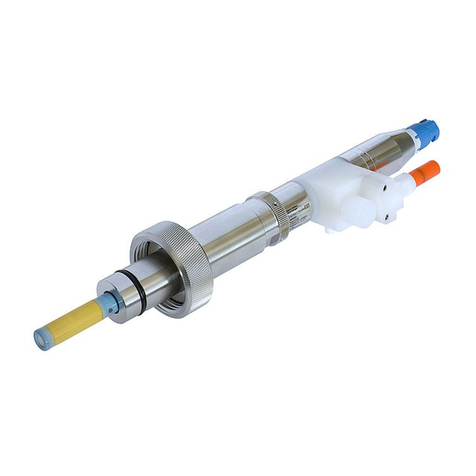
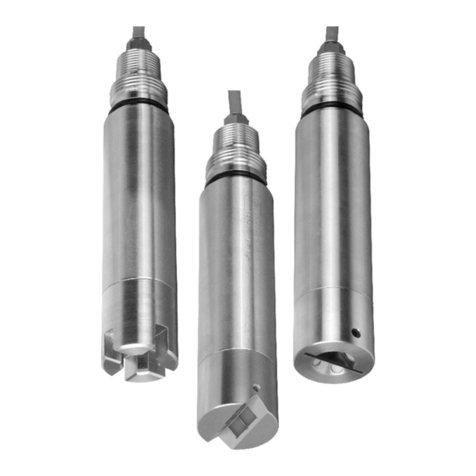
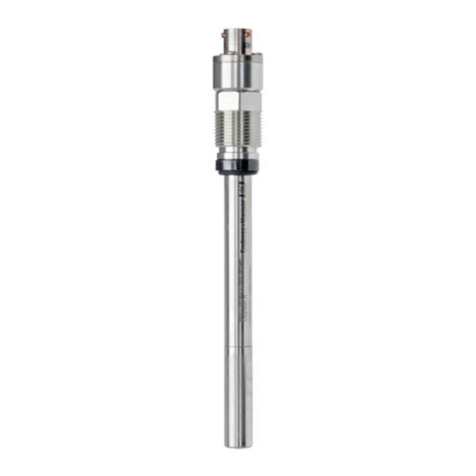
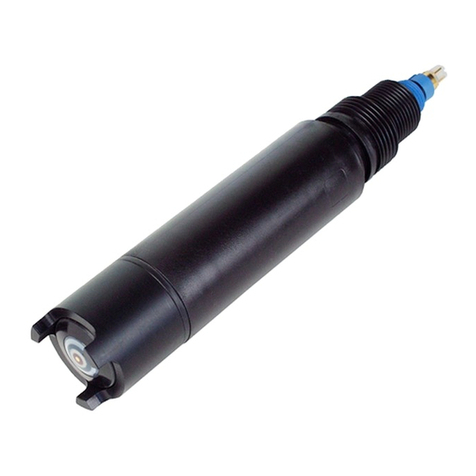
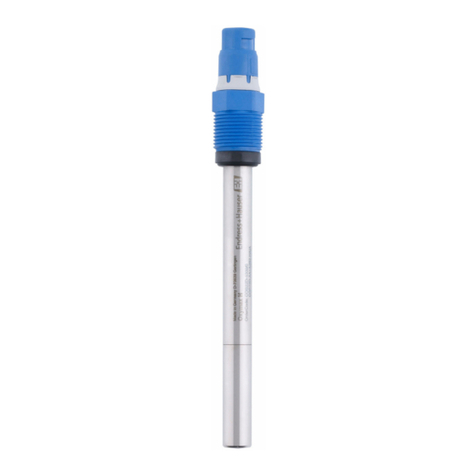
The sensor is designed for the continuous measurement of dissolved oxygen in water.
The specific suitability depends on the sensor version:
• COS22-**1***** (standard, measuring range 0.01 to 60 mg/l)
COS22D-**1***** (standard, measuring range 0.01 to 60 mg/l)
• Measuring, monitoring and regulating the oxygen content in fermenters
• Monitoring the oxygen content in biotechnology facilities
• COS22-**3***** (trace measurement, measuring range 0.001 to 10 mg/l, preferred
operational range 0.001 to 2 mg/l), also suitable for high CO2 partial pressure
COS22D-**3/4***** (trace measurement, measuring range 0.001 to 10 mg/l, preferred
operational range 0.001 to 2 mg/l), also suitable for high CO2 partial pressure
• Monitoring inertization equipment in the food industry
• Monitoring the residual oxygen content in carbonated fluids of the beverage industry
• Trace measurement in industrial applications such as inertizations
• Monitoring the residual oxygen content in boiler feedwater
• Monitoring, measuring and regulating the oxygen content in chemical processes
NOTICE
Molecular hydrogen
Hydrogen causes sensitivity in other substances and leads to false low readings or, at the
worst, total failure of the sensor.
‣Only use the COS22-**1/3***** or COS22D-**1/3***** sensor in media free of
hydrogen.
‣Use the COS22D-**4***** sensor in media containing hydrogen.
For non-contact digital data transmission, the COS22D sensor must be connected to the
digital input of the Liquiline transmitter using the CYK10 measuring cable.
Use of the device for any purpose other than that described, poses a threat to the safety of
people and of the entire measuring system and is therefore not permitted.
The manufacturer is not liable for damage caused by improper or non-designated use.