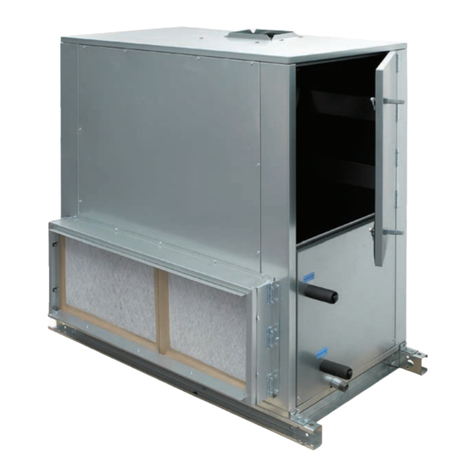
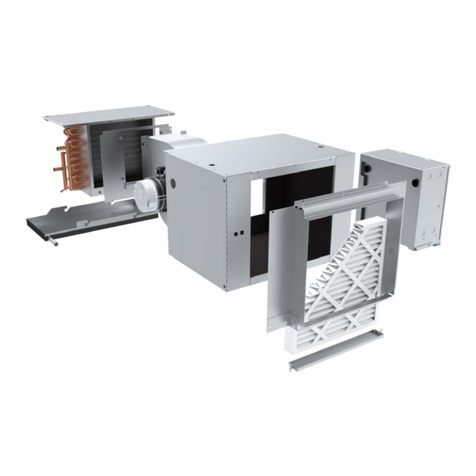
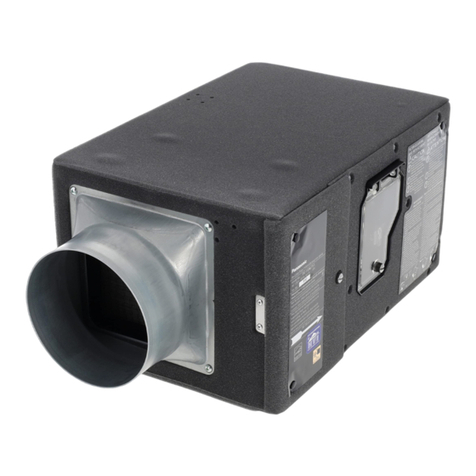
Enviro VHC Owner's manual

VERTICAL HI-RISE FAN COILS SERIES B
INSTALLATION, OPERATION & MAINTENANCE Supersedes: ET115.24-NOM4 (317) Form ET115.24-NOM4 (819)
MODELS VHC/VHS/VHM VERTICAL HI-RISE
VHA/VHB TANDEM MASTER & TANDEM SLAVE

ENVIRO-TEC
2
FORM ET115.24-NOM4 (819)
This equipment is a relatively complicated apparatus.
During rigging, installation, operation, maintenance,
or service, individuals may be exposed to certain com-
ponents or conditions including, but not limited to:
heavy objects, refrigerants, materials under pressure,
rotating components, and both high and low voltage.
Each of these items has the potential, if misused or
handled improperly, to cause bodily injury or death. It
is the obligation and responsibility of rigging, instal-
lation, and operating/service personnel to identify and
recognize these inherent hazards, protect themselves,
and proceed safely in completing their tasks. Failure
to comply with any of these requirements could result
in serious damage to the equipment and the property in
IMPORTANT!
READ BEFORE PROCEEDING!
GENERAL SAFETY GUIDELINES
which it is situated, as well as severe personal injury or
death to themselves and people at the site.
This document is intended for use by owner-authorized
rigging,installation,andoperating/servicepersonnel.It
is expected that these individuals possess independent
training that will enable them to perform their assigned
tasks properly and safely. It is essential that, prior to
performing any task on this equipment, this individual
shall have read and understood the on-product labels,
this document and any referenced materials. This in-
dividual shall also be familiar with and comply with
all applicable industry and governmental standards and
regulations pertaining to the task in question.
SAFETY SYMBOLS
The following symbols are used in this document to alert the reader to specific situations:
Indicates a possible hazardous situation
whichwillresultindeathorserious injury
if proper care is not taken.
Indicates a potentially hazardous situa-
tion which will result in possible injuries
or damage to equipment if proper care is
not taken.
Identies a hazard which could lead to
damage to the machine, damage to other
equipment and/or environmental pollu-
tion if proper care is not taken or instruc-
tions and are not followed.
Highlights additional information useful
to the technician in completing the work
being performed properly.
External wiring, unless specied as an optional connection in the manufacturer’s product line, is
not to be connected inside the control cabinet. Devices such as relays, switches, transducers and
controls and any external wiring must not be installed inside the micro panel. All wiring must be in
accordance with ENVIRO-TEC's published specications and must be performed only by a qualied
electrician. ENVIRO-TEC will NOT be responsible for damage/problems resulting from improper
connections to the controls or application of improper control signals. Failure to follow this warn-
ing will void the manufacturer’s warranty and cause serious damage to property or personal injury.

ENVIRO-TEC 3
FORM ET115.24-NOM4 (819)
CHANGEABILITY OF THIS DOCUMENT
In complying with ENVIRO-TEC's policy for continu-
ous product improvement, the information contained
in this document is subject to change without notice.
ENVIRO-TEC makes no commitment to update or
provide current information automatically to the man-
ual or product owner. Updated manuals, if applicable,
can be obtained by contacting the nearest ENVIRO-
TEC Service office.
It is the responsibility of rigging, lifting, and operating/
service personnel to verify the applicability of these
documents to the equipment. If there is any question
regarding the applicability of these documents, rig-
ging, lifting, and operating/service personnel should
verify whether the equipment has been modified and
if current literature is available from the owner of the
equipment prior to performing any work on the chiller.
CHANGE BARS
Revisions made to this document are indicated with a
line along the left or right hand column in the area the
revision was made. These revisions are to technical in-
formation and any other changes in spelling, grammar
or formatting are not included.
The equipment covered by this manual is designed for
safe and reliable operation when installed, operated,
and maintained within its’ design specifications. To
avoid personal injury or damage to equipment or prop-
erty during installation, operation, and maintenance of
this equipment, it is essential that these functions be
performed by qualified, experienced personnel using
good judgment and safe practices. See the following
cautionary statements.
ELECTRICAL SHOCK HAZARDS. All
power must be disconnected prior to in-
stallationandservicing of this equipment.
Morethanone power source maybepres-
ent.Disconnectall powersourcestoavoid
electrocution or shock injuries.
MOVING PARTS HAZARDS. Power
mustbedisconnected from the motor and
blower prior to opening access panels.
Motorscanstartautomatically, and more
than one power source may be present.
Disconnectallpower and control circuits
prior to servicing to avoid serious crush-
ing or dismembering injuries.
Electric resistance heating elements
may start automatically. Disconnect all
power and control circuits, and allow
the elements to cool before servicing.
Again, more than one power source may
be present.
HOT PARTS HAZARDS. Hot water and
steam heating coils operate at tempera-
tures that will cause severe burn injury.
Some systems will continue to allow cir-
culationofhot water,evenwithallcontrol
circuits deenergized. Before performing
serviceatornear any heating coil, piping,
or valve package component, disconnect
all power and close all isolation valves,
and allow the equipment to cool. As pre-
viously mentioned, more than one power
source may be present.
Checkthatthe unit assembly andcompo-
nent weights can be safely supported by
rigging and lifting equipment.
All assemblies must be adequately se-
cured during lifting and rigging by
temporary supports and restraints until
equipment is permanently fastened and
set in its nal location.
All unit temporary and permanent sup-
ports must be capable of safely sup-
porting the equipment’s weight and any
additional live or dead loads that may
be encountered. All supports must be
designed to meet applicable local codes
and ordinances.
SAFETY CONSIDERATIONS

ENVIRO-TEC
4
FORM ET115.24-NOM4 (819)
All fastening devices must be designed to
mechanically lock the assembly in place
without the capability of loosening or
breaking away due to system operation
and vibration.
Secure all dampers when servicing
damper, actuator or linkages. Dampers
may activate automatically, disconnect
control circuits to avoid injury.
Protect adjacent flammable materials
when brazing, Use ame and heat pro-
tection barriers where needed. Have re
extinguisher available and ready for im-
mediate use.
Never wear bulky or loose tting cloth-
ing when working on any mechanical
equipment. Gloves should only be worn
when required for proper protection
from heat or other possible injury. Safety
glasses or goggles should always be
worn when drilling, cutting, or working
with chemicals such as refrigerants or
lubricants.
Never pressurize any equipment beyond
specied test pressures. Always pressure
test with some uid or inert gas such as
clear water or dry nitrogen on refrigera-
tion systems to avoid possible damage or
injuryinthe event of aleak or component
failure during testing.
The manufacturer assumes no respon-
sibility for personal injury or property
damage resulting from improper or un-
safe practices during the handling, in-
stallation, service, or operation of any
equipment.
TROUBLESHOOTING REFERENCE
Component Description Guide Name Option Description
Fan Coil Relay Board (FCRB) Fan Relay Board (FCRB) –
Installation, Operation and
Maintenance
1st generation relay board, 24V Control
Packages, units shipped before 3/31/2017
Fan Relay Board II (FRBii) Fan Relay Board II (FRBii)
– Installation, Operation and
Maintenance
2nd generation relay board, 24V Control
Packages
G3 PWM Board Fan Coil EC Motor IOM ECM controller on variable speed ECM
units
NOTE:
All documents downloadable at www.enviro-tec.com.

ENVIRO-TEC 5
FORM ET115.24-NOM4 (819)
VH SERIES B FEATURES
SEE SECTION 6 - Dimensional Data FOR DIMENSIONAL DRAWINGS
(Optional, Shipped Loose)
Return Air/Access Panel
Inlet (optional)
Outside Air
(Optional Slideout)
Fixed Standard
Drain Pan With "P-Trap",
Air Filter
Heating Coil
Hydronic Cooling/
Motor
Deplugable
Blower Assembly
Slide Out
Controls
(Refer to Appropriate Relay
Board IOM if Present)
(Optional)
Riser Chase
Removable
Typical
Opening Knockout
Supply Air
(Optional)
Risers
(Optional)
Blower Shield
Access Door
Control Enclosure
Electric Heat)
(Optional With
Disconnect switch
Incoming Power
(Optional, Shipped Loose)
Room Thermostat
(Optional, Shipped Loose)
Supply Air Grille
other features.
Note: Some optional items are included with

ENVIRO-TEC
6
FORM ET115.24-NOM4 (819)
TABLE OF CONTENTS
SECTION 1 - RECEIPT & INSTALLATION ............................................................................................................11
Preface .........................................................................................................................................................11
Unpacking & Inspection .................................................................................................................................11
Ship Loose Items ..........................................................................................................................................11
Handling & Installation ..................................................................................................................................12
Cooling/Heating Medium Connections...........................................................................................................12
Flex Hose .....................................................................................................................................................14
Factory Installed Risers ................................................................................................................................14
Factory Furnished, Field Installed Risers .....................................................................................................15
Field Furnished and Installed Piping or Risers .............................................................................................16
Riser Connection ..........................................................................................................................................16
Ductwork Connections .................................................................................................................................17
Dual Air Discharge Units .......................................................................................................................17
Field Reconfigurable Risers and Discharge Openings...................................................................................18
Riser Reconguration ..........................................................................................................................18
Discharge Opening Reconfiguration .............................................................................................................18
Wall Framing .................................................................................................................................................19
Tandem Master & Tandem Slave Unit Installation ........................................................................................19
Outside Air Connection .................................................................................................................................20
Manual Outside Air Damper .........................................................................................................................20
Motorized Outside Air Damper .....................................................................................................................20
Electrical Connections Shock / Electrical Hazards.........................................................................................20
Thermostats .................................................................................................................................................21
SECTION 2 - START-UP.........................................................................................................................................23
General .........................................................................................................................................................23
Cooling/Heating System ...............................................................................................................................23
Air System Balancing ...................................................................................................................................24
Water System Balancing ..............................................................................................................................24
Controls Operation .......................................................................................................................................24
Fan Coil EC Motor Control.............................................................................................................................25
G3 PWM Board.....................................................................................................................................25
PWM Board Status LED........................................................................................................................25
G3 PWM Status Descriptions................................................................................................................26
Adjusting EC Motor Speed....................................................................................................................27
2 – 10 VDC Proportional Motor Control..........................................................................................................29
EC Motor Troubleshooting Guidelines............................................................................................................32
Checking EC Wire Harnesses........................................................................................................................35
EC Motor and Driver.......................................................................................................................................35
Constant Airow/Constant Torque EC Motors .......................................................................................35
Constant RPM EC Motors.....................................................................................................................36
Constant RPM EC Motor Driver Enable Jumper...................................................................................37
ECM 3-Speed Constant Torque Motor Troubleshooting Guide ......................................................................38
Procedure for Checking ECM Constant Torque Wiring Harnesses.......................................................39
ECM Constant Torque Motor Connections............................................................................................39
ECM Constant Torque Motor Specications..........................................................................................40

ENVIRO-TEC 7
FORM ET115.24-NOM4 (819)
TABLE OF CONTENTS (CONT'D)
SECTION 3 - NORMAL OPERATION & PERIODIC MAINTENANCE...................................................................42
General .........................................................................................................................................................42
Motor/Blower Assembly ................................................................................................................................42
Coil.................................................................................................................................................................42
Electric Resistance Heater Assembly.............................................................................................................42
Electrical Wiring & Controls ..........................................................................................................................43
Valves & Piping .............................................................................................................................................43
Filters, Throwaway .......................................................................................................................................44
Drain .............................................................................................................................................................44
Optional Removable Drain Pan ....................................................................................................................44
Replacement Parts .......................................................................................................................................44
SECTION 4 - INSPECTION, INSTALLATION & START-UP CHECKLIST.............................................................46
SECTION 5 - TROUBLESHOOTING......................................................................................................................48
SECTION 6 - DIMENSIONAL DATA.......................................................................................................................51
Vertical Hi-Rise Tandem Units
VHA/VHB Installation Instructions..................................................................................................................75
Receipt & Initial Installation...................................................................................................................75
Temperature ...................................................................................................................................................79

ENVIRO-TEC
8
FORM ET115.24-NOM4 (819)
LIST OF FIGURES
FIGURE 1 - Flex Hose Connections.....................................................................................................................13
FIGURE 2 - Ball Valve With Memory Stop............................................................................................................13
FIGURE 3 - Factory Installed Risers....................................................................................................................14
FIGURE 4 - Factory Installed Risers, Master/Slave Conguration.......................................................................15
FIGURE 5 - Factory Furnished, Field Installed Risers .........................................................................................15
FIGURE 6 - Factory Furnished, Field Installed Risers, Master/Slave ..................................................................15
FIGURE 7 - Field Furnished and Installed Risers ................................................................................................16
FIGURE 8 - Field Furnished and Installed Risers Master/Slave ..........................................................................16
FIGURE 9 - Knockout Removal............................................................................................................................18
FIGURE 10 - Critical Penetration Areas.................................................................................................................19
FIGURE 11 - Outside Air Connection.....................................................................................................................20
FIGURE 12 - G3 PWM Board.................................................................................................................................25
FIGURE 13 - Program Mode (Conguration Switch 1 ON) ....................................................................................26
FIGURE 14 - Constant RPM and Constant Torque EC Motors Example Fan Calibration Curve ...........................27
FIGURE 15 - Constant Airow and Constant Torque EC Motors Example Fan Calibration Curve ........................27
FIGURE 16 - High Speed Adjust............................................................................................................................28
FIGURE 17 - Medium Speed Adjust.......................................................................................................................28
FIGURE 18 - Low Speed Adjust.............................................................................................................................29
FIGURE 19 - Normal Three Speed Operation........................................................................................................29
FIGURE 20 - Mode to 2–10 VDC Proportional Control..........................................................................................30
FIGURE 21 - Max Speed Adjust.............................................................................................................................30
FIGURE 22 - Min Speed Adjust..............................................................................................................................31
FIGURE 23 - Normal 2 – 10 VDC Speed Control...................................................................................................31
FIGURE 24 - Constant CFM/Constant Torque EC Motors (1/3 HP Shown) ...........................................................35
FIGURE 25 - Constant CFM/Constant Torque EC Motor Driver.............................................................................35
FIGURE 26 - Constant RPM EC Motor (1/4 HP Shown)........................................................................................36
FIGURE 27 - Constant RPM EC Motor Driver........................................................................................................36
FIGURE 28 - Constant RPM EC Driver EC Motor Enable Connector....................................................................37
FIGURE 29 - Motor Power and Signal Connectors................................................................................................39
FIGURE 30 - Motor/Blower Assembly ....................................................................................................................42
FIGURE 31 - Electric Heat .....................................................................................................................................43
FIGURE 32 - Drain Pan Removal...........................................................................................................................44
FIGURE 33 - Model VHM, Vertical Concealed Master High Rise, FCU, 88" Cabinet ............................................51
FIGURE 34 - Model VHS, Vertical Concealed Slave High Rise, FCU, 88" Cabinet...............................................52
FIGURE 35 - Model VHA/VHB, Vertical Hi-Rise Tandem Fire Rated and Non-Fire Rated, FCU Combinations,
88" Cabinets .....................................................................................................................................53
FIGURE 36 - Model VH, Vertical Concealed High Rise Fan Coil Unit with 79" Cabinet.........................................55
FIGURE 37 - Model VHM, Vertical Concealed Master High Rise Fan Coil Unit with 79" Cabinet..........................56
FIGURE 38 - Model VHS, Vertical Concealed Slave High Rise Fan Coil Unit with 79" Cabinet............................57
FIGURE 39 - Model VHA/VHB, Vertical Hi-Rise Fire Rated and Non-Fire Rated FCU Combinations,
79" cabinets......................................................................................................................................58
FIGURE 40 - Model VH, Vertical High Rise Coil Unit, Aluminum Discharge Grille.................................................60
FIGURE 41 - Model VHC/VHM/VHA Vertical High Rise Fan Coil Unit Arrangement Designations........................61
FIGURE 42 - Model VHC w/o Risers & VHS/VHB Vertical High Rise Fan Coil Units, Unit Arrangement
Designations.....................................................................................................................................62
FIGURE 43 - Model VH Vertical High Rise Coil Unit Outside Inlet Dimensions.....................................................62
FIGURE 44 - Model VHM/VHA/VHC Tandem Master & Tandem Slave Unit Conguration Fan Coil Unit..............64

ENVIRO-TEC 9
FORM ET115.24-NOM4 (819)
LIST OF TABLES
FIGURE 45 - Assembly Instructions Return Panel with Latches, Quick Opening or Tamper Proof,
Model VHC/VHM/VHS High Rise FCU.............................................................................................65
FIGURE 46 - Preparation Instructions for Model VHC/VHM Vertical High Rise FCU "Ship Loose"
Riser Assemblies ..............................................................................................................................66
FIGURE 47 - Full Louvered Aluminum Return Air/Wall Panel Model VH Vertical High Rise Fan Coil Unit............67
FIGURE 48 - Model VH Vertical High Rise Fan Coil Unit Standard Surface Mount Wall Panel.............................68
FIGURE 49 - Recessed Wall Panel Model VH Vertical High Rise Fan Coil Unit....................................................69
FIGURE 50 - Model VH Vertical High Rise Fan Coil Unit Standard Return Wall Panel withADA Thermostat.......70
FIGURE 51 - Suggested Riser Floor Openings VHC & VHM.................................................................................73
FIGURE 52 - Riser Terminology, Model VHC, VHM, VHA Units.............................................................................74
FIGURE 53 - Standard Installation.........................................................................................................................76
FIGURE 54 - Alternate Installation.........................................................................................................................76
FIGURE 55 - Mounting Details...............................................................................................................................77
LIST OF FIGURES (CONT'D)
TABLE 1 - G3 Status LED Definition....................................................................................................................25
TABLE 2 - EC Motor Troubleshooting Guidelines................................................................................................32
TABLE 3 - Signal Connector................................................................................................................................36
TABLE 4 - Power Connector................................................................................................................................36
TABLE 5 - CON1, Power Input ............................................................................................................................36
TABLE 6 - CON502 (if present), Programming Connector ..................................................................................36
TABLE 7 - CON302, PWM Signal Input...............................................................................................................36
TABLE 8 - CON503 (if present), Motor Enable Input...........................................................................................37
TABLE 9 - CON202, Feedback from EC Motor Hall Sensor................................................................................37
TABLE 10 - CON201, Output Power to Motor .......................................................................................................37
TABLE 11 - ECM Constant Torque Motor Specific Troubleshooting Guidelines....................................................38
TABLE 12 - The ECM Constant Torque Motor Power Wiring Harness ..................................................................39
TABLE 13 - The Standard ECM Constant Torque Motor Signal Wiring Harness (White Plug)..............................40
TABLE 14 - The High Static ECM Constant Torque Motor Signal Wiring Harness (Red Plug)..............................40
TABLE 15 - ECM Constant Torque Motor Part Numbers.......................................................................................40
TABLE 16 - Motor Signal Tap Specifications..........................................................................................................40
TABLE 17 - General ECM Constant Torque Motor Specifications .........................................................................40
TABLE 18 - Discharge Register Performance Data, VH Standard FCU 88" Cabinet,
Single and Double Supply..................................................................................................................71
TABLE 19 - Discharge Register Performance Data, VH Standard FCU 79" Cabinet,
Single and Double Supply..................................................................................................................72
TABLE 20 - SI Metric Conversion ..........................................................................................................................79

ENVIRO-TEC
10
FORM ET115.24-NOM4 (819)
THIS PAGE INTENTIONALLY LEFT BLANK

ENVIRO-TEC 11
FORM ET115.24-NOM4 (819)
1
PREFACE
ENVIRO-TEC fan coils represent a prudent invest-
ment which can, with proper installation, operation,
and regular maintenance, give trouble-free operation
and long service.
Equipment is initially protected under the manufac-
turers’ standard warranty; however, this warranty is
provided under the condition that the steps outlined in
this manual for initial inspection, proper installation,
regular periodic maintenance, and everyday operation
of the equipment be followed in detail. This manual
should be fully reviewed in advance of any actual work
being done on the equipment. Should any questions
arise, please contact your local Sales Representative or
the factory BEFORE proceeding.
The equipment covered by this manual is available
with a vast variety of options and accessories. Consult
the approved unit submittal, order acknowledgement,
and other manuals for details on the options and ac-
cessories provided with the equipment on each project.
UNPACKING & INSPECTION
All units are carefully inspected at the factory through-
out the manufacturing process under a detailed qual-
ity assurance program. All factory furnished major
components and subassemblies are carefully tested for
proper operation and verified to be in full compliance
with the customer order and quality assurance docu-
ments.
Each unit is then carefully packaged for shipment to
avoid damage during normal transport and handling.
The equipment must be stored in a dry place in the
proper orientation as marked on the packaging.
All shipments are made F.O.B. factory and it is the
responsibility of the receiving party to inspect the
equipment upon arrival. Any obvious damage to the
packaging and/or its contents should be recorded on
the bill of lading and a claim should be filed with the
freight carrier.
After determining the condition of the unit’s exterior,
carefully remove each unit from the packaging and in-
spect for hidden damage. At this time, check to make
sure that “ship loose” items such as grilles, decorator
panels, and thermostats are accounted for. Any hidden
damage should be recorded and immediately reported
to the carrier, and a claim filed as before. In the event
a claim for shipping damage is filed, the unit, shipping
package, and all packing must be retained for physical
inspection by the freight carrier. All equipment should
be stored in the factory shipping package with internal
packing in place until installation.
A series of rigorous leak tests are performed on all of
the piping installed in this equipment to ensure piping
integrity. Because this equipment may be shipped with
factory supplied external riser piping, it is necessary
for the receiving inspector to carefully inspect this pip-
ing for signs of shipping damage. If damage is present,
a claim must be filed with the freight carrier.
At the time of receipt, the equipment type and arrange-
ment should be verified against the order documents.
Should any discrepancy be found, the local Sales Rep-
resentative should be notified immediately so that the
proper action may be instituted. Should any question
arise concerning warranty repairs, the factory must
be notified BEFORE any corrective action is taken.
Where local repairs or alterations can be accomplished,
the factory must be fully informed as to the extent and
expected cost of those repairs before work is begun.
Where factory operations are required, the factory must
be contacted for authorization to return equipment and
a Return Authorization Number will be issued. Unau-
thorized return shipments of equipment and shipments
not marked with an authorization number will be re-
fused. In addition, the manufacturer will not accept any
claims for unauthorized expenses.
SHIP LOOSE ITEMS
Several components are shipped loose for field instal-
lation. These may include: thermostat, return air ac-
cess panel, return air access panel fasteners, discharge
grille(s), risers (optional). These parts are shipped
loose to offer protection against shipping and job-site
damage. Refer to packing slip.
SECTION 1 - RECEIPT & INSTALLATION

ENVIRO-TEC
12
FORM ET115.24-NOM4 (819)SECTION 1 - RECEIPT & INSTALLATION
HANDLING & INSTALLATION
While all equipment is designed and fabricated of
sturdy construction and may present a rugged appear-
ance, great care must be taken to assure that no force
or pressure be applied to the coil, risers, piping or drain
stub-outs during handling. Do not use the risers for lift-
ing the unit. Also, depending on the options and acces-
sories, some units could contain delicate components
that may be damaged by improper handling. Wherever
possible, all units should be maintained in an upright
position and handled by the exterior casing, with no
impact forces applied that may damage internal com-
ponents or painted surfaces.
The equipment covered in this manual IS NOT suit-
able for outdoor installations. The equipment should
never be stored or installed where it may be subjected
to a hostile environment such as rain, snow, extreme
temperatures, or hazardous chemicals.
During and after installation, special care must be tak-
en to prevent foreign material such as paint, plaster,
and drywall dust from being deposited in the drain pan,
electric heater, motor and blower wheels. Failure to do
so may have serious adverse effects on unit operation
and in the case of the heater, motor and blower assem-
bly, may result in immediate or premature failure. All
manufacturers’ warranties are void if foreign material
is allowed to be deposited on the heater, motor or blow-
er wheels of any unit. Some units and/or job conditions
may require some form of temporary covering during
construction.
Condensate pan is internally sloped toward drain con-
nection. Make assurance that unit is level and plumb.
Level the unit to insure proper coil operation and con-
densate drainage. After units are positioned and risers
centered in pipe chase, plumb the unit in two directions,
using unit casing as a reference.Avoid any interference
with wiring, coil, or coil connections, drain pain, and
structural components inside the cabinet while using
bolts or lag screws to anchor the unit to building. See
Figure 10 on page 19 for critical penetration areas.
After mounting the unit, it is then ready for the various
service connections such as water, drain and electri-
cal. At this time it should be verified that the proper
types of service are actually provided to the unit. On
those units requiring chilled water and/or hot water,
the proper line size and water temperature should be
available to the unit. The electrical service to the unit
should be compared to the unit nameplate to verify
compatibility. The routing and sizing of all piping,
and the type and sizing of all wiring and other elec-
trical components such as circuit breakers, disconnect
switches, etc. should be determined by the individual
job requirements and should not be based on the size
and/or type of connection provided on the equipment.
All installations should be made in compliance with all
governing codes and ordinances. Compliance with all
codes is the responsibility of the installing contractor.
Any new field connections must ensure all openings
are sealed and properly insulated. Improper sealing
or insulation can result in untreated air infiltrating the
unit. Units are not internally thermally isolated, proper
thermal breaks required at installation to prevent ad-
verse effects.
For seismic certied installation, refer-
ence the seismic installation document.
COOLING/HEATING MEDIUM CONNECTIONS
Toxic residues and loose particles result-
ing from manufacturing and eld piping
techniques such as joint compounds,
soldering ux, and metal shavings may be
present in the unit and the piping system.
Special consideration must be given to
system cleanliness when connecting to
solar, domestic or potable water systems.
Submittals and Product Catalogs detailing unit opera-
tion, controls, and connections should be thoroughly
reviewed BEFORE beginning the connection of the
various cooling and/or heating mediums to the unit.
All accessory valve packages should be installed as re-
quired, and all service valves should be checked for
proper operation.
If coil and valve package connections are made with
“sweat” or solder joint, care should be taken to assure
that no components in the valve package are subjected
to a high temperature which may damage seals or other
materials. Many two-position electric control valves,
depending on valve operation, are provided with a
manual-opening lever. This lever should be placed in
the “open” position during all soldering or brazing op-
erations. Solder joints with Sil-fos®, phos-copper, or
similar high temperature alloy. Do not use soft solder.

ENVIRO-TEC 13
SECTION 1 - RECEIPT & INSTALLATIONFORM ET115.24-NOM4 (819)
1
BRAIDED FLEX HOSE
P/N-PC-00-0283 3/4" FEMALE SWIVEL
MEMORY STOP
1/2" SWEAT
TO
RISER
UNIT ISOLATION
BALL VALVE P/N
PC-00-0282
2-5/8" MINIMUM
RECOMMENDED RADIUS
GASKET P/N
PH-05-0047 OR
PH-05-0048
ADAPTER FITTING
P/N PR-04-0108
TO
COIL
1/2"
FEMALE
SWIVEL
VITON O-RING
P/N PR-07-0115 3/4" NPSH
FIGURE 1 - FLEX HOSE CONNECTIONS
LD13870
FIG. 2C
TOP VIEW
TO REGULATE FLOW (FIG. 2C):NOTE:
Valve package isolation valve shown,
typical for riser shut off valve.
FIG. 2B
TOP VIEW
FIG. 2A
EXPLODED VIEW
TO DESIRED FLOW
MEMORY STOP ADJUSTED
VALVE HANDLE WITH
"EAR" (BOTH SIDES)
MEMORY STOP
"EARS"
MEMORY STOP ADJUSTMENT RANGE
MEMORY STOP
STEP 1. SET VALVE TO DESIRED FLOW.
STEP 4. TIGHTEN SCREW AT TOP OF VALVE.
STEP 3. TURN MEMORY STOP TO "EAR" ON VALVE BODY.
STEP 2. LOOSEN SCREW AT THE TOP OF VALVE.
FIGURE 2 - BALL VALVE WITH MEMORY STOP
LD13871

ENVIRO-TEC
14
FORM ET115.24-NOM4 (819)SECTION 1 - RECEIPT & INSTALLATION
FLEX HOSE
All Vertical Hi-Rise and Tandem Master & Tandem
Slave units use Kevlar reinforced braided stainless
steel flexible hoses for all water piping between the
coil and the risers or field piping. This factory piping
includes two ball valves per coil, with memory stop.
These hoses are designed with swivel connections on
both ends, and require either a gasket or O-ring for
positive sealing. See Figure 1 on page 13 for con-
nection details.
These hoses are designed to provide for riser move-
ment due to thermal expansion, and allow for quick,
easy coil removal through the use of the swivel con-
nections.
During transit, vibration may cause a connection to
loosen. Therefore, all threaded connections must be
checked during unit installation. Any fitting that is
loose must be tightened. The stationary side of any
swivel connection must be prevented from twisting
during tightening by the use of a “backup” wrench.
Pressure test all joints before applying water.
Some hose-to-coil joints are furnished
with a removable vulcanized ber gasket.
This gasket (Part No. PH-05-0047) must
be replaced each time the joint is broken.
Later model units have a hose-to-coil
jointwitha black EDPM gasket (PartNo.
PH-05-0048). This gasket is re-useable,
but may be replaced should it become
damaged and no longer seal.
FACTORY INSTALLED RISERS
Units provided with factory installed water and drain
risers include fully insulated risers as specified per or-
der. The flex hose and ball valve described above is
assembled to the riser and pressure tested at the fac-
tory. Each unit is configured for a specific location in
the building, and is marked with that location by room
number, floor, riser number, or other identification as
specified per order.
Units provided with factory installed drain risers are
supplied with “full height” drain risers that extend
3” above the top of the unit, and include the standard
“swaged” section at the top. Field piping and venting
of the drain riser must be furnished and installed by
others.
Factory installed risers are strapped to the unit for ship-
ment to prevent damage during transit. These shipping
straps must be removed at installation to allow move-
ment of the risers to assure proper alignment.
See Figure 3 on page 14 and Figure 4 on page 15
for details.
At no time should a unit be lifted, moved,
or otherwise handled by the risers.
RISERS
INSTALLED
FACTORY
TYPICAL
REMOVE STRAP,
SHIPPING BRACKET,
FIGURE 3 - FACTORY INSTALLED RISERS
LD13872

ENVIRO-TEC 15
SECTION 1 - RECEIPT & INSTALLATIONFORM ET115.24-NOM4 (819)
1
VITON O-RING
P/N PR-07-0115
HOSE CLAMP
SHIPPED
LOOSE
RISERS
FIGURE 5 - FACTORY FURNISHED, FIELD
INSTALLED RISERS
VITON O-RING,
P/N PR-07-0115
VITON O-RING,
P/N PR-07-0115
HOSE
CLAMP
HOSE
CLAMP
SHIPPED
LOOSE
RISERS
FIELD
FURNISHED &
INSTALLED
PIPING
MASTER UNIT
(MODEL VHM) SLAVE UNIT
(MODEL VHS)
FIGURE 6 - FACTORY FURNISHED, FIELD
INSTALLED RISERS, MASTER/SLAVE
LD13866
LD13867
TYPICAL
REMOVE STRAP,
SHIPPING BRACKET,
CLAMP
HOSE
ENVIRO-PAC UNITS
FIELD PIPING EXCEPT
TM
Slave Unit
(Model VHS)
Master Unit
(Model VHM)
FIGURE 4 - FACTORY INSTALLED RISERS,
MASTER/SLAVE CONFIGURATION
FACTORY FURNISHED, FIELD INSTALLED
RISERS
Units provided with factory furnished, field installed
water and drain risers include fully insulated risers as
specified per order, which are shipped separately for
installation on the job prior to receipt of the units. The
ball valve previously described is assembled to the riser
and pressure tested at the factory. The risers are pack-
aged as a “kit” for a specific location in the building,
and each “kit” is marked with that location by room
number, floor, riser number, or other identification as
specified per order.
Riser “kits” that include drain risers are supplied with
“full height” drain risers that extend 3” above the top
of the unit, and include the standard “swaged” section
at the top, similar to factory installed riser sets. Field
piping and venting of the drain riser must be furnished
and installed by others.
See Figure 5 on page 15 for details.
Field installed risers MUST be installed
with the proper unit connection height
and orientation to allow for correct unit
installationata later date.Swageisalways
oriented up. Refer to unit dimensional
drawings.
LD13873

ENVIRO-TEC
16
FORM ET115.24-NOM4 (819)SECTION 1 - RECEIPT & INSTALLATION
FIELD FURNISHED AND INSTALLED PIPING
OR RISERS
Units provided for field furnished and installed water
and drain piping or risers include the flex hose and ball
valve assemblies previously described. These hose
and valve assemblies include a stub of copper tube for
field connection to the unit piping. The factory hose
and valve assemblies are marked by connection type
and retracted inside the unit for shipment. Do not braze
the pipe stub without opening the ball valve and dis-
connecting the hose. Riser stub out should slope down
slightly away from the riser. This prevents condensa-
tion from dripping at the bottom of a riser column.
See Figure 7 on page 16 for details.
Field fabricated/installed piping and ris-
ers MUST be installed with the proper
unit connection height and orientation to
allowfor correct unitinstallationatalater
date. Refer to unit dimensional drawings.
RISER CONNECTION
Do not rigidly attach risers to this equipment. Risers
must be free to move with thermal expansion and con-
traction. Units and risers are designed to accommodate
a maximum of 3” (1-1/2” up and 1-1/2” down) total
vertical movement. To achieve this range of move-
ment, the risers must be installed according to the
conditions outlined below. If the total combined riser
expansion will exceed 3”, additional expansion com-
pensation, such as loops and expansion joints, or alter-
nate riser anchoring techniques must be field furnished
and installed.
Factory furnished risers are designed with a “swage”
or socket in the top to accommodate 2” of tailpiece
insertion from the riser above. The riser configuration,
when combined with the required length as provided
by the customer, is designed to position the riser-to-
unit stub out piping at the vertical center of the riser
slot in the unit casing. See unit submittal drawings for
dimensional details.Due to building construction vari-
ations, some risers may require cutting or lengthening
to correctly position the riser. Any field modifications
are the responsibility of the installer.
& INSTALLED
RISERS
FIELD
FURNISHED
HOSE
CLAMP
FIGURE 7 - FIELD FURNISHED AND INSTALLED
RISERS
& INSTALLED RISERS
FIELD FURNISHED
HOSE
CLAMP HOSE
CLAMP
FIGURE 8 - FIELD FURNISHED AND INSTALLED
RISERS MASTER/SLAVE
LD13874
LD13875

ENVIRO-TEC 17
SECTION 1 - RECEIPT & INSTALLATIONFORM ET115.24-NOM4 (819)
1
After all connections are completed, and prior to insu-
lating and furring-in of any riser or piping connections,
the system should be tested for leaks. Since some com-
ponents are not designed to hold pressure with a gas,
hydronic systems should be tested with clear water.
Care should be taken to completely drain the system,
or otherwise protect it from freezing in cold weather.
Standard unit operating pressure is 300
psig maximum. Field test pressure must
not exceed 400 psig maximum. Some op-
tional or special unit piping components
may have lower pressure ratings than the
standard unit. All valve and piping com-
ponent pressure ratings must be veried
before applying test pressure to the unit.
All water coils and unit piping must be
protected from freezing after initial lling
with water. Unit coils and piping may still
holdenoughwaterto cause damage when
exposed to freezing temperatures, even
after the system is drained.
In the event that leaking or defective components are
discovered, the Sales Representative must be notified
BEFORE any repairs are attempted. All leaks should
be repaired before proceeding with installation.
After all risers and piping are installed and pressure
tested, all riser joints must have the insulation joint
sealed and all other piping must be insulated in compli-
ance with the project specifications. All chilled water
risers, piping, and valves must be insulated or located
over a drain pan, to prevent damage from condensa-
tion. This includes factory and field piping inside the
unit cabinet.
The drain should always be connected and piped to an
acceptable disposal point. For proper moisture carry-
off, the drain piping should be sloped away from the
unit at least 1/8” per foot.Adrain trap is integral to the
unit and is necessary for odor containment. The drain
riser and piping must be installed to avoid pinching or
kinking the unit drain tube.
Any required piping or riser penetration fire blocking
is the responsibility of the installer.All penetrations for
piping and risers should be sealed with materials and
techniques suitable for all governing codes and ordi-
nances.
DUCTWORK CONNECTIONS
All ductwork and/or supply and return grills should
be installed in accordance with the project plans and
specifications. If not included on the unit or furnished
from the factory, supply and return grilles should be
provided as recommend in the product catalog.
All units must be installed in non-hazardous areas.
Zero clearance to combustible materials is allowed.
Units provided with outside air for ventilation should
have some form of low temperature protection to pre-
vent coil freeze-up. This protection may be any of sev-
eral methods such as a low temperature thermostat to
close the outside air damper or a preheat coil to temper
the outside air before it reaches the unit. It is recom-
mended that outside air is pretreated to regulate its
temperature and humidity ratio
It should be noted that none of these methods would
adequately protect a coil in the event of power failure.
The safest method of freeze protection is to use glycol
in the proper percent solution for the coldest expected
air temperature.
Flexible duct connections should be used on all air han-
dling equipment. All ductwork and insulation should
be installed to allow proper access to all components
for service and repair such as filters motor/blower as-
semblies, etc.
Dual Air Discharge Units
All dual discharge units are provided with a sight and
sound baffle in the discharge plenum area (except top
discharge units). It is recommended that a discharge
grille with a damper be provided in one of the dis-
charge locations to aid in air balancing. Dual discharge
units with top discharge must be provided with a field
supplied damper in the top discharge duct.
Do not inhibit inlet or outlet connections.
Quickly turning off the inlet or rapid
reduction in ductwork can cause system
effects that impact airow. Reductions
in airow can cause electric heaters to
overheat, condensation to form, or other
unintended consequences, which can re-
sultin injury, propertydamage,equipment
damage, as well as void factory warranty.

ENVIRO-TEC
18
FORM ET115.24-NOM4 (819)SECTION 1 - RECEIPT & INSTALLATION
FIELD RECONFIGURABLE RISERS AND
DISCHARGE OPENINGS
Riser Reconfiguration
Vertical Hi-Rise units are furnished with riser slot
“knockouts” in the casing back and both sides. Should
it be necessary to relocate risers in the field, the water
risers may be disconnected at the swivel joint on the
riser isolation valve, and removed from the unit. The
drain riser may be removed by moving the drain tube
hose clamp and removing the riser tube from the drain
hose.
The water riser slot “knockouts” may be removed by
clipping the “tabs” to separate the inner portion of the
knockout. See Figure 9 on page 18 for details.After
opening the riser slot, make a vertical slit in the cabinet
insulation with a sharp utility knife. This slit must be
centered left to right, and full height in the slot. The
water riser may now be re-installed at the desired loca-
tion by inserting the valve through the new opening.
Insert the valve through the opening with care to avoid
damage to the cabinet insulation. Make sure that the
swivel joint O-ring is undamaged, and re-attach the
hose to the valve with the O-ring in place. Replace-
ment O-rings (Part No. PR-07-0115) may be ordered
through the parts department.
INSULATION
SLIT CABINET
AS REQ'D
CLIP "TABS"
AS
REQ'D
CLIP
"TABS"
AS REQ'D
DRYWALL
STOP
FOLD OUT
FIGURE 9 - KNOCKOUT REMOVAL
LD13876
After relocating all the risers, pressure test the joints to
assure system integrity.
The drain riser slot is already present on the back, left
and right sides. To install the drain riser, insert the riser
tube into the unit and connect the drain hose using the
hose clamp preciously removed.
After all the risers have been relocated, inspect the
cabinet insulation where the risers were removed, and
repair any insulation damage before starting the unit
and cover unused openings.
DISCHARGE OPENING RECONFIGURATION
Vertical Hi-Rise and Tandem Master & Tandem Slave
units are furnished with discharge opening “knock-
outs” in all four sides and the top. Should it be nec-
essary to reconfigure a unit for a different discharge
arrangement than originally provided, the new dis-
charge opening may be created by clipping the tabs of
the desired opening to remove the inner portion of the
“knockout”. The side flanges may then be folded out to
provide the drywall stops for the opening. See Figure 9
on page 18 for details.
After the new opening is created, the cabinet insulation
must be trimmed out, and the edges of the insulation
should be coated with duct board adhesive or appropri-
ate liner tape to prevent erosion into the airstream.
Any unused discharge openings must have the drywall
stops bent back flush with the unit casing. The open-
ing must then be covered with an insulated plate. Any
cover plates and insulation must be provided and in-
stalled by others.
Relocating a discharge opening on a double discharge
unit may require removal or relocation of any factory
provided sight and sound baffle. Consult the factory
for details on requirements and relocation of sight and
sound baffles.
Size 10 and 12 units factory furnished
with double discharge do not have dis-
charge “knockouts” to allow eld conver-
sion to a single discharge. Consult the
factory for details.
The manufacturer assumes no responsibility for unde-
sirable system operation due to improper field design,
equipment or component selection, and/or installation
of ductwork, grilles, and other related components.

ENVIRO-TEC 19
SECTION 1 - RECEIPT & INSTALLATIONFORM ET115.24-NOM4 (819)
1
Due to factory manufacturing tolerances and jobsite
construction variations, some unit casing surface con-
ditions may exist that could require additional fram-
ing or shimming of the finished wall surface. ALL
WORK REQUIRED TO ACHIEVE THE DESIRED
FINISHED WALL SURFACE CONDITION IS THE
RESPONSIBILITY OF OTHERS.
1. Attaching fasteners should be no longer than nec-
essary to provide proper grip.
2. Do not locate fasteners where they could pen-
etrate coils, risers, piping, electrical enclosures or
other components.
3. Do not locate fasteners where they would pose a
safety hazard during access or service on any in-
ternal components.
4. Do not locate fasteners where they would impede
the access or removal of any internal component.
5. Verify that all enclosure attachment points are lo-
cated properly and do not pose any safety hazards
or damage any internal components before bring-
ing the enclosure surface to nished condition
(e.g., nish drywall or apply wall covering).
TANDEM MASTER & TANDEM SLAVE UNIT
INSTALLATION
(See SECTION 6 - Dimensional Data for details)
Tandem Master & Tandem Slave units are shipped as a
factory assembled pair and are intended for installation
with the space separating the units to be included in
the wall between the units. Tandem Master & Tandem
Slave units are available with fire rated and non-fire
rated construction.
Non-fire rated unit pairs may be installed as required
to achieve the finished wall configuration desired. Wall
framing and drywall application should be accom-
plished as noted above.
Fire rated unit pairs are designed to be installed with
the space between the units becoming part of a fire
rated wall usually used to separate specific occupan-
cies. These unit pairs must be installed according to the
procedure shown on Tandem Master & Tandem Slave
Installation Instructions to maintain the fire rating for
the unit.
Electric Heat
Controls
Motor
Valves
Coil
Drain Pan
Risers
SIDE VIEW
Indicates critical
penetration area. Do
not penetrate, drill,
screw to, or use
mechanical fasteners
in shaded areas
.
FIGURE 10 - CRITICAL PENETRATION AREAS
WALL FRAMING
All wall framing is the responsibility of others. The
Vertical Hi-Rise and Tandem Master & Tandem Slave
unit casing is designed to be concealed by a finished
wall or enclosure that is installed in the field by others.
This enclosure may be a framed structure with gyp-
sum board or other material covering as selected by
others. Where desired, the gypsum board or paneling
may be applied directly to the unit casing. If the direct
application method is used, care must be taken when
installing the fasteners so as not to damage any internal
components. See Figure 10 on page 19 for critical
penetration areas.
LD13877

ENVIRO-TEC
20
FORM ET115.24-NOM4 (819)SECTION 1 - RECEIPT & INSTALLATION
MOTORIZED OUTSIDE AIR DAMPER
The standard motorized outside air damper is factory
wired to open the damper when the fan is operating.
Other damper operating sequences are available. See
individual order documents to verify actual damper
operation.
The motorized outside air damper is factory set to drive
from full closed to full open. The damper may be ad-
justed in the field to set the desired amount of outside
air by the following steps:
1. Loosen the set screw in the damper actuator set
collar and turn on all power and set all controls
to call for full outside air. This should drive the
damper actuator to the “full open” position.
2. Manually position the damper blade to achieve
the desired amount of outside air.
3. Tighten the set screw to lock the damper blade to
the actuator set collar.
4. Disconnect power or set controls to de-energize
the outside air, and verify that the damper drives
to the “closed” position.
5. Re-energize the outside air and verify that the
damper returns to the position set in Step 2.
ELECTRICAL CONNECTIONS SHOCK /
ELECTRICAL HAZARDS
The unit nameplate lists the unit electrical characteris-
tics such as the required supply voltage, fan and heater
amperage, unit minimum circuit ampacity, and maxi-
mum overcurrent protective device. The unit-wiring
diagram shows all unit and field wiring. Since each
project is different and each unit on a project may be
different, the installer must be familiar with the wiring
diagram and nameplate on the unit BEFORE beginning
any wiring. Provide for adequately sized fuse, circuit
breaker or disconnect means as applicable to meet lo-
cal and national electrical codes. All electrical connec-
tions should be checked for tightness prior to startup.
All components furnished for field installation, by ei-
ther the factory or the controls contractor should be
located and checked for proper function and compat-
ibility. All internal components should be checked for
shipping damage and any loose connections should be
tightened to minimize problems during startup.
AIR DAMPER
OUTSIDE
MOTORIZED
AIR DAMPER
MANUAL OUTSIDE
FIGURE 11 - OUTSIDE AIR CONNECTION
OUTSIDE AIR CONNECTION
The optional 6” diameter round outside air connec-
tion is provided with either a round butterfly manual
damper, or a rectangular motorized damper assembly,
for outside air control. See Figure 11 on page 20 for
details. Installation of outside air duct connections may
require installation of a vapor barrier between the unit
and the wall, and may require freeze protection con-
trol devices. These components must be supplied and
installed by others as required. It is recommended that
all outside air be pretreated to regulate its temperature
and humidity ratio.
MANUAL OUTSIDE AIR DAMPER
The manual outside air damper may be adjusted by
loosening the wing nuts on the top and bottom, and
setting the adjustment lever to the required position for
the desired amount of outside air. The wing nuts are
then tightened to lock the damper in place.
LD13877
Other manuals for VHC
1
This manual suits for next models
4
Table of contents
Other Enviro Fan manuals

Enviro
Enviro VDD Owner's manual

Enviro
Enviro CFR Owner's manual

Enviro
Enviro HP Series Owner's manual

Enviro
Enviro HLF Owner's manual

Enviro
Enviro HORIZONTAL VENT KIT 50-1235 User manual

Enviro
Enviro EC-061 User manual

Enviro
Enviro Series D Owner's manual

Enviro
Enviro VFC User manual

Enviro
Enviro VHC User manual
Popular Fan manuals by other brands

Bahamas Breeze
Bahamas Breeze FW40-F3 owner's manual

cecotec
cecotec FORCESILENCE 790 FRESHESSENCE IONIC instruction manual

AAON
AAON RN Series Installation operation & maintenance

AREBOS
AREBOS AR-HE-LZBV55W manual

nedis
nedis FNST16CWT40 quick start guide

Ebmpapst
Ebmpapst W4D710-GF01-01 operating instructions