UNDERSTANDING THE CONTROLS:
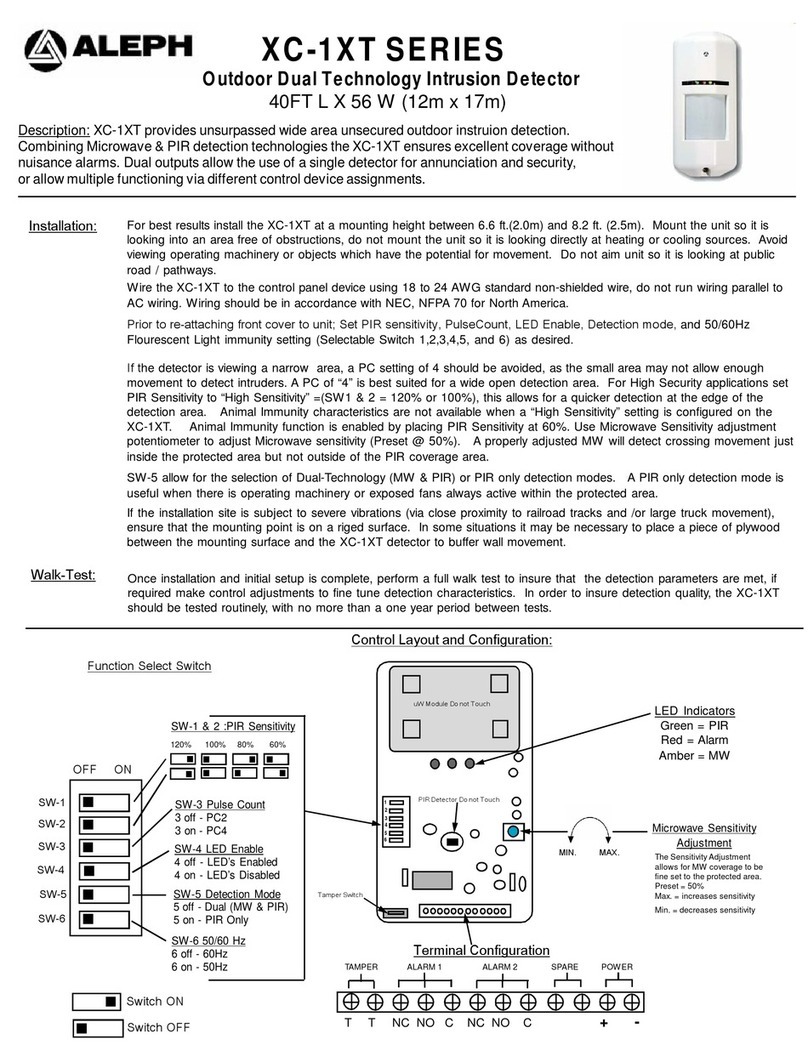
Referring to Fig. 5 below.
ADJUSTING THE DURATION TIME:
The length of time that the load-light remains switched on after activation, can be adjusted from 10(±5)
seconds to 4(±1) minutes. Rotating the TIME knob from (+) to (-) will reduce the time duration.
Note: Once the load-light has been triggered by the PIR sensor any subsequent detection will start the timed
period again from the beginning.
ADJUSTING THE LUX CONTROL:
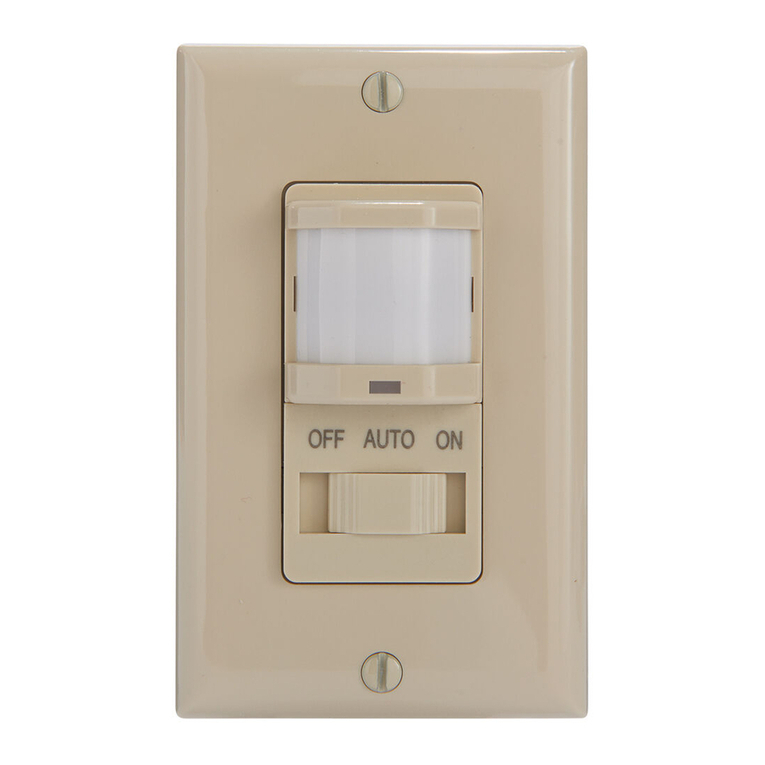
The lux control module has a built-in photocell which detects daylight.
The (R)position denotes that the unit can work during day and night.
The () position denotes that the unit only works at night.
You can set the PIR sensor to operate the unit at the desired dawn/dust level, by adjusting the LUX screw shown
in Fig. 5 below.
SETTING THE CONTROLS:
Referring to Fig. 5 below.
1) Fully turn the LUX control screw clockwise to the sun (R) position, turn the power on and wait 30 seconds
for the control circuit to stabilise. Turn the time control screw clockwise to set at minimum duration time (-)
position. The load-light will now switch on and remain on for about 30 seconds.
2) Direct the sensor eyeball towards the desired detection area.
3) Have another person move across the detection area and slowly adjust the angle of the sensor eyeball until
the unit senses the presence of the moving person, causing the load-light to switch on.
4) Re-adjust time control to required duration setting.
5) To set the light level at which the load-light will automatically switch “on” at night, turn the LUX control
screw from daylight (R) to night (). If the load-light is required to switch on earlier, e. g. dusk, wait for the
desired light level, then slowly turn the LUX control screw towards daylight whilst someone walks across the
centre of the detection area. When the load-light switches on, release the LUX control screw. You may need
to make further adjustments to achieve your ideal light level setting.
TROUBLESHOOTING AND USER HINTS:
Note: all passive infra red detectors are more sensitive in cold and dry weather than warm and wet weather.
PROBLEM POSSIBLE CAUSE SUGGESTED REMEDY
Load-light does not
switch on when there
is movement in the
detection area
1. Nearby lighting is too bright Redirect sensor or relocate the unit
2. Controls set incorrectly Readjust sensor angle or the LUX control
3 Sensor positioned in wrong direction
Adjust angle and direction of PIR, for best
results movement should cross detection
beam
4. Lamp blown on load-light Check lamp functions and replace if necessary
5. Lamp not tted correctly on load-light Make sure the lamp is correctly seated in the
lampholder
6. No mains voltage A qualied electrician should check all
connections and MCB fuses / switches
7. Wired incorrectly
A qualied electrician should check the wiring
and conrm it is wired as per the installation
instructions
Load-light switches on
for no apparent reason
(false trigger)
1. Heat from lamp body activating sensor A minimum gap of 40mm between oodlight
body and sensor head is required
2. Heat sources such as air-con, vents, heaters,
ues, other outside lighting, moving cars trees
or shrubs are activating sensor
Adjust direction of sensor head away from
these sources
3. Animals / birds activating sensor Redirecting sensor head may help
4. Interference from on/o switching of electric
fans or lights on the same circuit as your
security oodlight.
(This problem does not always occur but a faulty
switch or noisy uorescent light may cause the
security oodlight to switch on)
Should the false triggering become
troublesome, a qualied electrician should
review the wiring circuit and nd a suitable
solution
5. Reection from ponds or swimming pools,
or other reective surfaces such as smooth
white walls
Redirect sensor
Load-light remains on
1. Continuously false triggered Redirecting sensor head may help
2. Time is set to long Reduce time control screw
Load-light remains on
at nighttime Possible heat source in detection zone
Cover PIR sensor lens with a thick cloth, if the
light turns o check detection area for heat or
reective source, reposition head
Load-light switches on
during daylight hours LUX control knob is set to daylight position Turn the LUX control knob to desired light
level setting
When setting the lux
controls in daylight
the detection distance
becomes shorter
Interference by sunlight Re-test at night