INSTALLATION INSTRUCTIONS
Please ensure that all power is switched off before installing the range hood.
Installation must be in accordance to the local electrical authority and codes.
The switched power outlet for the range hood should be positioned to enable the user to turn the power off,
to enable cleaning and any maintenance required.
The switched power outlet should be installed within 600mm from the rear of the unit.
Ensure that when installing the range hood, that it is protected from any possible damage from tools etc.
Ducting for this unit must be installed in accordance to the local authority.
Ensure that the fixings used for this range hood are suitable.
Check the area where the range hood is to be fitted, to ensure that it is structurally sound.
Before using the appliance, remove the plastic coatings protecting the stainless steel finish.
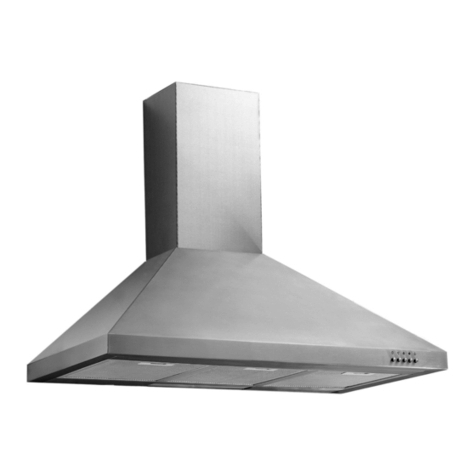
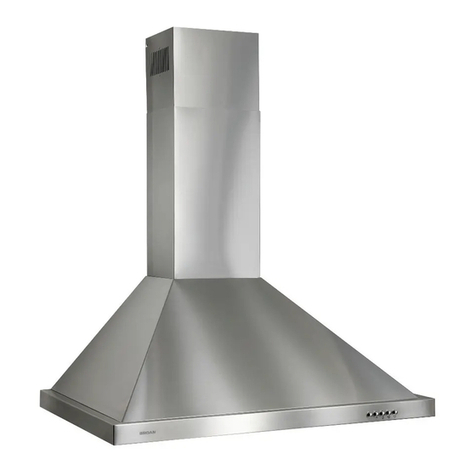
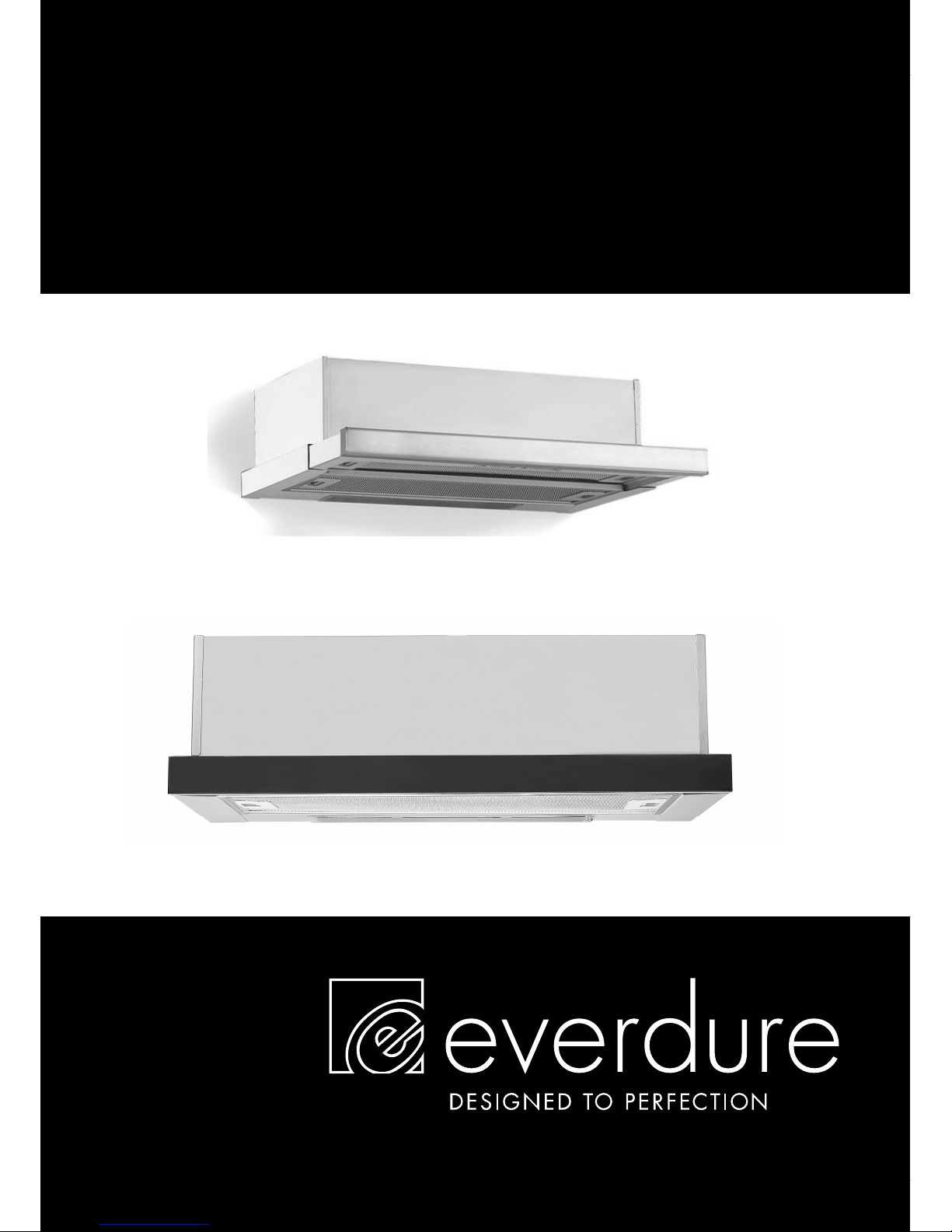
The Everdure RBES62 & RBES62B range hoods are intended to be fitted into kitchen cabinetry. They can also
be installed directly onto a wall if required.
INSTALLATION OF THE EVERDURE RBES62/RBES62B RANGE HOOD DIRECTLY TO A WALL
Ensure that the wall is structurally sound, and is capable of carrying the weight of the range hood.
The range hood can be placed at a minimum of 600mm away from an electric cooktop, or 650mm
minimum from a gas cooktop.
Measure the distance between the two fixing holes on the back of the unit. Due to manufacturing processes,
there may be slight variations on each range hood produced.
Mark the distance on the wall in the desired location, at the correct distance above the cooktop.
For timber framed houses, the range hood should be attached to a wall stud. Drill holes of a suitable size to
fix the screws into, which will take the weight of the range hood. Using a screwdriver, attach the screws to the
studs in the pre drilled holes, leaving an adequate amount for the range hood to rest on. Locate the range
hood onto the screws, via the mounting holes in the back of the unit.
For masonry walls, mark the position of the holes on the wall, and drill holes of a suitable size, to accept the
size of masonry anchor to be used. Alternatively, a wall plug of a suitable size may be fitted. Fit the masonry
anchor (if being used) into the hole, or if using wall plugs, attach a screw into the plug. Allow an adequate
amount of the screw or anchor out for the range hood to be fitted onto. Locate the range hood onto the
anchor or the screw, via the mounting holes in the back of the unit. Fit the right angled brackets onto either
side of the unit. Mark the position required onto the wall to fit the brackets. Drill the holes in the wall, to
accept either a screw or wall plug, depending on the wall structure. Attach screws through the brackets and
into the hole or wall plug drilled previously.
Fit the one way valve onto the range hood, ready for the ducting to be installed. If no ducting is used, it is
recommended that the optional charcoal filters be installed to clean the air being exhausted back into the
room.
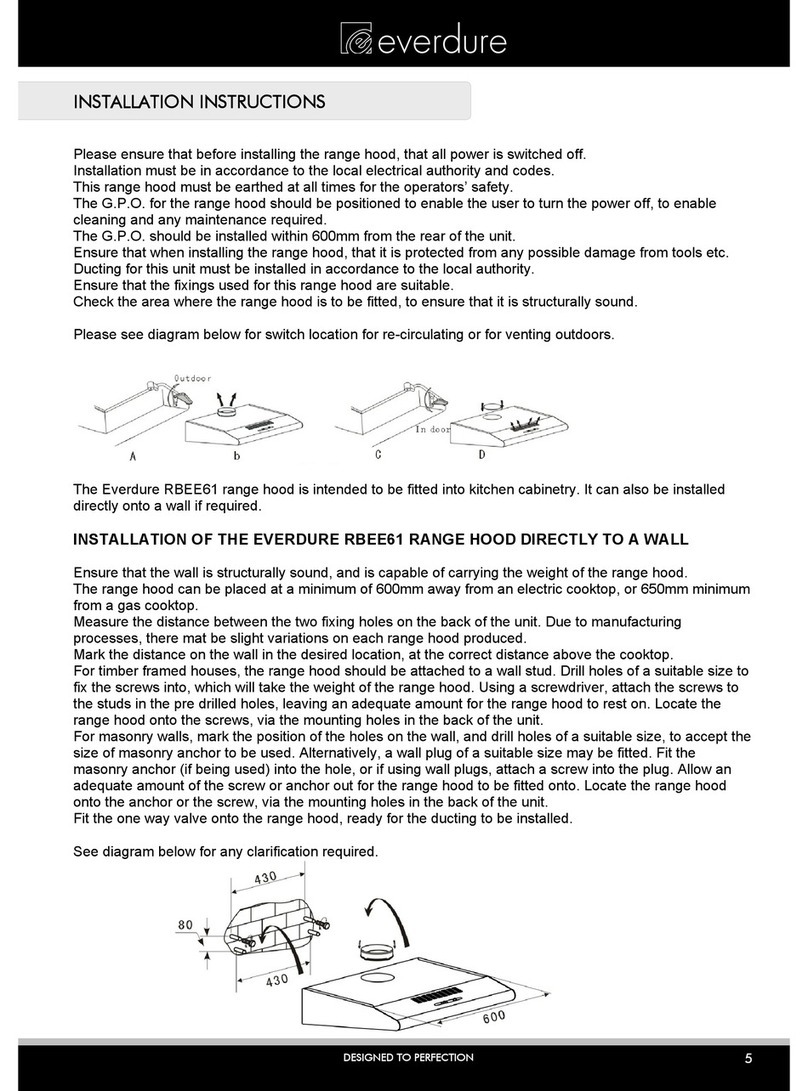
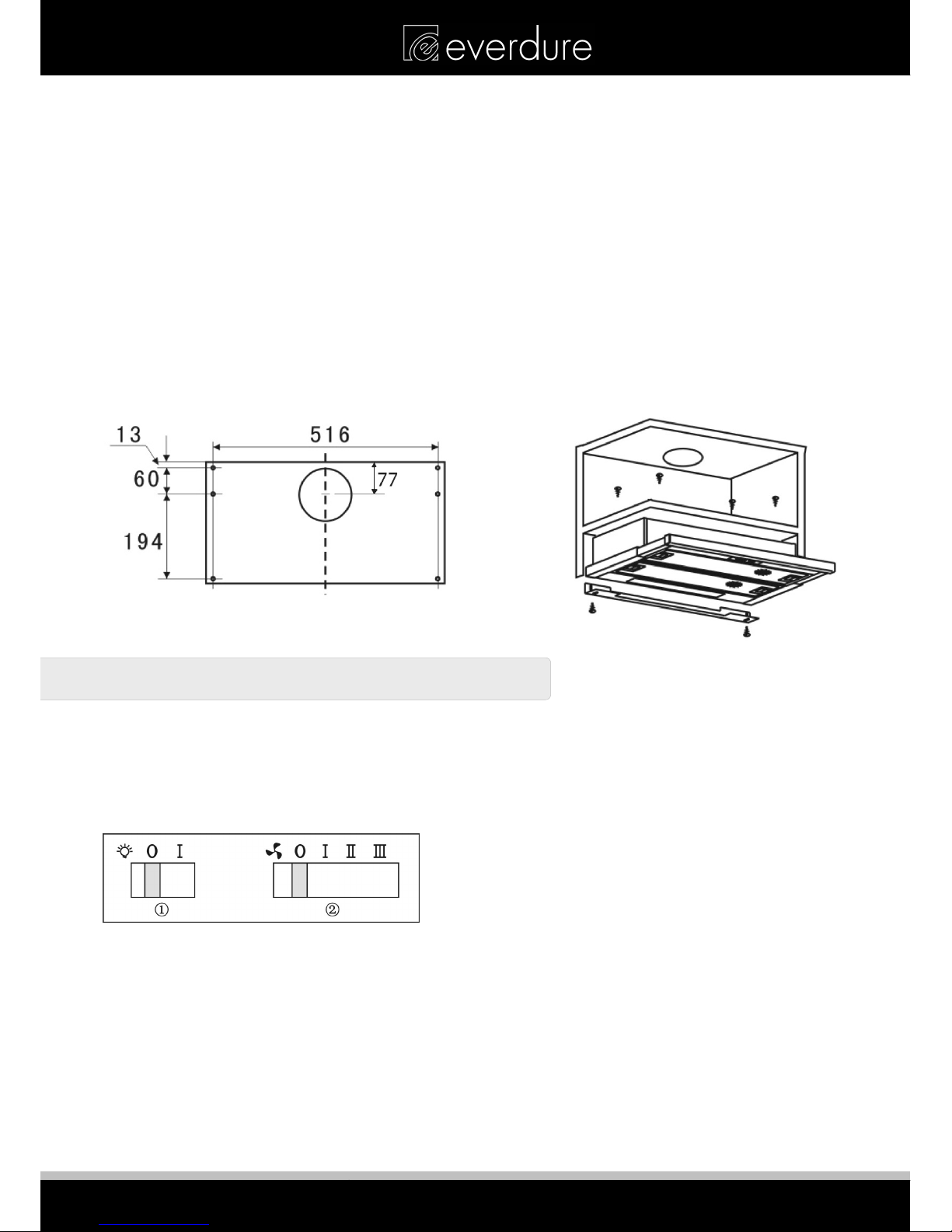
See diagram below for any clarification required.
5