11
10
Tyrannosaurus
Findings
Montana, 1902
Sixty-five million years after all dinosaurs had disappeared,
paleontologists gathered at a dig site in Montana, United
States of America, to study plant and animal fossils. The
year was 1902. Excitement filled the air as the scientists dug
deeper into the earth’s mysterious secrets. They found the
bones of one of the largest, most powerful animals that ever
lived (that we know of!)—Tyrannosaurus, the tyrant lizard.
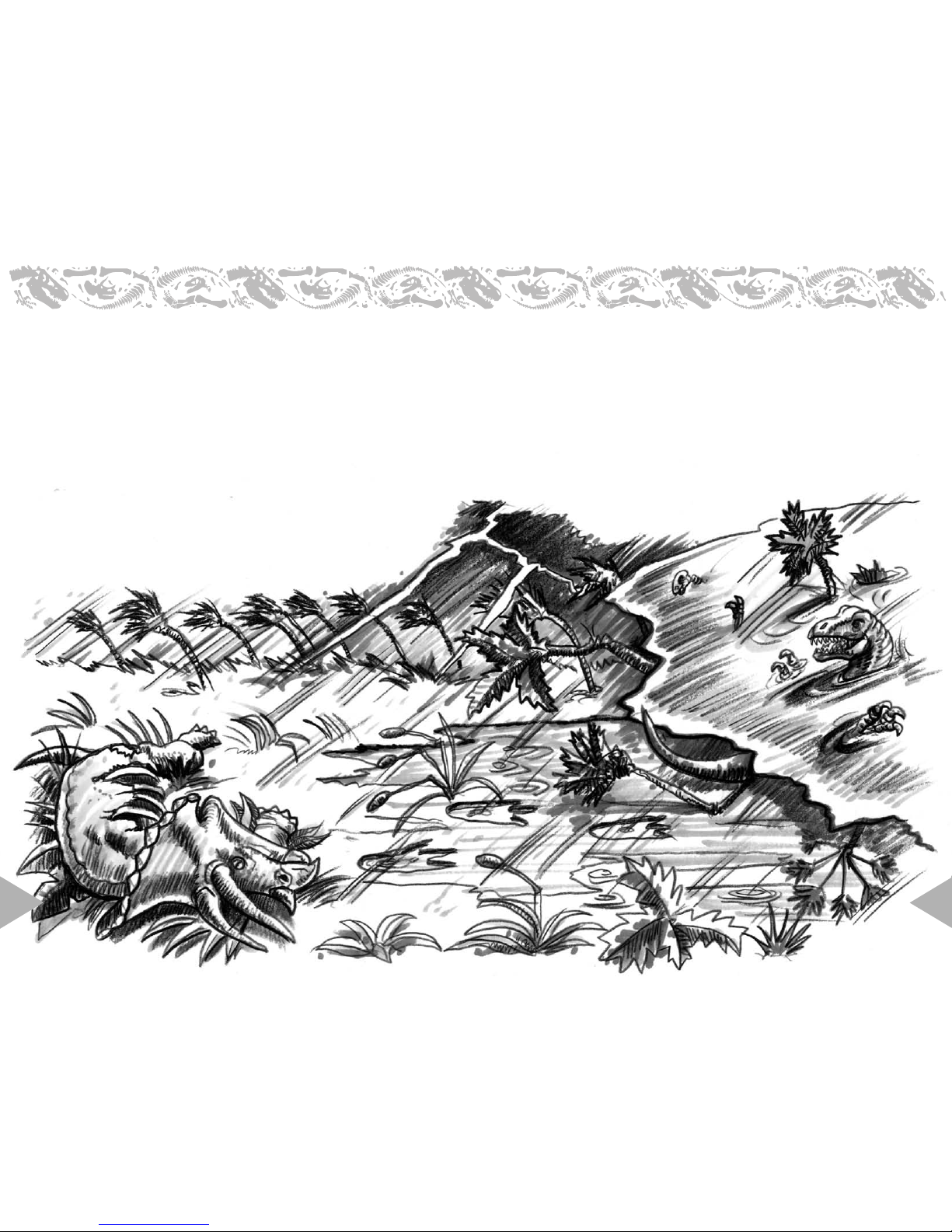
The fossilized bones were in excellent condition. This is why
scientists believed he or she may have died in a flash flood.
When the flood was over, Tyrannosaurus was left buried in
tiny particles of earth, sand, and mud. Over the years, this
sediment hardened into rock. The rock lay unnoticed for
millions of years, until this day.
From this and other digs that followed, paleontologists have
found many Tyrannosaurus fossils, including a 7-inch
(18 cm)
tooth. The curved tooth has a serrated, or saw-like edge.
They learned that Tyrannosaurus had three toes on its feet
and two claws on its two tiny hands. They determined that
Tyrannosaurus probably walked with its huge, heavy tail
raised to balance the weight of its large head, not lowered to
the ground as was earlier believed. Like some other animal
species, the female Tyrannosaurus may have been larger
than the male. By the 1990s, scientists had found two almost
complete skeletons of this remarkable dinosaur.
Scavenger or Hunter?
Was the great meat-eating Tyrannosaurus a terrifying
hunter or a cunning scavenger? Scientists disagree about the
evidence. Some believe Tyrannosaurus was the most vicious
meat-eating creature of the Cretaceous period—a powerful
threat to any living animal who may have been in the way.
Its long, sharp teeth could have gripped the flesh of any prey
it wanted. Other scientists say Tyrannosaurus’s enormous
size and weight would have prevented it from moving fast
enough to catch any live prey. They believe the great
dinosaur relied on the weak, sick, or dead for its meals.
One thing scientists do agree on about the Tyrannosaurus—
it was one of the last species of dinosaur to disappear from
the face of the earth.
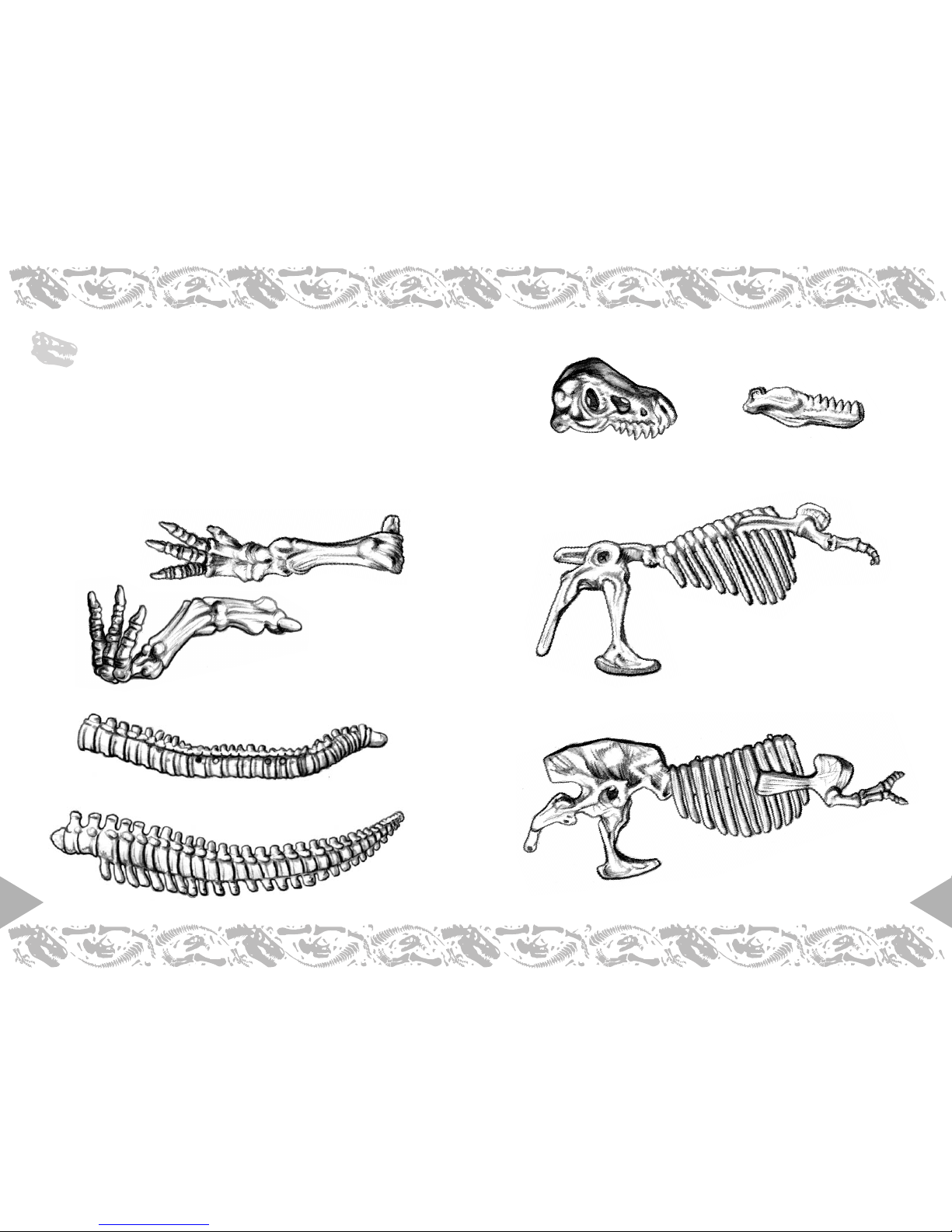
This is a drawing of Tyrannosaurus’s front arm from the humerus, or shoulder
bone, to the finger claws.