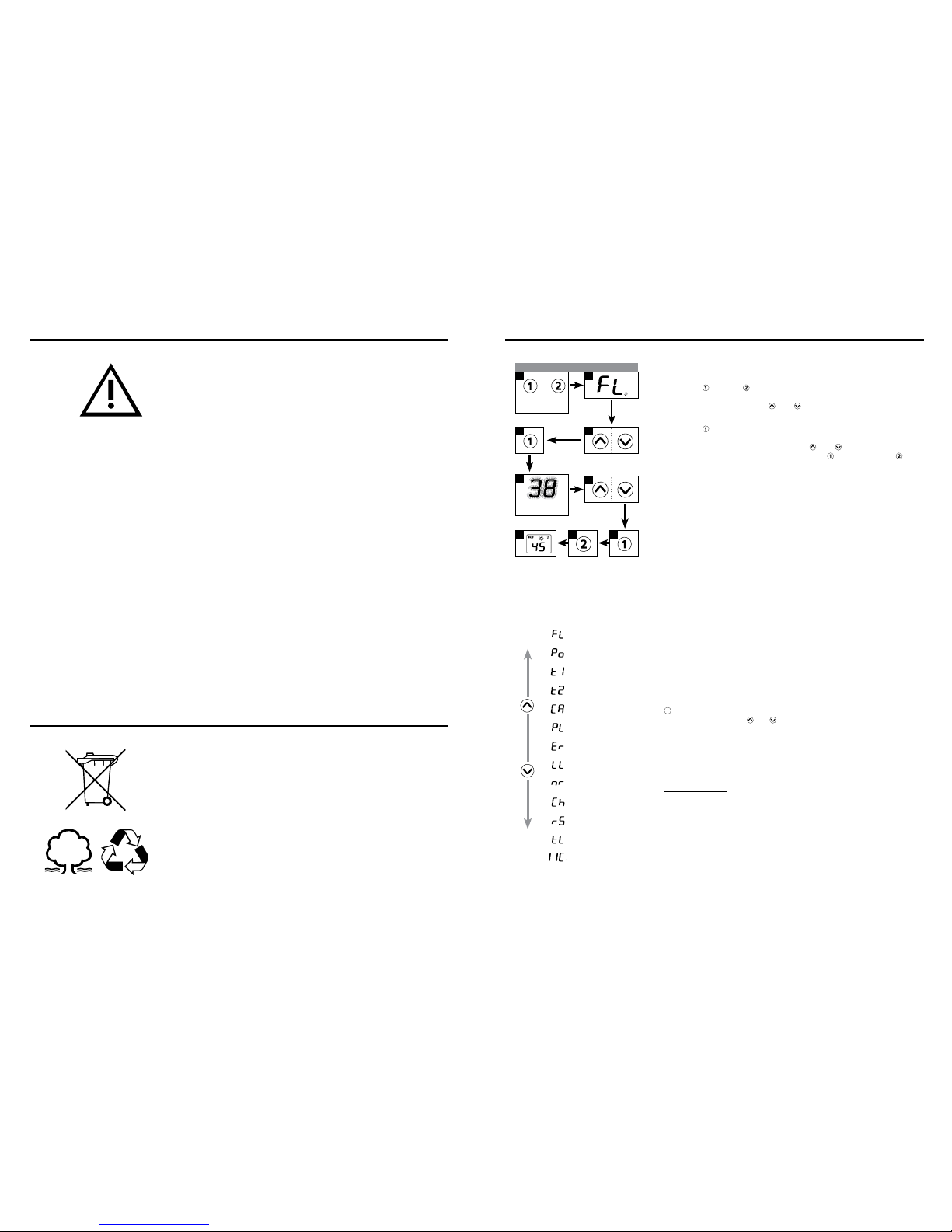
P.12 P.13
8.ElectricalConnection
1
2
5
3
4
Only by a specialist! Please observe:
• VDE 0100
• The installation must comply with current IEC and
national local regulations or any particular
regulations, specified by the local electricity supply
company
• The rating plate and technical specifications
• The unit must be earthed!
Structural prerequisites
•Theappliancemustbeinstalledviaapermanent
connection. Heater must be earthed! A maximum
cable size must be observed: 10 mm2.
•Theelectricwiringshouldnotbeinjured.After
mounting, the wiring must not be direct accessible.
•Anall-poledisconnectingdevice(e.g.viafuses)with
a contact opening width of at least 3 mm per pole
should be provided at the installation end.
•Toprotecttheappliance,afuseelementmustbe
fitted with a tripping current commensurate with
the nominal current of the appliance.
Electrical connection
Check that the power supply is switched off prior to
electrical connection!
1. Dismantle off the power cable so that you can insert
the cable with the cladding through the water splash
protection sleeve up to the cord grip into the appliance.
2. Lead the cable through the water splash protection
sleeve into the appliance so that one can securely
fix the cladding of the cable with the cord grip. If
necessary, use one of the three predetermined
breaking points for the cable entry (at the right, left
or bottom). The protective sleeve prevents water from
entering the appliance alongside the connection line.
The protection sleeve has to be used!
3. Mount the cord grip. The cord grip must be used!
4. Strip the cables and plug them in the connecting
terminals according to the wiring diagram. The
appliance must be earthed.
5. After successful electrical connection, fit the hood of
theunit.Makesurenottojamanycablesbetweenthe
appliance hood and the base part of the appliance.
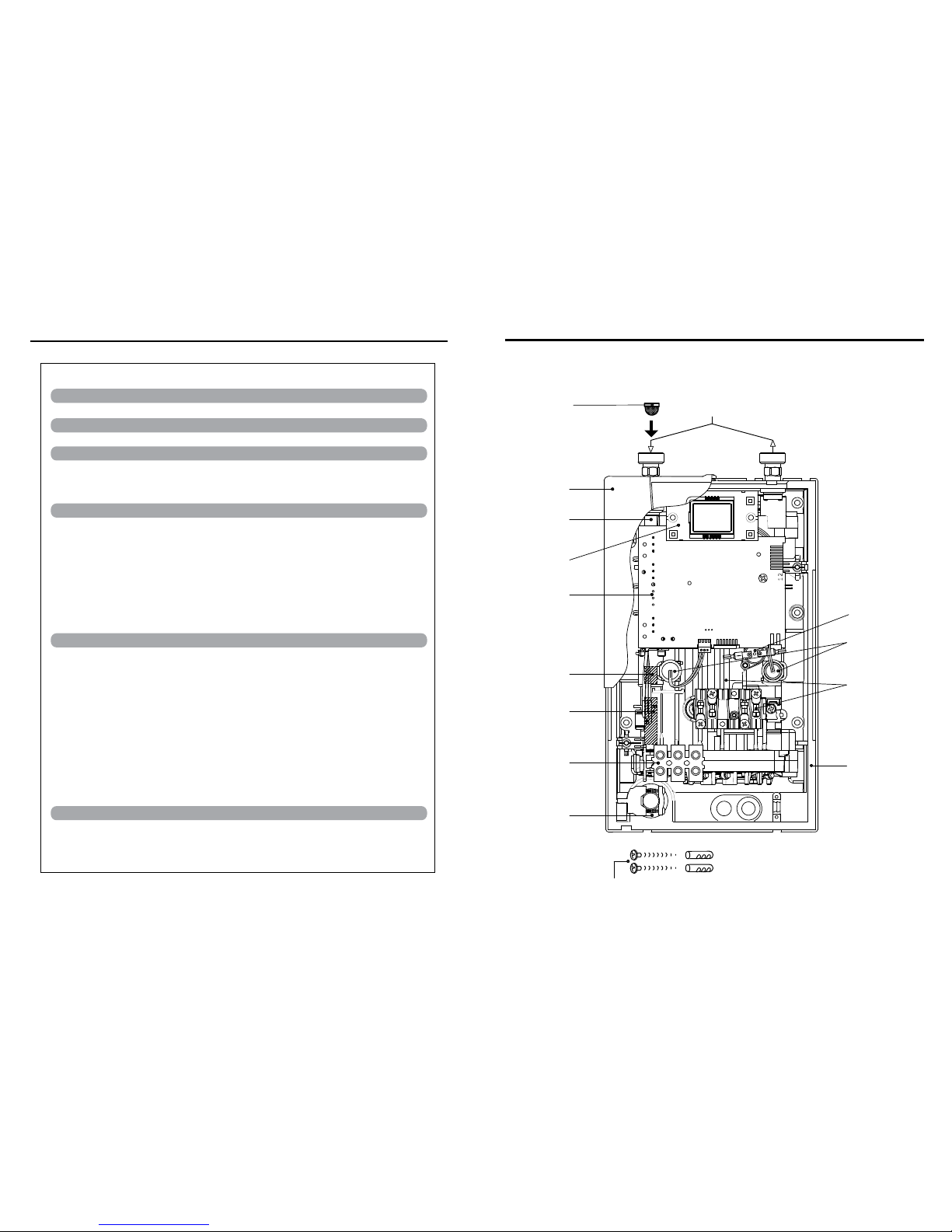
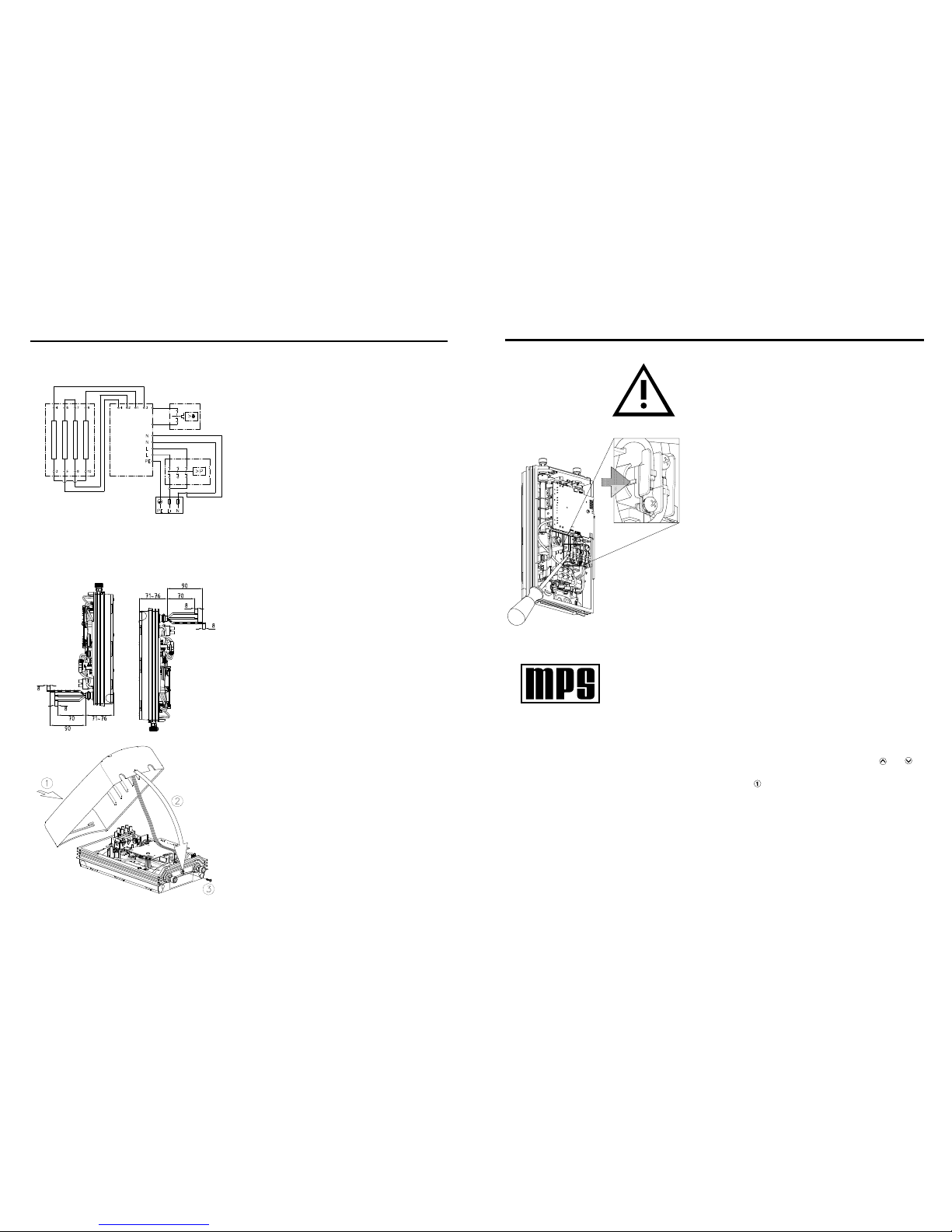
1. Electronic circuitry
2. Heating element
3. Safety pressure cut-out
4. Terminal strip
5. Safety thermal cut-out
Wiring diagram Before making the electrical connection, fill the mains
and the appliance with water by carefully opening and
closing the hot water tap in order to vent completely.
To ensure a maximum flow, remove any existing
aerator from the faucet. Flush the warm and cold
water pipes each at least for one minute.
After every draining (e.g. after work on the plumbing
system or following repairs to the appliance), the
heater must be re-vented in this way before starting it
up again.
If the water heater cannot be put into operation, the
temperature cut-out or the pressure cut-out may have
tripped during transport. If necessary, reset the cut-out.
Selection of power rating
Only by authorised specialist, otherwise lapse of
guarantee!
Upon first connection of the appliance to the supply
voltage, select the maximum power rating. Only after
having set the power rating, the heater provides its
standard operation mode.
The maximum allowable power rating at installation
site depends on the local situation. It is imperative
to observe all data shown in the table “Technical
specifications“, in particular the required cable size
and fuse protection for the electrical connection.
Moreover, the electrical installation must comply with
the statutory regulations of the respective country and
those of the local electricity supply company (Germany:
DIN VDE 0100).
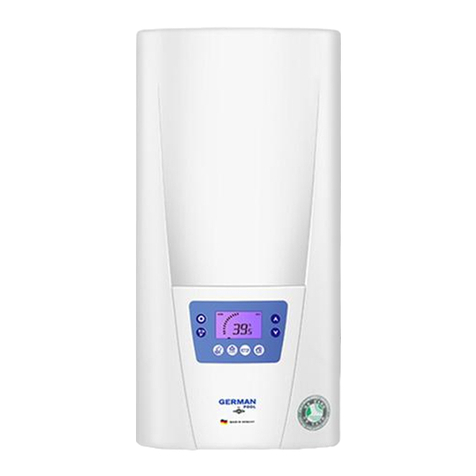
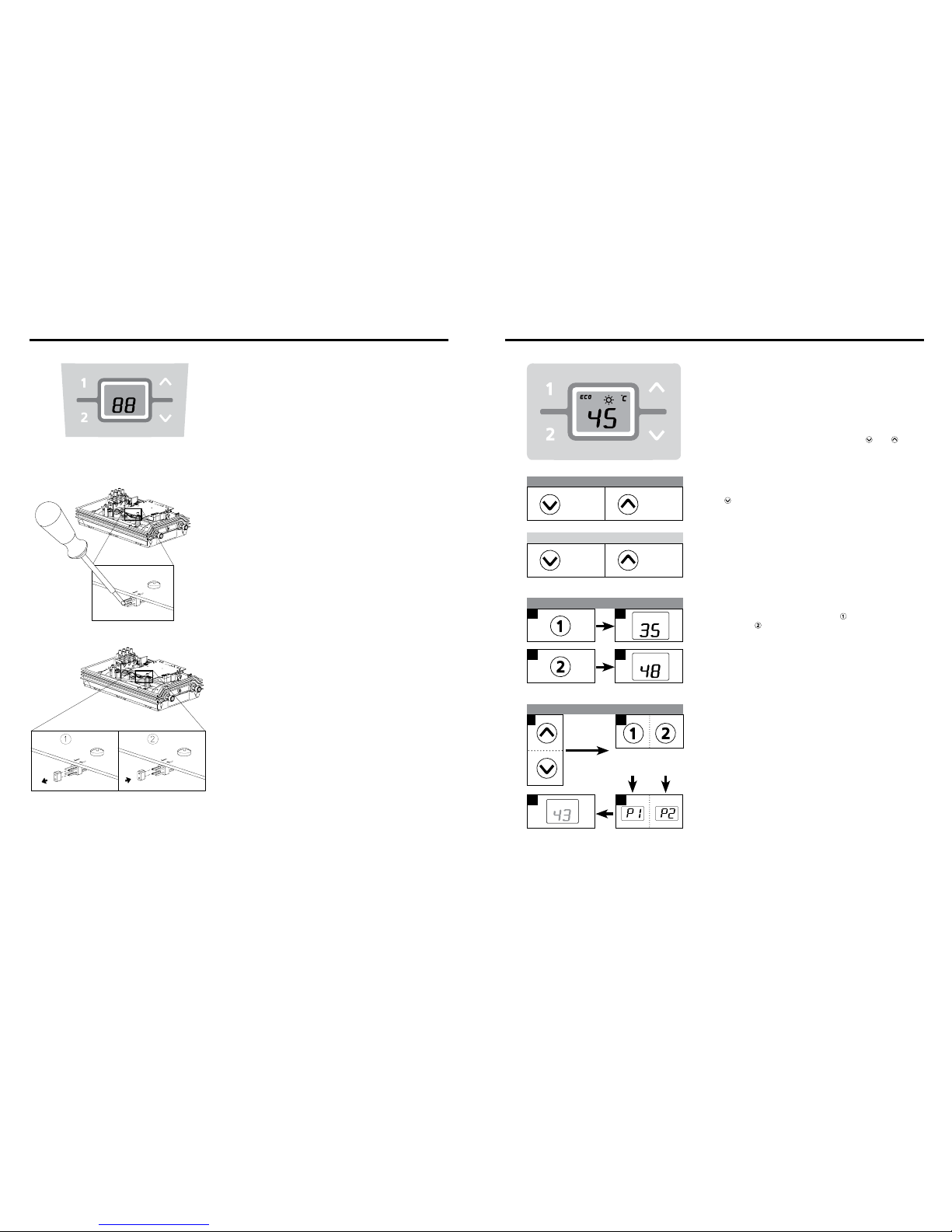
1. Switch on the power supply to the appliance. The
digital display on the appliance must light up.
2. When switching on the supply voltage for the first
time,thevalue“88“flashesinthedisplay.Ifnot,
please carefully read the note “Reinstallation“.
3. Select the maximum allowable power rating
depending on the local situation via the up and
downarrowkeys:8.8or6.6kW(display:“66“)230V.
4. Press key to confirm the setting. The appliance
starts operating.
5. Mark the set power rating on the rating plate.
6. Open the hot water tap. Check the function of the
appliance.
7. After having set the maximum allowable power
rating, the heating element will be activated after
approx. 10 - 30 seconds of water flow.
9. Initial Operation
®
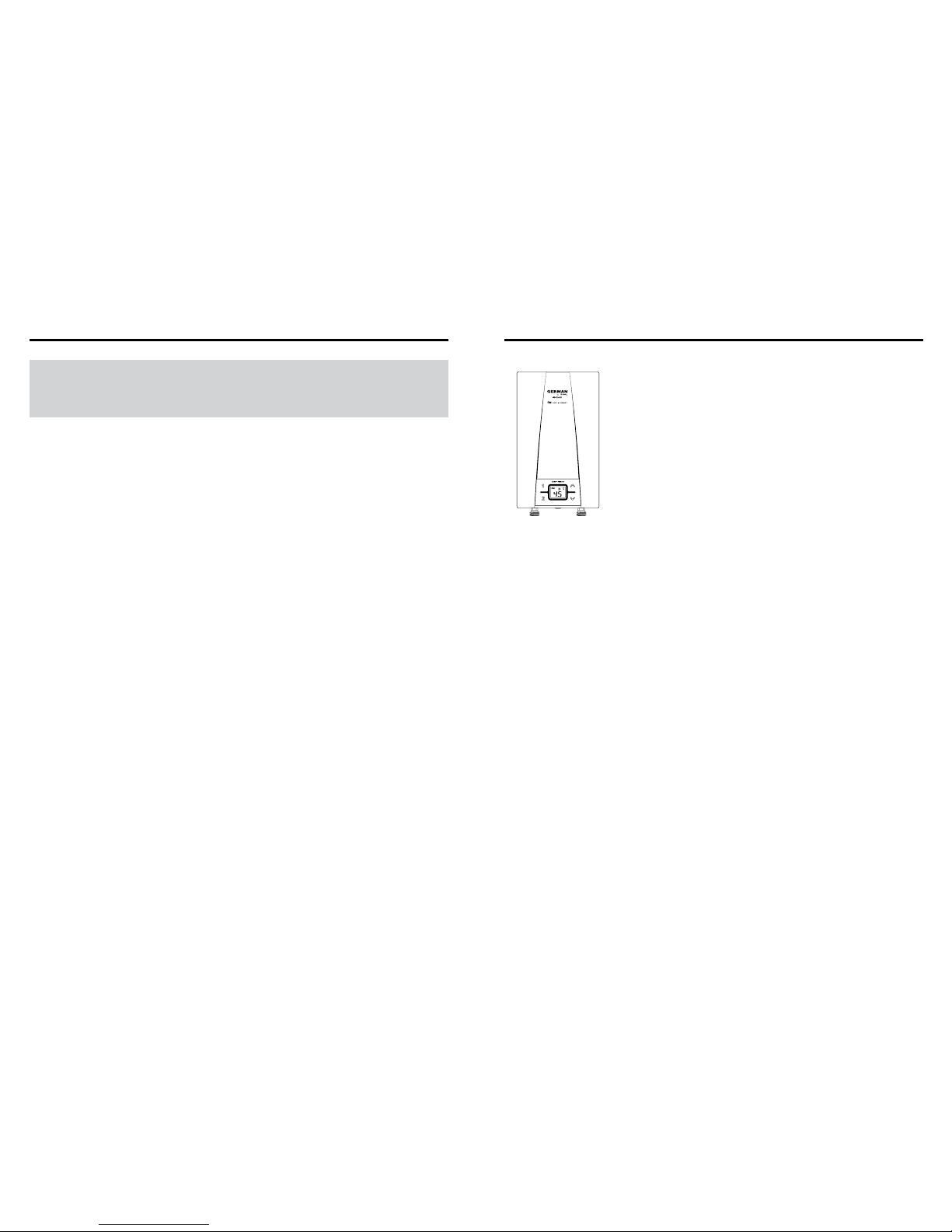
Multiple Power System:
The rated capacity (max. power
consumption) is 8.8kW / 230 V
and can be reduced to 6.6kW.