8
As baking accessories heat up, their form may change. This does not affect their functionality and their original
form will be restored when they cool down.
BEFORE USING THE APPLIANCE FOR THE FIRST TIME
•Upon receiving the appliance, remove all parts, including any transport equipment, from the oven.
•Clean all accessories and utensils with warm water and regular detergent. Do not use any abrasive cleaners.
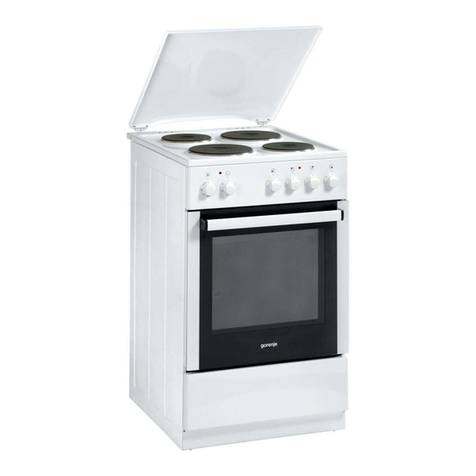
•If the cooker has cast iron plates, set the hotplate knobs to level 4 and leave them on for 30 minutes without using
any dishes. As the cooking zones heat up, some smoke may appear on the cooking hob surface. Thus, the cooking
zone finish reaches its maximum resistance.
•When the oven heats up for the first time, the characteristic smell of a new appliance will be emitted. Ventilate the
room thoroughly during the first operation.
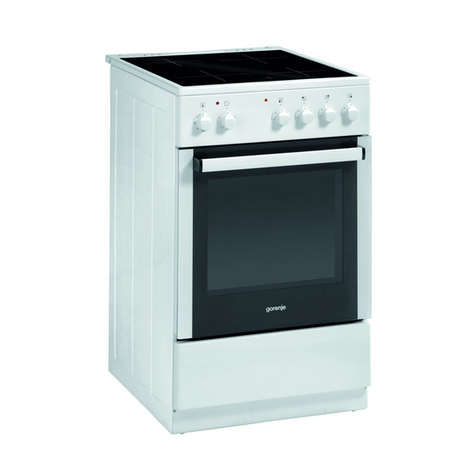
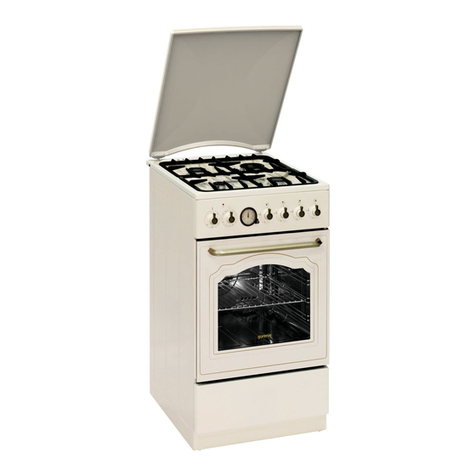
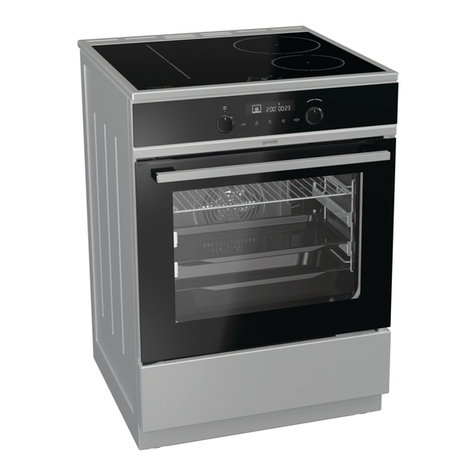
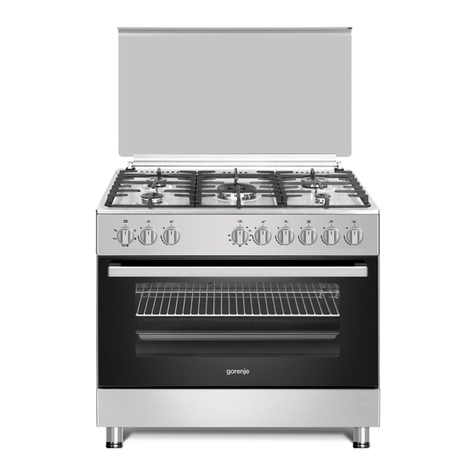
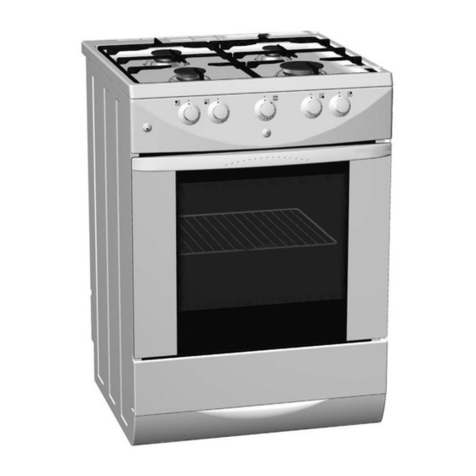
COOKING HOB (depending on the model)
1 cooking zone rear left
2 cooking zone rear right
3cooking zone front left
4cooking zone front right
ENERGY SAVING TIPS
•Diameter of the pot and pan bottoms should match the diameter of the cooking zone. If the pot or pan is too small,
a part of the heat will be lost, and the cooking zone may be damaged.
•If the cooking process allows, use a lid.
•Cookware should be suitably sized given the amount of food. When you cook a small amount of food in a large pot
or pan, more energy is lost.
•If a dish takes a long time to cook, use a pressure cooker.
•Vegetables, potatoes etc. may be cooked in a smaller amount of water. The food will cook just as well, as long as
the pot is tightly closed with a lid. After bringing the water to a boil, reduce the heat to a level that just sufices to
maintain a slow simmer.
ELECTRIC HOBS
•Make sure the cooking zone and the cookware bottom is clean and dry. This will allow better conduction of heat and
prevent any damage to the heating surface.
•Overheated fat and oil on the cooking zones may ignite. Therefore, be careful when cooking with fat or oil and
always control the cooking process.
•Do not place wet cookware or lids covered in steam on the cooking zones. Moisture may damage the cooking zones.
•Do not cool down the hot cookware by placing it on the cooking zones that were not in use, because the condensate
that will appear under the cookware bottom may aid corrosion.
Rotate the knob to switch on the cooking zone. Cooking zone
heating power can be set in steps from 1 to 6.
Switch off the cooking zone 3 –5 minutes before the end of the cooking process to make use of the residual
heat and save power.