Installation
3A8861C 7
Installation
Prepare the Pump
Always complete the following procedure before
performing any service or repair to the equipment.
1. Relieve the pressure. Follow the Pressure Relief
Procedure in your related pump manual. See
Related Manuals, page 2.
2. Verify that the pump is turned off and power to the
system is disconnected before performing any
service or repair procedure.
Install the Leak Sensor
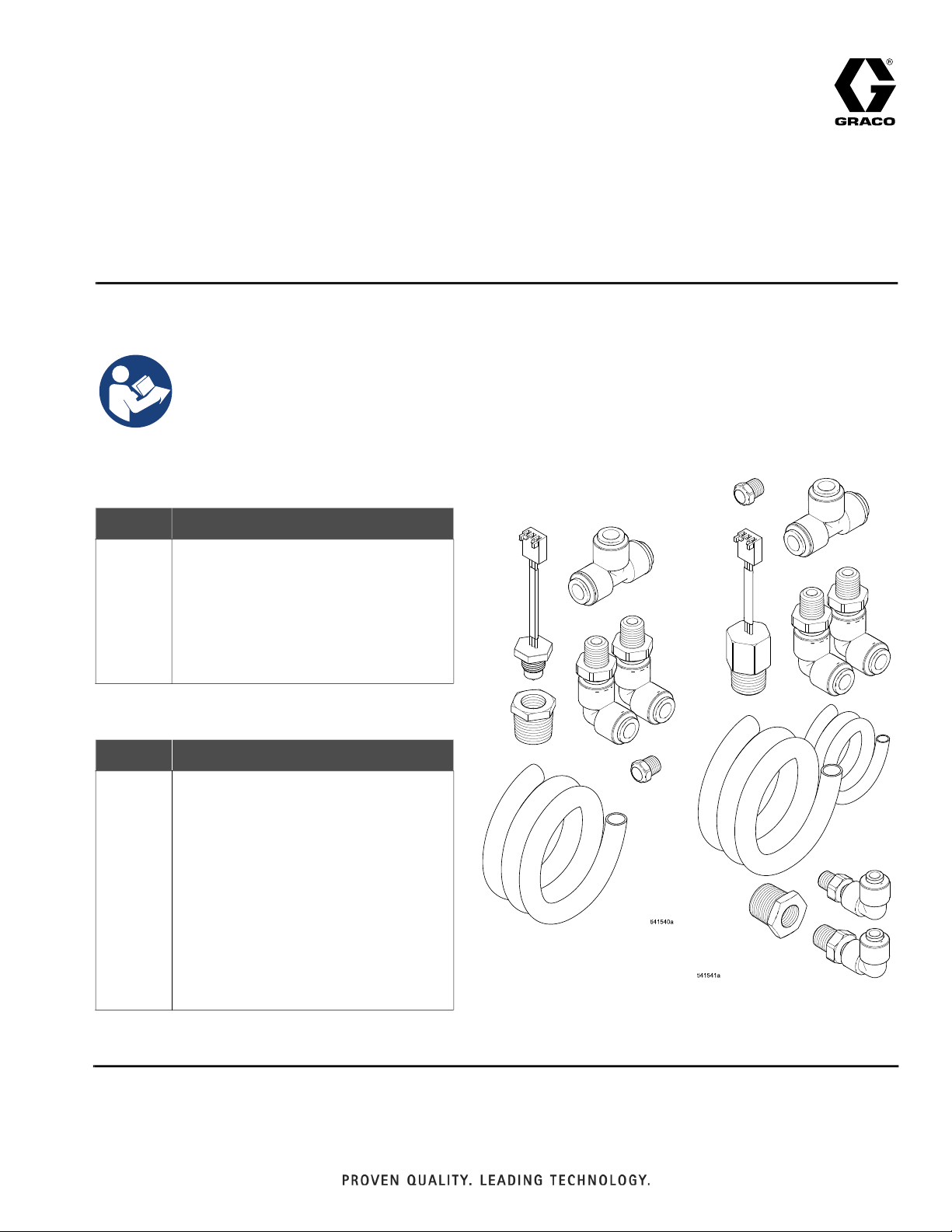
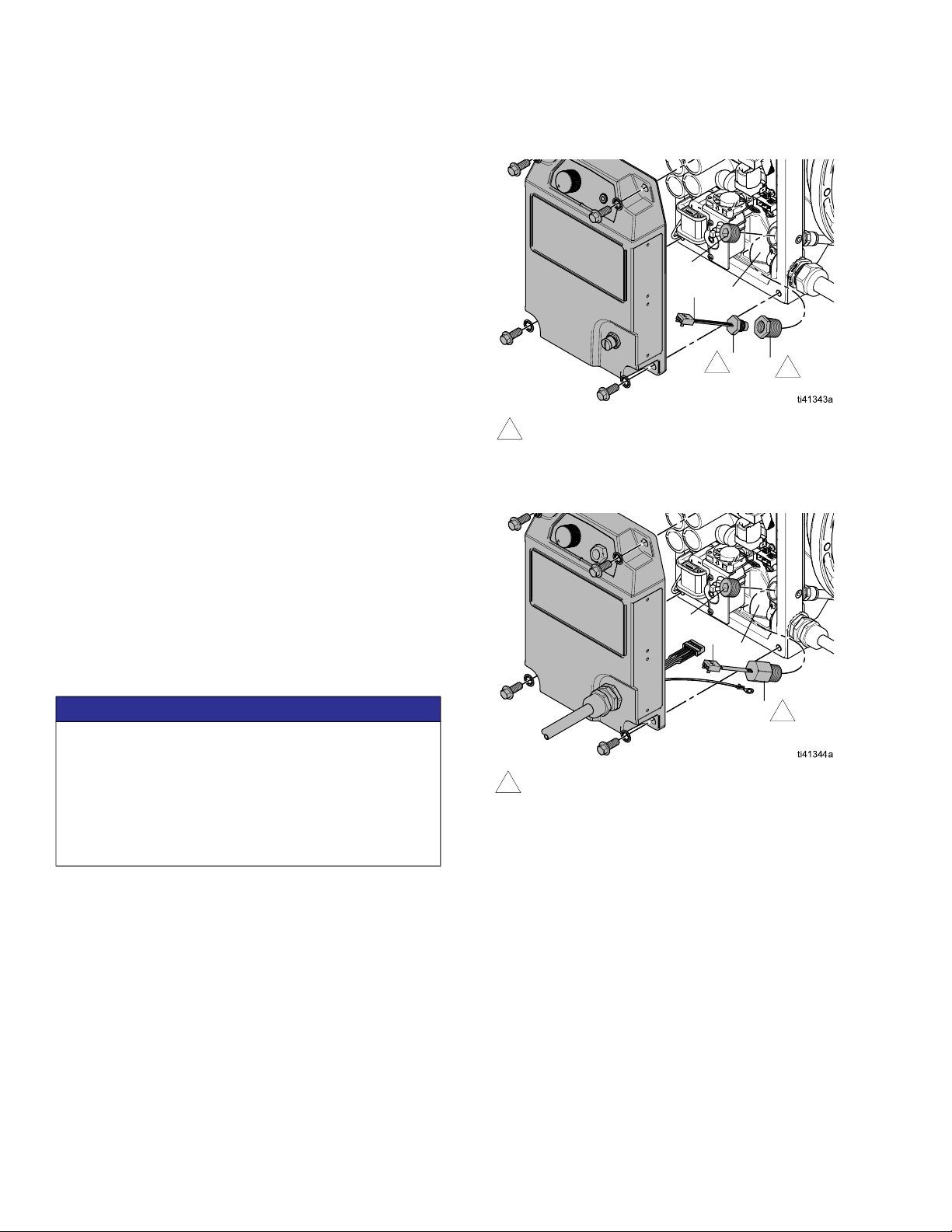
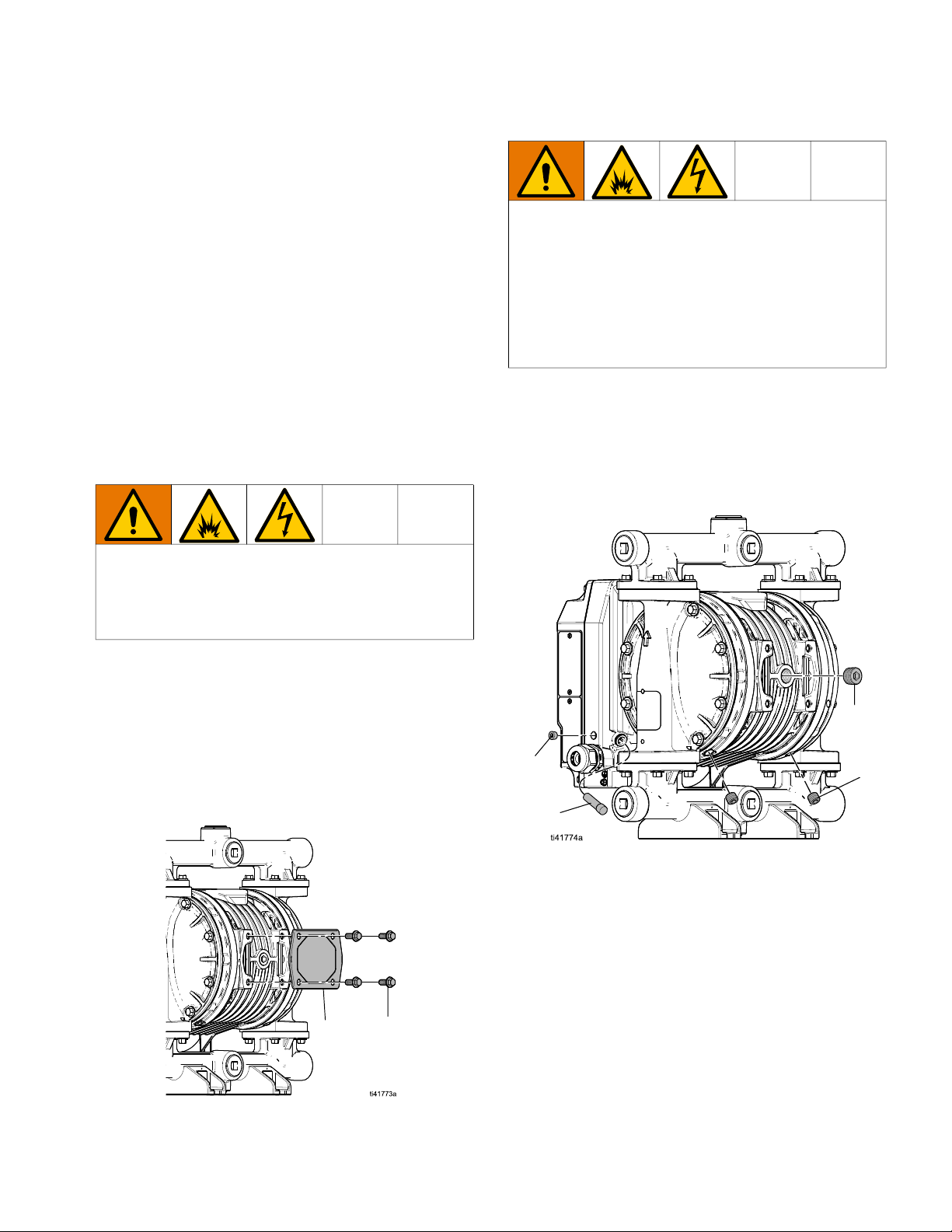
See FIG. 3–FIG. 4.
Required Tools:
• 7/8 in. open-end wrench
• 3/8 in. hex wrench
• 3/4 in. open-end wrench (for pumps certified for
use in Ordinary Locations only)
Remove the Leak Sensor
If a leak sensor is currently installed, remove the current
leak sensor before installing the new leak sensor.
1. Follow Prepare the Pump, page 7.
2. Remove the control cover. See your related motor
manual. See Related Manuals, page 2.
3. Disconnect the leak sensor wire (A) from the port in
the control housing (S). See Electrical
Schematics, page 13.
4. Pumps Certified for Use in Ordinary Locations
only: Loosen the fitting (B) behind the leak sensor
(C).
5. Remove the leak sensor (C) assembly and reducer
fitting (B, if applicable) from the control housing (S).
NOTE: Ensure there is no fluid in the leak sensor or
in the control housing.
6. Pumps Certified for Use in Ordinary Locations
only: Disconnect the fitting (B) from the leak
sensor (C).
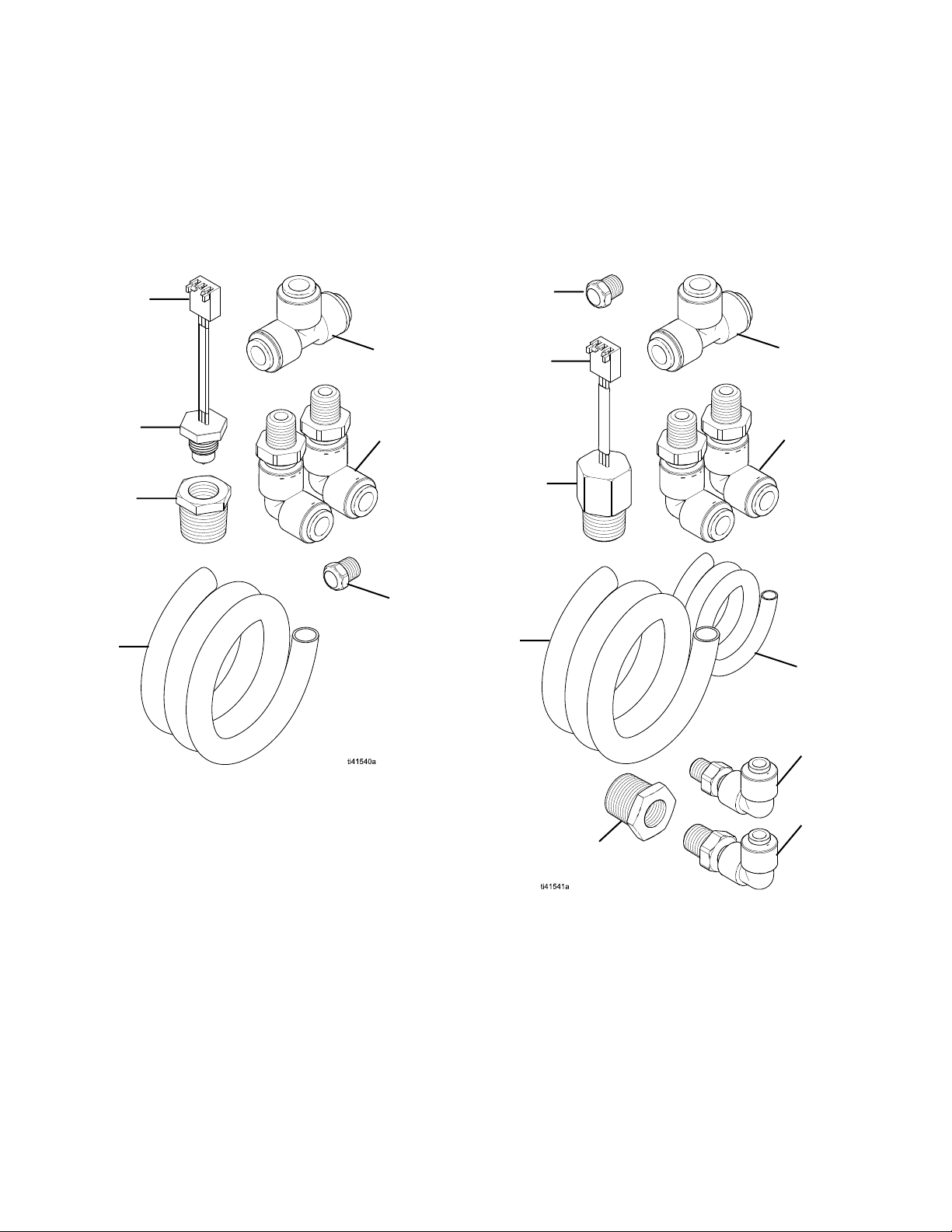
7. Disconnect the hoses (F, H, if applicable) and
fittings (D, J, if applicable, K, if applicable, N, if
applicable) from the pump.
8. Inspect for wear or damage. Replace as necessary.
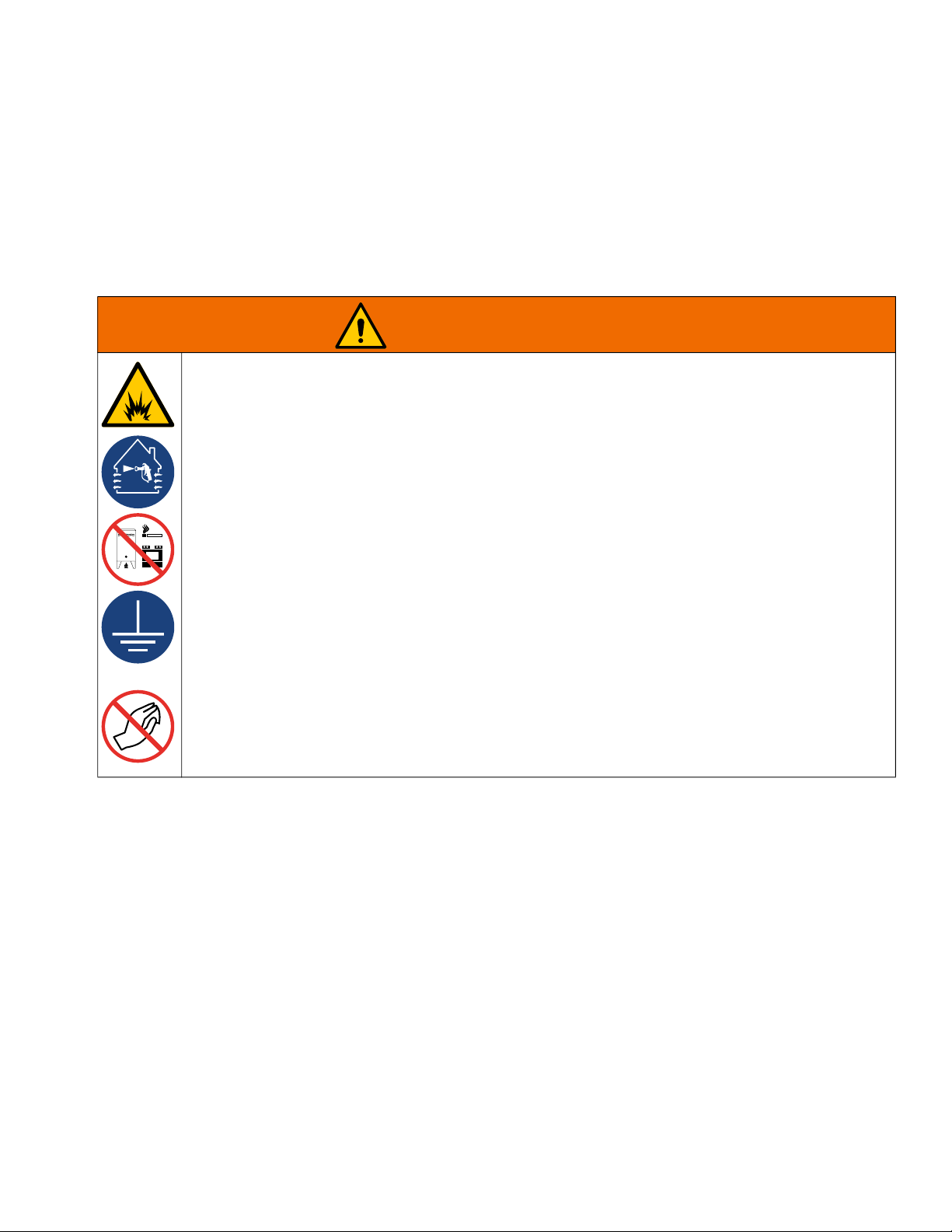
To avoid injury from fire, explosion, or electric
shock, all electrical wiring must be done by a
qualified electrician and comply with all local codes
and regulations.
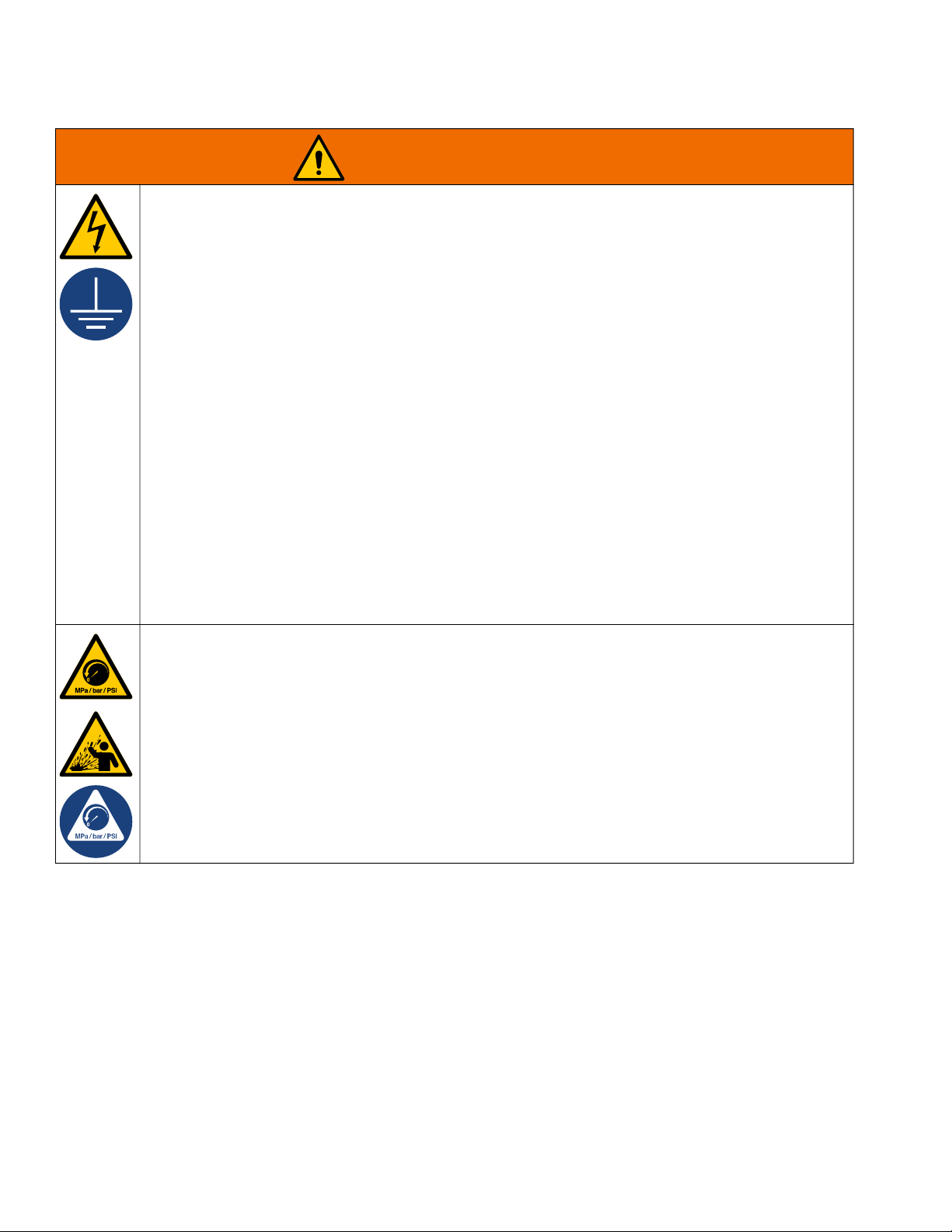
To prevent electric shock, turn off the pump and
disconnect from power before performing any
service or repair procedure.
To help prevent serious injury from pressurized fluid,
such as skin injection, splashing fluid and moving
parts, relieve the pressure when you stop operating
and before cleaning, checking, or servicing the
equipment. Follow the Pressure Relief Procedure in
your related pump manual. See Related Manuals,
page 2.
Perform Prepare the Pump, page 7, before
performing any service or repair.
Pumps Certified for Use in Explosive
Atmospheres or Hazardous (Classified)
Locations: To avoid injury from fire and explosion,
move the equipment to a non-explosive or
non-hazardous location before performing any
service or repair to the equipment.
To avoid injury from electric shock, all electrical
wiring must be done by a qualified electrician and
comply with all local codes and regulations.
NOTICE
To avoid damage to the control board, ensure that
fluid does not contact electrical components in the
control housing.