16 17
Warning!
• The CareSens Test Strips should be used only with fresh
capillary whole blood samples.
• Do not reuse test strips.
• Do not use test strips past the expiration date.
• Test strips in new, unopened vials and test strips in vials that
have been opened can be used up until the expiration date
printed on the test strip box and vial label if the test strips
are used and stored according to its storage and handling
methods.
• Store test strips in a cool and dry place at a temperature
between 1-30˚C (34-86˚F).
• Keep test strips away from direct sunlight or heat and do not
freeze.
• Store test strips only in their original vial.
• Close the vial tightly after taking out a test strip for testing and
use the strip immediately.
• Handle test strips only with clean and dry hands.
• Do not bend, cut, or alter test strips in any way.
• For detailed storage and usage information, refer to the
CareSens test strip package insert.
• Keep the meter and testing supplies away from young
children.
• The test strip vial contains drying agents that are harmful
if inhaled or swallowed and may cause skin or eye
irritation.
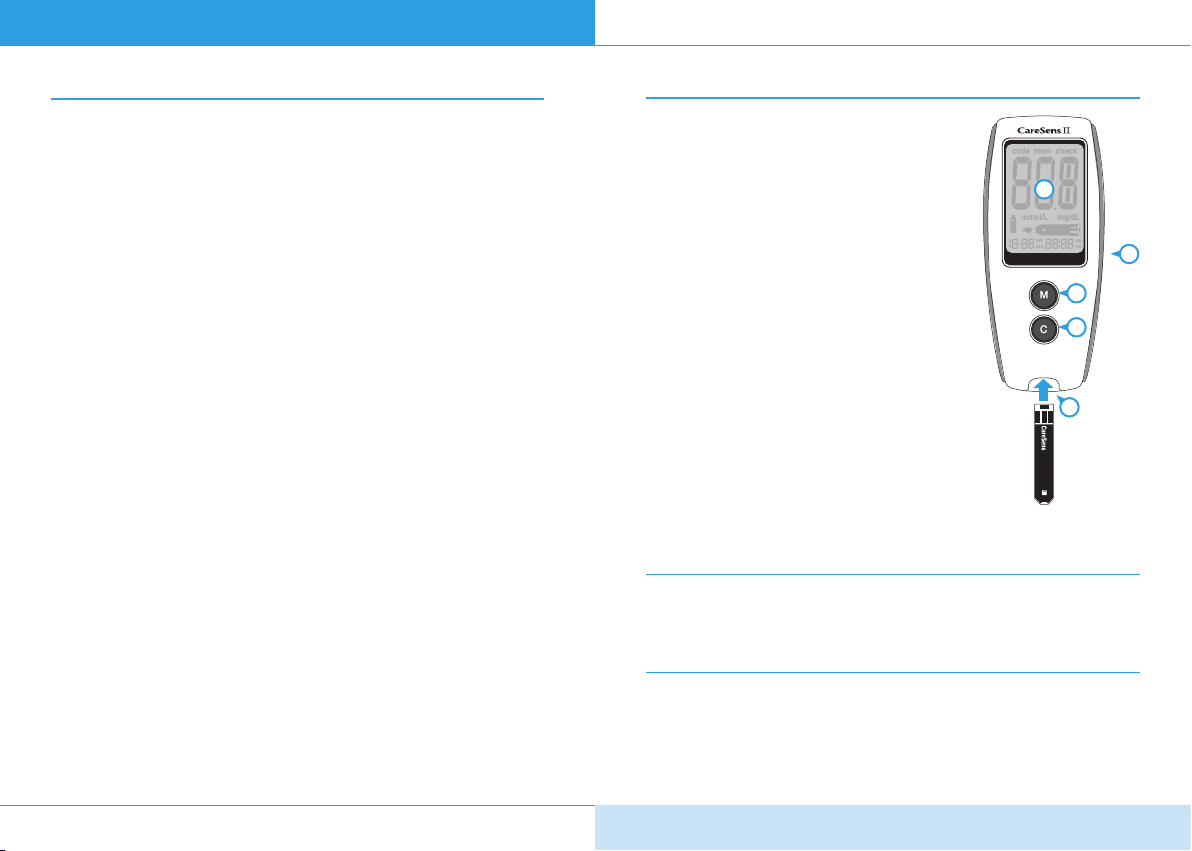
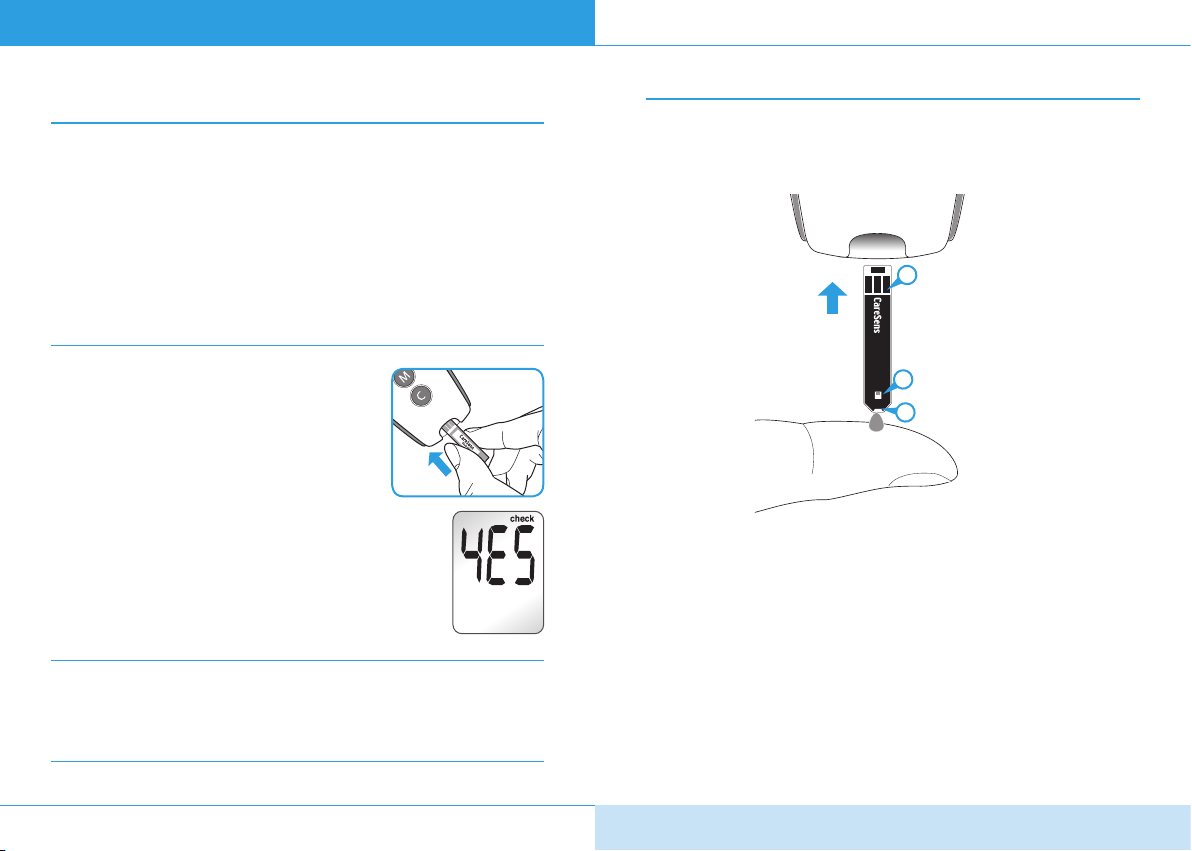
[1] Gently push test strip in until meter
beeps. A code number will appear for
three (3) seconds. Code number 1 will
appear when the meter is first used.
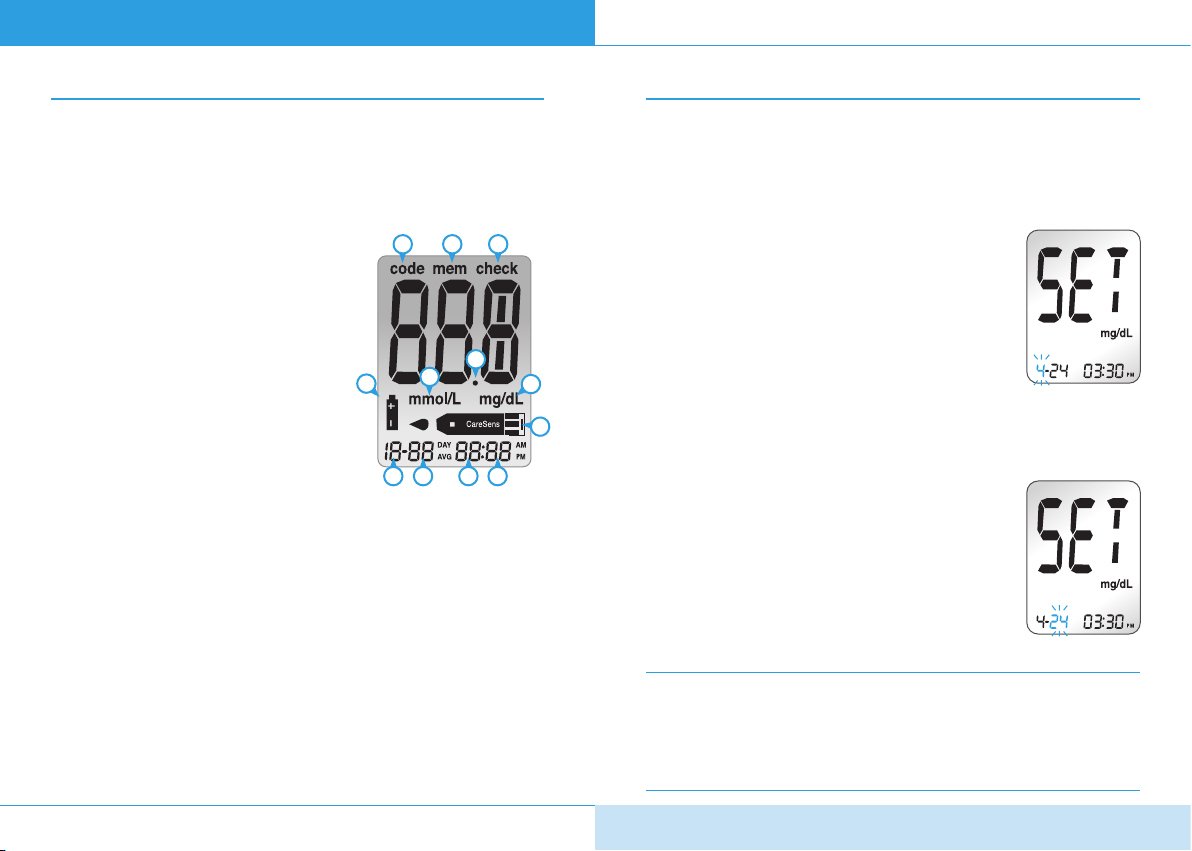
[2] The code number on display and test
strip vial should match. If so, wait until
the symbol appears on the screen to
begin the test. If not, follow Step 3.
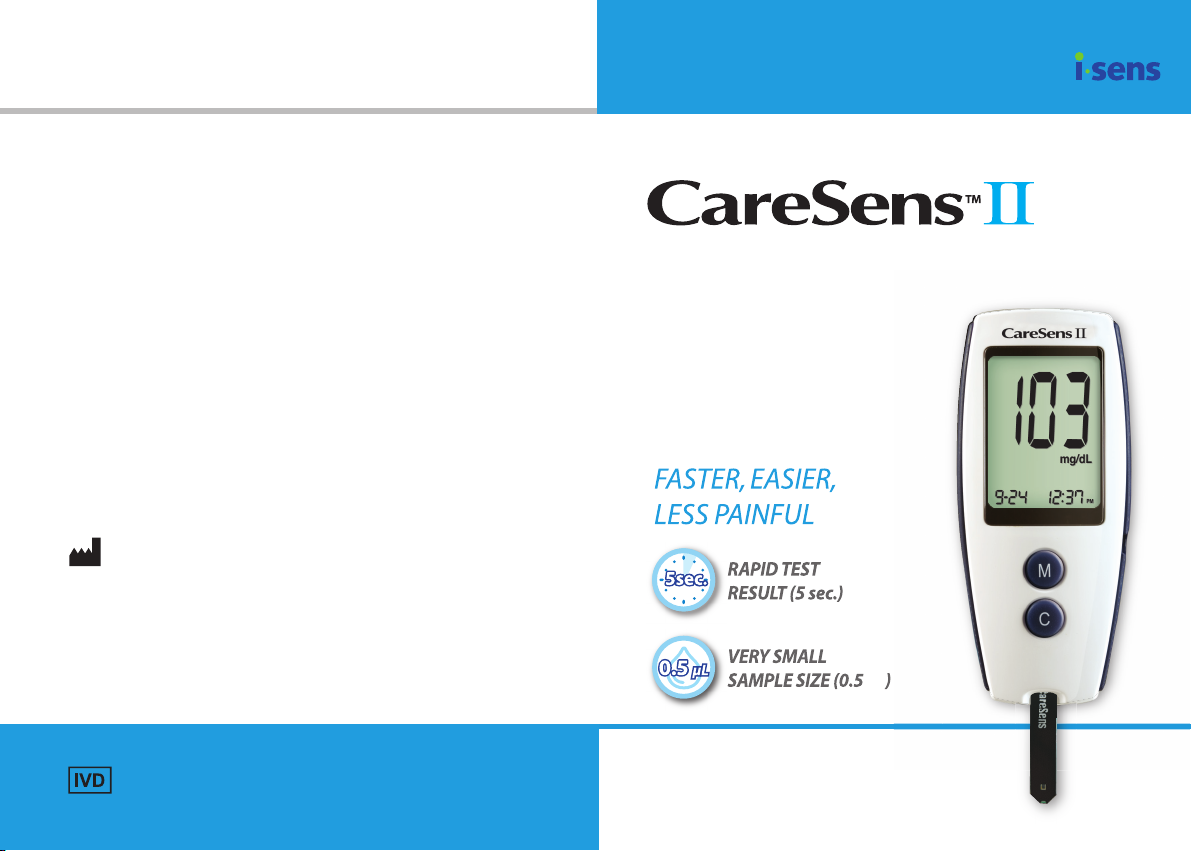
For accurate results, the code number on the CareSens II Meter
and CareSens Test Strips must match. You must code your meter
before using it for the first time and each time you open a new
vial of test strips. The code number on the meter display must
match the one on the test strip vial.
Coding Meter to Match Test Strips
You must code your meter before using it for the first time
and each time you open a new vial of test strips. The
code number on the display and test strip vial must
match. If the meter is not correctly coded, you will get
inaccurate results.